


Iron Fire Screen
An iron fire screen protects a room from stray sparks while anchoring the hearth with industrial character and decorative metalwork.
Iron Fire Screen
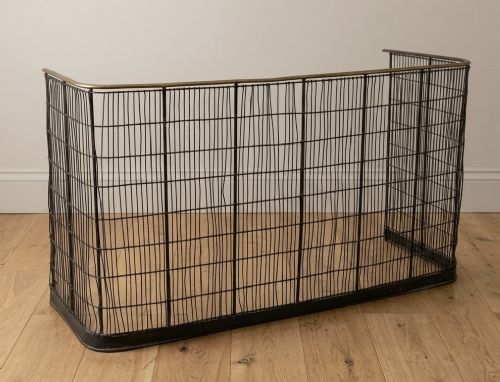
An iron fire screen serves primarily as a spark guard before an open hearth, taking several distinct physical forms across the inventory. You will find sturdy folding fireguards, protective nursery fenders, and tall static panels designed to sit flush against the brickwork.
The pieces appearing here span the nineteenth century, the Victorian era, and the early decades of the twentieth century. Common design movements represented include the Arts and Crafts style, Gothic Revival, Art Nouveau, and Regency periods.
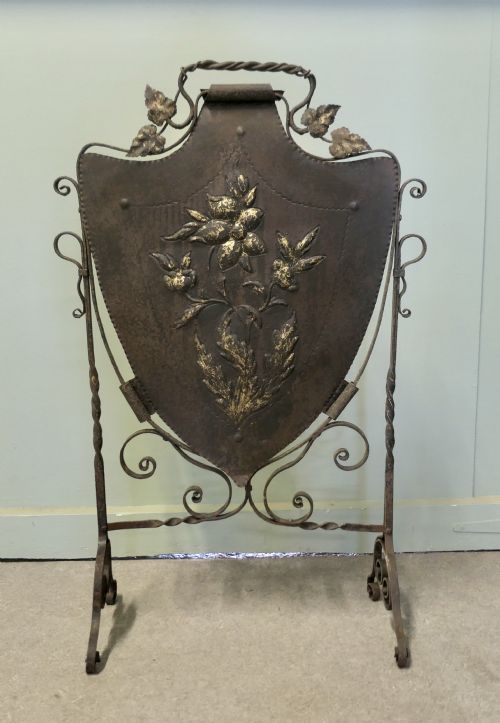
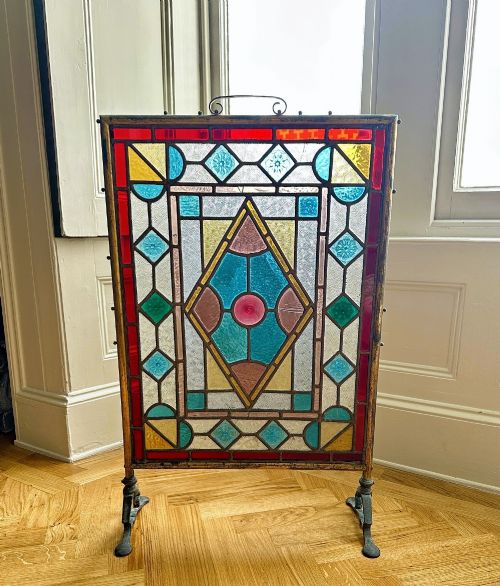
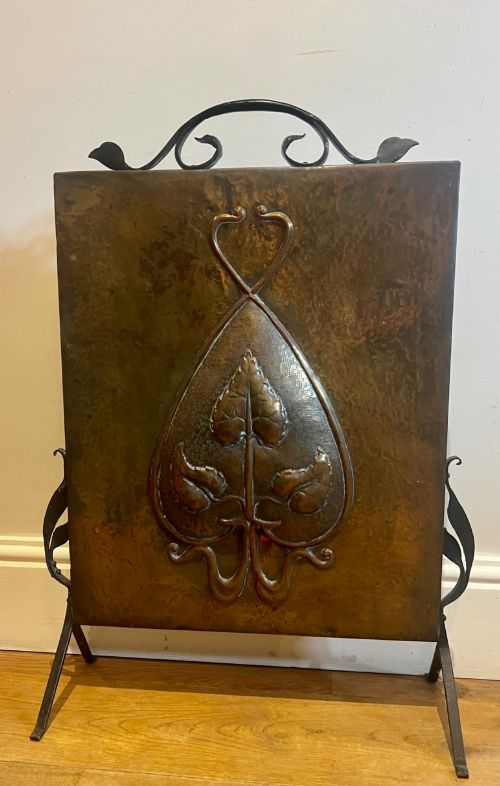
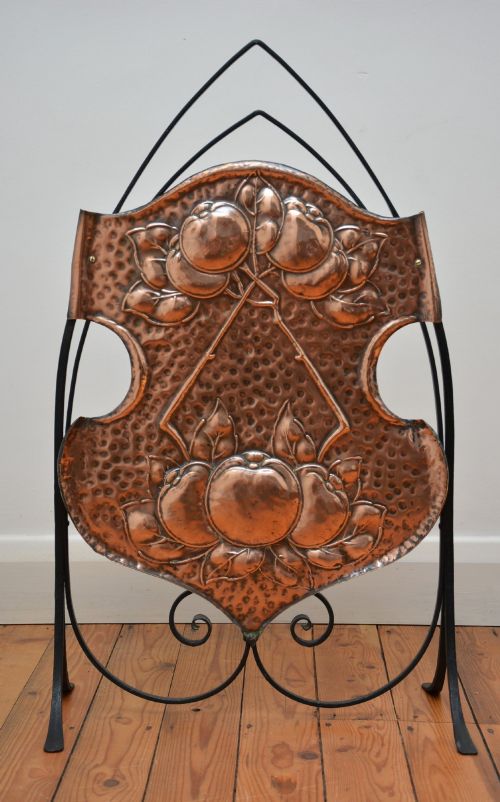
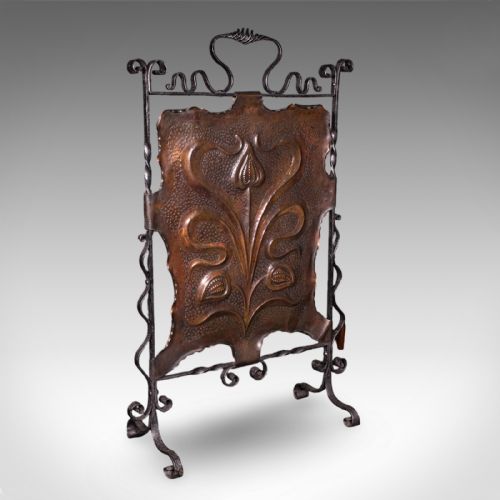
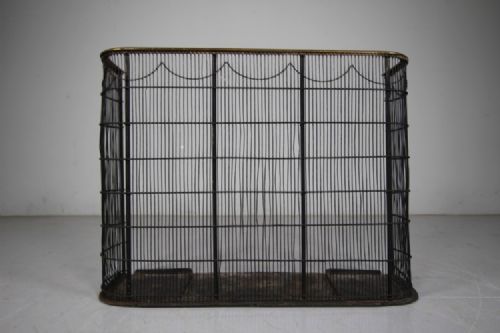
Many examples combine heavy metal frames with contrasting decorative panels or mesh. You will encounter screens featuring beaten copper, stained glass inserts, leaded details, and fine wirework alongside simpler utilitarian guards.
Materials and Techniques
The core structure relies heavily on wrought iron and plain iron, shaped through traditional blacksmithing techniques to form rigid frames and supportive stands. Hand-forged joints and heavy metal bars provide the substantial weight needed to remain stable beside an active hearth.
Makers integrated other metals and media to soften the severe industrial metalwork. Copper panels, brass trim, and wire mesh appear frequently, often secured with visible rivets or fastened into decorative metal scrollwork.
Certain ambitious items incorporate fragile decorative elements like stained glass, mirrored glass, or antique Delft tiles set directly into the iron framework. These contrasting materials required precise framing to withstand the heat and movement near a fireplace.
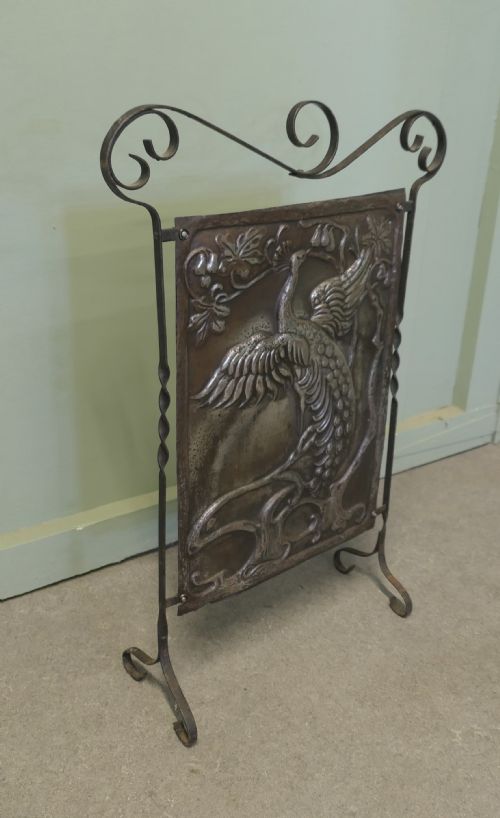
At least one industrious maker decided an iron fire screen simply had to feature a stork staring intently at a fish.
Craftsmanship and Construction
The distinction between standard utility guards and finer decorative examples lies in the ambition of the hand-forged details and the integration of auxiliary materials. Superior screens display thoughtful composition in the wrought iron scrollwork, careful riveting, and harmonious pairing with polished copper or stained glass.
Weight and structural rigidity indicate the level of material substance used in construction. Heavy wrought iron frames and sturdy folding mechanisms demonstrate sturdiness, whereas lighter wire mesh guards prioritize simple domestic safety over artistic expression.
Victoria and Albert Museum
The Iron Fire Screen Glossary
- Wrought iron
- Tough, malleable iron that can be heated and hammered into decorative shapes. It forms the structural skeleton of most period fire guards.
- Nursery fender
- A low metal barrier placed around a hearth to keep children and pets at a safe distance from open flames. These often include attached clothes rails or wire mesh guards.
- Arts and Crafts
- A design movement emphasising handcraftsmanship, simple forms, and natural motifs. Objects in this style often feature exposed metalwork and beaten copper panels.
- Spark guard
- A fine wire mesh or perforated metal screen designed to catch embers popping from the fire. They are built for practical safety rather than display.
- Delft tiles
- Tin-glazed earthenware tiles, often painted in blue and white, occasionally inset into period fire screens. They add colour and historical interest to the iron frame.
Iron Fire Screen: Frequently Asked Questions
How do I identify an Arts and Crafts screen?
Arts and Crafts screens typically display hand-beaten copper panels, visible forged iron construction, and motifs inspired by nature such as peacocks, storks, or floral patterns. The emphasis is on visible craftsmanship rather than mass-produced uniformity.
You will also notice honest joinery, such as rivets and hammered brackets, rather than hidden welds. Stained glass or coloured glass inserts frequently appear in these particular designs.
Are nursery fenders different from standard fire screens?
Nursery fenders are lower, enclosure-style guards designed to surround the entire hearth perimeter rather than covering just the fireplace opening. They often incorporate a fine wire mesh and sometimes feature integrated rails for airing clothes.
Standard fire screens are taller, flat or folding panels meant to sit directly against the fire opening. Fenders create a physical boundary around the hearth, whereas screens act as a direct barrier against the flames.
How do I clean an antique iron screen?
Dust the iron frame regularly with a dry cloth to prevent grime accumulation. For wrought iron surfaces, a light application of neutral paste wax can help protect the metal from moisture and preserve the finish.
Avoid using harsh chemical polishes or abrasive pads on aged metal or delicate copper panels. Gentle handling ensures the original patina remains intact without stripping away historical character.