


Iron Basket Grate
An iron basket grate holds logs for a hearth while bringing period weight and structure to a room.
Iron Basket Grate
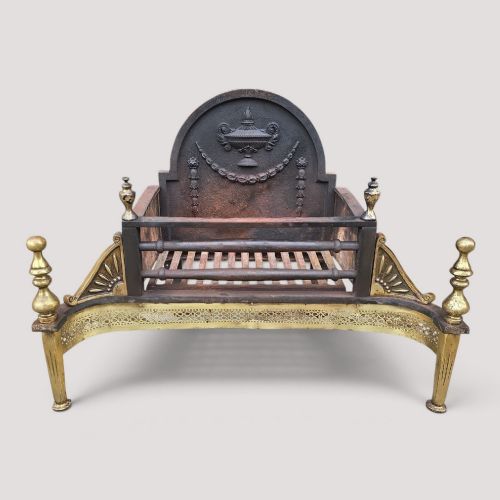
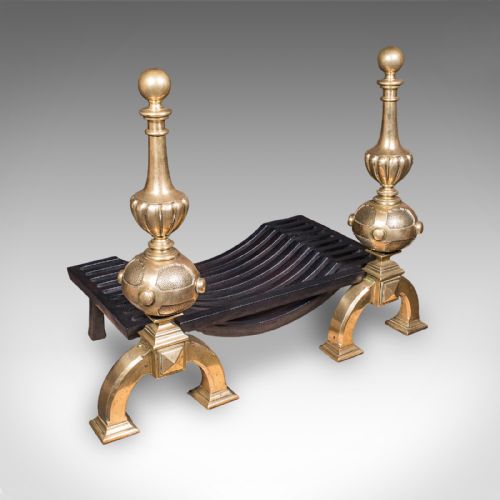
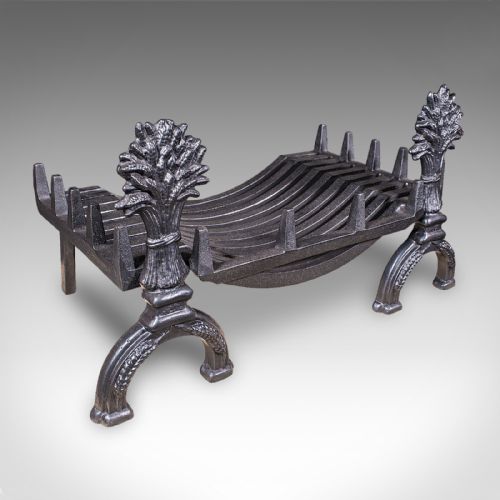
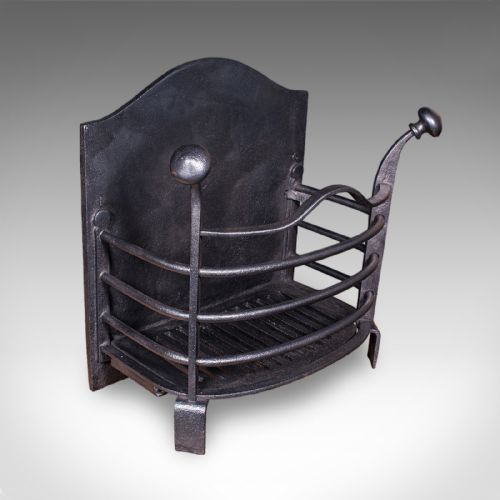
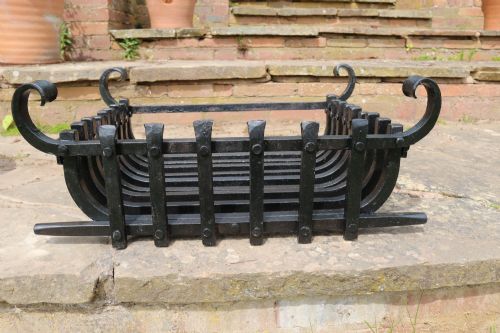
An iron basket grate is an open hearth structure designed to contain solid fuel such as wood or coal within a fireplace. These utilitarian pieces range from small freestanding fire baskets to large inglenook hearth assemblies.
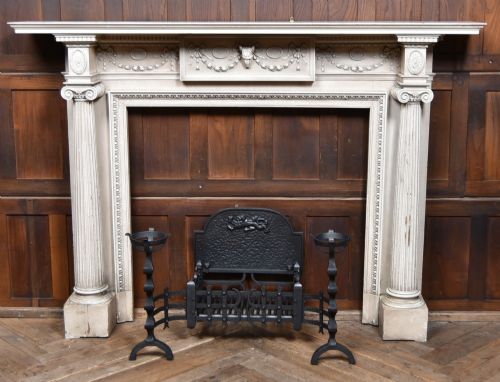
The versions most commonly met on this page span the Victorian and Georgian periods, alongside later twentieth-century interpretations in the Arts and Crafts and Regency styles. They frequently appear alongside firebacks, fenders, and andirons.
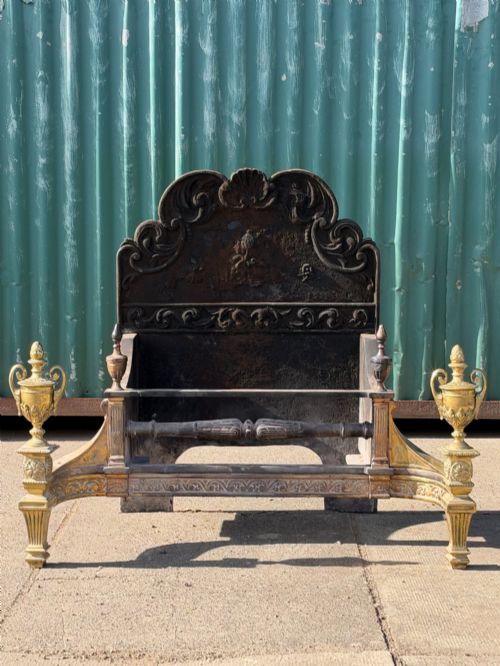
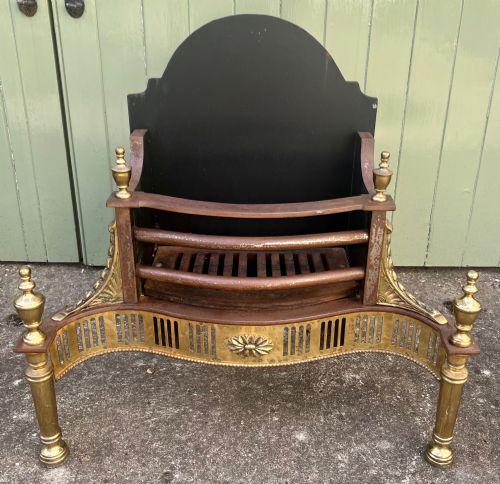
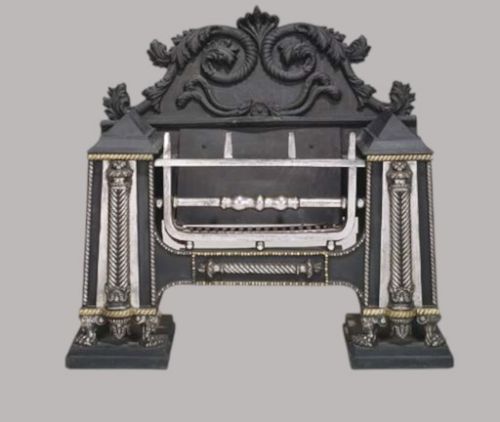
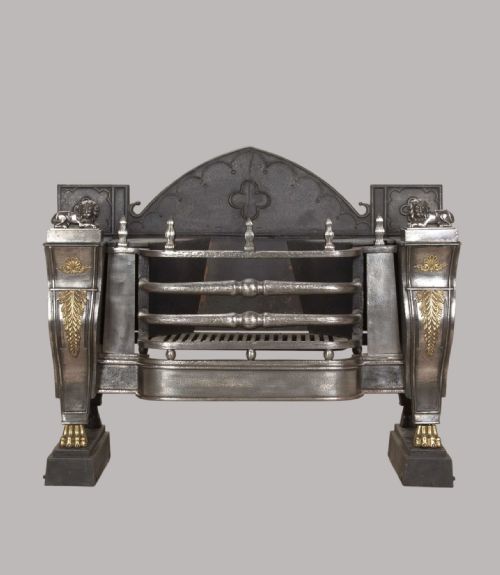
Makers and designers drew upon classical, Gothic, and Neoclassical vocabularies, producing everything from simple cast iron grates of small proportions to elaborate brass-mounted register grates.
Materials and construction methods
Foundries forged these pieces primarily from cast iron and wrought iron, utilising the high melting point and durability of the metal to withstand intense hearth temperatures. Brass elements appear regularly as decorative mounts, fire dogs, and andirons.
Internal structure often relied upon integrated firebricks to protect the surrounding metalwork and retain heat efficiently within the hearth. Skilled metalworkers combined casting for decorative backs and frames with hand-wrought bars for the fuel baskets themselves.
Some heavy iron inglenook sets weigh so much they likely required a small team of apprentices just to haul them into position.
Distinctions in construction and design
Weight and gauge of metal dictate the substance of a piece, separating heavier domestic and inglenook examples from lighter variants. The crispness of surface detail, particularly on neoclassical brass mounts and cast iron firebacks, demonstrates the skill of the original foundry.
Coherence of style marks the difference between standard production and superior examples executed in specific historical revivals like the Adam or George III idioms. The integration of matching fire furniture, such as dedicated andirons and fenders, elevates the integrity of the assembly.
The Iron Basket Grate Glossary
- Fire basket
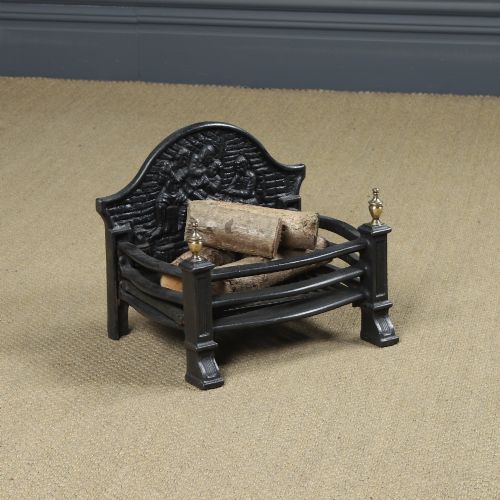
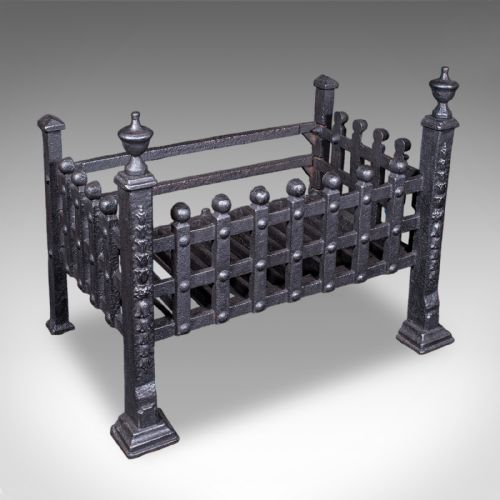
- An open metal container designed to hold burning fuel inside a fireplace hearth. These units stand independently or rest upon dedicated andirons.
- Andiron
- A horizontal iron support raised on legs, used in pairs to hold logs in an open fireplace. They frequently accompany iron basket grates in hearth sets.
- Fireback
- A heavy iron plate placed at the back of a fireplace to protect the masonry and reflect heat into the room. They often feature cast decorative relief work.
- Hob grate
- A fireplace grate featuring flat side shelves or hobs used for keeping kettles warm. These items combine a central fuel basket with cast iron side panels.
- Register grate
- A fireplace grate fitted with a movable flap or damper to control the draught up the chimney. They emerged as a more efficient way to manage hearth ventilation.
Iron Basket Grate: Frequently Asked Questions
How do I choose the right size?
Measure the width, depth, and height of your fireplace opening carefully before selecting a basket grate. Ensure there is adequate clearance around the ironwork for safe heat dissipation and proper airflow.
Freestanding grates need to sit comfortably on the hearth floor without crowding the surrounding fire surround or mantelpiece.
Can I burn real wood in these?
Most historical iron basket grates were built to burn wood, coal, or peat within an open hearth. Checking the condition of the metal bars and interior firebricks ensures the structure can handle solid fuel safely.
Modern usage may require a professional inspection of your chimney flue to confirm adequate draw and compliance with local regulations.
What is the difference between cast and wrought iron?
Cast iron is poured into moulds while molten, allowing for intricate decorative details and heavy firebacks. Wrought iron is heated and hammered by hand into shape, resulting in tougher, fibrous bars suited for fuel baskets.
Many period grates combine both techniques, using cast decorative elements alongside hand-forged supporting bars.
How do I clean and maintain cast iron?
Remove ash and debris regularly to prevent moisture retention and subsequent corrosion on the metal surfaces. Apply a specialised grate polish or black lead sparingly to maintain the dark finish of the iron.
Avoid using harsh chemical cleaners that strip the historic surface patina and protect the pieces from damp environments.