



Irish Sterling Silver Cutlery
Irish sterling silver cutlery brings Dublin craftsmanship and heavy gauge metal to the dining table through Georgian basting spoons, marrow scoops, and serving pieces.
Irish Sterling Silver Cutlery
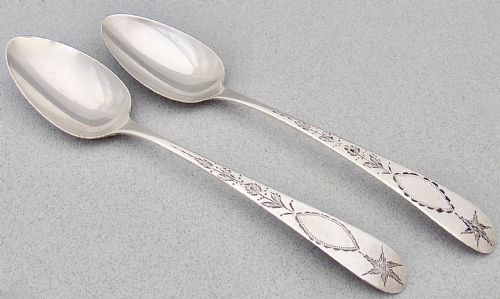
Buyers seeking Irish sterling silver cutlery encounter serving utensils, marrow scoops, fish slices, and spoons originating from the eighteenth and nineteenth centuries. The selection centres on Georgian forms, including George IV examples and pieces marked by Dublin assay offices.
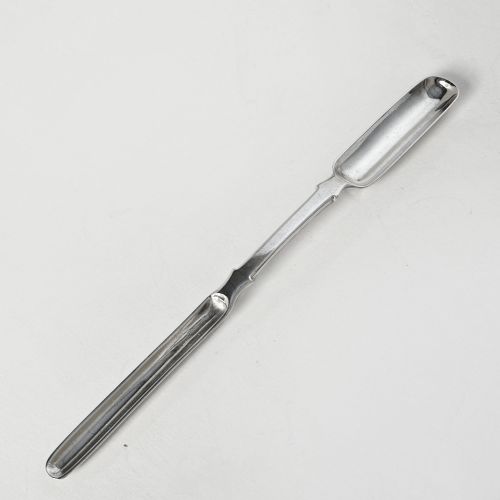
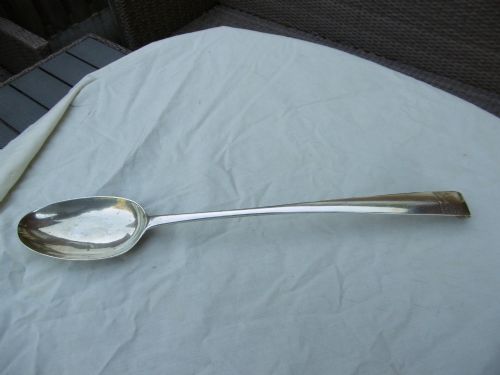
The most common survivals on this page are large serving implements like basting spoons and dessert spoons, alongside specialised items such as marrow scoops and fish slices. These domestic silver items reflect the dining habits of their period through distinct regional handle patterns like Celtic point, hook end, old English, and fiddle.
Objects span from the mid-eighteenth century into the nineteenth century, capturing the output of Dublin silversmiths working in sterling silver. Each piece carries hallmarks that anchor its date of manufacture within the Georgian era.
How irish sterling silver cutlery was made
Makers shaped Irish sterling silver cutlery by hand, hammering and forming sterling silver into sturdy shafts and bowls designed for heavy dining use. Engraved crests and Dublin hallmarks were applied directly to the metal.
Some cased sets incorporated secondary materials such as velvet and silk within their presentation boxes to protect the silver components. The primary construction relies entirely on traditional silversmithing techniques executed in Dublin workshops.
Irish Sterling Silver Cutlery Retail Price Guide 2026
Typical asking prices for irish sterling silver cutlery among the pieces listed under this phrase on Sellingantiques today, from the lower quarter to the upper quarter. They describe what is for sale here now, not the wider market.
Georgian diners relied on specialised silver spoons with curved hook ends designed to hang securely from the edge of a serving bowl.
What varies in quality
Quality in Irish sterling silver cutlery depends on the clarity of the Dublin hallmarks and the crispness of engraved family crests upon the handle or terminal. Distinct patterns such as Celtic point or fiddle pattern display varying degrees of wear across the high points of the design.
The weight of the sterling silver and the retention of original form without thinning of the spoon bowls or fish slice blades separate standard utilitarian items from finer maker-marked pieces. Presentation cases lined in silk and velvet further distinguish surviving cased pairs from loose tableware.
John Pittar·John Craig·Edward Power·John Locker
The Irish Sterling Silver Cutlery Glossary
- Sterling silver
- A silver alloy containing 92.5 percent pure silver and 7.5 percent other metals, traditionally copper, used to create durable tableware.
- Basting spoon
- A large serving spoon used in the kitchen or at the dining table for distributing juices over meat during roasting or service.
- Marrow scoop
- A narrow, elongated silver utensil with small bowls at each end designed for extracting bone marrow from joints.
- Fish slice
- A flat, broad serving implement with a pierced or engraved blade used for serving fish dishes at the table.
- Hallmark
- An official stamp applied by an assay office to guarantee the fineness of precious metal and record the year of manufacture and maker.
Irish Sterling Silver Cutlery: Frequently Asked Questions
What is Irish sterling silver cutlery?
Irish sterling silver cutlery encompasses spoons, basting spoons, marrow scoops, and fish slices produced by silversmiths in Dublin during the eighteenth and nineteenth centuries.
These pieces are defined by regional hallmarks and traditional handle patterns characteristic of Georgian silver production.
How do I identify Georgian Irish silver?
Georgian Irish silver is identified through official Dublin assay office hallmarks stamped directly onto the sterling silver metal, often accompanied by maker marks.
Stylistic indicators such as hook end terminals, Celtic point designs, and fiddle pattern handles also help confirm the period.
How should I clean antique silver?
Antique silver requires gentle cleaning with a soft cloth and specialised silver polish formulated to preserve the integrity of the metal surface.
Harsh abrasives and dipping solutions should be avoided to protect engraved crests and historical hallmarks.