

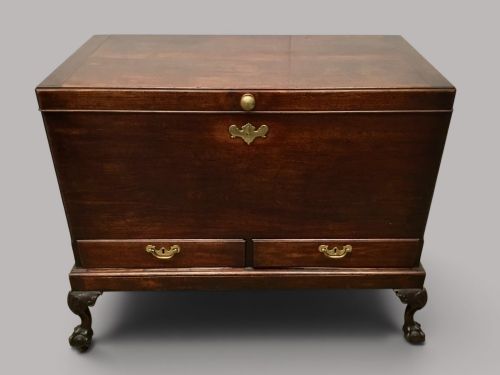
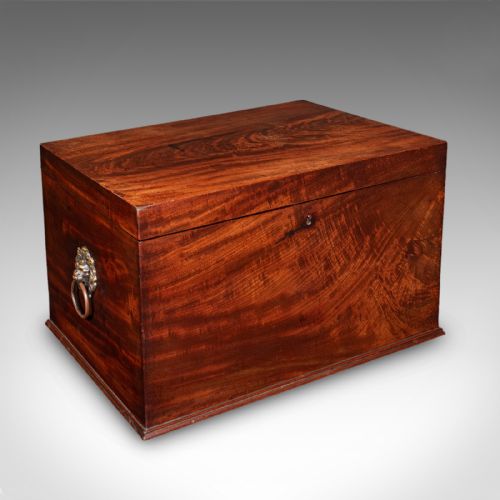


Irish Mahogany Chest
An irish mahogany chest brings rich timber and robust cabinet-making straight from Georgian and Regency workshops into your home.
Irish Mahogany Chest
An irish mahogany chest encompasses robust storage furniture built in Ireland during the Georgian, Regency, and Victorian eras. These pieces range from narrow chests of drawers and tallboys to specialised forms like cellarettes and linen presses.
The versions you are most likely to encounter on this page span the mid eighteenth century up through the nineteenth century. Makers utilised dense imported timbers to construct functional items intended for grand domestic interiors.
Forms vary from classic tallboys and secretaire chests to sarcophagus-shaped cellarettes and decorative teapoys. Each example reflects the distinct regional design preferences characteristic of Irish cabinet-making workshops.
How They Were Made
Cabinet-makers constructed these pieces using solid mahogany and flame mahogany veneer applied over sturdy secondary woods like oak. Workshops selected timber for deep figure and grain, relying on traditional joinery to build lasting frames.
Craftsmen fitted functional hardware including brass handles, locks, and paw feet to anchor larger storage units. Interior configurations required precise carpentry, particularly for linen presses, tallboys with secretaire drawers, and fitted cellarettes.
Irish Mahogany Chest Retail Price Guide 2026
Typical asking prices for irish mahogany chest among the pieces listed under this phrase on Sellingantiques today, from the lower quarter to the upper quarter. They describe what is for sale here now, not the wider market.
Some nineteenth-century cellarettes doubled as hunting day storage boxes, keeping portable refreshment close at hand during long outdoor pursuits.
What Varies in Quality
Quality rests upon the selection of timber, particularly the depth of figure in flame mahogany veneer and the integrity of the solid mahogany structure. Superior examples display careful book-matching and crisp carving on details such as paw feet.
The sophistication of the internal fitting and the execution of secondary woods like oak distinguish finer workshops. Attribution to known makers adds a layer of distinction to the construction and overall proportion of the piece.
Ross & Co·Gillingtons·Strahan·Robert Strahan & Co of Dublin·Gillington of Dublin
The Irish Mahogany Chest Glossary
- Cellarette
- A fitted cabinet or box designed for storing bottles of wine. These pieces often feature lead-lined interiors and sit on low supports or paw feet.
- Teapoy
- A small stand or box for holding tea, which gained popularity during the Regency and William IV periods. They frequently incorporate internal compartments for loose tea leaves.
- Tallboy
- A tall chest of drawers built in two sections, traditionally comprising a smaller chest stacked upon a larger base. Examples from the mid eighteenth century onward often include secretaire drawers.
- Linen Press
- A large storage cabinet featuring upper sliding trays enclosed by doors, positioned above a chest of lower drawers. They were built to store household textiles flat.
- Secretaire
- A desk form incorporating a fitted writing drawer with a drop-front panel. This feature conceals small pigeonholes and letter drawers within a standard chest format.
Irish Mahogany Chest: Frequently Asked Questions
What is an Irish mahogany chest?
An irish mahogany chest is a piece of antique storage furniture produced in Ireland during the Georgian, Regency, and Victorian periods. These items include tallboys, linen presses, and standard chests of drawers built from dense imported timbers.
Craftsmen utilised figured mahogany veneers and robust secondary woods to create functional furniture for domestic interiors. Their regional design characteristics set them apart from standard English cabinet-making of the same eras.
How do I identify a Georgian Irish chest?
Georgian examples are recognised through their proportions, timber selection, and distinct structural details. Makers often employed rich flame mahogany veneers and solid oak drawer linings.
Stylistic cues include classical bracket feet, carved mouldings, and occasional secretaire drawers. Eighteenth-century pieces also frequently present as tallboys or tall chests of seven drawers.
Where were these chests used in a home?
These chests served practical storage roles in bedrooms, drawing rooms, and dining spaces. Tallboys and linen presses provided ample space for clothing and household textiles.
Specialised forms like cellarettes functioned as portable or stationary wine storage units in dining rooms. Smaller items such as teapoys sat in reception rooms to manage tea service.
How do I care for antique mahogany?
Care for antique mahogany involves keeping the wood away from direct sunlight and maintaining stable humidity levels in the room. This prevents timber shrinkage and veneer lifting.
Dust the surface regularly with a soft, dry cloth. Avoid using modern silicone sprays, relying instead on traditional beeswax to nourish the polished finish.