
Interior Scene Artwork
Interior scene artwork captures domestic rooms, taverns and workshops in oil, watercolour and print, offering a window into past daily life.
Interior Scene Artwork
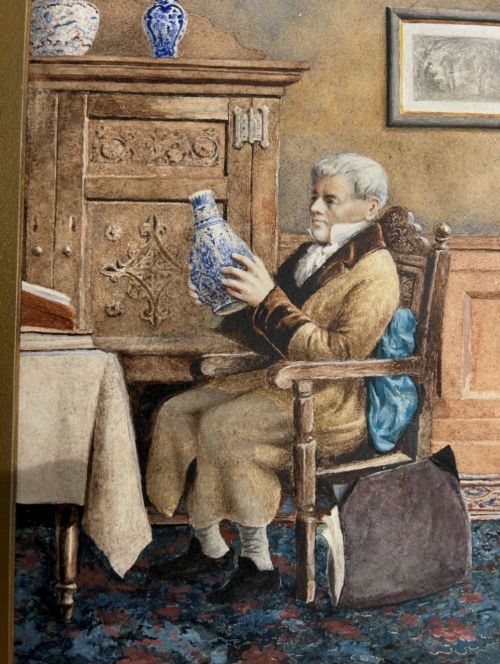
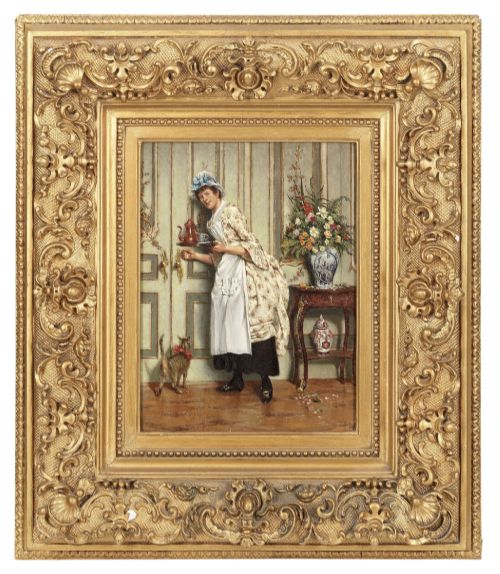
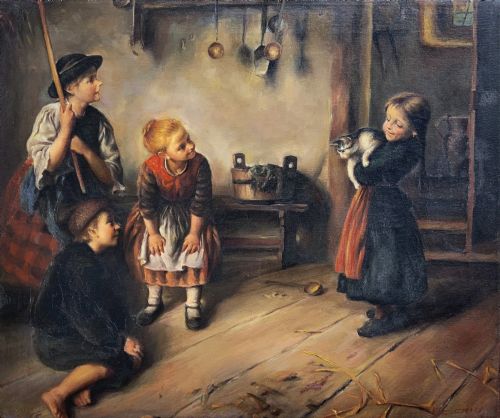
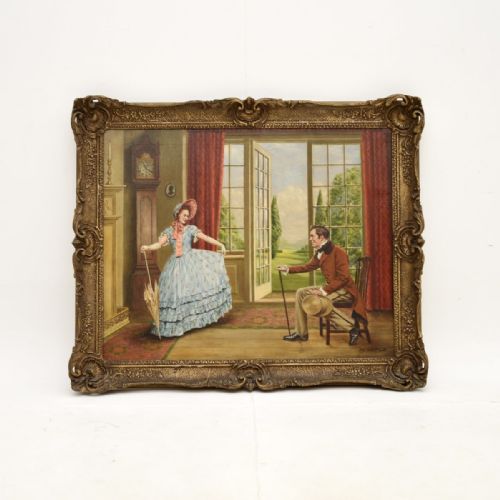
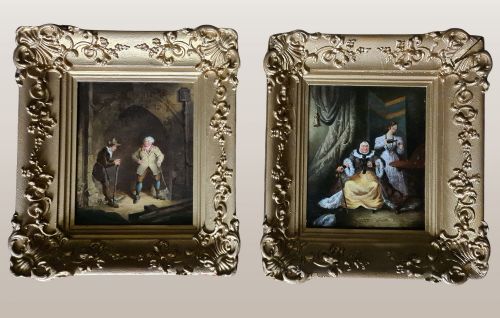
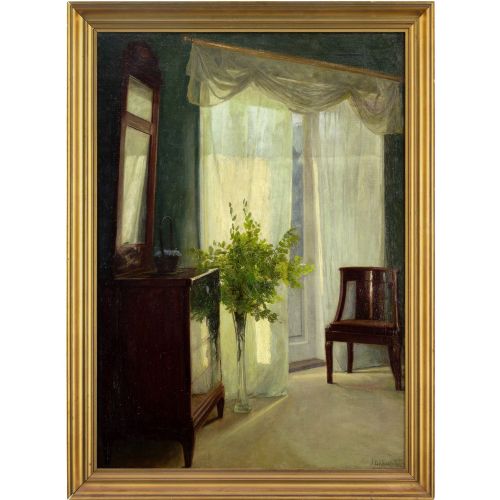
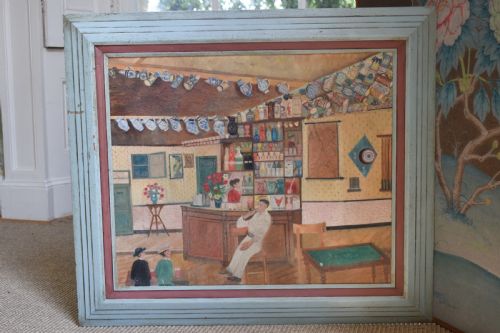
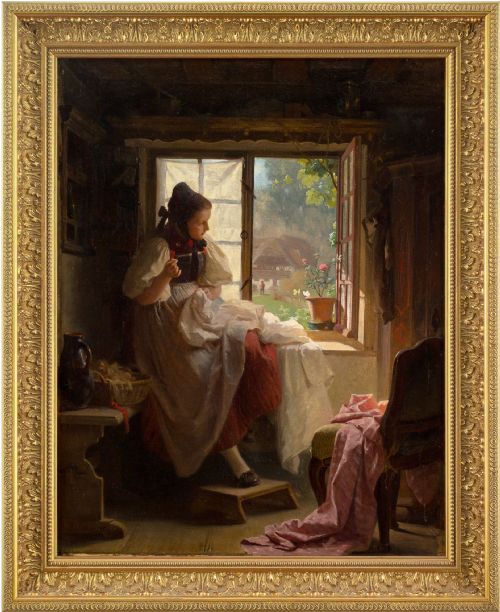
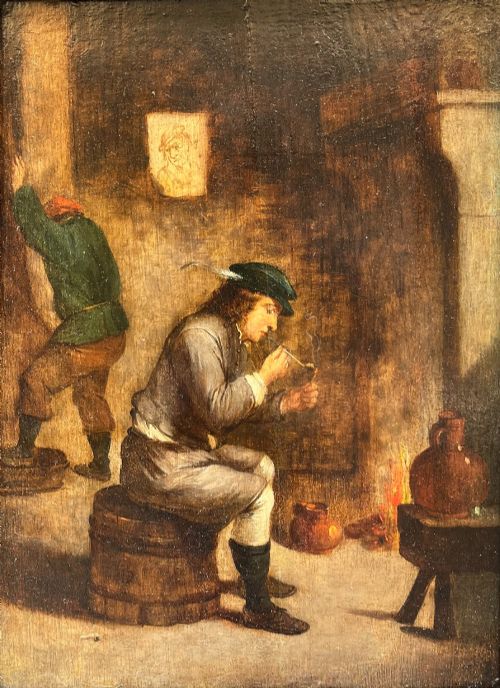
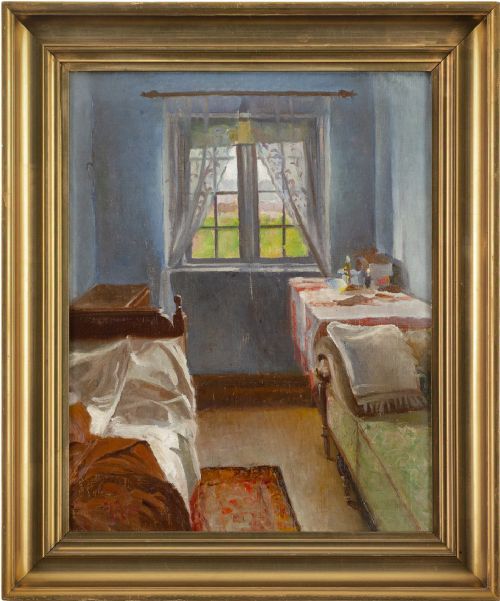
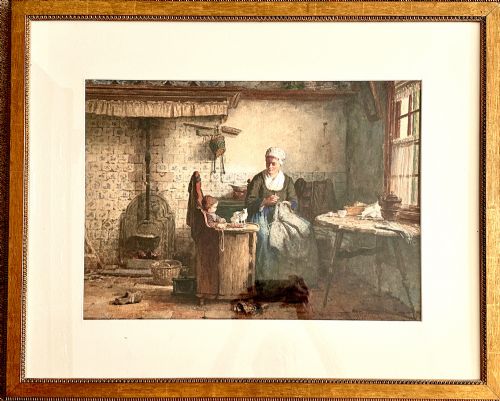
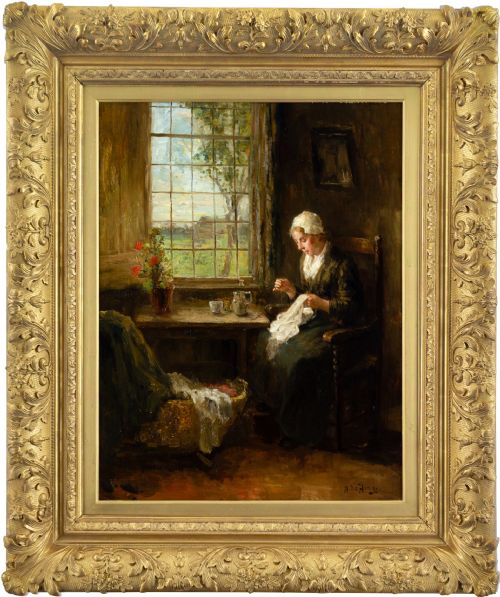
Interior scene artwork brings together oil paintings, watercolours, and prints depicting domestic rooms, cottages, and tavern interiors. These pieces frequently date from the nineteenth century into the mid twentieth century, encompassing Victorian genre painting and Edwardian domestic scenes. The buyer encounters depictions of daily routines, from tea times to quiet moments by a window, rendered by various national schools.
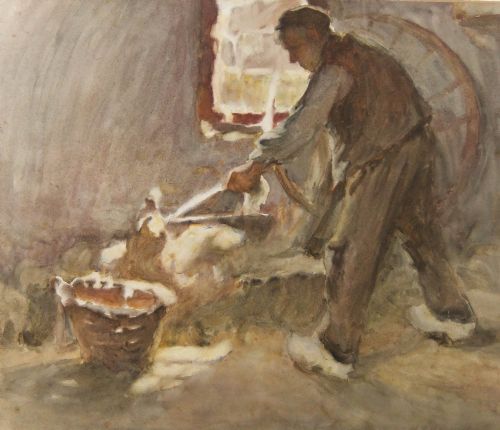
The most common examples on this page are nineteenth century oil paintings on canvas and panel, alongside detailed watercolours and etchings. Artists focus on human figures engaged in domestic tasks, social gatherings, or quiet contemplation within enclosed architectural spaces. These works range from intimate household vignettes to larger courtyard and workshop compositions.
Materials and Technique
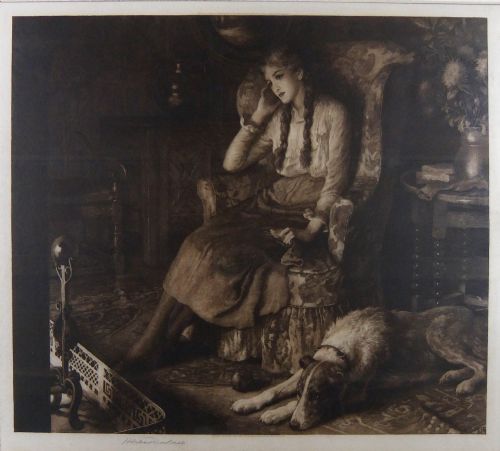
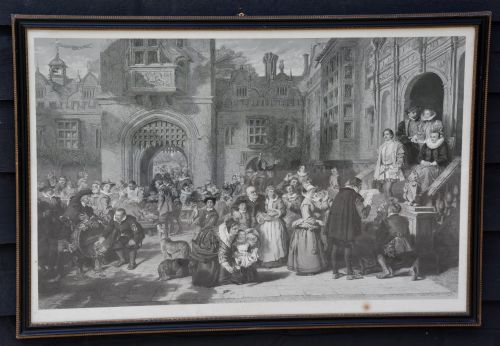
Printmakers employ etching and engraving techniques on paper to produce detailed monochrome or tinted interior views. Framing materials often include period mouldings, such as Hogarth frames, which complement the visual depth of the central image.
Listings feature oil paintings, watercolours, and engravings spanning the nineteenth century, Victorian era, and mid-century periods.
Visual Quality and Execution
Quality rests upon the artist's handling of light, shadow and spatial depth within the enclosed room. Superior examples demonstrate confident brushwork in the depiction of fabrics, facial expressions and interior furnishings.
The articulation of narrative atmosphere distinguishes finer works from routine studio output. Strong compositions successfully balance the human figures with architectural elements and ambient light sources like windows or hearths.
Henry Stacy Marks·Stephen Samuel Lewin·Henry Silkstone Hopwood·Alfred Lyndon Grace·John Lübschitz·Herbert Dicksee·Max Kaltenmoser·David Teniers·Harry Kluge·Hendrik Valkenberg·Bernard De Hoog·Renato Moretti·Jacob Akkersdijk·J De Ninville·James Hayllar·Harry Brooker·George Kilburne·Alexander Rosell·Benjamin Eugene Fichel·John Arthur Lomax·Gabriel Puig Roda·Haynes King·James Kyd·Robert Eadie·Robert Alexander Hillingford
The Interior Scene Artwork Glossary
- Genre painting
- Depiction of aspects of everyday life by subjects from ordinary life, often involving figures in domestic or social settings.
- Chiaroscuro
- The use of strong contrasts between light and dark, usually bold contrasts affecting a whole composition.
- Gesso
- A plaster mixture used as a smooth base for painting or for moulding decorative details on frames.
- Intimist
- An artist who paints intimate domestic interior scenes, often focusing on quiet personal moments.
Interior Scene Artwork: Frequently Asked Questions
What defines an interior scene?
An interior scene artwork depicts figures within enclosed architectural spaces such as rooms, taverns, workshops or cottages.
These works focus on human activities and domestic narratives rather than open landscapes or portraits.
How do I date these artworks?
Dating relies on stylistic evidence, artist signatures, framing types, and support materials like canvas or panel.
Nineteenth-century pieces often display distinct Victorian dress and academic realism techniques.
Where should I hang these paintings?
These domestic scenes suit traditional living rooms, studies or hallways where intimate lighting enhances the composition.
Keep them away from direct sunlight to protect oil paint and paper watercolours.
What is watercolour painting?
Watercolour involves pigment suspended in a water-based solution applied to paper supports.
Artists use this technique to achieve translucent washes of colour and fine linear detail.