





Inset Drawer Desk
An inset drawer desk brings traditional proportions and practical writing surfaces into a room, offering organised storage alongside a dedicated workspace.
Inset Drawer Desk
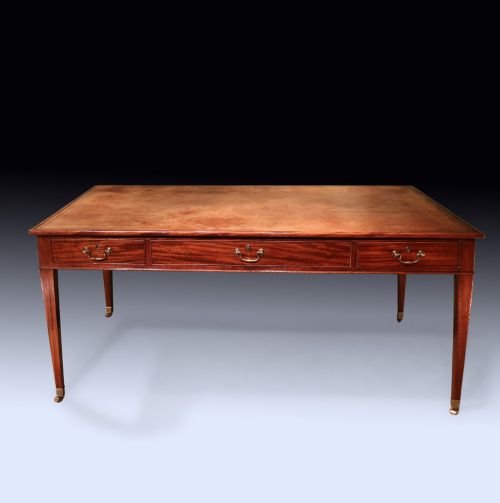
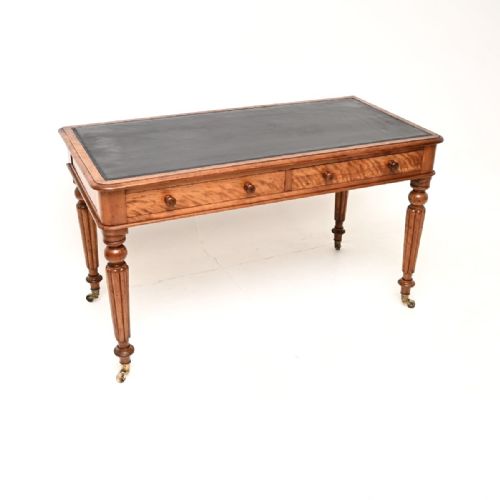
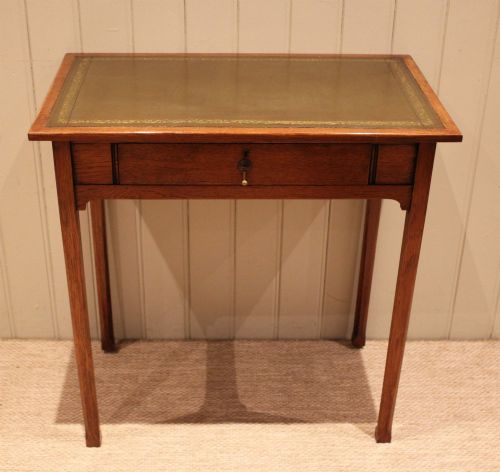
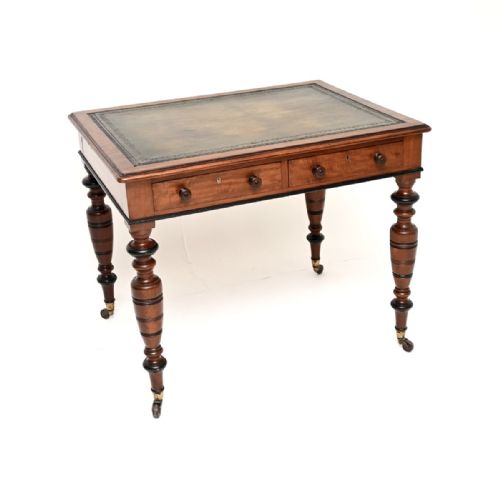
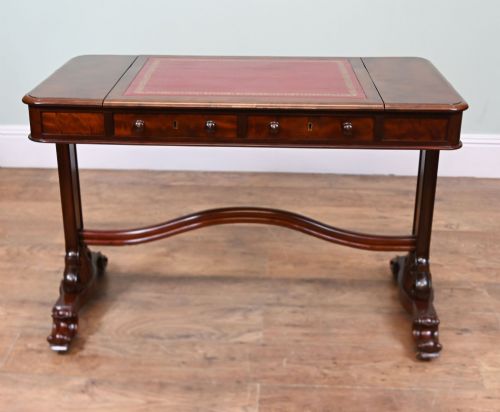
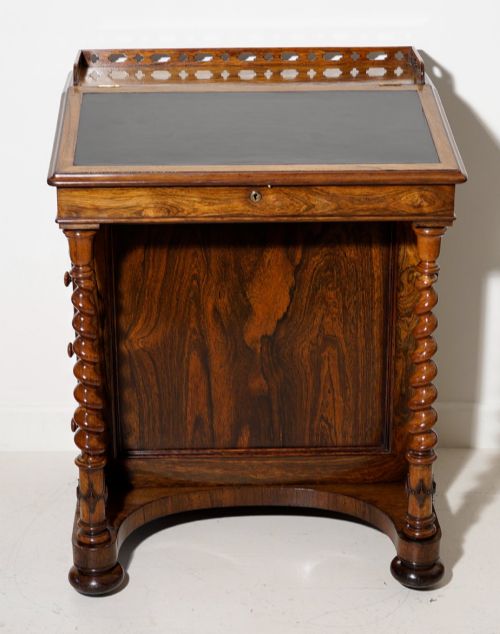
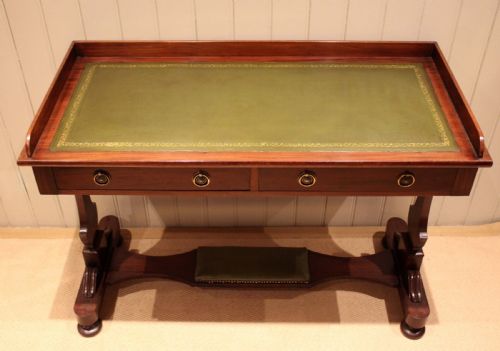
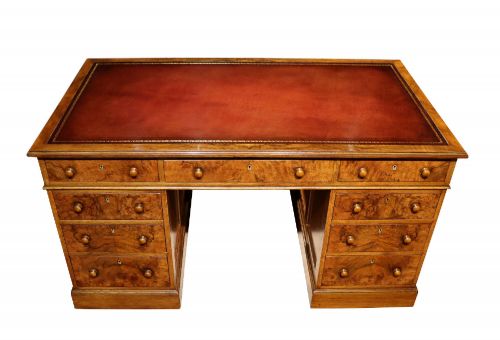
An inset drawer desk is a form of writing furniture designed with drawers integrated flush into the frame beneath the writing surface, preventing them from protruding awkwardly into the room. When you search for an inset drawer desk, you encounter various formats ranging from compact writing tables and Davenport desks to substantial twin pedestal models.
The pieces listed on this page span the eighteenth, nineteenth, and early twentieth centuries, encompassing Georgian, Victorian, Edwardian, and Regency periods alongside Arts and Crafts and revival styles. Mahogany and oak dominate the selection, accompanied by walnut, burr walnut, rosewood, satinwood, and leather.
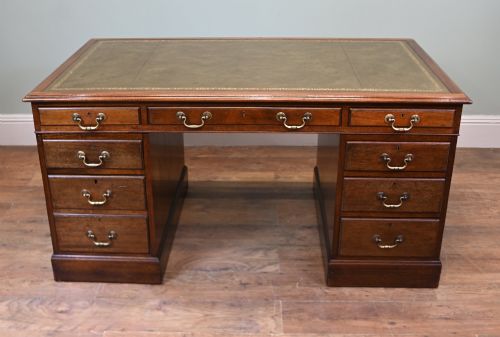
Victorian pedestal desks and mahogany writing tables form the core of what you are most likely to meet here, alongside smaller Davenport desks and writing tables fitted with two or three drawers. These work surfaces often incorporate inset panels of leather, providing a traditional writing plane framed by timber.
Materials and Construction
Cabinet makers constructed these desks using dense hardwoods such as mahogany and oak as the primary structural timbers, frequently applying figured veneers like burr walnut and satinwood to drawer fronts and top surfaces. Solid timber framing ensures stability across multi-drawer pedestal configurations and smaller writing tables alike.
Writing surfaces were typically inset with panels of leather, often tooled with gilt borders, providing a durable and tactile plane for daily correspondence. Brass hardware, including drop handles and escutcheons, was fitted to the drawer fronts to complement the darker tones of the polished wood.
Inset Drawer Desk Retail Price Guide 2026
Typical asking prices for inset drawer desk among the pieces listed under this phrase on Sellingantiques today, from the lower quarter to the upper quarter. They describe what is for sale here now, not the wider market.
Listings feature woods including mahogany, oak, burr walnut, satinwood, and rosewood, alongside inset leather tops.
Separating Ordinary From Exceptional
The distinction between standard utility pieces and finer examples rests on the selection of timber figures, such as the richness of burr walnut or the depth of grain in mahogany veneers. Superior cabinet making shows in the crispness of inlay work, the neatness of dovetail joints within the drawers, and the integration of brass fittings.
Proportion and scale dictate the visual success of a desk, where well-balanced pedestals and properly aligned inset drawers demonstrate the maker's skill. Desks that retain their original tooled leather tops and matching hardware command greater appreciation among collectors.
Maple and Co
The Inset Drawer Desk Glossary
- Inset drawer
- A drawer whose face sits flush within the surrounding frame rather than overlapping the aperture. This design creates a clean, flat elevation across the front of the desk.
- Pedestal desk
- A freestanding desk comprising two supporting banks of drawers beneath a single top. A central kneehole space sits between the two pedestals.
- Davenport
- A compact writing desk featuring a sloping, hinged desktop above a set of side drawers. Early versions often include a stationery compartment on top.
- Drum table
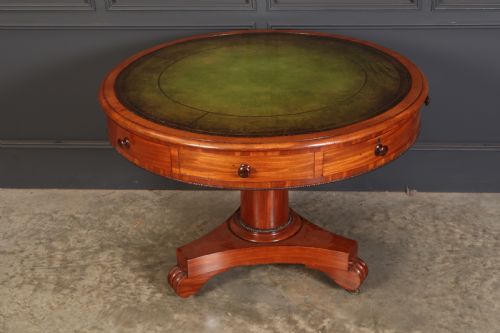
- A circular library table with a deep top containing drawers arranged around the circumference. These tables typically rotate on a central pillar and platform base.
- Dovetail
- A joint formed by interlocking wedge-shaped fingers of wood, used extensively in drawer construction. Fine, tight dovetails indicate careful cabinet making.
Inset Drawer Desk: Frequently Asked Questions
What is an inset drawer desk?
An inset drawer desk is a writing table or pedestal desk where the drawer fronts sit flush within the surrounding timber framework rather than protruding outward. This creates a streamlined elevation that defines traditional desk design.
These pieces range from compact writing tables with two or three drawers to large twin pedestal formats designed for institutional or domestic libraries.
How were these desks used originally?
These desks served as primary writing surfaces for correspondence, bookkeeping, and administrative tasks in private homes and offices. The inset drawers kept writing materials, ink, and papers close at hand without cluttering the main surface.
Pedestal variants offered deeper storage for ledgers and reference books, while smaller Davenport desks provided a compact writing slope for domestic parlours.
Where should I place an inset drawer desk?
Because many pedestal desks and partner's desks feature finished backs, they can stand freestanding in the middle of a room rather than being pushed against a wall. Smaller writing tables suit studies, bedrooms, or living spaces where floor area is more restricted.
Ensure there is adequate clearance behind the desk for a chair to pull out comfortably, particularly when working with pedestal configurations.
How do I distinguish Victorian desks from earlier periods?
Victorian desks often display heavier proportions and make extensive use of mahogany, walnut, and burr walnut, frequently incorporating inset leather writing surfaces and elaborate brass hardware. Construction methods during this era benefited from industrial mechanisation while retaining traditional hand-finishing.
Earlier Georgian and Regency examples tend to feature lighter, more restrained framing, simpler brass pulls, and distinct timber patination developed over a longer span of time.