


Inlay Mahogany Table
When you search for an inlay mahogany table, you encounter centuries of cabinet-making spanning the Georgian, Regency, and Edwardian periods.
Inlay Mahogany Table
When you search for an inlay mahogany table, you look at a diverse group of domestic furnishings ranging from Georgian card tables to Edwardian occasional pieces.
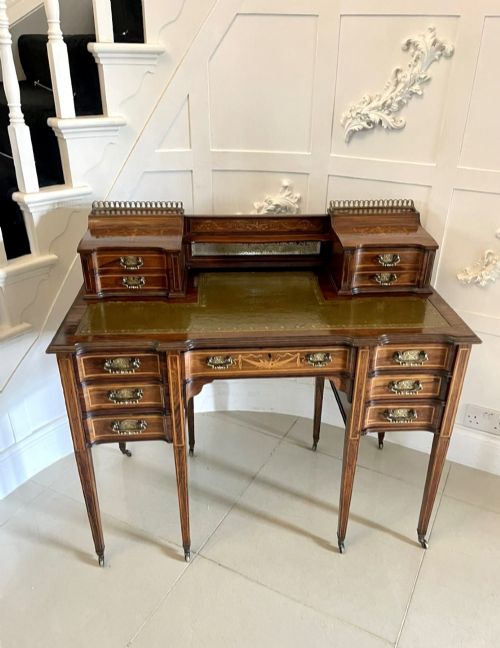
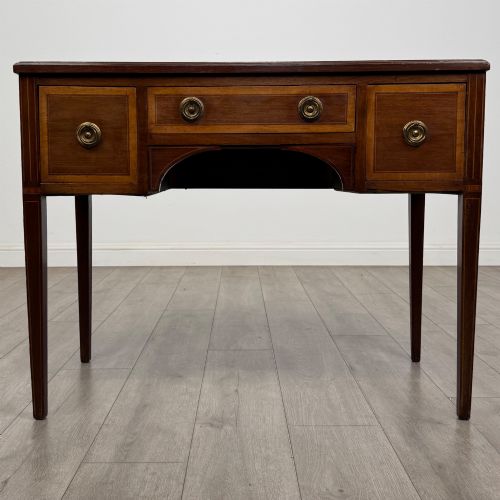
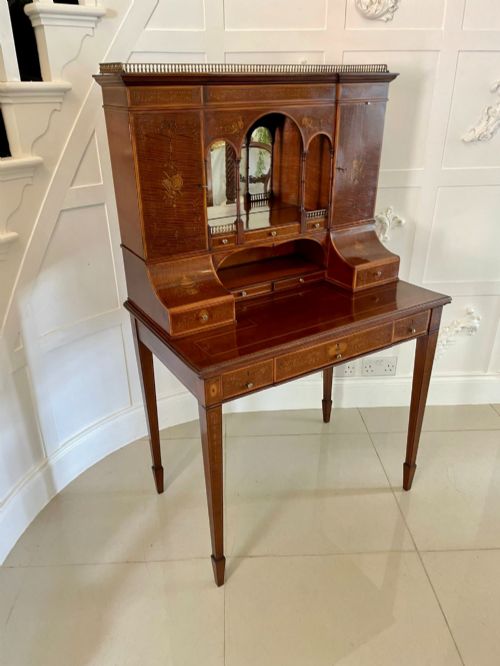
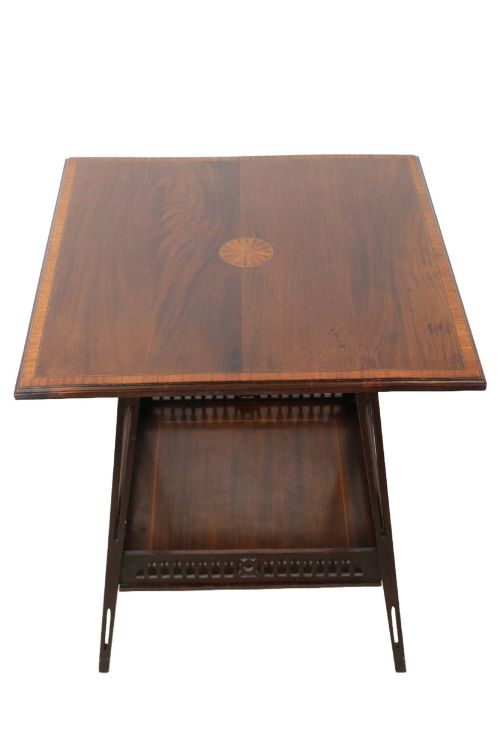
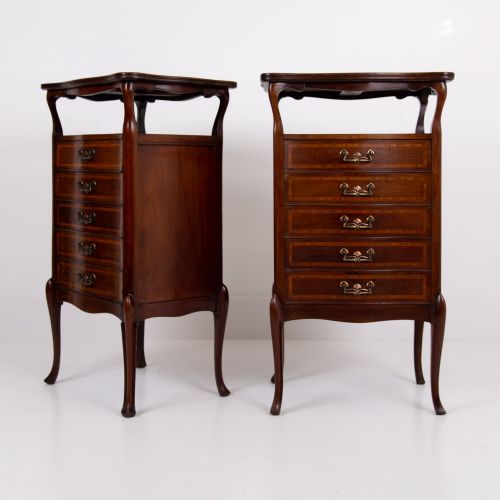
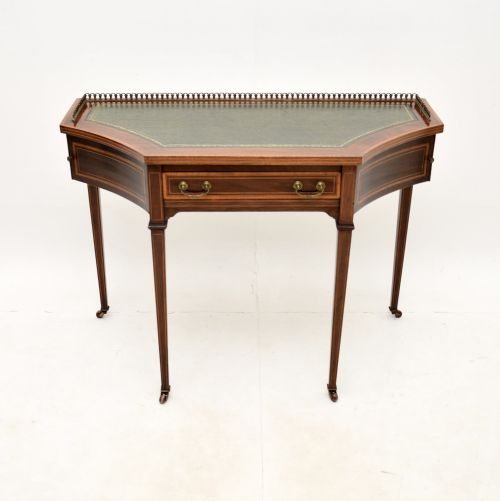
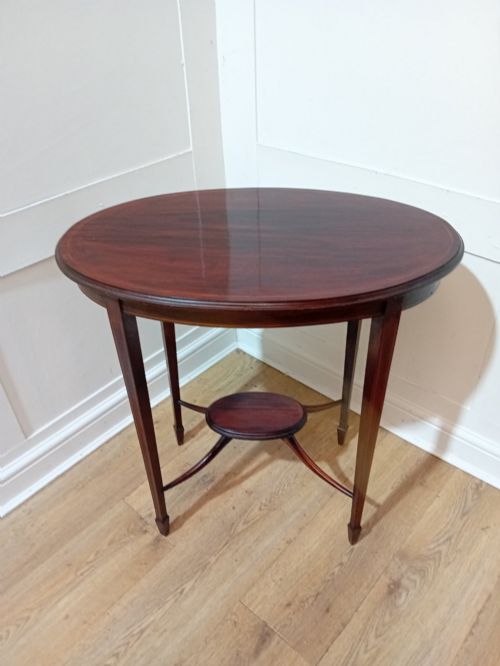
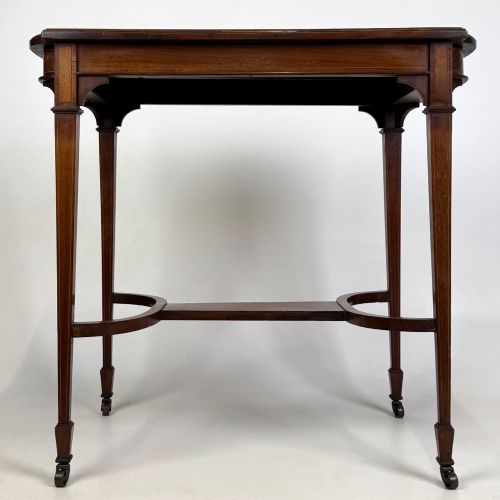
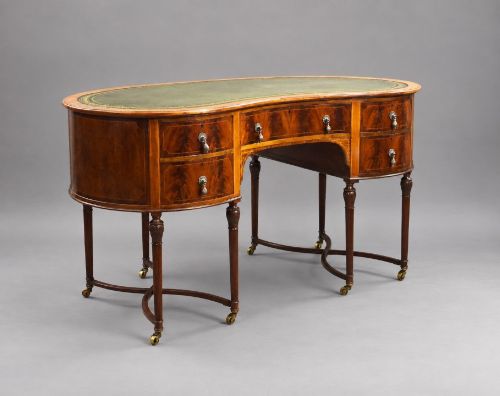
The most common iterations on this page are Edwardian side tables and writing desks, often decorated with contrasting wood inlays.
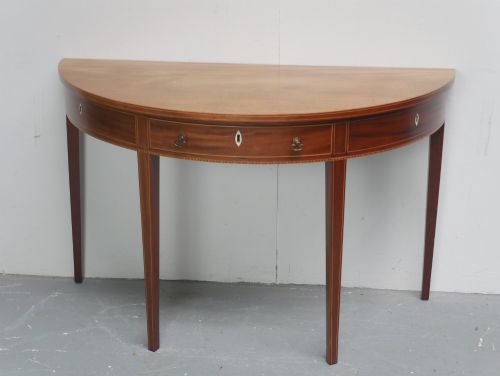
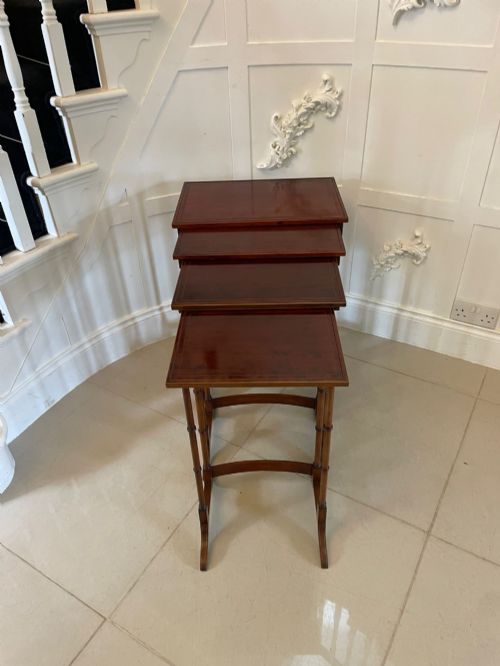
Forms extend from Pembroke and console tables to nested sets and demi-lune sideboards, reflecting the shifting domestic habits of the eighteenth, nineteenth, and early twentieth centuries.
Materials and Construction
Cabinet-makers relied primarily on mahogany as the structural ground, utilising its stability and rich grain for surfaces.
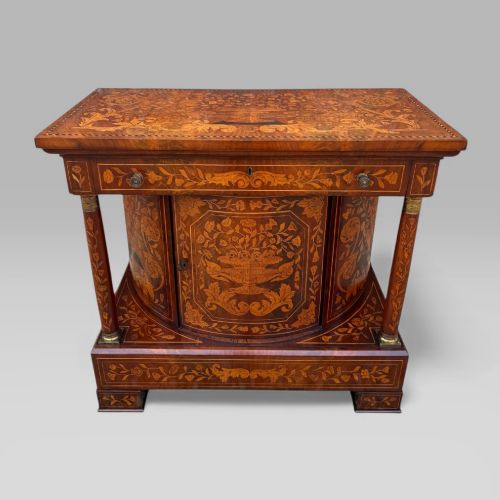
Decorative detailing incorporates contrasting timbers such as satinwood, boxwood, and ebony, alongside brass stringing and inlay work.
Advanced techniques included marquetry for pictorial motifs and crossbanding to frame table tops and drawer fronts.
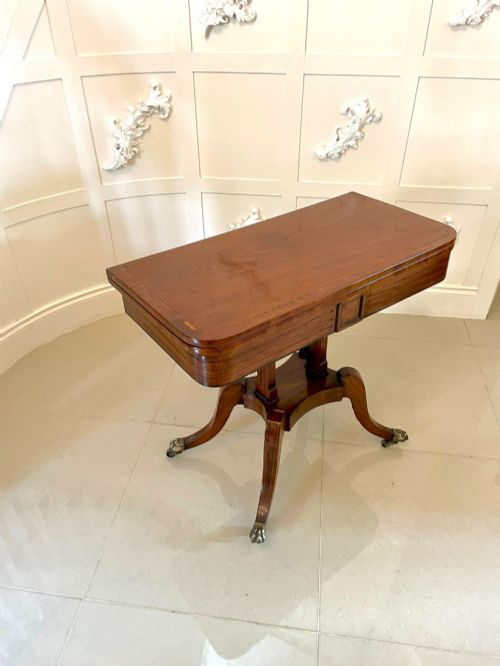
Some nineteenth-century tables hide clever mechanics like fold-over leaves and metamorphic writing actions designed to surprise guests.
Distinguishing the Craft
The distinction between ordinary and exceptional pieces lies in the precision of the joinery and the fineness of the botanical or geometric inlays.
Master craftsmen selected flame or figured mahogany veneers, matching grain patterns symmetrically across the top of the table.
Hardware integrity, original brass casters, and the crispness of hand-cut stringing elevate the standing of a piece.
Trevor Page & Co·Edwards & Roberts
The Inlay Mahogany Table Glossary
- Inlay
- The technique of inserting pieces of contrasting material into a recessed wooden surface to form a decorative design. This method defines the primary visual appeal of these tables.
- Marquetry
- Elaborate patterns of wood veneer arranged to create pictorial or decorative scenes. Artisans utilised various tinted woods to achieve shaded effects.
- Crossbanding
- A border veneer applied around the edge of a table top with the grain running perpendicular to the centre. This frames the primary timber and protects edges.
- Demi-lune
- A half-moon shape characteristic of side and card tables designed to stand flat against a wall. These often feature folding leaves.
- Stringing
- Thin lines of contrasting wood or brass inlaid into channels on table legs and borders. It provides delicate linear definition.
Inlay Mahogany Table: Frequently Asked Questions
How do I date an inlay mahogany table?
Dating relies on examining the secondary timbers, construction methods, and the style of the inlay work. Georgian pieces typically show hand-cut dovetails and subtle boxwood lines, whereas Edwardian revivals often incorporate machine-cut veneers and lighter satinwood.
Hardware styles and the specific species of secondary woods used in drawer linings also provide reliable chronological markers for the experienced eye.
What is the difference between a console and a side table?
Console tables were historically designed to be fixed to a wall or supported by front legs, frequently acting as decorative display pieces in formal reception rooms. Side tables are freestanding items built with four legs for general domestic utility.
Both forms frequently feature inlaid mahogany tops, but their original placement within a period interior dictated their structural design.
How should I care for an antique mahogany surface?
Maintenance requires keeping wooden furniture away from direct sunlight and heat sources to prevent the mahogany from drying and the veneer from lifting. Regular dusting with a soft, dry cloth preserves the polish without chemical buildup.
Occasional application of traditional beeswax feeds the timber and maintains the natural lustre of the polished surface.
Are these tables suitable for daily use?
Most antique tables were built for rigorous domestic service and withstand normal daily activities when treated with reasonable care. Occasional and side tables function well as lamp stands or writing surfaces in modern rooms.
Protecting the polished top from moisture and excessive weight ensures these pieces remain functional while retaining their historical character.