




Inlaid Wooden Sewing Table
An inlaid wooden sewing table combines delicate surface decoration with practical compartments for needlework, offering both historical charm and useful storage.
Inlaid Wooden Sewing Table
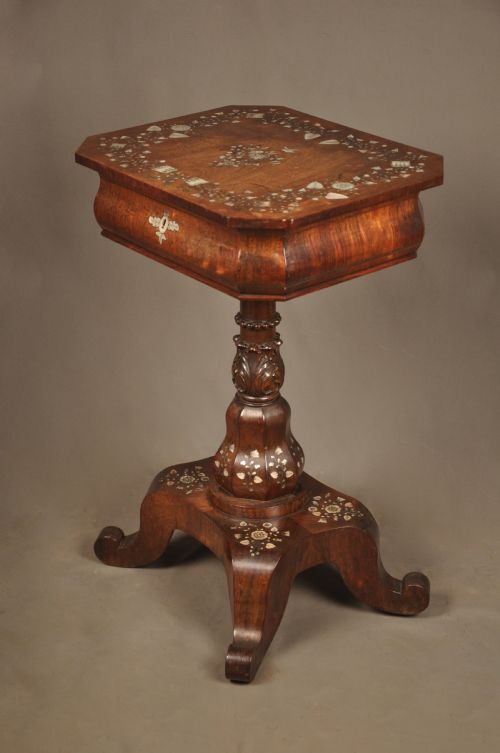
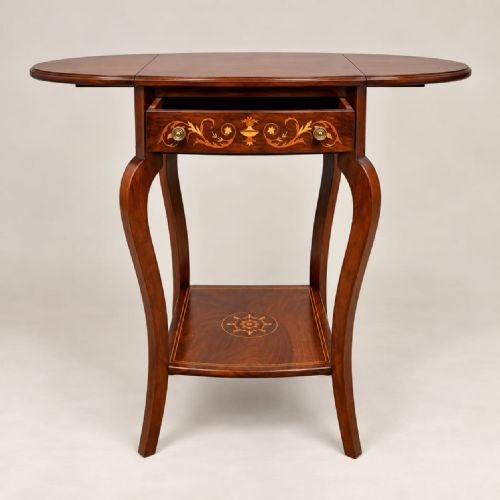
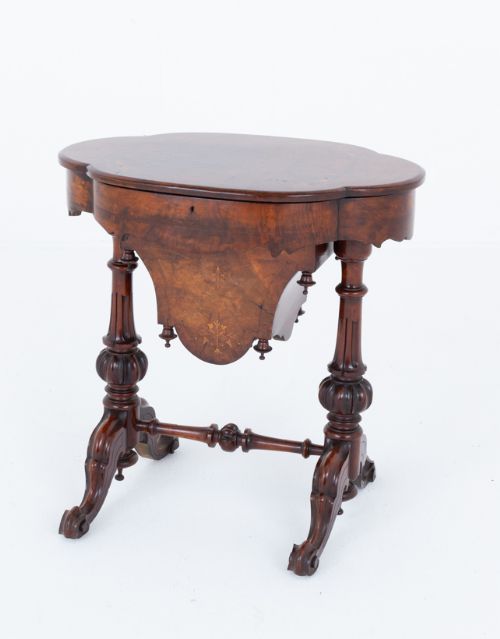
The objects span multiple periods, ranging from the Regency era and the nineteenth century through to the Edwardian period, appearing in forms that overlap with work tables, games tables, and side tables. Many incorporate decorative wood inlay, marquetry, or boxwood and brass detailing to elevate their appearance beyond purely utilitarian items.
Materials and Construction Techniques
Cabinetmakers constructed these tables using solid hardwoods and decorative veneers, applying mahogany, walnut, burr walnut, and satinwood across the main bodies. Rosewood and specialised timbers also appear frequently in the listings, providing rich dark tones and varied grain patterns.
Surface ornament relies on wood inlay, marquetry, and specimen wood veneers, often combined with boxwood or brass details. Fitted interiors utilise compartmentalised wooden inserts to organise threads, needles, and sewing implements beneath the lift-up tops.
Current listings feature pieces spanning the Regency, Victorian, and Edwardian eras, constructed from mahogany, walnut, satinwood, and rosewood.
Judging Quality and Execution
The refinement of the wood inlay and marquetry sets finer examples apart from simpler pieces, particularly where intricate floral or geometric patterns use contrasting specimen veneers. The choice of timber also dictates quality, with burr walnut and figured satinwood denoting higher status pieces.
Structural execution shows in the complexity of the fitted interior and the cleverness of the mechanisms behind drop leaves and multi-drawer arrangements. Integration of hand-painted decoration or delicate boxwood stringing further elevates the standard of the manufacture.
The Inlaid Wooden Sewing Table Glossary
- Marquetry
- Decorative veneer work arranged in pictorial or geometric patterns using various coloured woods. This technique adorns the tops and sides of many finer work tables.
- Work table
- A nineteenth-century term for a small domestic table equipped for sewing, containing internal compartments and sometimes a fabric bag. These pieces often double as occasional or side tables.
- Satinwood
- A lustrous, hard timber with a golden yellow sheen, frequently utilised in Regency and Edwardian marquetry. It provides a bright contrast against darker woods like mahogany and rosewood.
- Specimen wood
- Timbers chosen for their specific natural colours and grain variations, often collected from different regions. Craftsmen piece them together to form intricate geometric or pictorial tabletops.
- Pembroke table
- A small rectangular table featuring two hinged drop leaves on opposite sides. Some variants include fitted drawers designed for needlework and writing.
Inlaid Wooden Sewing Table: Frequently Asked Questions
How were these tables used originally?
In the nineteenth and early twentieth centuries, these tables served as workstations for ladies pursuing needlework, embroidery, and mending. The interior compartments kept pins, spools, and scissors organised while the main surface remained clear for working.
Many designs also incorporated games boards or sliding fabric bags beneath the drawers to hold loose wool and unfinished textiles.
How do I date an antique sewing table?
Dating relies on identifying the prevailing timber choices, hardware styles, and decorative techniques recorded in the piece. Regency examples often display mahogany with brass stringing, while Victorian pieces favour burr walnut and rosewood.
Edwardian versions frequently utilise satinwood or lighter mahogany with delicate floral marquetry, reflecting the lighter aesthetic of the early twentieth century.
How do I live with one today?
An inlaid wooden sewing table functions well as an occasional table beside a sofa or armchair, providing a surface for a lamp and hidden storage for small household items. The compact proportions allow it to fit easily into modern living spaces without dominating a room.
Care involves keeping the wood polished and placing the table away from direct sunlight and strong heat sources to protect the delicate veneers and inlay.