



Inlaid Wooden Pot
An inlaid wooden pot brings warmth and subtle ornamentation into a room, serving as a practical receptacle crafted with decorative wood details.
Inlaid Wooden Pot
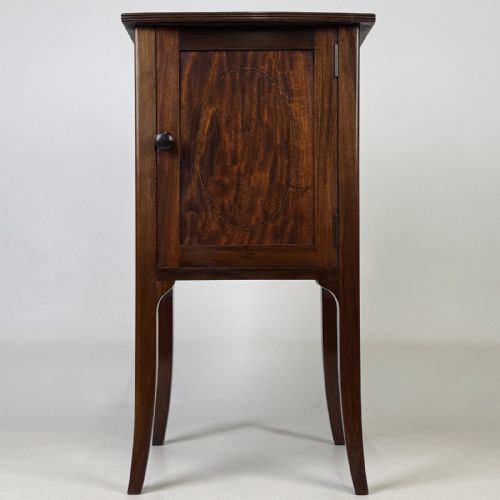
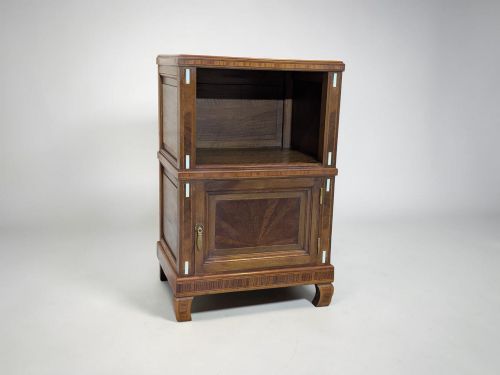
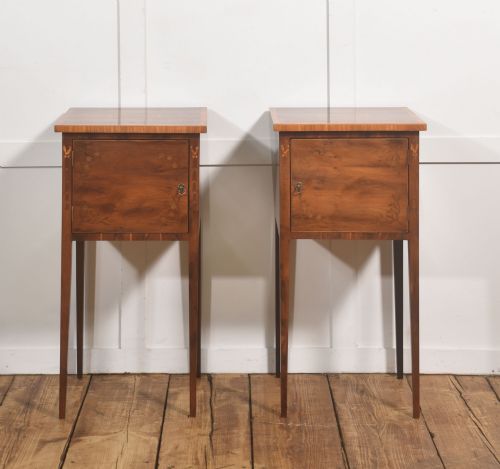
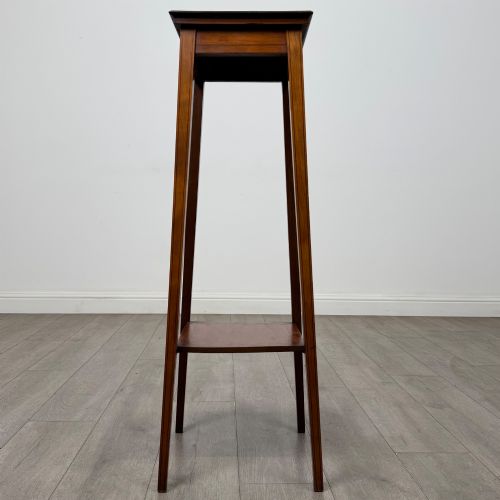
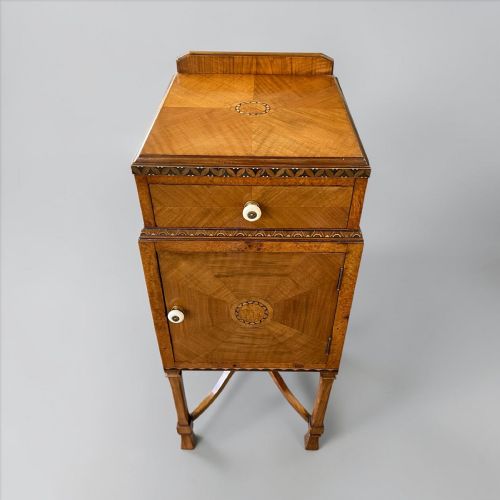
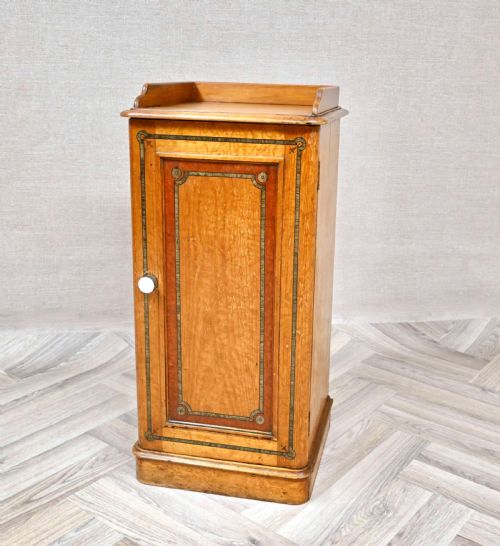
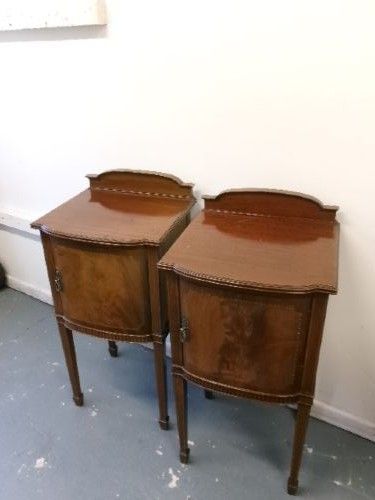
An inlaid wooden pot encompasses practical household vessels and small furniture items designed with contrasting timber decorations. When browsing for an inlaid wooden pot, the most frequent discoveries include Edwardian and Georgian bedside cabinets, plant stands, brush pots, and small storage boxes.
These items originate across the nineteenth and twentieth centuries, spanning Victorian, Edwardian, and Georgian eras. The assortment leans heavily towards bedside cupboards and cabinets constructed from mahogany, satinwood, and walnut, often enhanced with boxwood or satinwood inlay.
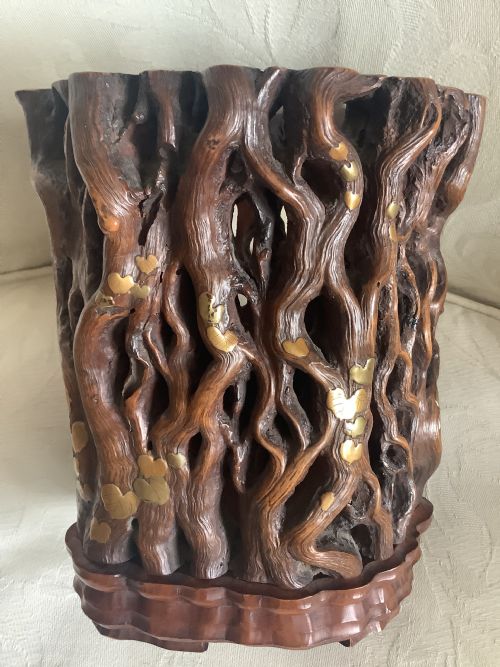
Alongside functional bedroom furniture, the selection includes decorative receptacles such as circular boxes and hardwood brush pots. Each piece combines structural utility with the fine decorative woodwork characteristic of its period.
Materials and Construction
Cabinet makers utilised solid timbers and veneers, predominantly employing mahogany, satinwood, walnut, and pine as foundational bases. These woods provided durable structures suitable for daily household use.
Decorative surface patterns were achieved through marquetry and precise inlay work, frequently incorporating contrasting boxwood or satinwood elements to create geometric or floral motifs.
Inlaid Wooden Pot Retail Price Guide 2026
Typical asking prices for inlaid wooden pot among the pieces listed under this phrase on Sellingantiques today, from the lower quarter to the upper quarter. They describe what is for sale here now, not the wider market.
Listings feature pieces spanning the Georgian, Victorian, Edwardian, and Art Deco periods, constructed from mahogany, satinwood, walnut, and brass.
Assessing Quality
Quality rests upon the precision of the cabinet work and the crispness of the timber inlay. Superior examples display tightly fitted joints and clean, securely seated decorative banding without gaps.
The choice of primary timber and the delicacy of the contrasting veneers dictate the refinement of the piece. Well-preserved polish and original hardware elevate the overall integrity of the construction.
Maple and Co·Gillows
The Inlaid Wooden Pot Glossary
- Inlay
- A decorative technique where small pieces of contrasting wood or other materials are inserted into recessed cavities flush with the surface.
- Marquetry
- An elaborate form of inlay assembling various wood veneers into pictorial or geometric designs across furniture panels.
- Satinwood
- A durable, lustrous timber native to India and Sri Lanka, valued for its pale yellow colouring and fine grain used extensively in decorative cabinet making.
- Brush pot
- A cylindrical vessel traditionally used in studies to hold writing brushes, often carved from dense hardwoods.
- Bedside cabinet
- A small enclosed storage item placed beside a bed, sometimes historically referred to as a pot cupboard.
Inlaid Wooden Pot: Frequently Asked Questions
What is an inlaid wooden pot?
An inlaid wooden pot refers to small decorative vessels, brush pots, or enclosed wooden cupboards adorned with contrasting wood details. These items range from desktop containers to bedroom cabinets.
They combine functional storage with traditional woodworking skills, displaying decorative banding and marquetry across various historical periods.
How were bedside pot cupboards used?
Bedside cupboards originally served a practical purpose in bedrooms before modern plumbing became standard. They provided discreet storage for chamber pots and personal items.
Over time, their function evolved into general bedside tables and lamp stands while retaining their compact proportions and enclosed cabinetry.
Which woods are most common?
Mahogany, satinwood, and walnut appear most frequently across these pieces, supplemented by pine in regional work. Boxwood is frequently employed for contrasting inlay lines.
Craftsmen selected these timbers for their stability, grain patterns, and ability to take a fine polished finish.
How do I identify an Edwardian piece?
Edwardian items typically display lighter timbers such as satinwood and lighter mahogany, often decorated with Sheraton Revival motifs. The construction reflects early twentieth-century manufacturing standards combined with traditional hand-finishing.
Proportions tend to be refined, with delicate inlay work rather than heavy carving.