
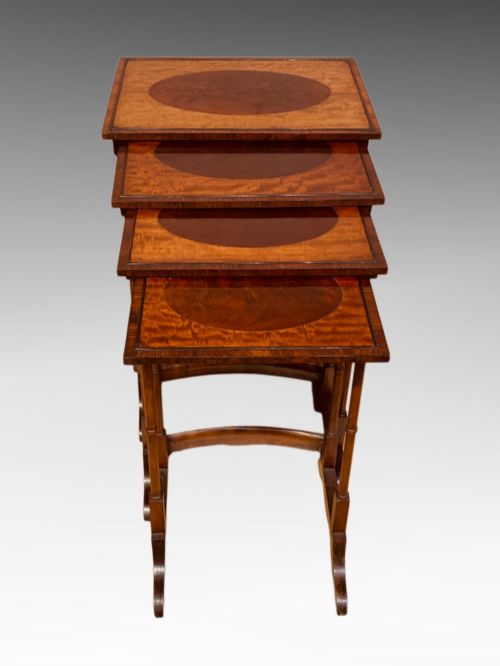


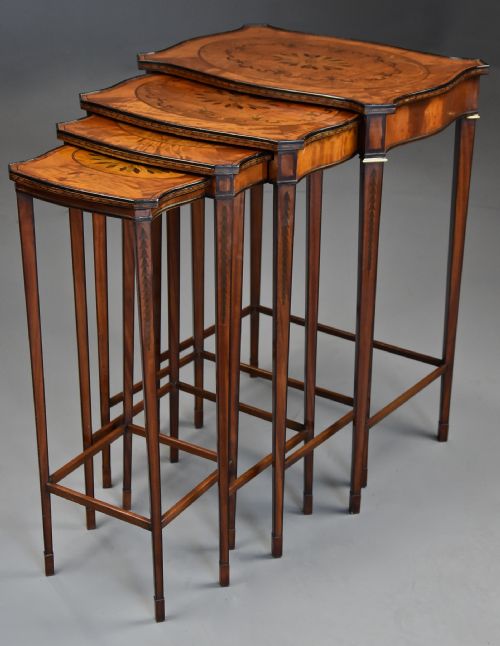


Inlaid Wooden Nest of Tables
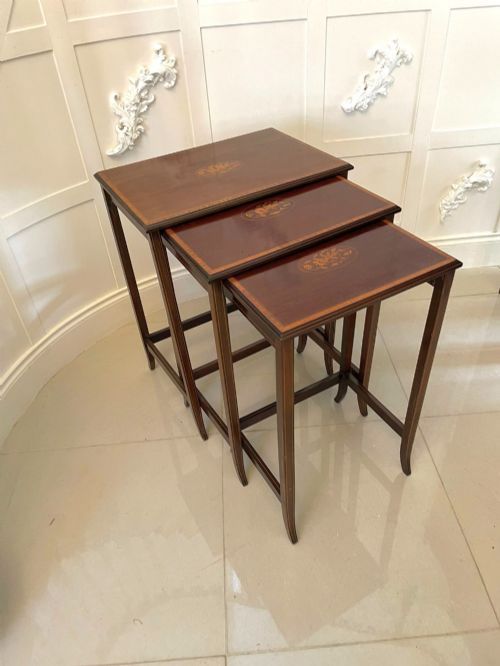
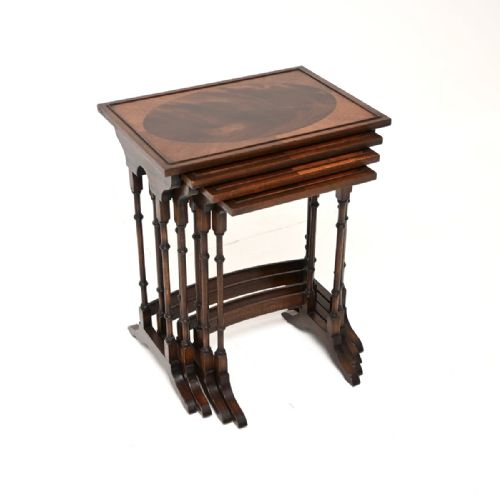
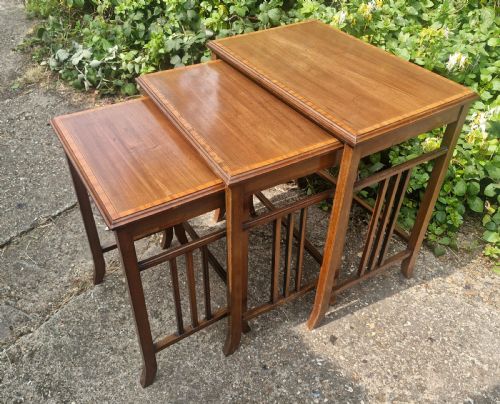
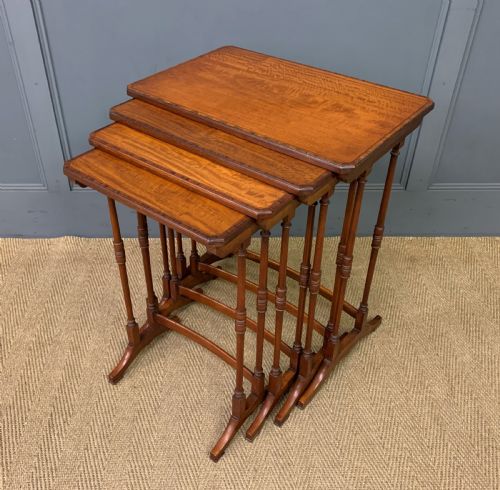
An inlaid wooden nest of tables offers clever stacking utility, bringing period charm and multiple surfaces into compact spaces.
Inlaid Wooden Nest of Tables
When you search for an inlaid wooden nest of tables, you encounter sets of graduated occasional tables designed to slide neatly beneath one another. These pieces emerge predominantly from Edwardian and Victorian workshops, alongside examples spanning the nineteenth and early twentieth centuries.
The most common version met on this page is the Edwardian quartetto nest, usually comprising four mahogany tables with contrasting satinwood or boxwood inlay. Formats vary from classic rectangular shapes to serpentine, kidney and occasional tables.
Origins stretch across standard British periods, including Regency and Georgian style revivals, with occasional regional specialisms such as Victorian Irish Killarney ware. Each configuration prioritises space-saving convenience without sacrificing decorative presence in a room.
How they were made
Cabinet makers utilised solid timbers like mahogany and walnut alongside applied veneers of satinwood, amboyna and yew to achieve contrasting surfaces. Tops frequently incorporate intricate inlay, banding and marquetry details executed in boxwood and other light-toned woods.
Construction relies on traditional joinery techniques suited to lightweight stacking furniture, ensuring each smaller table clears the frame of the one above it. Brass mounts and subtle French style brass stringing appear on select Edwardian iterations.
Some Victorian sets arrive with secret inner tiers that require a specific sequence to unstack without a gentle wobble.
What varies in quality
The distinction between ordinary production and finer execution rests on the crispness of the inlay and the selection of cabinet timbers. Superior examples display tightly fitted marquetry, well-figured veneer panels and harmonious grain matching across the graduated tiers.
Structural stability during frequent stacking and unstacking indicates the standard of original construction. Tables retaining their original polish, balanced proportions and clean timber joints represent the upper tier of the range.
Gillows
The Inlaid Wooden Nest of Tables Glossary
- Quartetto tables
- A set of four graduated occasional tables designed to nest together. This term appears frequently in Edwardian catalogue descriptions.
- Inlay
- A decorative technique where pieces of contrasting wood or other materials are inserted into recessed cavities on the surface. This creates flat patterns and banded borders.
- Marquetry
- Elaborate decorative veneer work assembled to form pictorial or geometric designs. It differs from simple linear inlay by covering larger expanses with composed wooden motifs.
- Veneer
- A thin slice of figured timber applied over a secondary wood base. This method allows cabinet makers to display expensive grains economically.
- Parquetry
- Geometric mosaic woodwork arranged in patterns such as cubes or chequers. It provides durable and decorative tabletops.
Inlaid Wooden Nest of Tables: Frequently Asked Questions
What is a quartetto nest?
A quartetto nest consists of four tables built to slide one inside another.
Cabinet makers designed these sets to occupy minimal floor space when stored.
Where were these tables used?
Owners placed them in drawing rooms and parlours for serving tea or holding small items.
Servants or hosts pulled out individual tiers as guests required extra surfaces.
How do I date a nest?
Stylistic clues such as Edwardian satinwood inlay or Victorian proportions guide the timeline.
Construction methods and timber choices further clarify whether a piece dates to the nineteenth or early twentieth century.
How do I care for inlaid wood?
Keep wooden furniture away from direct sunlight and sudden temperature changes to protect the veneer.
Apply traditional wax polish sparingly to maintain the finish without building up residue.