



Inlaid Wooden Corner Cabinet
An inlaid wooden corner cabinet puts dead space to work while adding rich timber and marquetry to a room.
Inlaid Wooden Corner Cabinet
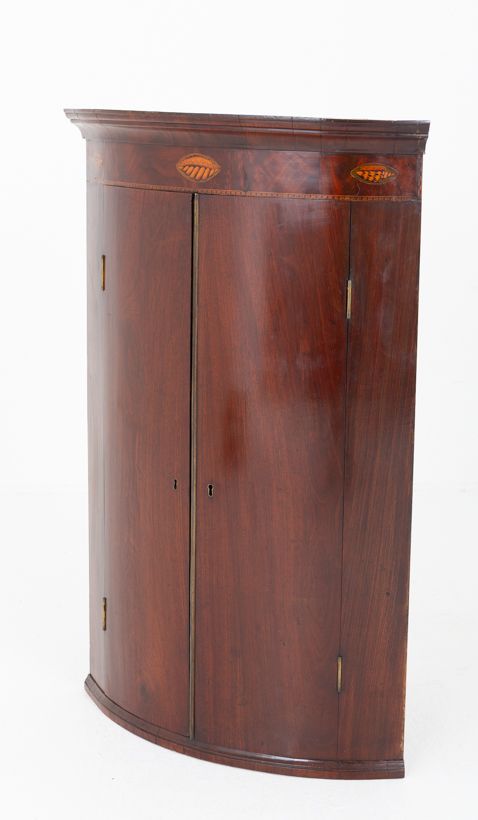
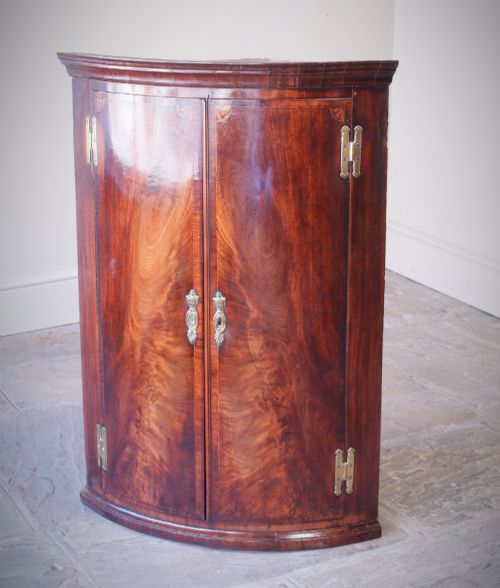
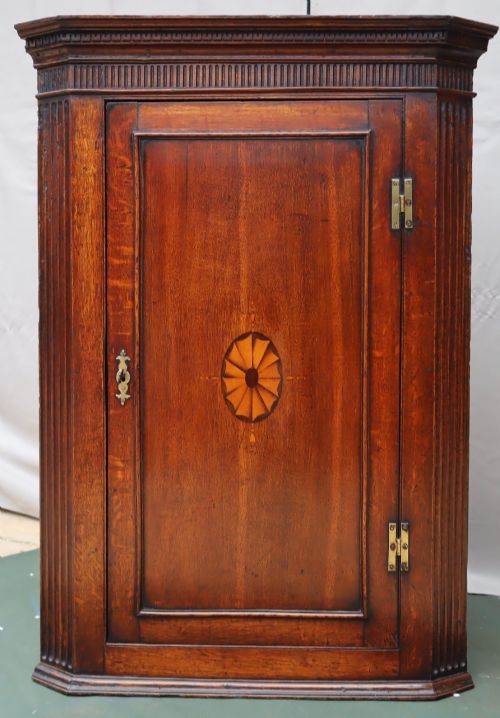
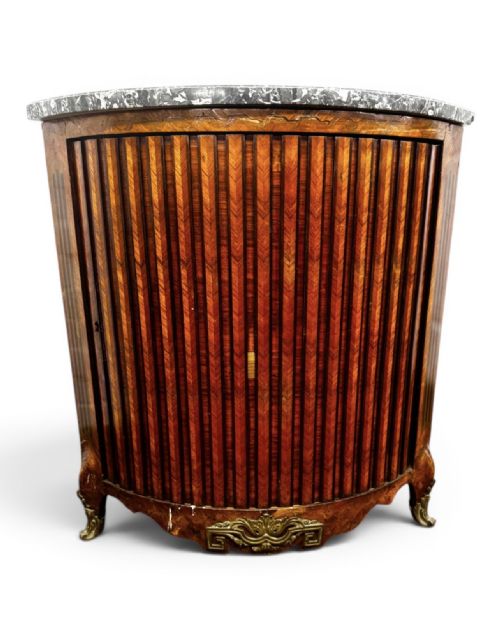
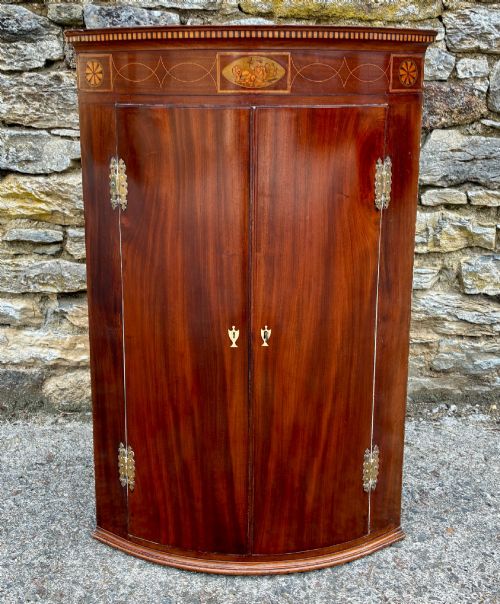
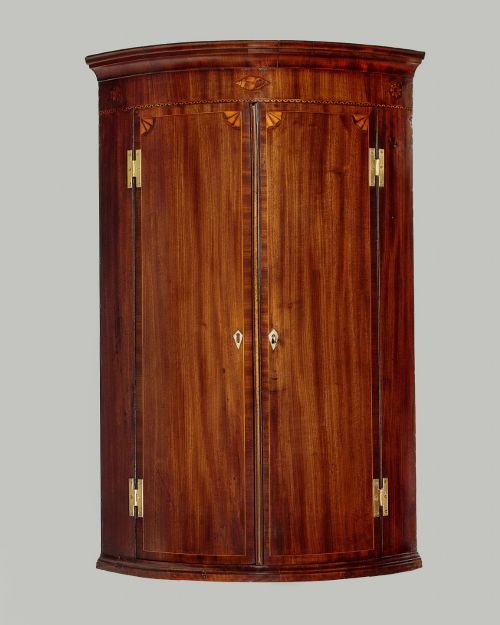
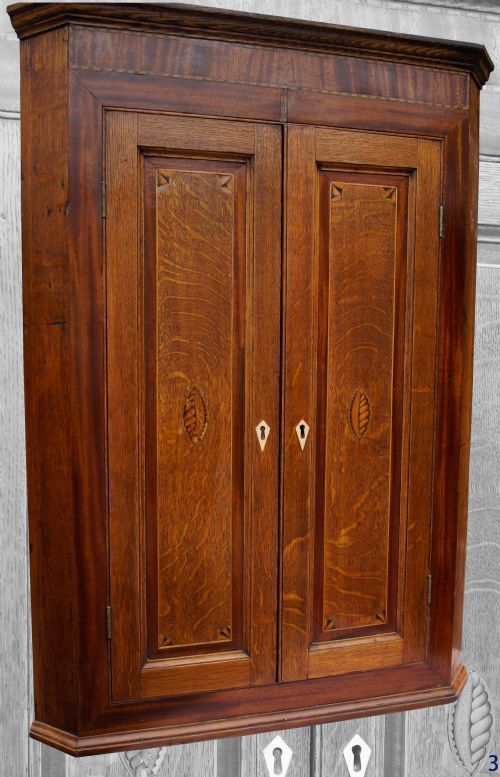
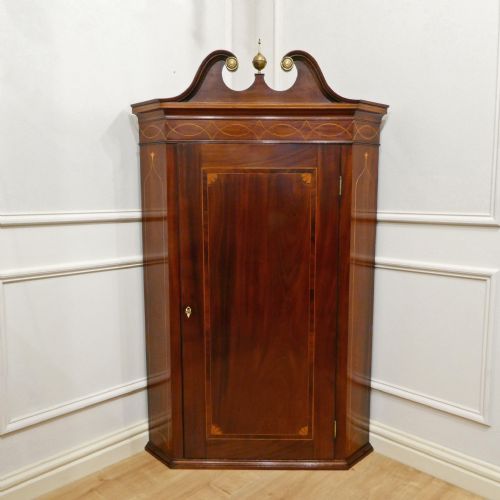
An inlaid wooden corner cabinet makes use of awkward room angles by tucking neatly into a corner while providing display or storage space. These items appear across various historical eras, with Georgian examples forming a significant part of the selection.
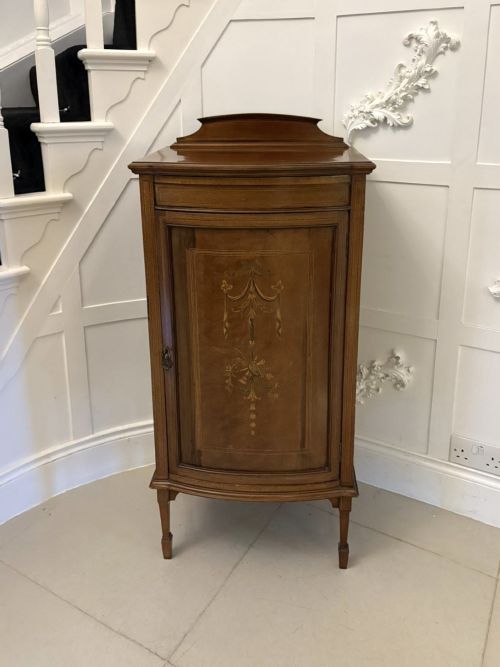
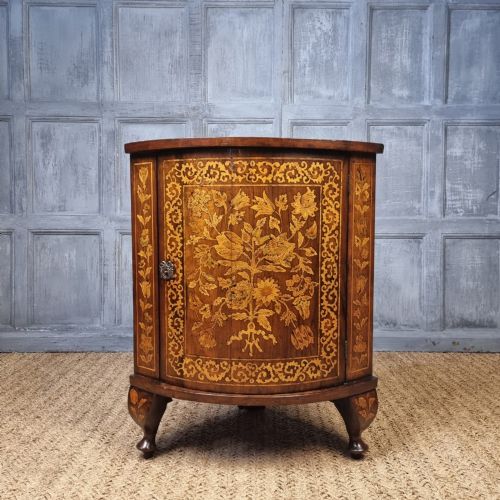
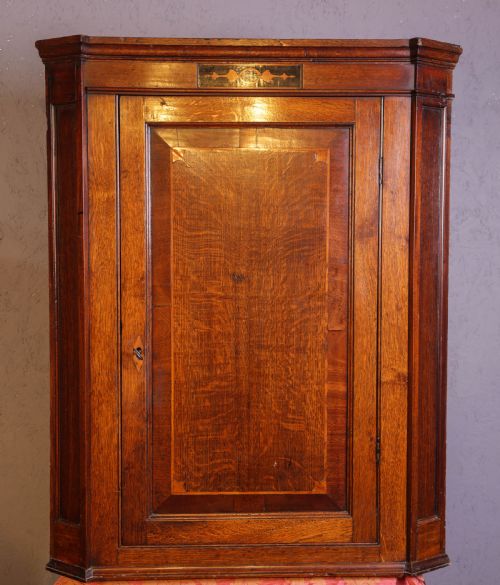
The inventory ranges from hanging cupboards designed to be mounted on walls to floor-standing units. Bow front designs and flat-fronted panels both feature prominently among the surviving specimens.
Origin and styling stretch from domestic Georgian oak and mahogany pieces to continental marquetry works, alongside later revival pieces from the nineteenth century.
How they were made
Cabinet makers utilised primary timbers such as mahogany, oak, walnut and elm for the main structure, applying contrasting woods like boxwood and satinwood for decorative inlay work. Marquetry techniques appear on continental and eighteenth-century examples to create elaborate surface patterns.
Glazing and brass hardware frequently complement the woodwork, particularly on hanging and standing display cabinets from the Georgian and Regency periods.
Inlaid Wooden Corner Cabinet Retail Price Guide 2026
Typical asking prices for inlaid wooden corner cabinet among the pieces listed under this phrase on Sellingantiques today, from the lower quarter to the upper quarter. They describe what is for sale here now, not the wider market.
Materials recorded across the listings include mahogany, oak, walnut, glass, brass, boxwood, satinwood, tulipwood, goncalo alves and king-wood.
What varies in quality
The refinement of the timber selection and the crispness of the boxwood inlay define the upper tier of these cabinets. Finely figured mahogany and intricate marquetry indicate superior craftsmanship compared to plain utility pieces.
Structural proportions and the preservation of original brass fittings or glazing bars also distinguish finer specimens from more standard workshops.
The Inlaid Wooden Corner Cabinet Glossary
- Bow front
- A convex curved front that swells outward from the corners. This shape softens the angular geometry typical of corner furniture.
- Marquetry
- The art of applying pieces of veneer to a structure to form decorative patterns. Craftsmen use various coloured woods to achieve pictorial designs.
- Hanging cabinet
- A wall-mounted storage unit designed to be secured above floor level. These pieces save floor space in smaller rooms.
- Swan neck pediment
- A broken arch top terminating in inward-curving scrolls. This classical architectural feature often crowns grander standing cabinets.
- Sheraton Revival
- A late nineteenth-century style inspired by late eighteenth-century neoclassical designs. It frequently incorporates delicate inlay and light timbers.
Inlaid Wooden Corner Cabinet: Frequently Asked Questions
Where should I place a corner cabinet?
These units fit directly into ninety-degree room junctions to utilise otherwise wasted space.
They work well in dining rooms, hallways or sitting rooms where floor area is at a premium.
How do I distinguish hanging models from standing ones?
Hanging versions feature concealed wall-mounting brackets or strong fixing points on the upper backboards.
Standing models rest directly on the floor, often incorporating a plinth or bracket feet to bear the weight.
What woods were commonly used?
Mahogany and oak form the bulk of the structural timber across British pieces.
Walnut, elm, tulipwood and exotic veneers appear alongside boxwood inlay on decorative examples.
How do I spot a revival piece?
Revival items from the late nineteenth century often show lighter internal construction methods and cleaner, standardised timber ageing.
Stylistic cues like Sheraton Revival details point to nineteenth-century interpretations of older aesthetics.