




Inlaid Wooden Butler Tray
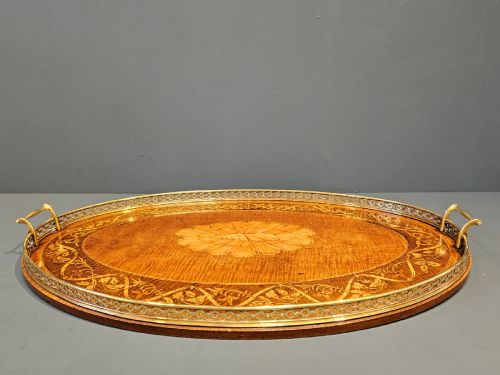
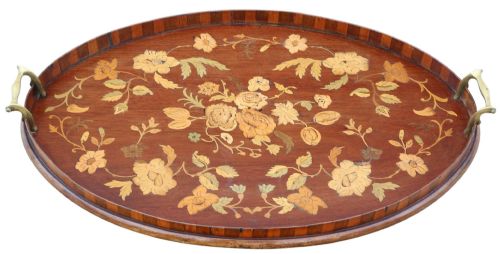
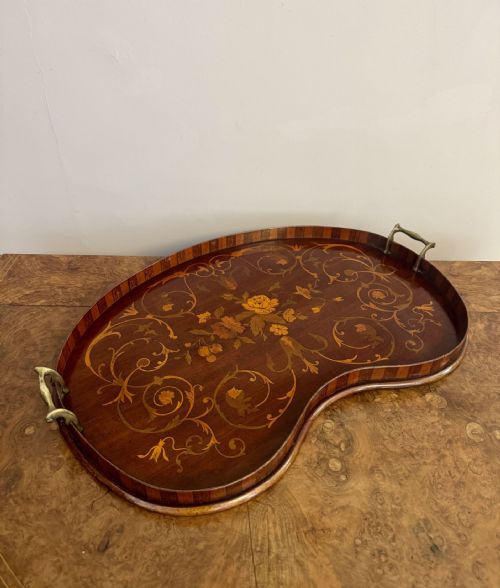
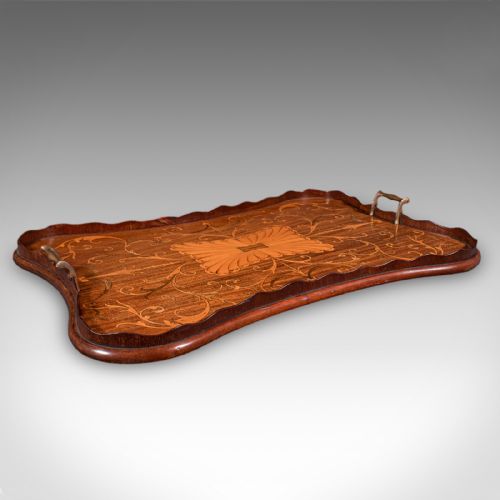
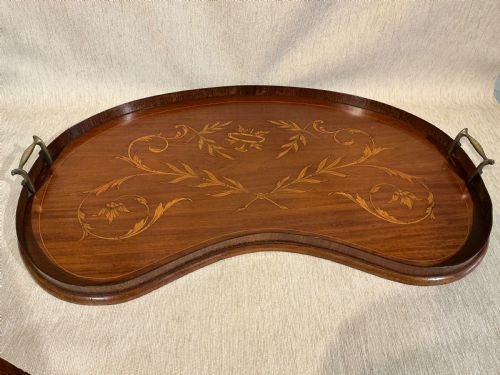
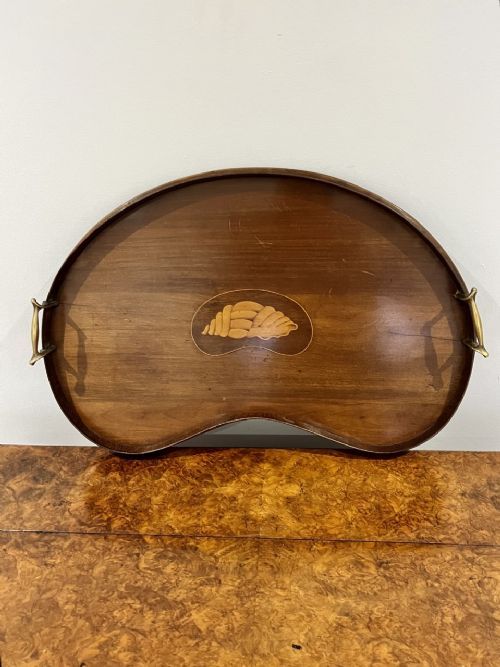
An inlaid wooden butler tray brings domestic service history into a modern room, offering a sturdy mahogany or satinwood surface with intricate marquetry.
Inlaid Wooden Butler Tray
When you search for an inlaid wooden butler tray, you encounter serving pieces and tray tables spanning the Georgian, Victorian, and Edwardian eras. These items served a practical function in wealthier households for carrying tea, silver, or afternoon refreshments.
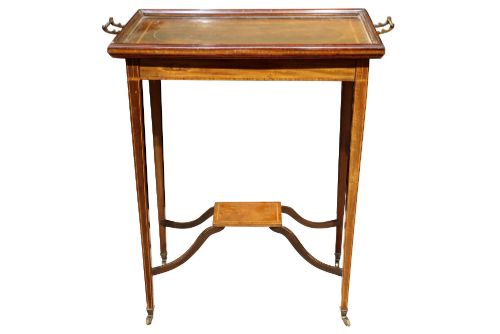
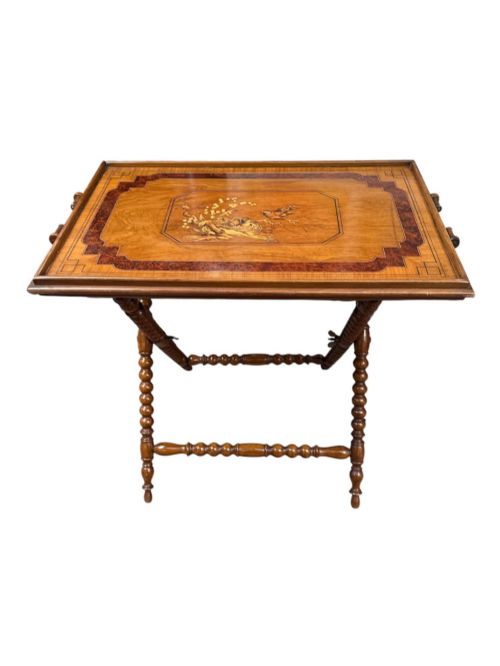
Beyond traditional serving, several listings demonstrate how these trays function as occasional or side tables when mounted on folding stands. The form bridges portable serviceware and stationary furniture.
How they were made
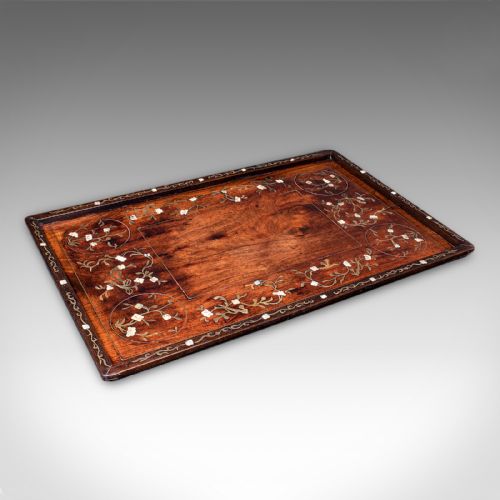
Cabinetmakers utilised dense timbers like mahogany, teak, and walnut as the primary structural body for these trays. Contrasting lighter woods such as satinwood and burr yew provided the palette for decorative motifs.
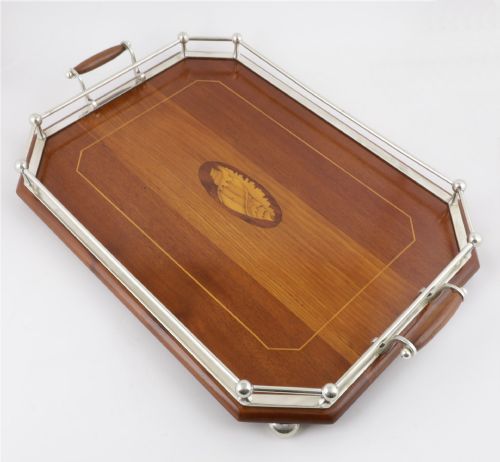
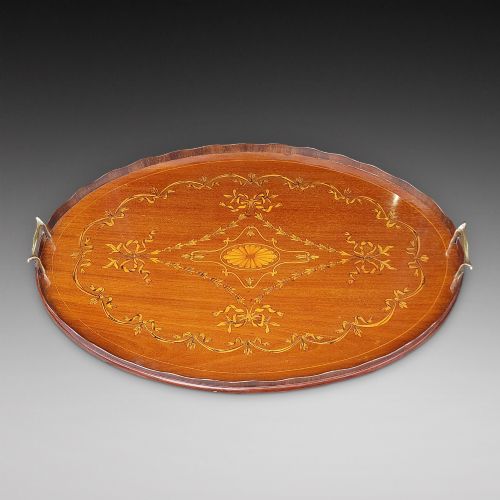
Marquetry inlay techniques involved cutting precise geometric or floral patterns into the wood veneer before pressing them flush into the surface. Brass fixtures, handles, and gallery rails were then fitted to complete the piece.
Listings feature mahogany, satinwood, and walnut woods across Victorian, Edwardian, and Georgian periods.
What varies in quality
The precision of the marquetry and the crispness of the inlay distinguish standard production from exceptional examples. Finer pieces demonstrate seamless integration of contrasting timbers without gaps along the veneer joints.
The choice of secondary woods and the robustness of the handles or gallery rails indicate the original workshop's standard. Substantial mahogany bases combined with elaborate satinwood banding command attention for their durability and visual depth.
Edwards and Roberts
The Inlaid Wooden Butler Tray Glossary
- Marquetry
- The art of applying pieces of veneer to a structure to form decorative patterns. Craftsmen cut various coloured woods to create pictorial designs on the tray surface.
- Satinwood
- A durable, lustrous timber native to India and Sri Lanka, prized for its golden yellow colour. It is frequently employed for contrasting inlay work.
- Gallery
- A raised rim or rail surrounding the edge of a tray, often pierced in brass or carved from solid wood to prevent items from sliding off.
- Kidney-shaped
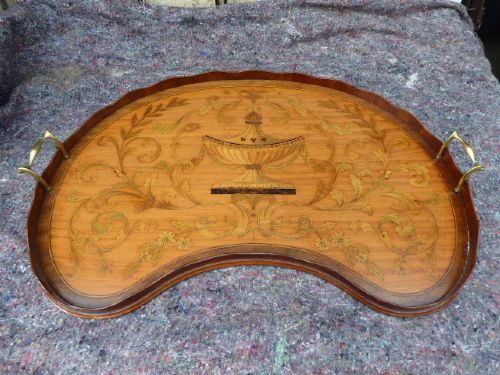
- A curved, indented outline characteristic of refined serving trays from the Edwardian period. This contour allowed the user to hold the tray closer to the body during service.
Inlaid Wooden Butler Tray: Frequently Asked Questions
How were butler trays originally used?
These trays functioned primarily for transporting tea services, decanters, and silver from kitchens to drawing rooms in large residences.
Servants used them to clear courses or present afternoon refreshments, often placing the tray onto a folding wooden stand for stability.
Are these trays suitable for daily use?
Most antique pieces handle normal domestic tasks well, though antique surfaces benefit from protective coasters and gentle cleaning.
Pieces mounted on stands function effectively as permanent side tables in living spaces or hallways.
How do I identify an Edwardian tray?
Edwardian examples frequently display lighter satinwood inlays, kidney contours, and refined neoclassical revival motifs dating around nineteen hundred.
They tend to feel lighter in construction compared to earlier heavy Victorian or Georgian serving platters.
What is the difference between a tray and a tray table?
A standard tray remains portable with integrated or attached handles designed purely for carrying goods from room to room.
A tray table includes a designated folding or fixed wooden stand that transforms the portable surface into an occasional piece of furniture.