



Inlaid Wood Wall Cabinet
An inlaid wood wall cabinet brings warmth and practical storage to small rooms, using decorative banding and timber grain to catch the eye.
Inlaid Wood Wall Cabinet
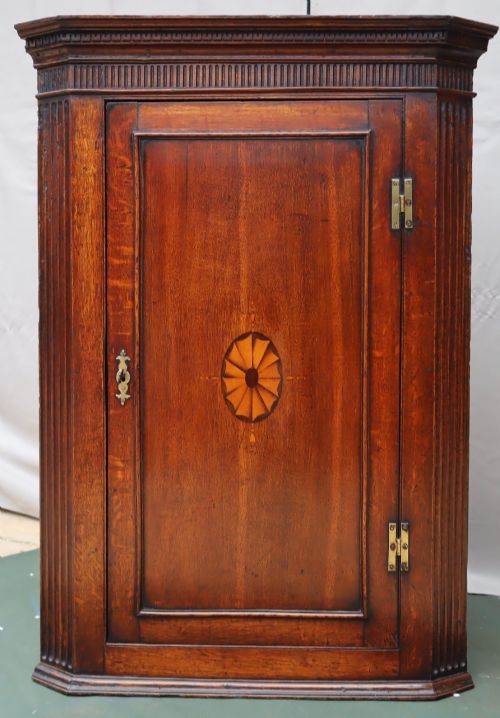
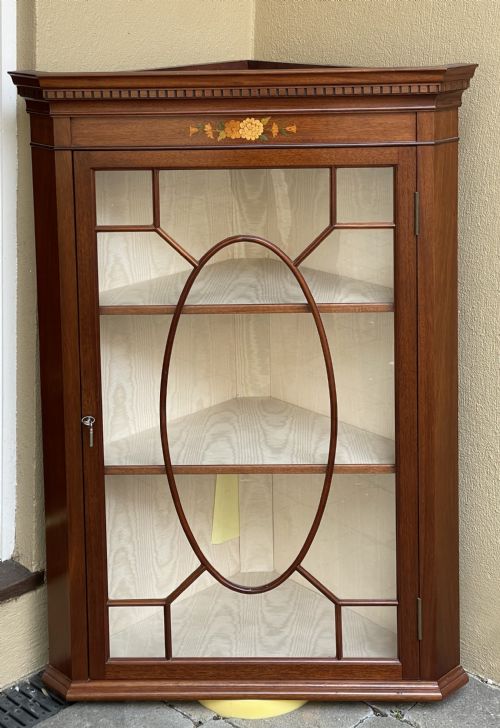
When searching for an inlaid wood wall cabinet, you will primarily encounter corner cupboards and hanging display units designed to utilise wasted wall space in period interiors. The selection spans robust oak pieces from the eighteenth century to refined rosewood and mahogany examples created during the Edwardian era and Victorian periods.
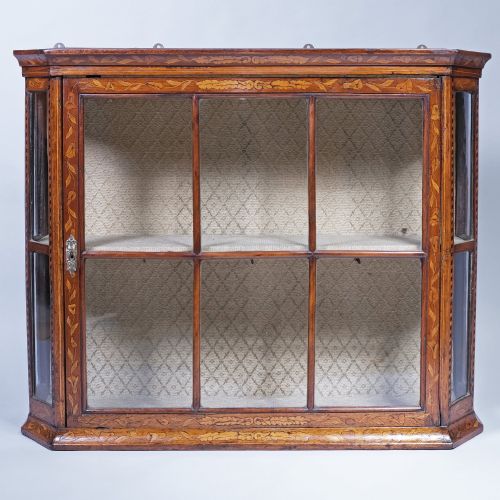
Most pieces take the form of corner cabinets featuring single doors, frequently with bow fronts that soften the angles of a room. You will also find flat wall-hanging cabinets and shelves integrating glass panels or intricate boxwood and satinwood inlay.
Origins range widely across the eighteenth and nineteenth centuries, alongside revival pieces from the twentieth century. The prevailing format remains the hanging corner cupboard, constructed to mount securely at eye level or above other furniture.
How they were made
Cabinet makers utilised dense primary hardwoods like mahogany, oak, walnut, and rosewood for the structural carcase and doors. These surfaces were frequently enhanced through crossbanding and contrasting stringing lines executed in lighter timbers such as boxwood and satinwood.
Internal joinery relied on traditional pegged and dovetailed joints, while brass hinges and escutcheons secured the doors and added functional detail. Glazed doors incorporated timber glazing bars to segment the glass panes safely within the frame.
Inlaid Wood Wall Cabinet Retail Price Guide 2026
Typical asking prices for inlaid wood wall cabinet among the pieces listed under this phrase on Sellingantiques today, from the lower quarter to the upper quarter. They describe what is for sale here now, not the wider market.
Some corner cupboards hide tiny secret drawers inside behind the main shelves, perfect for keeping small treasures out of sight.
What varies in quality
Quality rests upon the selection of timber veneers and the precision of the inlay work embedded into the carcase. Sharp, tight junctions in the crossbanding and well-figured mahogany or rosewood distinguish finer workshops from simpler regional production.
The sophistication of the internal shelving, original brass hardware, and the structural integrity of the hanging fixings also define the tier of the piece. Cabinets featuring secondary timbers like oak paired with clean exterior cabinetwork represent the higher end of surviving examples.
The Inlaid Wood Wall Cabinet Glossary
- Crossbanding
- A narrow strip of veneer laid perpendicular to the surrounding grain, forming a decorative border around a cabinet door or panel. This technique frames the primary timber and demonstrates careful cabinet making.
- Bow front
- A convexly curved cabinet front that projects outward from the corners. This shape softens the profile of wall furniture, particularly in corner installations.
- Stringing
- Thin lines of contrasting timber inlaid into shallow channels on the surface of furniture. It is often seen in geometric or linear patterns on Edwardian and Georgian pieces.
- Satinwood
- A pale, lustrous timber native to the tropics, utilised for contrasting inlay and stringing on darker woods. Its reflective quality made it popular for decorative highlights.
- Carcase
- The foundational body or frame of a cabinet before doors, shelves, and hardware are fitted. Understanding the carcase construction reveals the primary and secondary woods used by the maker.
Inlaid Wood Wall Cabinet: Frequently Asked Questions
Can I place these cabinets in a modern room?
An inlaid wood cabinet introduces natural texture and historical character to contemporary interior spaces. Their compact wall-hanging formats make them particularly useful for adding focal points without consuming floor space.
Pairing a dark mahogany or rosewood cabinet against neutral modern walls highlights the grain and delicate satinwood inlay work.
How do I tell an eighteenth-century cabinet from a later revival piece?
Examine the secondary timbers visible on the interior and backboards, as eighteenth-century pieces typically utilise native woods like oak or elm with hand-sawn markings. Construction methods such as irregular dovetails and hand-forged iron or brass fixings also point to earlier periods.
Revival pieces from the twentieth century often display more uniform machine-cut joints and modern backing materials, even when styled in the Georgian manner.
What is the difference between a corner cupboard and a wall cabinet?
A corner cupboard is specifically engineered with an angled back to fit snugly into the ninety-degree junction of two walls. Standard wall cabinets feature a flat back designed for placement on a single flat wall surface.
Both types serve similar storage roles, but corner units are especially effective for utilising awkward room intersections.