




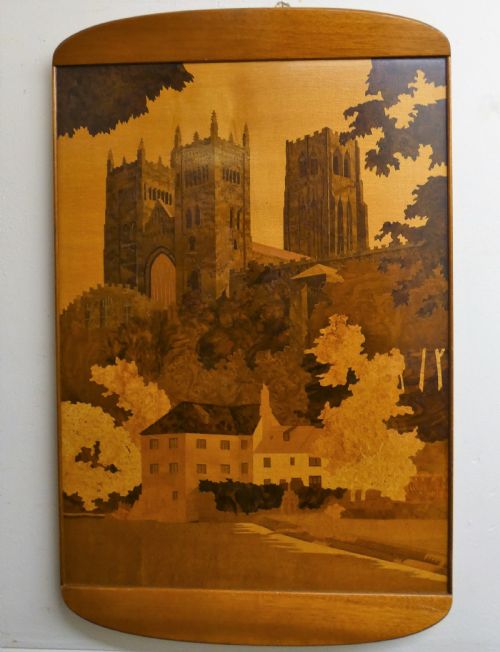
Inlaid Wood Wall Art
Inlaid wood wall art brings together intricate timber mosaic and marquetry to transform plain interiors with texture and history.
Inlaid Wood Wall Art
These pieces encompass framed marquetry panels, architectural dioramas, and decorative wall plaques created across several centuries. When exploring inlaid wood wall art, you encounter diverse forms ranging from Victorian Tunbridge ware to Anglo-Indian marquetry panels and Arts and Crafts mirrors.
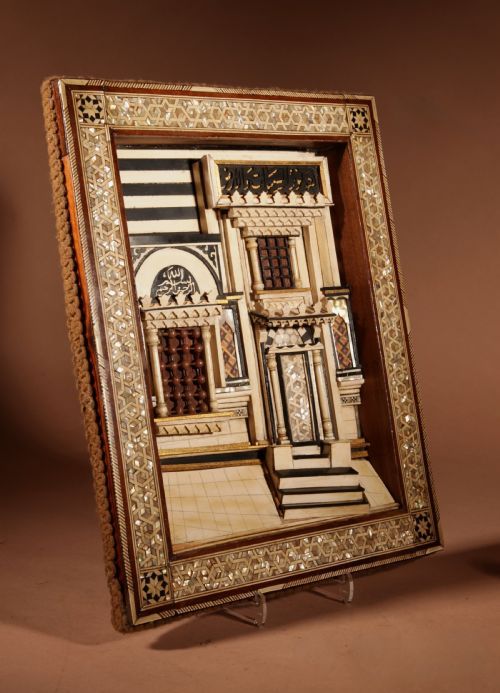
The selection reflects global traditions, including Afghani bone-inlaid pieces, Moorish relief dioramas, and detailed British specimen wood pictures. Most examples lean towards decorative wall panels and mirrors constructed during the nineteenth and early twentieth centuries.
Materials and construction
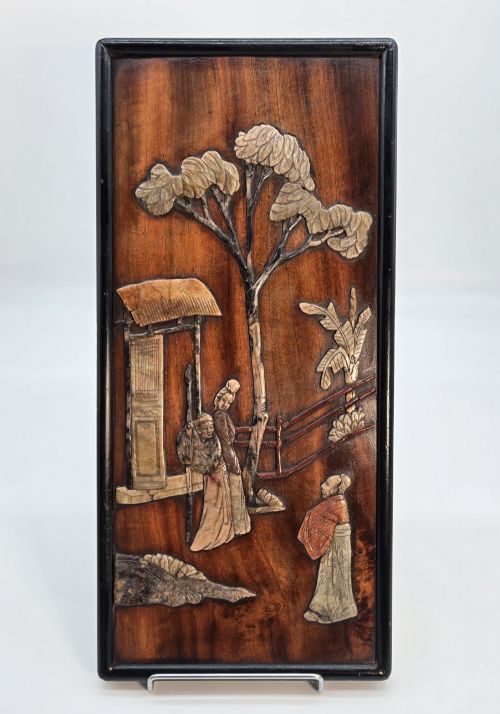
Maker workshops utilised a foundation of walnut, oak, mahogany, or beech, overlaid with contrasting veneers such as satinwood, rosewood, and teak. In certain regional traditions, bone and brass accents were embedded directly into the timber ground.
Techniques relied on precise micro-mosaic assembly, such as Tunbridge ware pixel work, alongside traditional marquetry cutting where individual wood grains were contrasted to form pictorial depth and geometric patterns.
Inlaid Wood Wall Art Retail Price Guide 2026
Typical asking prices for inlaid wood wall art among the pieces listed under this phrase on Sellingantiques today, from the lower quarter to the upper quarter. They describe what is for sale here now, not the wider market.
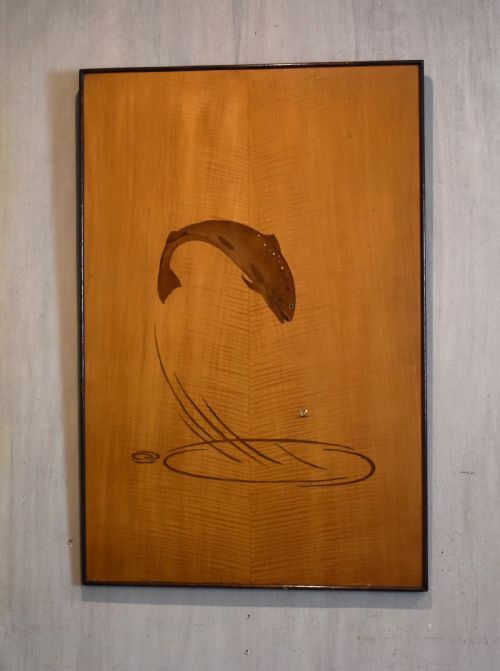
Several panels depict woodland creatures and leaping fish, proving that early artisans enjoyed bringing local wildlife indoors through timber.
Judging the work
Superior execution relies on the precision of the veneer fit and the natural colour graduation of the timber species. Pieces with tight joints and minimal filler show greater workshop skill.
The complexity of the pictorial composition distinguishes standard plaques from exceptional masterworks. Strong contrast in grain direction and careful selection of varied woods elevate the visual impact of a panel.
Rowley Gallery·A.J Rowley
The Inlaid Wood Wall Art Glossary
- Marquetry
- The art and craft of applying pieces of veneer to a structure to form decorative patterns and pictures. It differs from inlay by covering the entire surface rather than being set into recesses.
- Tunbridge Ware
- A distinct type of British wood mosaic originating in Kent, characterised by tiny geometrically arranged wooden blocks. It creates detailed pictorial plaques and picture frames.
- Specimen Wood
- Furniture and decorative items constructed from a wide variety of native and exotic timbers. Each block retains its natural colour to display the diverse hues of the woods.
- Diorama
- A three-dimensional architectural or scenic model enclosed within a frame. In wall art, these often depict building facades or historical scenes with relief depth.
Inlaid Wood Wall Art: Frequently Asked Questions
How do I hang heavy wood panels safely?
Heavy inlaid panels require robust wall fixings anchored directly into studwork or masonry rather than standard plasterboard hooks. Ensure the weight is distributed evenly across the primary wooden frame.
Check that the hanging wire or integrated brackets on the reverse are securely fastened to the structure of the piece before mounting.
Where should I display these pieces?
Position your wall art away from direct sunlight and sudden temperature fluctuations to protect delicate veneers and natural glues. Stable indoor environments prevent the wood from warping or cracking over time.
Select a wall space at eye level where the fine details of the marquetry or mosaic work can be appreciated closely.
How do I clean inlaid wooden surfaces?
Dust the surface gently with a soft, dry microfibre cloth to remove particles without scratching the polished timber. Avoid using wet cloths, harsh chemical polishes, or abrasive cleaners.
An occasional application of specialist neutral wax can help nourish older wooden surfaces and maintain a gentle sheen.
How do I distinguish regional styles?
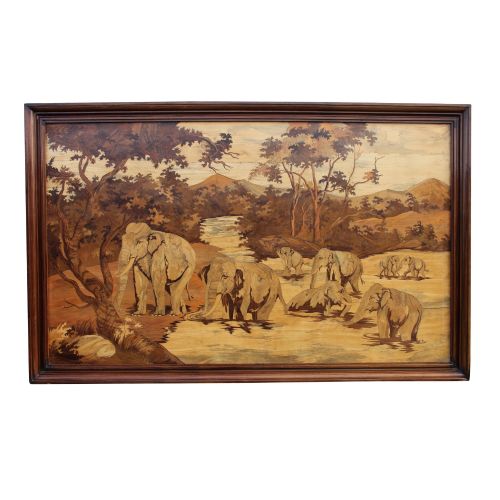
Examine the choice of timber and the specific geometric or pictorial motifs used in the composition. British Tunbridge ware relies on tiny multi-coloured mosaic blocks, whereas Indian pieces often incorporate dense elephant or floral marquetry.
Moorish and Afghani examples frequently feature distinct architectural relief work and bone inlay patterns unique to their respective workshops.