

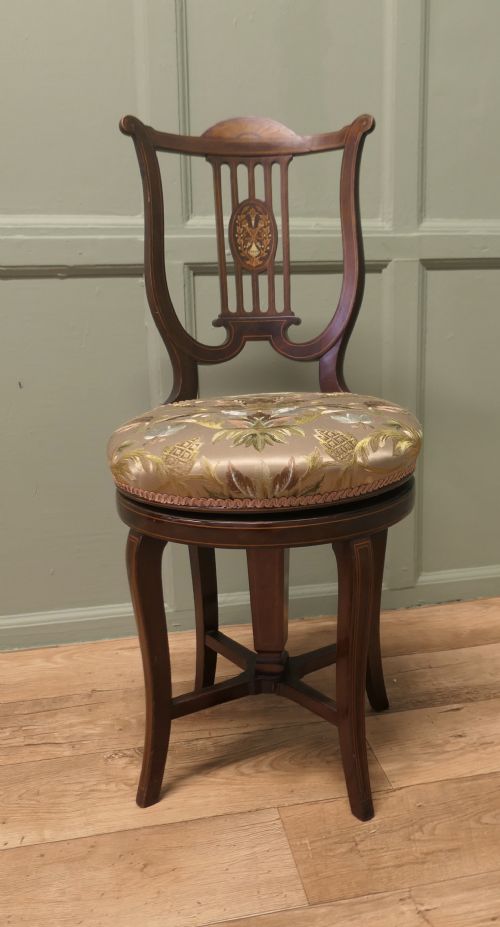


Inlaid Wood Stool
An inlaid wood stool brings warmth and character to a room, offering a functional seat with intricate surface detail.
Inlaid Wood Stool
An inlaid wood stool combines traditional seating with decorative surface work, spanning Victorian, Edwardian and early twentieth-century periods. These pieces include piano stools, music chairs and occasional seating adorned with contrasting timber and botanical motifs.
The selection on this page ranges from British revival designs like Sheraton Revival piano stools to imported Anglo-Indian and Syrian occasional items. Buyers encounter diverse forms, from rise-and-fall music seats to small tables that function as low perches.
Origin and maker influence the character of each piece, drawing on Victorian Arts & Crafts ideals, African tribal traditions and Eastern geometric craft. Mahogany and rosewood form the structural foundation for much of the British domestic furniture.
Craftsmanship and Materials
Cabinetmakers utilised dense hardwoods such as mahogany and rosewood to build stable frames capable of supporting mechanical piano stool movements and carved supports. Boxwood inlay and bone provided sharp contrast against darker timbers through precise recessing techniques.
Artisans in Syrian and Hoshiapur workshops employed intricate surface work, embedding mother-of-pearl and bone directly into the timber base. Surface finishes relied on natural oils and polishes to protect the wood while accentuating the grain and decorative patterns.
Inlaid Wood Stool Retail Price Guide 2026
Typical asking prices for inlaid wood stool among the pieces listed under this phrase on Sellingantiques today, from the lower quarter to the upper quarter. They describe what is for sale here now, not the wider market.
Some music chairs allowed harpists to adjust their posture effortlessly while navigating intricate compositions.
Factors That Determine Quality
The precision of the inlay work defines the upper tier of pieces, where individual pieces of boxwood or bone fit flush into the surrounding timber without gaps or heavy filler. Superior examples maintain crisp edges along geometric patterns and botanical motifs.
Mechanical integrity distinguishes utilitarian seats, particularly rise-and-fall piano stools and revolving chairs where the internal wooden or brass screw mechanism must operate smoothly. The structural stability of the joints and the quality of the primary hardwood determine longevity.
The Inlaid Wood Stool Glossary
- Boxwood inlay
- A pale timber inserted into recesses of darker wood to create contrasting lines and geometric patterns. It appears frequently in Sheraton Revival furniture.
- Rise and fall
- A mechanical adjustment system operated by rotating the seat top to alter its height. This mechanism is common in Victorian piano stools.
- Rosewood
- A heavy, dense tropical timber featuring dark grain patterns and a rich reddish-brown colour. Cabinetmakers favoured it for formal Victorian seating.
- Hongmu
- A category of dense Chinese hardwood used for traditional carved furniture. It translates to red wood and provides a durable dark frame for mother-of-pearl inlay.
- Sheraton Revival
- A late nineteenth and early twentieth-century design style inspired by eighteenth-century neoclassical furniture. It favours slender legs and delicate inlay.
Inlaid Wood Stool: Frequently Asked Questions
How do I date an inlaid wood stool?
Dating relies on timber selection, joinery methods and stylistic clues linking the piece to Victorian, Edwardian or later periods. Mechanical hardware, such as iron screws or brass fittings, provides further chronological evidence.
Secondary woods used inside the frame often reveal regional manufacturing origins that help narrow down the decade of production.
Were piano stools used only for music?
While designed specifically for keyboard players needing adjustable height or swivel movement, these seats frequently served as general parlour seating. Their compact dimensions made them versatile for small rooms.
Many examples feature under-seat compartments originally intended for sheet music storage.
How should I care for antique inlaid wood?
Maintain a stable indoor environment away from direct sunlight and heat sources to prevent the timber from drying out and shrinking. This protects the delicate bond between the inlay and the base wood.
Apply a microcrystalline wax periodically to clean the surface and preserve the natural lustre of the polish.
What is the difference between British and imported inlaid stools?
British pieces typically follow European furniture styles like Sheraton Revival using mahogany or rosewood with boxwood stringing. Imported examples from regions such as Syria or Hoshiapur utilise dense overall surface carving alongside bone or mother-of-pearl.
Construction techniques also vary, reflecting regional woodworking traditions and local timber availability.