



Inlaid Wood Secretaire
An inlaid wood secretaire brings together fitted writing compartments and display storage in timber cabinetwork.
Inlaid Wood Secretaire
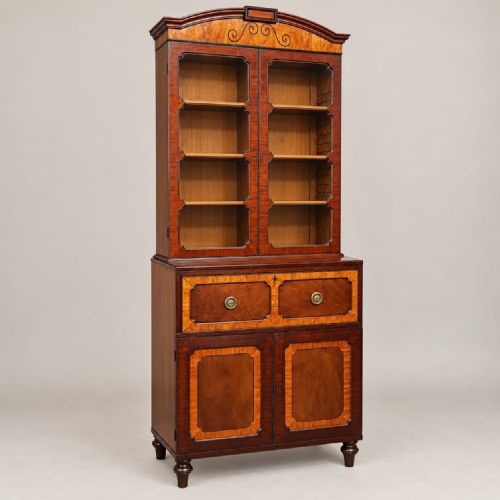
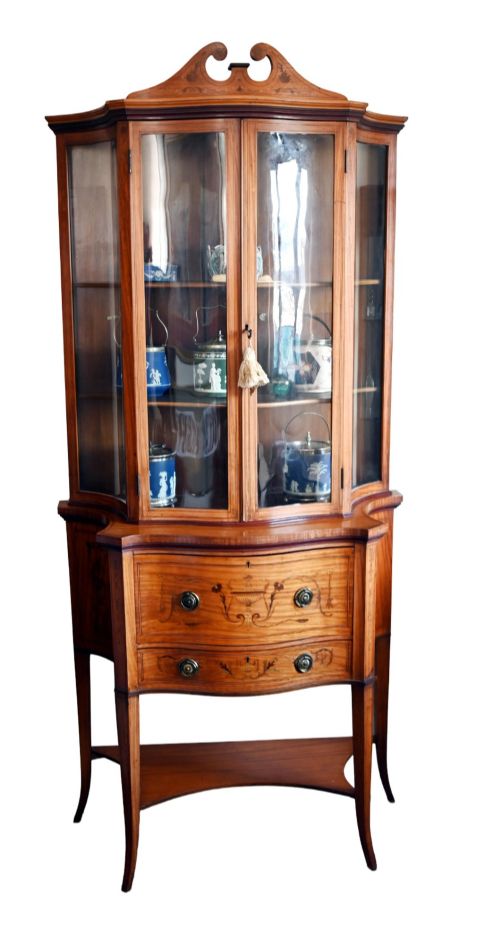
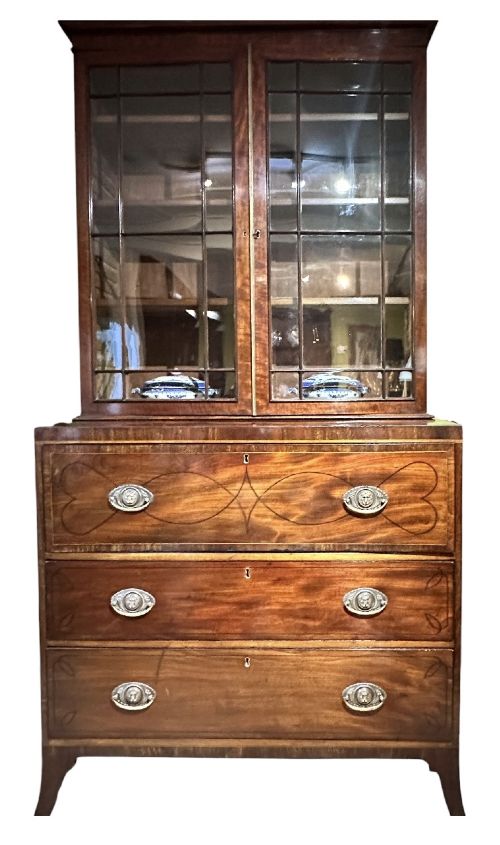
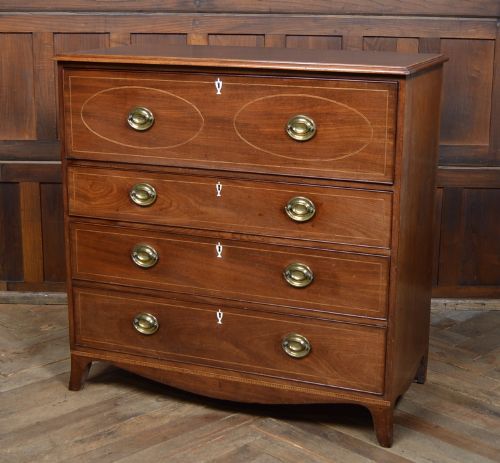
An inlaid wood secretaire combines a writing surface with concealed drawers and pigeonholes behind a drop-front panel or drawer, often surmounted by a bookcase or display cabinet. The pieces available range from large Georgian and Regency bookcase forms in mahogany and rosewood to smaller chests and cabinets influenced by Sheraton and French revival styles.
Most examples meet on this page as mahogany secretaire bookcases or compact writing chests featuring contrasting satinwood, brass, or bone inlay. The selection includes tall library pieces alongside smaller chiffoniers, escritoires, and tambour-fronted writing cabinets spanning the eighteenth century to the early twentieth century.
Buyers encounter regional variations such as Scottish yew desks alongside standard English mahogany and rosewood constructions. The primary function remains the dual purpose of a formal bookcase or cabinet with a dedicated, drop-down writing space.
What varies in quality
The sophistication of the timber figure and the precision of the contrasting inlay separate standard production from finer cabinetwork. Finer pieces display carefully matched veneers on the fall-front or drawer fronts, alongside well-proportioned interior compartments executed in high-grade satinwood.
Structural integrity of the drop-front hinges and the complexity of the interior drawer layout indicate the maker's skill. The quality of the secondary timbers used inside the carcass and the crispness of the brass or wood inlay further distinguish the better examples.
Inlaid Wood Secretaire Retail Price Guide 2026
Typical asking prices for inlaid wood secretaire among the pieces listed under this phrase on Sellingantiques today, from the lower quarter to the upper quarter. They describe what is for sale here now, not the wider market.
Listings feature mahogany, rosewood, and satinwood alongside brass and bone inlay across Georgian, Regency, and Edwardian periods.
The Inlaid Wood Secretaire Glossary
- Secretaire
- A piece of furniture containing a built-in writing drawer or drop-front desk compartment. This feature allows a chest or bookcase to function as a writing desk when opened.
- Escritoire
- A term for a writing cabinet, often used interchangeably with secretaire in French and English pieces. These usually feature a fall-front writing surface.
- Inlay
- A decorative technique where pieces of contrasting wood, bone, or metal are inserted into recessed cavities in the timber surface. This creates flat patterns and decorative borders.
- Satinwood
- A durable, yellowish timber native to Ceylon and India, prized for its lustrous grain. Cabinetmakers utilised it extensively for contrasting banding and inlay work.
- Tambour
- A flexible shutter formed of narrow strips of wood glued to canvas or leather backing. It slides along a groove to enclose the writing surface or small compartments.
Inlaid Wood Secretaire: Frequently Asked Questions
What is a secretaire bookcase?
A secretaire bookcase combines upper shelving for books with a lower section containing a pull-out or drop-front desk drawer. The fitted interior includes small drawers and pigeonholes for correspondence.
This form allowed libraries and parlours to house books and writing materials within a single tall cabinet.
How do I use a secretaire desk?
The drop-front or fall-front panel lowers to form a horizontal writing surface supported by brackets or arms. Inside, you find compartments for paper and hidden drawers for valuables.
When writing is finished, the panel lifts and locks shut to conceal the papers and maintain a tidy cabinet front.
How do I identify a Regency secretaire?
Regency pieces often display darker timbers such as rosewood or figured mahogany, frequently accented with brass inlay or brass stringing. The proportions tend to be clean and classical, reflecting early nineteenth-century design.
Look for architectural cornices, brass lion-mask handles, and sabre or bracket feet characteristic of the period.