



Inlaid Wood Lamps
These inlaid wood lamps and lamp tables bring warmth and surface interest to a room through traditional cabinetmaking.
Inlaid Wood Lamps
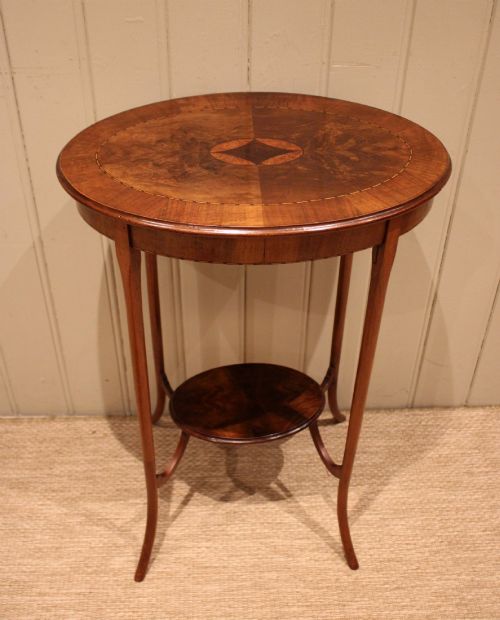
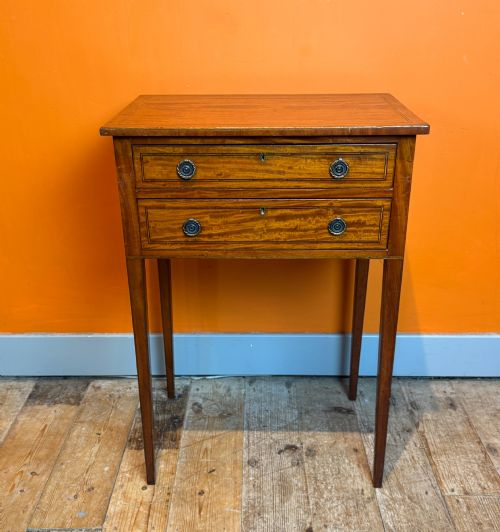
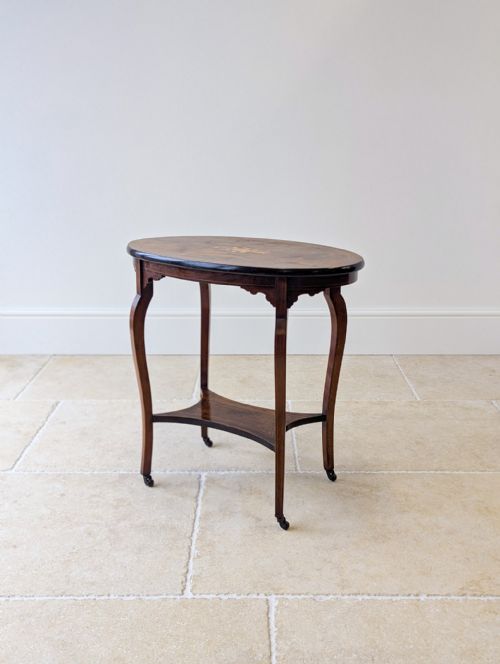
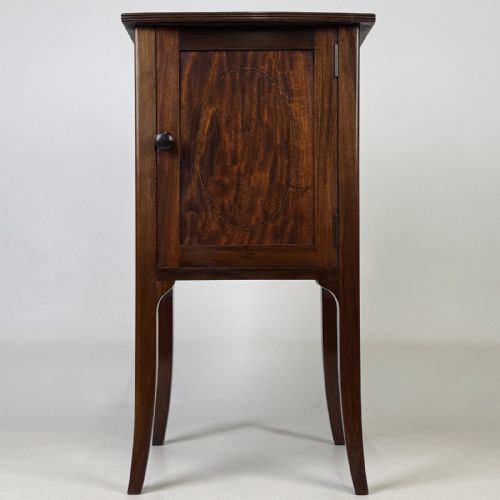
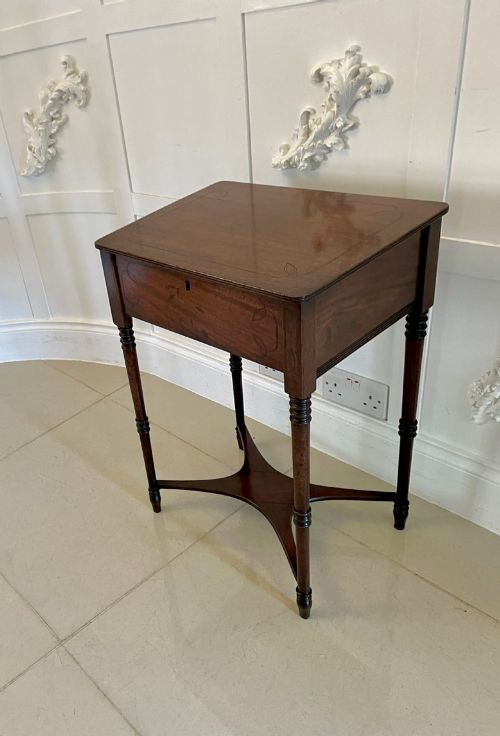
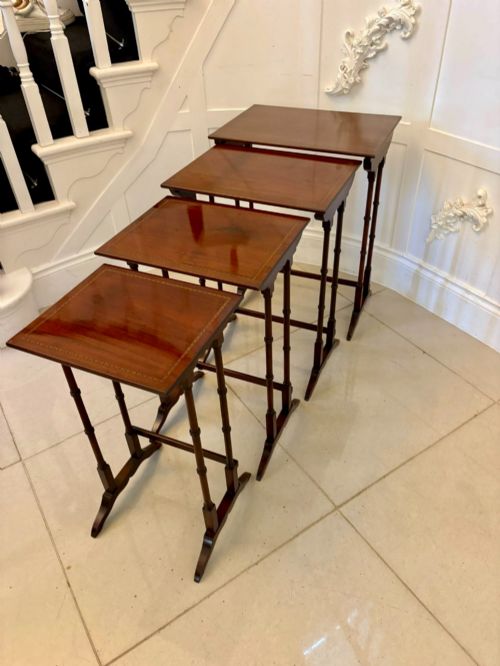
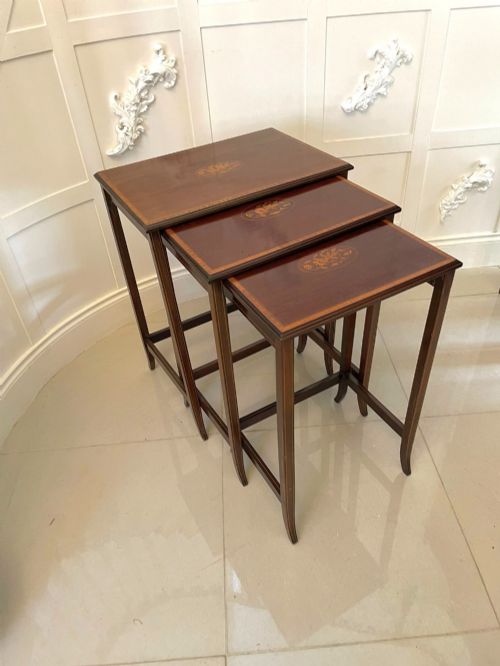
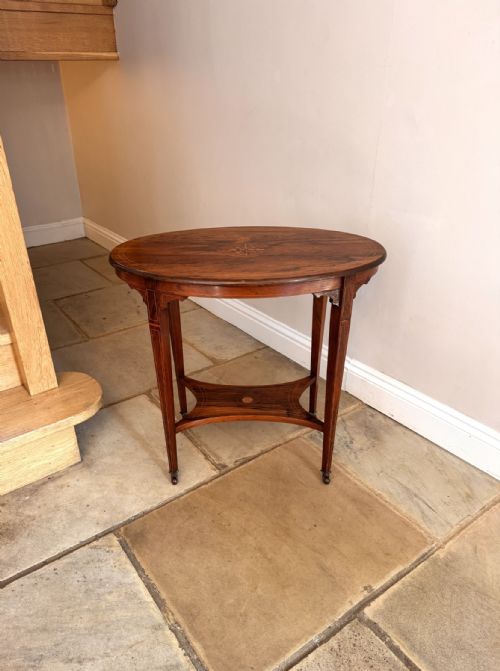
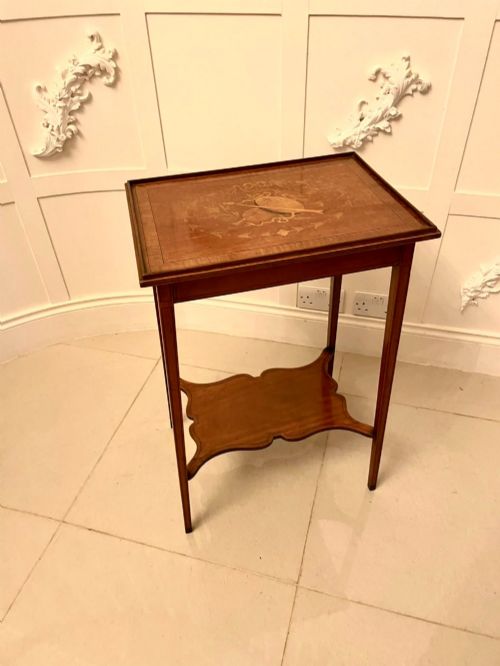
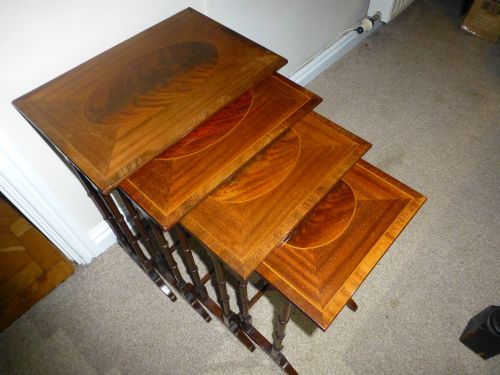
When searching for inlaid wood lamps, buyers encounter diverse small tables adapted for lighting, alongside occasional pieces from the Edwardian and Victorian periods. Mahogany, rosewood, and satinwood form the foundation of these furnishings, frequently shaped as side tables, lamp tables, and nests.
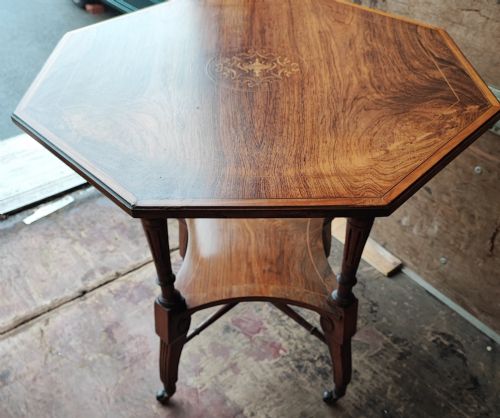
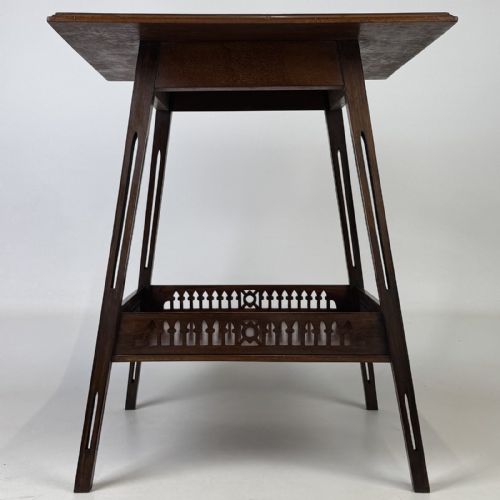
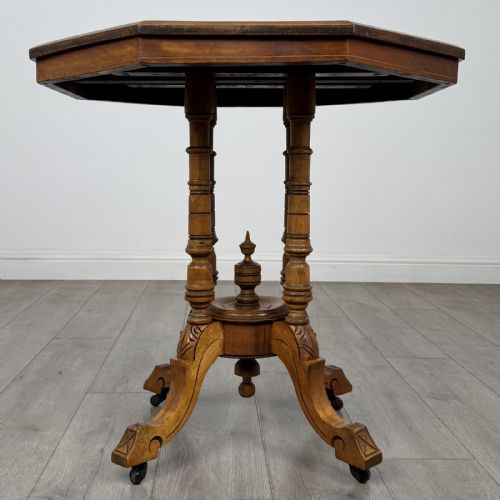
Edwardian mahogany examples with satinwood inlay dominate the current selection, often featuring details like fretwork galleries, lower shelves, or octagonal tops. Alongside these stand 19th-century rosewood and walnut occasional pieces, plus occasional floor lamps from the Art Deco era.
Originating largely from British periods spanning the Georgian era through the 1930s, these pieces combine utility with decorative surface patterns. Buyers find everything from quartetto nesting sets to single bedside cabinets designed to hold a light source.
How they were made
Cabinetmakers utilised dense timbers such as mahogany, walnut, and rosewood as a stable base for decorative surface work. Satinwood, boxwood, and brass provided contrasting tones for fine inlay and stringing.
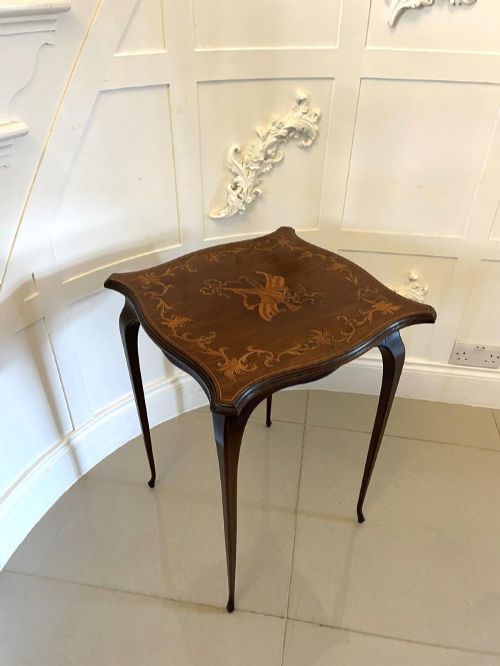
Marquetry techniques allowed artisans to cut and fit diverse wood veneers into pictorial or geometric patterns on table tops. Structural elements often incorporated turned legs, tier shelves, and fretwork galleries.
Inlaid Wood Lamps Retail Price Guide 2026
Typical asking prices for inlaid wood lamps among the pieces listed under this phrase on Sellingantiques today, from the lower quarter to the upper quarter. They describe what is for sale here now, not the wider market.
The selection includes various table configurations, from octagonal tops to nests of four matching pieces.
What varies in quality
The precision and complexity of the inlay separate finer examples from simpler production, particularly where multiple contrasting timbers meet in intricate marquetry patterns. Crispness in the cutting of boxwood stringing and satinwood banding indicates higher workshop standards.
Timber selection governs visual depth, with burr woods, figured mahogany, and richly grained rosewood commanding greater visual presence than plain boards. Structural integrity in small components like gallery fretwork and table leg joints ensures lasting durability.
Trevor Page & Co·George Bullock
The Inlaid Wood Lamps Glossary
- Inlay
- A technique where pieces of contrasting wood, brass, or other materials are inserted into recesses within a solid timber base to form a flat decorative surface.
- Marquetry
- An elaborate form of inlay assembling fitted wood veneers into pictorial or geometric designs across an entire table top.
- Stringing
- Thin, narrow lines of contrasting wood or light-coloured boxwood embedded into the edges of table tops and drawer fronts.
- Quartetto
- A set of four graduating tables designed to nest neatly one beneath another, popular in Edwardian production.
- Lowboy
- A small traditional side table with drawers, typically dating from the Georgian period.
Inlaid Wood Lamps: Frequently Asked Questions
What distinguishes an inlaid lamp table from a standard side table?
Lamp tables are generally sized specifically to accommodate a lighting fixture while offering a stable surface for everyday use.
Many examples share dimensions and forms with occasional or wine tables, making their classification flexible depending on how the piece is utilised in a room.
How do I identify Edwardian inlaid tables?
Edwardian pieces often combine light mahogany or satinwood with delicate boxwood stringing, frequently featuring spade feet or slender tapered legs.
Cabinetmakers of this period around 1900 favoured lighter proportions compared to heavier Victorian designs.
Were these tables originally made for lamps?
Many of these pieces began life as occasional, wine, or side tables before modern buyers repurposed them to hold table lamps.
Their sturdy tops and convenient heights suit modern lighting, though period interiors might have used them for candles or decorative objects.
What woods were commonly used for inlay?
Boxwood and satinwood provide pale contrast against darker primary timbers like mahogany, walnut, and rosewood.
Brass stringing also appears on Regency period pieces to create sharp metallic definition.