


Inlaid Wood Dining Table
An inlaid wood dining table brings warmth and intricate detail into a room, combining solid timber with delicate contrasting ornamentation.
Inlaid Wood Dining Table
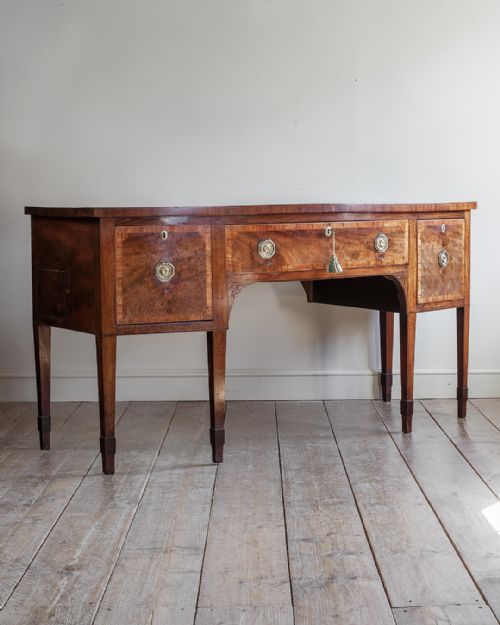
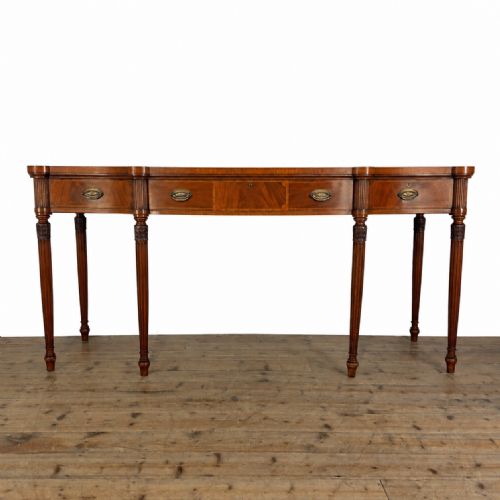
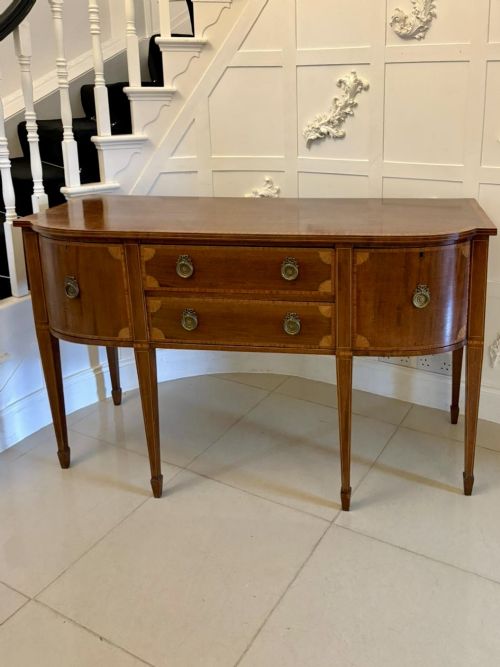
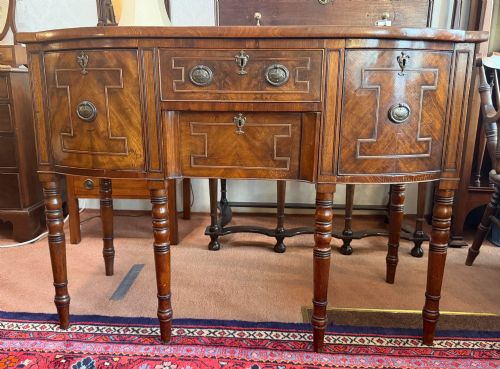
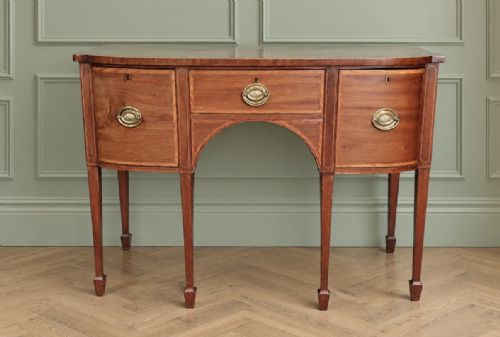
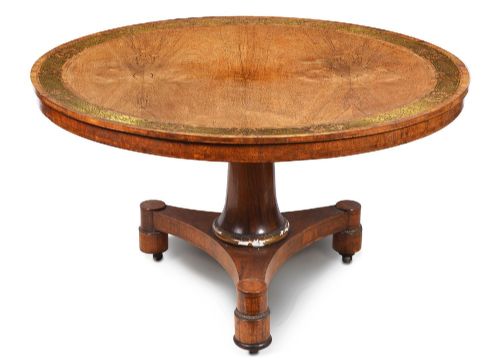
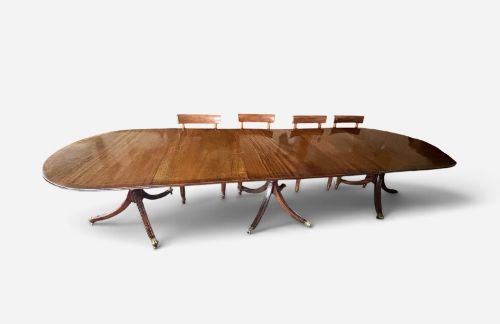
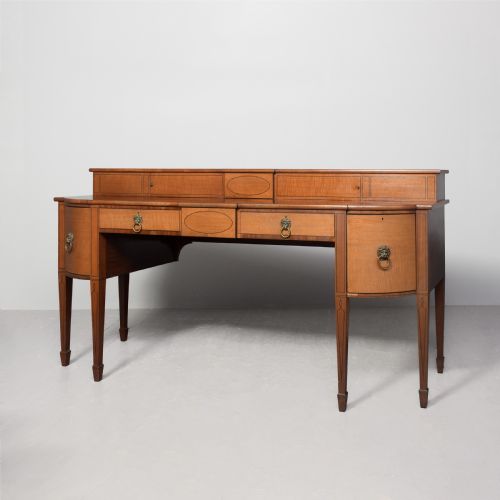
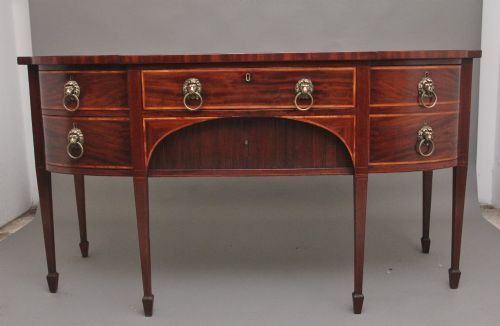
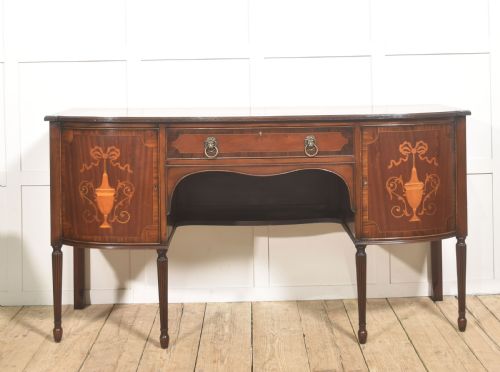
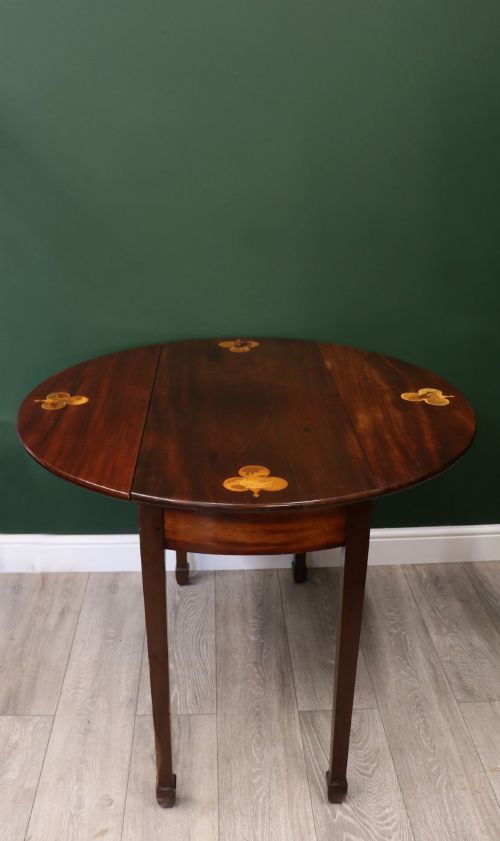
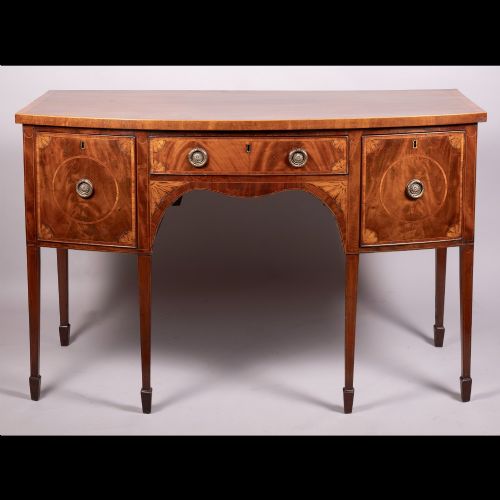
When searching for an inlaid wood dining table, buyers encounter a variety of forms spanning multiple centuries, from formal Georgian and Regency dining pieces to Edwardian examples and later interpretations. The selection on this page predominantly includes mahogany timbers enriched with satinwood, boxwood, and brass details, often taking the form of extending tables, centre tables, and sideboards that share similar decorative vocabularies.
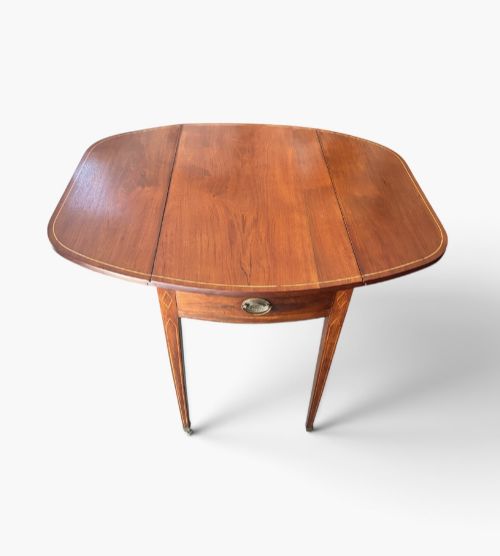
The historical scope ranges across the eighteenth, nineteenth, and early twentieth centuries, capturing shifts in domestic dining habits and cabinet-making fashions. Pieces vary from compact Pembroke tables and oval centre tables to large pillar dining tables and serpentine sideboards designed for grand entertaining spaces.
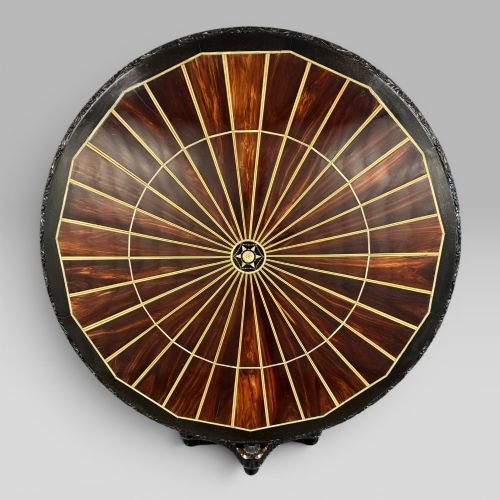
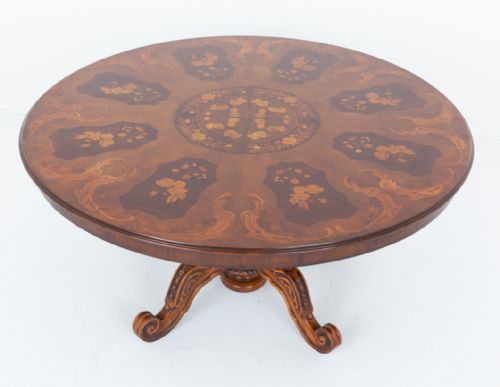
Makers and designers from different eras utilised geometric stringing, floral motifs, and contrasting veneers to elevate standard dining furniture into decorative focal points. Buyers will find that surviving examples reflect both British cabinet-making traditions and continental or colonial influences such as Dutch Renaissance and Anglo-Indian styles.
How they were made
Cabinet-makers relied on dense, stable hardwoods such as mahogany and walnut as the primary foundation for these dining tables and sideboards. These woods provided a durable surface capable of supporting complex decorative schemes without warping.
Contrasting timbers like satinwood, boxwood, and ebony were sliced into thin veneers and precise stringing lines, then hand-sunk into recesses carved directly into the main timber body. This meticulous process required steady hands and sharp chisels to ensure tight, seamless junctions between the different wood species.
In certain Regency and nineteenth-century pieces, fine brass inlay was incorporated alongside the wood, requiring delicate metalwork techniques to embed brass strips and motifs flush with the polished mahogany or rosewood top.
Inlaid Wood Dining Table Retail Price Guide 2026
Typical asking prices for inlaid wood dining table among the pieces listed under this phrase on Sellingantiques today, from the lower quarter to the upper quarter. They describe what is for sale here now, not the wider market.
Some nineteenth-century dining tables hide ingenious mechanical leaves that expand smoothly, proving our ancestors took hosting dinner parties very seriously indeed.
What varies in quality
The distinction between ordinary and superior examples lies in the precision of the cabinet-making and the crispness of the inlay work. Finer pieces display seamless integration where contrasting veneers meet, with no visible gaps or excess adhesive interrupting the geometric patterns.
Material selection also dictates the hierarchy of quality, distinguishing standard commercial production from workshops that utilised highly figured mahogany, dense burr walnut, or carefully selected satinwood with rich natural chatoyancy. The depth of hand-applied polish and the preservation of the original timber surface further separate everyday survivors from exceptional cabinet work.
The Inlaid Wood Dining Table Glossary
- Crossbanding
- A border technique where veneer is laid perpendicular to the grain of the main surface. This frames the top of a table or sideboard with a contrasting grain direction.
- Stringing
- A narrow, thin strip of contrasting wood or light-coloured timber inlaid into channels cut into the primary wood. It creates delicate linear borders around drawers and table edges.
- Marquetry
- The art of forming decorative pictures or patterns using various woods, veneers, and shells applied to a wooden structure. It differs from simple linear inlay by creating pictorial or floral compositions.
- Pembroke table
- A small, versatile table with hinged drop leaves on either side, often fitted with a single drawer. They became popular in the eighteenth century for breakfasting or writing.
- Centre table
- A freestanding table designed to be viewed from all sides rather than pushed against a wall. These frequently feature elaborate inlay on the top surface.
Inlaid Wood Dining Table: Frequently Asked Questions
How do I care for an inlaid wood dining table?
Maintain a stable indoor humidity and avoid placing the timber in direct sunlight or close to heat sources. Use coasters and placemats to protect the polished surface from moisture and heat.
Feed the wood periodically with appropriate wax and dust gently with a soft cloth. Avoid harsh chemical cleaners that can degrade the historic polish and loosen delicate veneer work.
Can I use an antique inlaid table for daily family meals?
Many of these pieces were built for robust daily use by skilled cabinet-makers using seasoned hardwoods. However, due to their age and historical value, sensible precautions are necessary.
Using protective pads beneath tableware helps prevent scratches and heat marks on the polished timber top. Treating the antique surface with care ensures it remains preserved for future generations.
How do I identify the wood species used in the inlay?
Boxwood typically appears as a pale, creamy-yellow line, while satinwood offers a luminous, golden sheen with a mottled grain. Darker contrasts are often achieved using ebony or blackened fruitwood.
Examining the grain pattern under good light reveals the natural pores and growth rings characteristic of each specific timber. Comparing the colours against standard cabinet-making materials helps confirm the types utilised.
What is the difference between an inlay and marquetry?
Inlay involves setting pieces of wood or metal into recesses carved into a solid wood base or veneer foundation. This technique is commonly used for geometric borders and linear stringing.
Marquetry assembles an entire pictorial or decorative veneer puzzle on a backing sheet before applying it to the furniture surface. This method allows for complex floral sprays and figurative scenes rather than simple lines.