



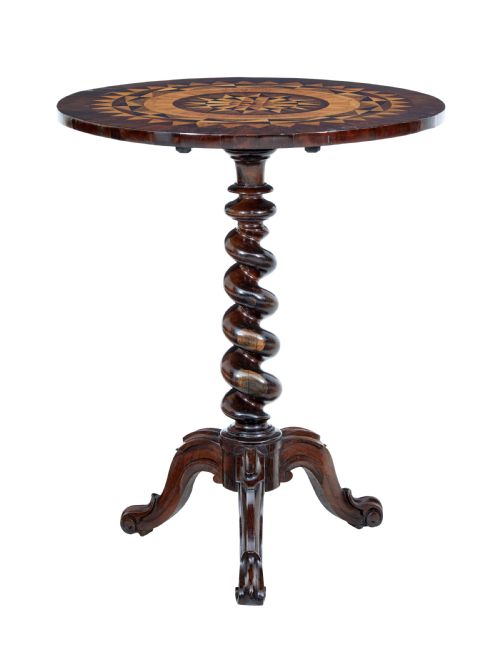
Inlaid Wood Columns
Inlaid wood columns form a distinct group of decorative supports and furniture pieces crafted across the nineteenth and twentieth centuries.
Inlaid Wood Columns
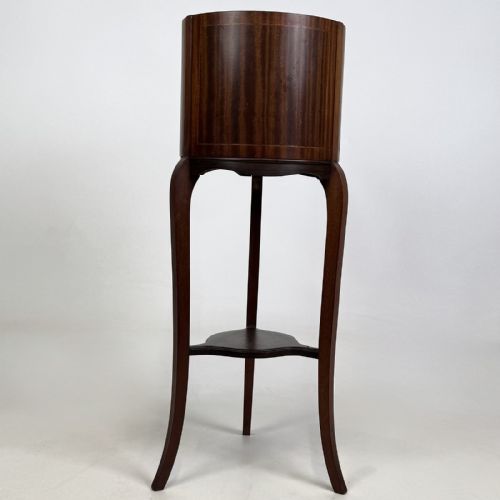
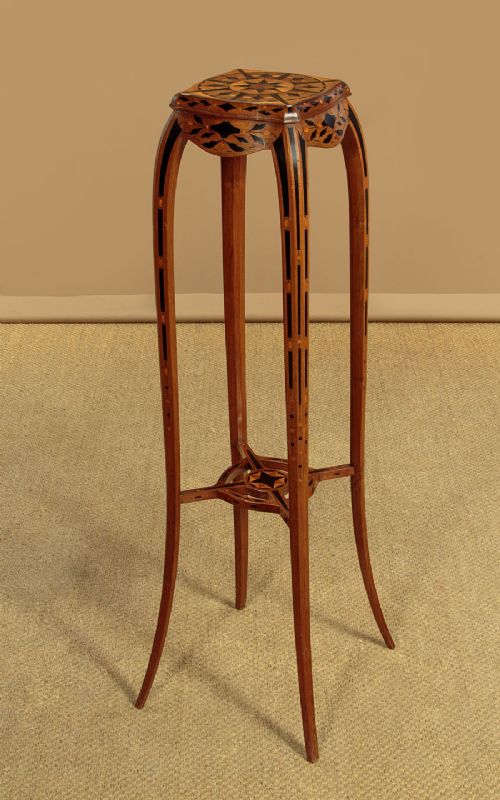
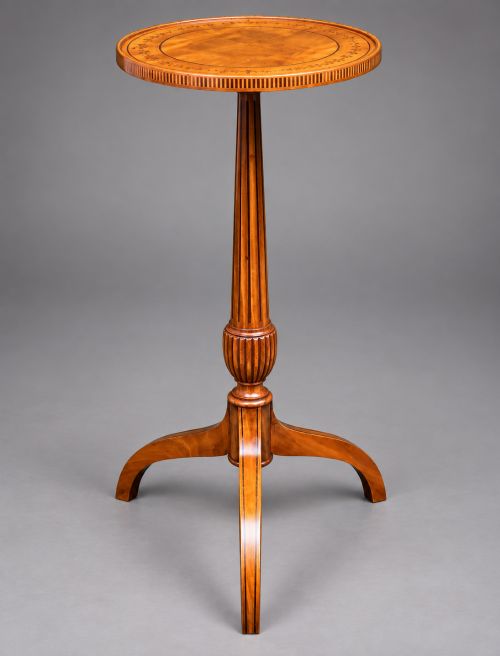
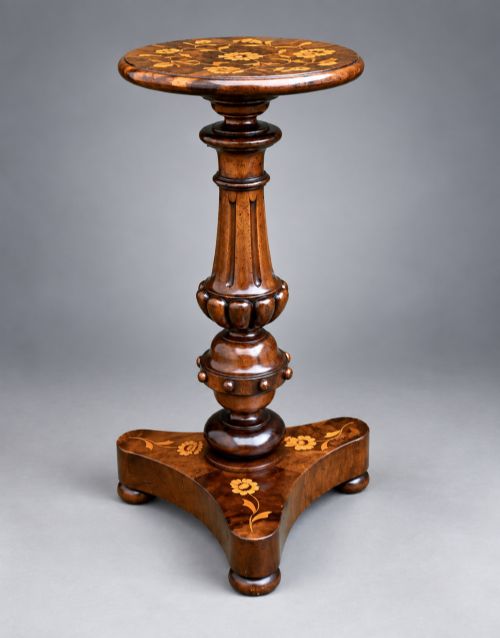
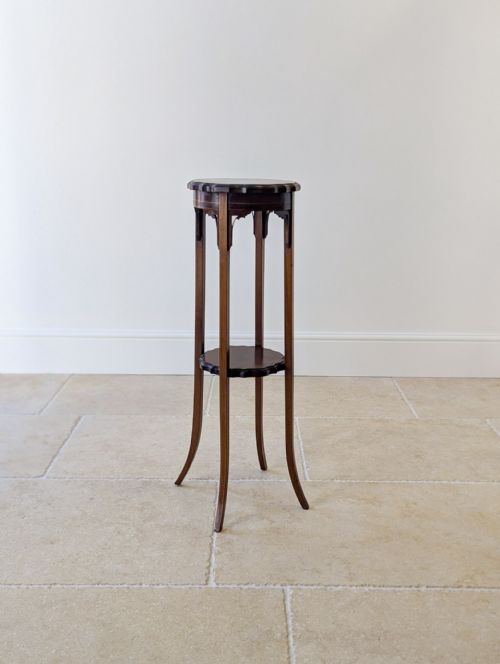
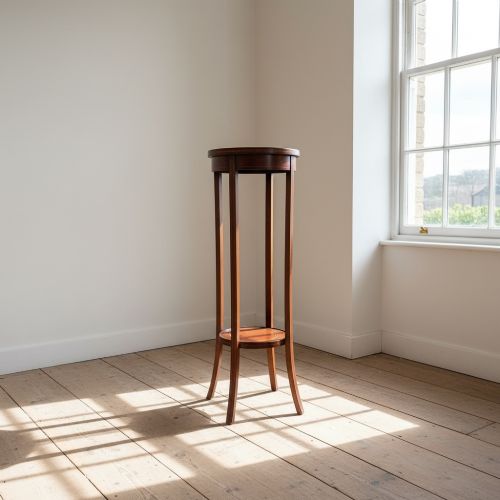
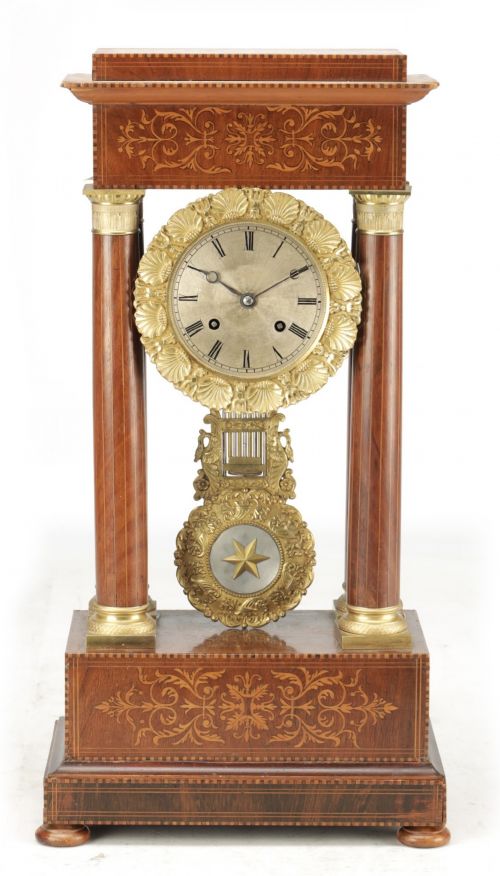
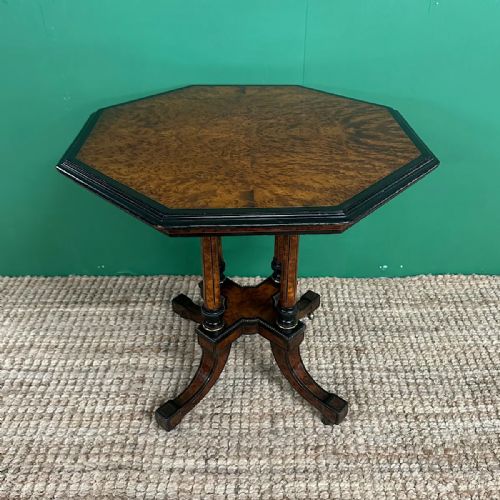
Inlaid wood columns span several distinct forms and functions, from tall plant stands and torcheres to the architectural framing of portico clocks and mirrors. These pieces surface most frequently as Edwardian plant stands and nineteenth-century occasional tables featuring inlaid surfaces.
The materials and styles cross multiple periods, including Victorian, Edwardian, and Regency eras, reflecting the sustained popularity of detailed woodwork and decorative banding in domestic interiors.
How they were made
Cabinet makers utilised dense hardwoods such as mahogany, walnut, and rosewood as primary foundations, often applying contrasting veneers like satinwood, lemon wood, and ebony for linear detail.
Marquetry and parquetry techniques required precise hand-cutting of diverse timber species to create intricate geometric patterns and floral motifs set flush into the main surface.
Inlaid Wood Columns Retail Price Guide 2026
Typical asking prices for inlaid wood columns among the pieces listed under this phrase on Sellingantiques today, from the lower quarter to the upper quarter. They describe what is for sale here now, not the wider market.
Current listings demonstrate a prevalence of mahogany and walnut supports, alongside occasional tables incorporating marquetry and specimen wood tops.
What varies in quality
The refinement of the inlay work marks the primary division in quality, distinguishing straightforward edge lines from complex pictorial marquetry and specimen wood arrangements.
Selection of the underlying timber dictates the character of the piece, with choice burr veneers and well-figured mahogany representing the upper tier of production.
The Inlaid Wood Columns Glossary
- Marquetry
- A decorative technique applying pieces of veneer to a structure to form ornamental designs and pictures. This method creates detailed pictorial surfaces on tabletops and clock panels.
- Parquetry
- A geometric mosaic of wood pieces used for floors and furniture surfaces. It produces repeating patterns across occasional tables.
- Torchere
- A tall stand designed to support a light or a plant. These slender vertical supports often incorporate turned columns and inlaid shafts.
- Portico clock
- A mantel clock featuring a classical architectural frame supported by columns. These housings commonly employ rosewood and elaborate wood inlays.
Inlaid Wood Columns: Frequently Asked Questions
What periods do these pieces come from?
The inventory spans the nineteenth and twentieth centuries, taking in Regency, Victorian, and Edwardian eras. Cabinet makers of these periods utilised traditional timber framing and hand-cut veneer work.
Specific dates cluster around the late nineteenth and early twentieth centuries, alongside earlier Regency and William IV examples demonstrating distinct regional craftsmanship.
How were plant stands and torcheres used?
These vertical stands held decorative plants, urns, or lighting in principal rooms of period homes. Their slender profiles allowed them to occupy corners and landings without blocking pathways.
Placement indoors required stable surfaces, leading makers to design weighted bases and balanced tripod or pedestal footings.
How do I identify different wood types?
Examination of grain patterns and natural colour reveals the timber species used in the construction and surface decoration. Mahogany and walnut provide dark, rich background tones, while satinwood and lemon wood offer pale contrast.
Closer inspection of contrasting borders often uncovers ebony or boxwood line inlay framing the primary panels.
Where should I place a portico clock?
Portico clocks suit mantelpieces, sideboards, or dedicated console tables where their architectural columns remain clearly visible. Their vertical presence draws the eye upward within a room.
Protection from direct sunlight and damp conditions preserves the delicate veneers and ormolu mounts typical of these mantel pieces.