


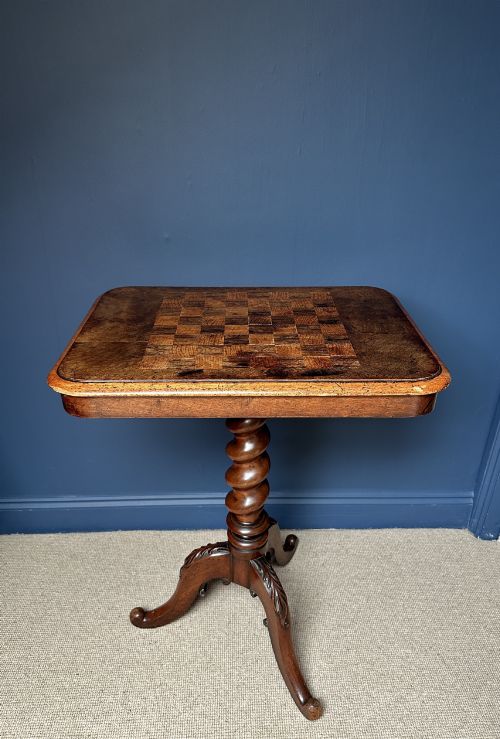
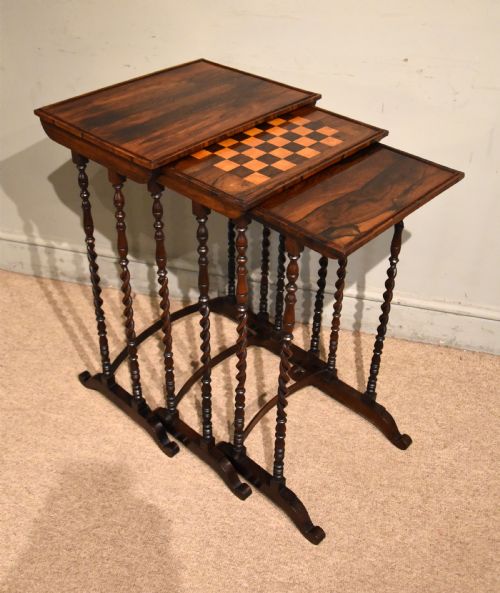


Inlaid Wood Chess Table
An inlaid wood chess table brings the tactical board permanently into the drawing room through cabinetwork.
Inlaid Wood Chess Table
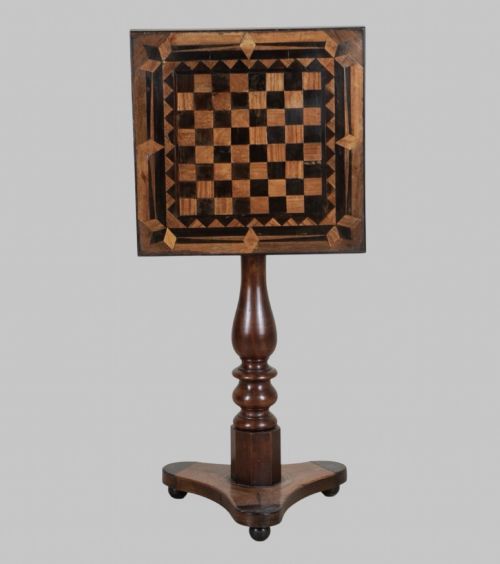
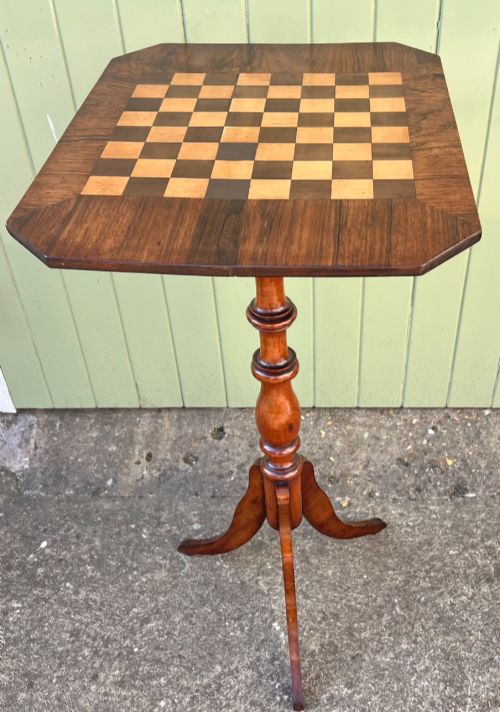
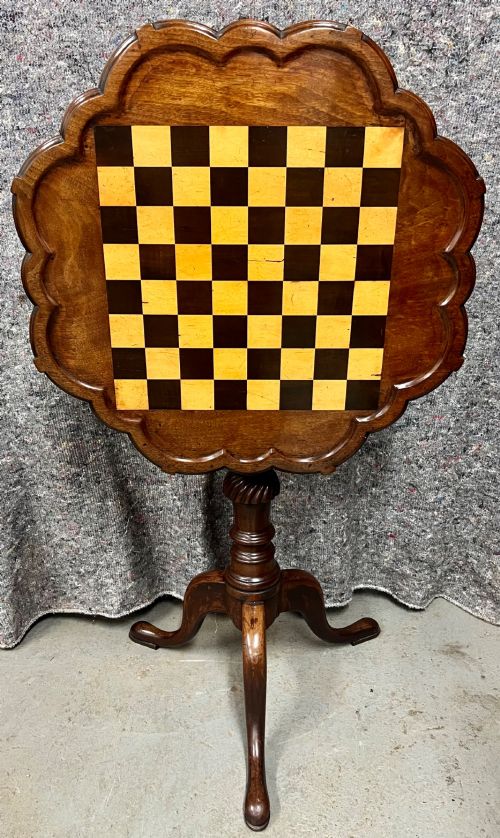
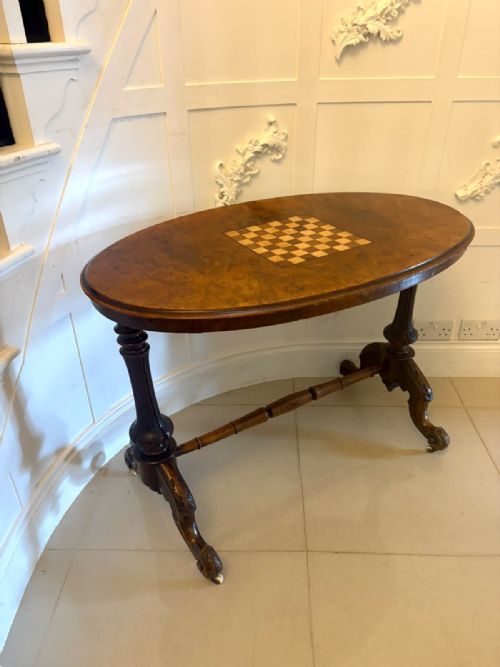
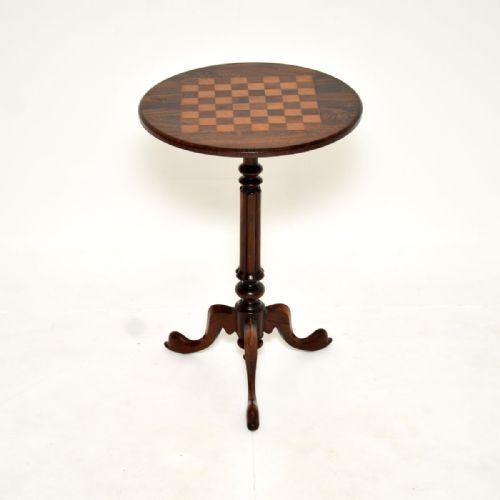
An inlaid wood chess table combines a domestic surface with a built-in gaming layout, emerging in forms from tripod stands to foldover card tables. You will encounter walnut, rosewood, and mahogany examples spanning the Georgian, Regency, and Victorian periods.
The playing surface is typically worked directly into the timber top using contrasting squares of lighter and darker woods. Many double as work tables, occasional tables, or multi-game compendiums with backgammon and card layouts.
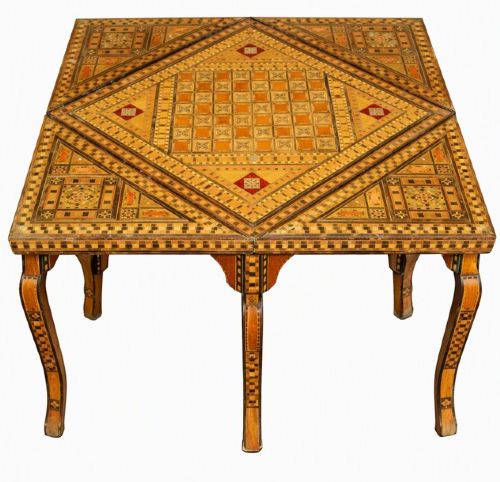
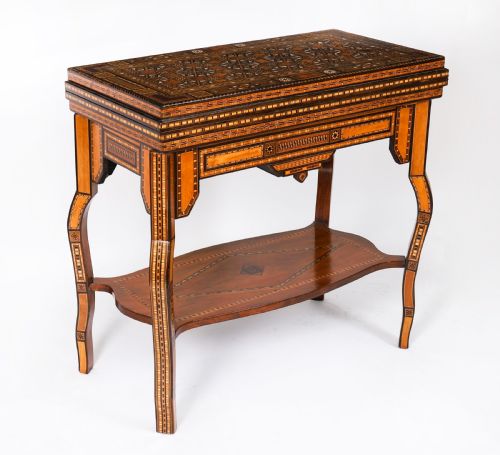
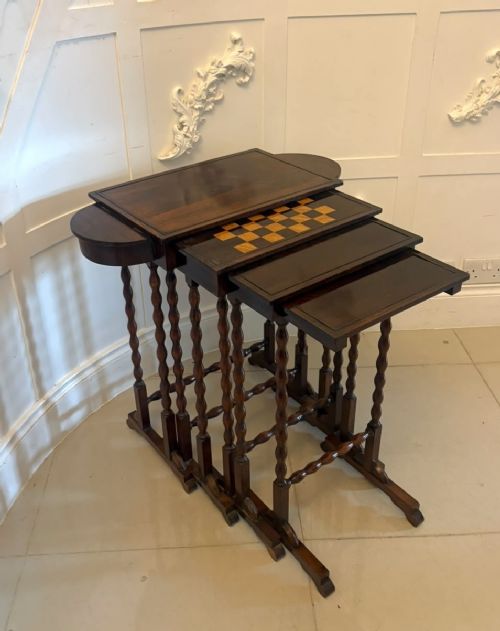
Makers utilised distinct regional traditions, producing Syrian Ottoman and Damascus pieces alongside English cabinetwork. The resulting pieces range from simple lamp tables to complex nesting quartetto sets with integrated boards.
Materials and construction methods
Cabinetmakers built these tables using solid foundational timbers like mahogany, walnut, and rosewood, applying contrasting veneers for the chequerboard top. Boxwood, ebony, and satinwood provided the pale and dark squares, sometimes integrated with elaborate wood inlay and marquetry.
Specialised techniques included parquetry and Sorrento marquetry, creating precise geometric or pictorial motifs across the tabletop. Structural elements like tripod bases, turned pedestals, and foldover hinges supported the dual function of writing or dining alongside gaming.
Inlaid Wood Chess Table Retail Price Guide 2026
Typical asking prices for inlaid wood chess table among the pieces listed under this phrase on Sellingantiques today, from the lower quarter to the upper quarter. They describe what is for sale here now, not the wider market.
Object forms include tripod stands, nest of tables, envelope tables, and multi-game compendiums.
Factors determining quality
The precision of the wood inlay defines the standard of the board, where tight joints between contrasting squares show the hand of a skilled artisan. Inferior pieces rely on surface painting rather than precise cutting and fitting of individual timber segments.
The selection of secondary timbers and the crispness of carved details on pedestals and tripod legs elevate a piece above standard production. Timber figure, such as burr walnut or rich rosewood grain, dictates the visual weight and finish of the cabinetwork.
Gillows·British Chess Company
The Inlaid Wood Chess Table Glossary
- Marquetry
- Decorative veneer work forming pictures or patterns using various woods. This technique allows intricate floral or geometric designs to cover a tabletop.
- Parquetry
- Geometric mosaic woodwork used to create repeating patterns. It is frequently seen on the chequerboard squares of gaming surfaces.
- Quartetto
- A set of four graduating nesting tables. These arrangements occasionally incorporate a sliding or integrated chess board within the design.
- Compendium
- A multi-use box or table containing equipment for several different games. These pieces often feature removable boards and internal storage compartments.
Inlaid Wood Chess Table: Frequently Asked Questions
How do I date an inlaid wood chess table?
Dating relies upon stylistic markers such as the turnings of the pedestal, the choice of primary timber, and the framing of the top. Regency and Georgian examples tend towards lighter rosewood and mahogany forms, while Victorian pieces often employ burr walnut and heavier carved bases.
Secondary characteristics like boxwood stringing and the presence of pivoting foldover tops help narrow the decade of production. Examining the construction of the interior compartments and drawer linings provides further chronological clues.
Were these tables used for daily play?
These tables served as functional furniture for the parlour, designed to accommodate both social gaming and everyday domestic tasks. Foldover tops and multi-game surfaces allowed the room to transition rapidly from tea service to an evening of chess.
The integration of work bags, writing surfaces, and occasional table proportions ensured the furniture remained useful when no game was in progress.
How do I care for a veneered chess top?
Maintenance requires keeping the timber away from direct heat sources and strong sunlight to prevent the delicate boxwood and ebony veneers from lifting. Regular dusting with a dry, soft cloth preserves the polished finish without risking moisture damage to the marquetry.
Applying a traditional beeswax polish occasionally helps nourish the rosewood or walnut grain without building up heavy chemical layers.
What is the difference between Syrian and Victorian tables?
Syrian and Ottoman pieces often feature dense geometric mosaic inlay utilising varied woods and bone or metal wire detailing. Victorian English tables typically showcase Burr walnut or rosewood with standard European chequerboard squares set into a foldover or tripod framework.
The regional workshops produced distinct decorative vocabularies, though both shared a dedication to intricate surface pattern.