
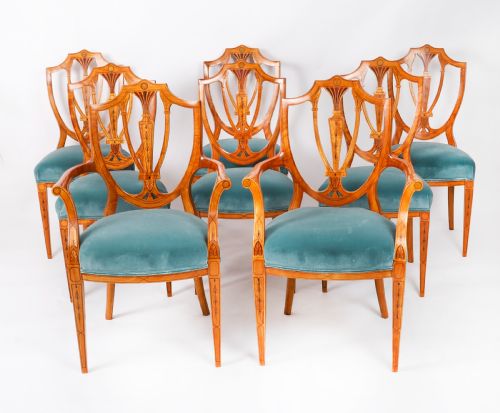


Inlaid Wood Carver Chairs
These inlaid wood carver chairs offer robust seating and decorative grace, bringing period distinction and refined woodwork to any study or dining space.
Inlaid Wood Carver Chairs
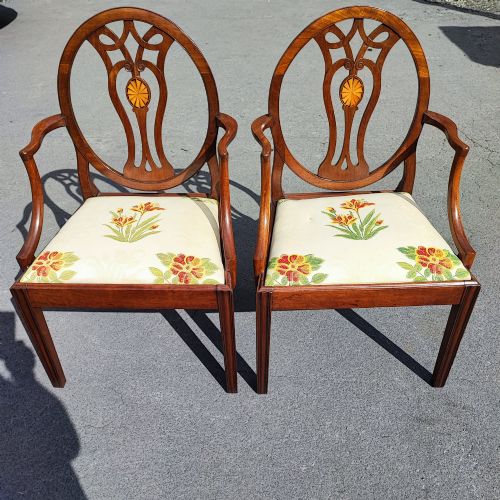
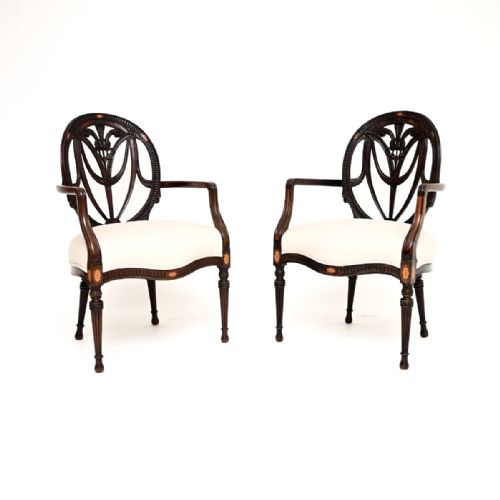
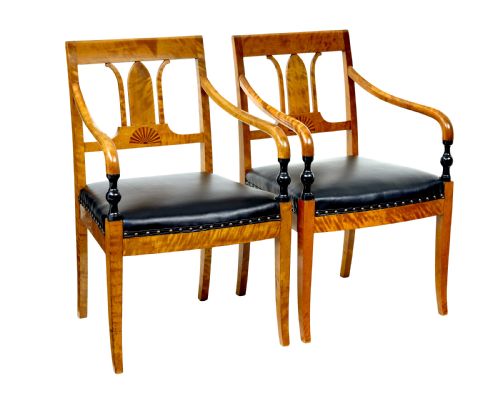
Inlaid wood carver chairs combine the structural support of an armchair with decorative surface ornament, spanning periods from the eighteenth century through the Edwardian era and the Art Deco movement. Buyers seeking these seats will most commonly find Edwardian mahogany examples alongside nineteenth-century and Regency variations.
Makers utilised various forms including armchairs, dining armchairs, and elbow chairs, often shaped in revival styles such as Sheraton, Hepplewhite, and Art Nouveau. These seating options served both formal dining rooms and private libraries, functioning as principal chairs at the head of a table or as occasional seating in reception rooms.
Materials and construction
Cabinetmakers built these carver chairs primarily using mahogany, rosewood, and satinwood, often incorporating contrasting wood inlay and marquetry to create intricate surface patterns. Brass details and various upholstery fabrics, including leather and velvet, provide additional texture and structure.
Woodworking techniques relied on precise joinery to support the stresses placed on open arms and backs, while specialist artisans set delicate veneer and inlay work directly into the primary timber frame.
Some nineteenth-century carvers served double duty as library desk chairs, letting readers swivel slightly before getting stuck in a book.
Assessing quality and execution
The distinction between standard examples and superior pieces rests on the precision of the cabinetwork and the intricacy of the wood inlay. Finer chairs display crisp detailing in Sheraton or marquetry motifs and employ dense, well-figured primary timbers like mahogany and satinwood.
Proportion and structural integrity also separate grades, where master craftsmanship ensures the curved arms and backsplats remain both balanced and enduringly rigid over centuries of use.
Cowtan & Sons·Lamb of Manchester·Jenks & Wood
The Inlaid Wood Carver Chairs Glossary
- Carver chair
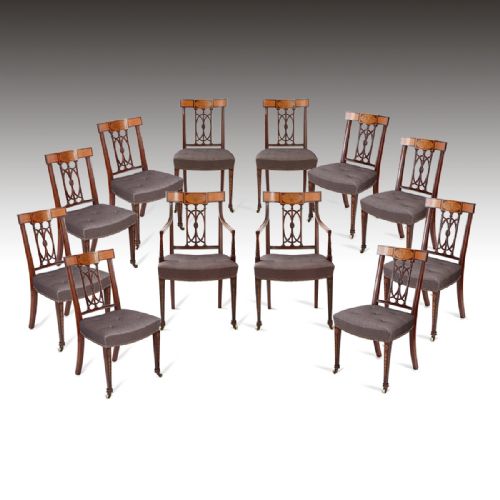
- An armchair, traditionally placed at the head of a dining table or used as a desk chair, featuring supporting arms. These chairs match or complement a set of smaller side chairs.
- Marquetry
- The art of applying pieces of veneer to a structure to form decorative patterns and pictures. This technique defines the ornamentation on many eighteenth-century and nineteenth-century examples.
- Satinwood
- A durable, lustrous yellowish timber native to India and Sri Lanka, highly prized for contrasting inlay work and fine cabinet furniture. It provides a bright surface highlight against darker woods.
- Elbow chair
- An alternative term for an armchair or carver, describing a seat with low arms designed to support the elbows. These frequently appear in Regency and Edwardian seating configurations.
- Sheraton style
- A neoclassical furniture design style characterised by straight tapered legs, rectilinear forms, and delicate contrasting wood inlay. It heavily influenced nineteenth-century revival pieces.
Inlaid Wood Carver Chairs: Frequently Asked Questions
How do I identify a true carver chair?
A carver chair is distinguished by its permanent wooden arms, designed to match a larger set of dining or parlour side chairs. They typically occupied the head of the dining table.
Historically, these chairs provided greater comfort and status for the host, often featuring more elaborate inlay and carving than the companion chairs.
Where should I place an inlaid chair?
These chairs suit studies, libraries, bedrooms as dressing table seats, or grand dining rooms. Their decorative backs and arms make them effective as standalone occasional pieces.
Position them away from direct sunlight and strong heat sources to protect the delicate wood inlay and polished mahogany surfaces from drying out.
How do I care for antique wood inlay?
Maintain the wood using traditional beeswax applied sparingly and buffed gently with a soft cloth. Avoid synthetic polishes and modern sprays that can degrade historic finishes.
Keep indoor humidity stable to prevent the small veneer pieces forming the inlay from lifting or shrinking away from the primary timber base.
What defines the Edwardian style?
Edwardian furniture often reinterprets earlier eighteenth-century aesthetics, particularly Sheraton and Hepplewhite designs, with lighter proportions and bright mahogany or satinwood surfaces. These pieces date from the early twentieth century.
Craftsmen of this period frequently applied delicate stringing and floral inlay, creating bright and refined seating for domestic drawing rooms.