



Inlaid Wood Bedside Chests
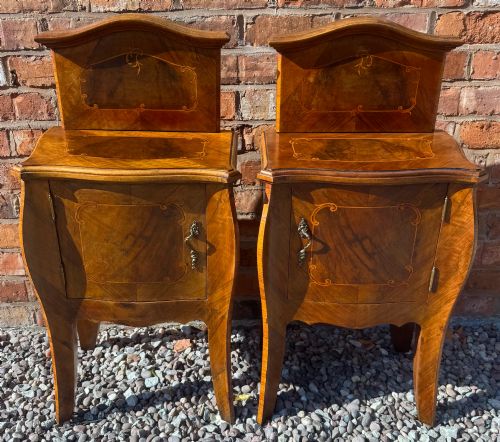
These inlaid wood bedside chests bring warmth and subtle pattern to a room, offering practical surface space alongside neat storage.
Inlaid Wood Bedside Chests
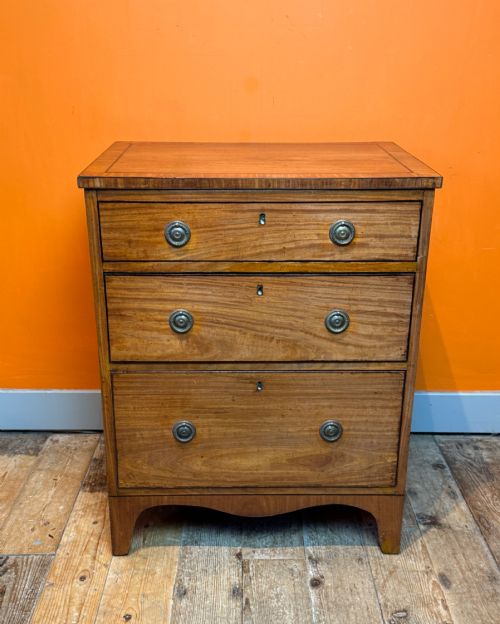
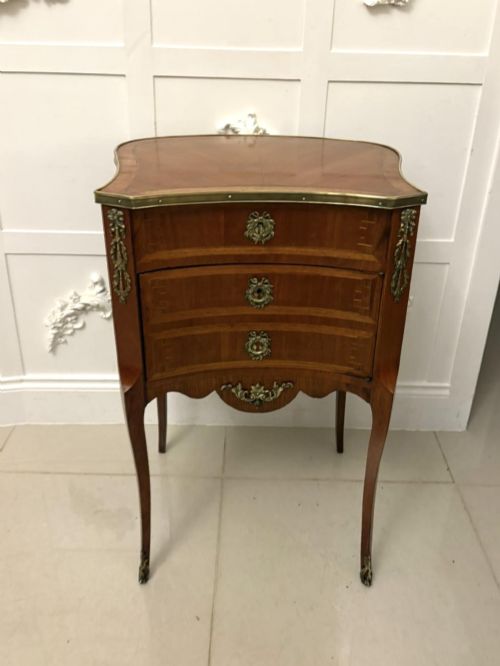
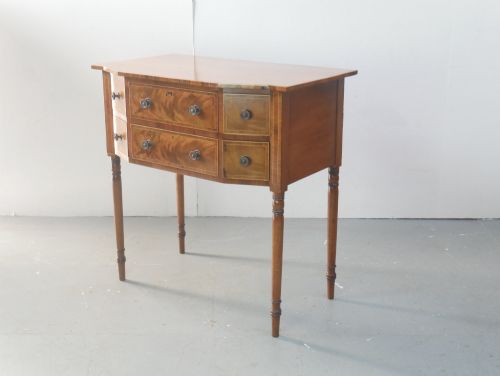
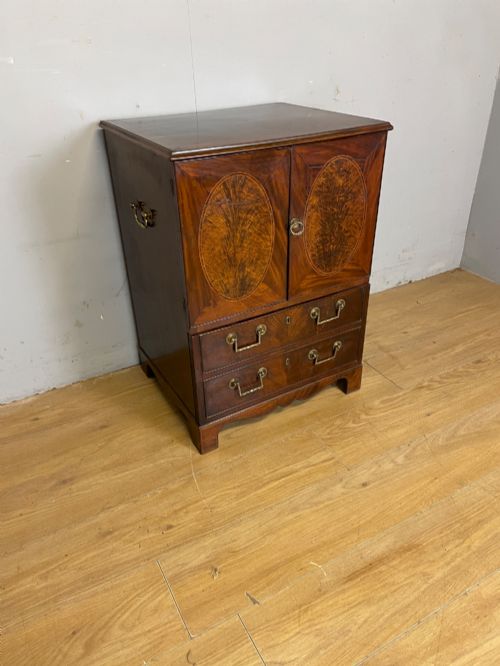
Inlaid wood bedside chests combine useful drawers or cupboards with decorative surface patterns formed by contrasting timbers. When searching for inlaid wood bedside chests, buyers encounter pieces ranging from compact Georgian and Regency designs to Edwardian cabinets and French Louis XV revival models.
The selection on this page relies heavily on nineteenth-century and early twentieth-century examples, including satinwood, mahogany, and walnut forms. Cabinets, commodes, and small chests of drawers make up the primary shapes found here, often shaped with bombe contours or straight fronts.
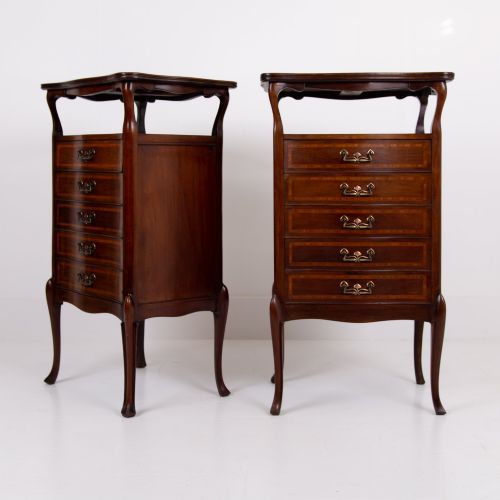
Pairs appear frequently among these listings, providing symmetrical options for flanking a bed. French stylistic influences dominate many of the decorated pieces, bringing floral marquetry and parquetry geometric arrangements to the bedroom.
How they were made
Cabinet makers utilised dense primary timbers such as mahogany, walnut, and rosewood for the main carcass, applying fine wood veneers across flat and curved surfaces. Satinwood, ebony, and lighter fruitwoods were then cut into thin strips and geometric or floral motifs for insertion into recesses carved into the ground wood.
Many examples incorporate decorative brass handles, key escutcheons, and occasional ormolu mounts to accent the drawer fronts and corners. Marble tops feature on several French commodes and side cabinets, adding a heavy, polished stone surface above the inlaid wooden structure.
Inlaid Wood Bedside Chests Retail Price Guide 2026
Typical asking prices for inlaid wood bedside chests among the pieces listed under this phrase on Sellingantiques today, from the lower quarter to the upper quarter. They describe what is for sale here now, not the wider market.
Several pairs hide their contents behind curved bombe doors, perfect for storing midnight reading material out of sight.
What varies in quality
The precision of the veneer work and the crispness of the contrasting inlay lines set finer pieces apart from simpler workshop output. Tight joints, smooth drawer operation, and balanced timber selection indicate careful construction.
The choice of secondary woods and the subtlety of the marquetry shading distinguish master cabinet work from standard production. Surface finish also plays a role, with polished wax or French polish highlighting the grain depth of the underlying mahogany, satinwood, or walnut.
The Inlaid Wood Bedside Chests Glossary
- Marquetry
- The art of forming decorative patterns on a wooden carcass using fitted pieces of various veneers. This technique creates pictorial or floral designs across drawer fronts and tops.
- Parquetry
- A geometric mosaic of wood veneer used to cover floors or furniture surfaces. Squares, triangles, and lozenges create repeating patterns.
- Commode
- A low cabinet or chest of drawers, often French in origin. These pieces frequently stand on slender legs and display ornate mounts.
- Bombe
- A swollen, convex shape characteristic of continental furniture. The sides and front curve outward.
- Line inlay
- Thin strips of contrasting wood or metal inserted into shallow grooves to outline panels or edges. Ebony and boxwood are common choices for these fine borders.
Inlaid Wood Bedside Chests: Frequently Asked Questions
What is the difference between a bedside cabinet and a commode?
Bedside cabinets usually contain a single cupboard door or small drawers designed specifically to hold personal items next to a bed. Commodes are traditionally wider chests with deeper drawers or double doors.
Continental commodes often feature more pronounced shaping and marble tops, whereas British bedside cabinets tend towards straight lines in mahogany or yew.
How do I care for an inlaid wooden cabinet?
Keep inlaid furniture away from direct sunlight and strong heat sources to prevent the veneers from drying and lifting. Dust regularly with a dry, soft cloth.
Apply a microcrystalline wax occasionally to nourish the wood and protect the polish without building up excessive residue.
Are these chests suitable for modern bedrooms?
Their compact proportions make these cabinets practical for contemporary spaces where floor area is limited. The varied timber tones pair easily with both neutral and bold interior schemes.
Surface marble tops on French models also provide durable, water-resistant space for lamps and nighttime items.
How can I tell a Georgian style piece from an Edwardian one?
Georgian and Georgian style pieces generally favor clean architectural lines, flame mahogany veneers, and restrained inlay. Edwardian examples often lean into lighter satinwood finishes and delicate floral marquetry.
Construction details, such as drawer linings and backboards, help confirm the actual period of manufacture.