


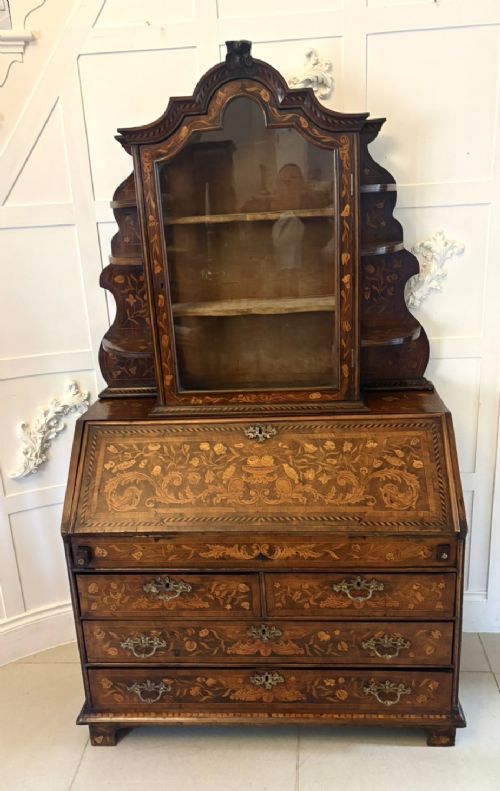


Inlaid Walnut Fall Front Desk
An inlaid walnut fall front desk brings together rich timber and intricate marquetry, offering a functional writing surface that conceals fitted drawers.
Inlaid Walnut Fall Front Desk
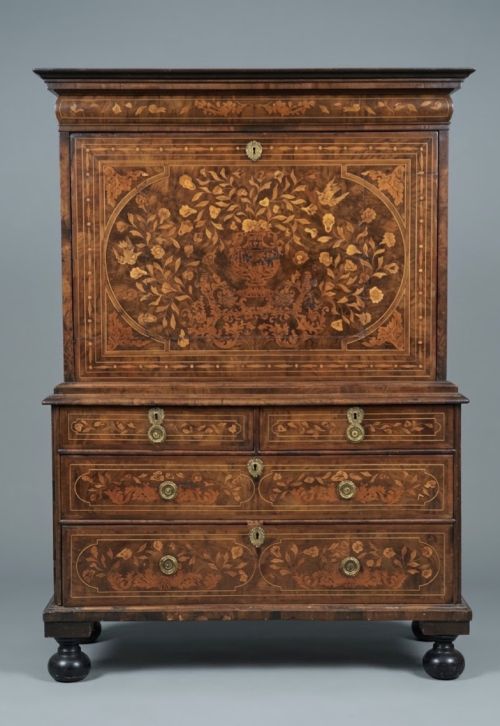
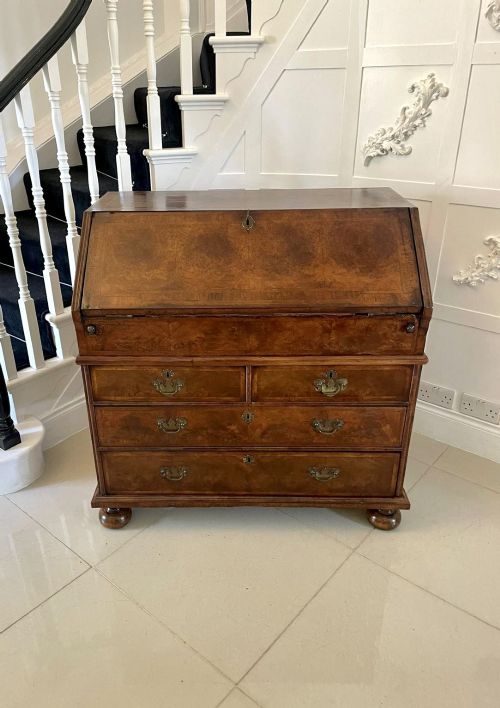
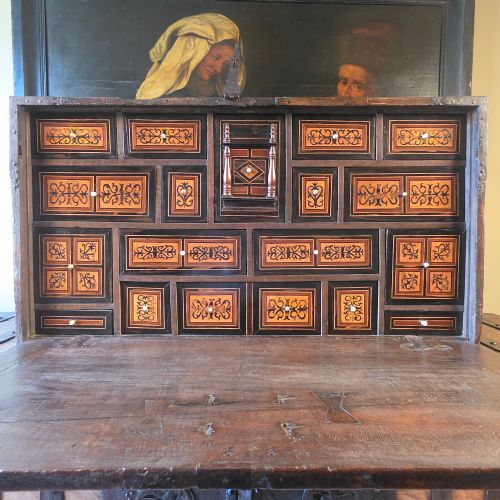
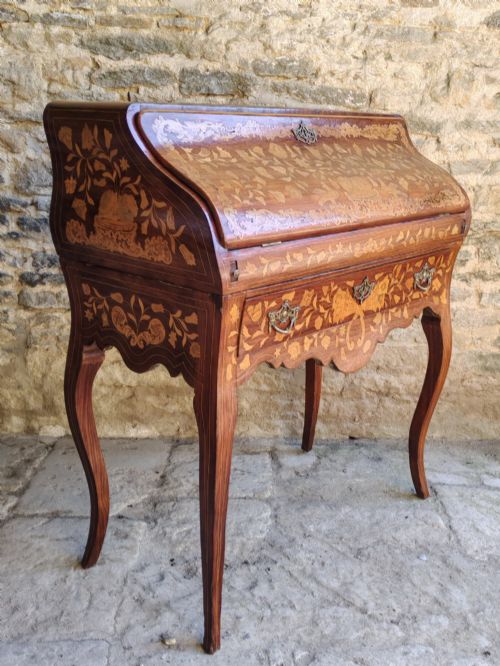
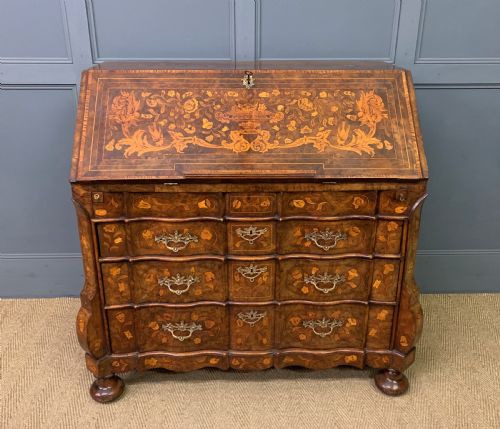
An inlaid walnut fall front desk is typically encountered as a bureau or writing cabinet originating from the seventeenth, eighteenth, or nineteenth centuries. These pieces combine a hinged writing flap that drops forward for use with internal compartments, pigeonholes, and small drawers.
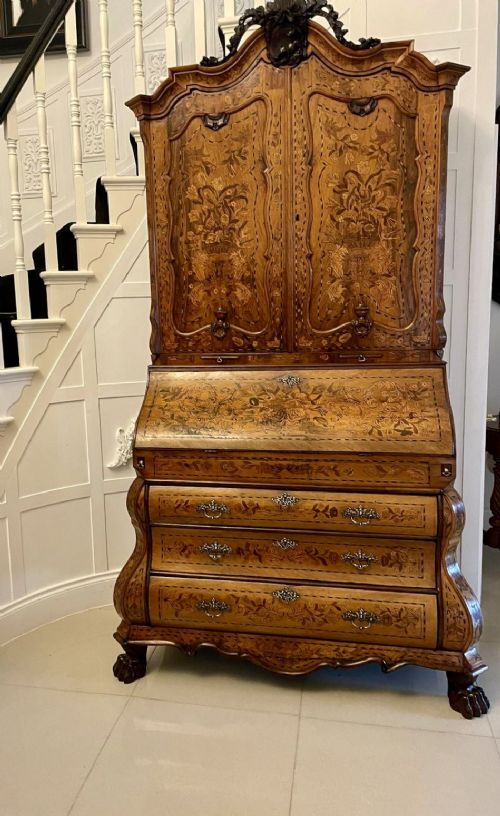
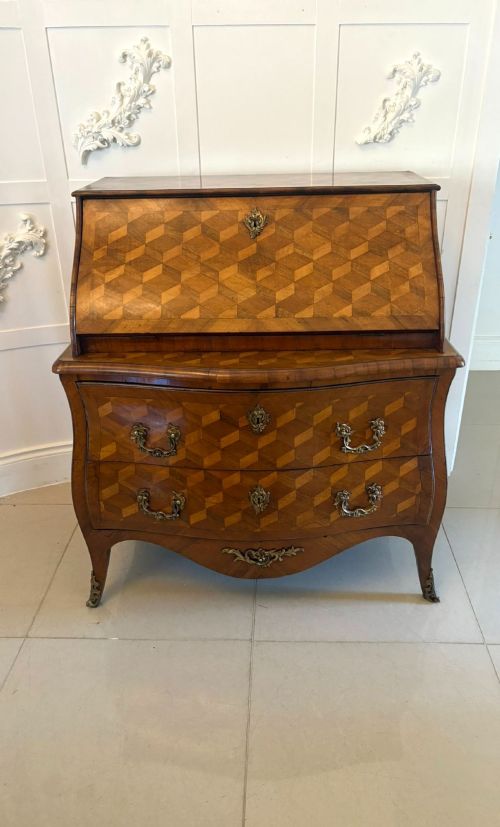
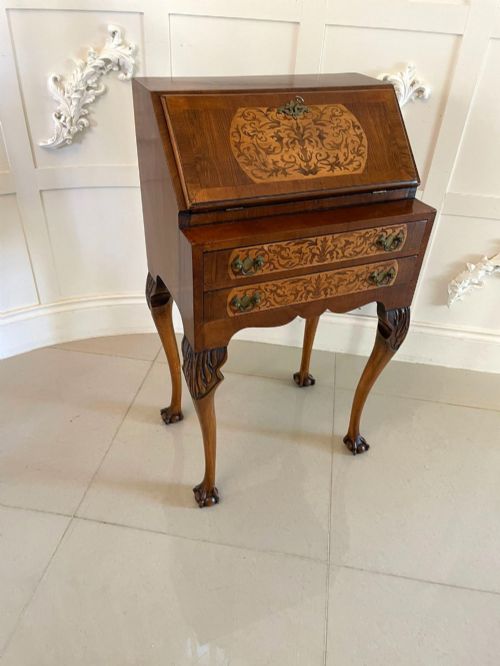
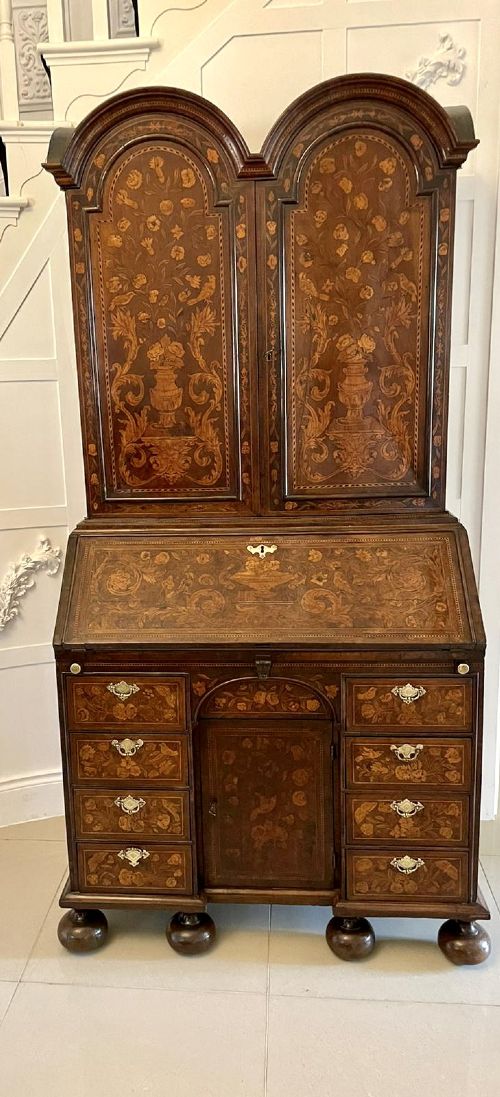
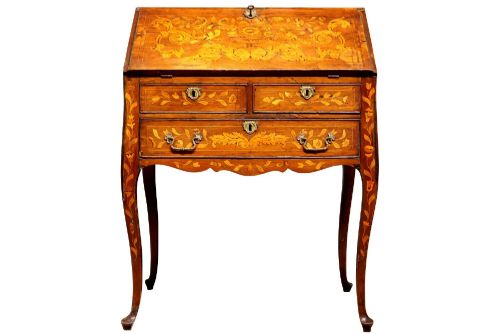
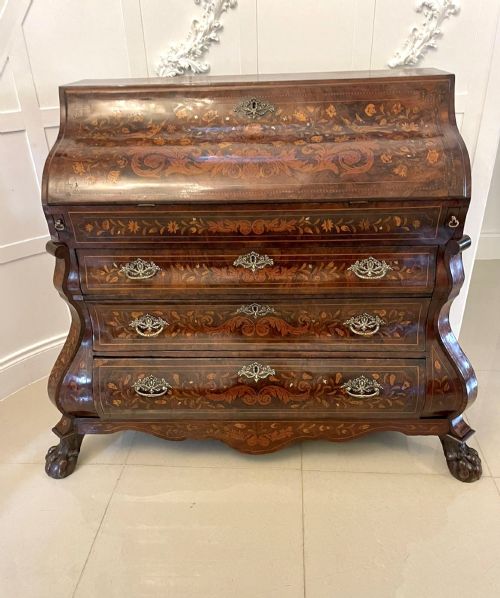
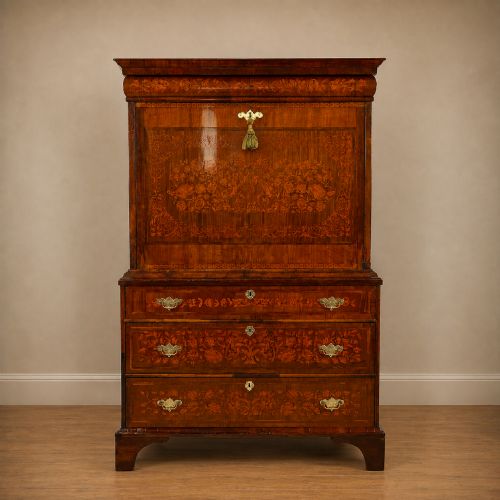
The selection ranges from compact bureau de dame examples designed for ladies' chambers to substantial bureau bookcases and double dome cabinets. Dutch and French regional styles dominate the offerings, often displaying elaborate floral marquetry or bombé shaping.
Makers and craftsmen of the period utilised walnut and burr walnut as the primary ground timber, embellished with contrasting woods to create pictorial or geometric designs across the writing slope and drawer fronts.
Materials and construction methods
Carpenters constructed these desks using solid walnut or pine carcases veneered with figured burr walnut to achieve striking grain patterns. Marquetry inlay was meticulously sawn from various fruitwoods, satinwood, and occasionally bone, then fitted flush into the walnut ground.
The fall front mechanism relied on sturdy brass hinges and internal lopers or wooden arms that slide out automatically to support the lowered writing flap. Dovetail joints secured the drawer construction, while secondary timbers such as oak or pine formed the drawer linings and internal divisions.
Inlaid Walnut Fall Front Desk Retail Price Guide 2026
Typical asking prices for inlaid walnut fall front desk among the pieces listed under this phrase on Sellingantiques today, from the lower quarter to the upper quarter. They describe what is for sale here now, not the wider market.
An eighteenth-century walnut bureau once belonged to Joseph II, the Holy Roman Emperor, proving that even monarchs needed a proper drop-down flap for their paperwork.
Assessing craftsmanship and execution
The distinction between standard examples and the finest pieces lies in the precision and complexity of the marquetry and the choice of veneer. Finer desks display crisp floral urns or elaborate pictorial inlays using diverse coloured woods without gaps or excessive filler.
Structural harmony also dictates value, particularly in bombé or serpentine forms where the curved walnut timber must be shaped accurately without distorting the drawers. Superior examples retain original brasses, finely fitted interior compartments, and well-figured burr walnut across all primary surfaces.
Morison of Edinburgh·Paul Sormani
The Inlaid Walnut Fall Front Desk Glossary
- Marquetry
- Decorative veneer work formed by fitting pieces of wood, bone, or other materials into a background veneer to create pictorial designs. Floral motifs and urns are particularly common on Dutch examples.
- Fall front
- A hinged writing flap that pulls down to a horizontal position for use. When closed, it conceals an interior arrangement of small drawers and pigeonholes.
- Bombé
- A swelling or outward curving contour found on the front and sides of certain cabinets and desks. This Baroque and Rococo shaping requires advanced woodworking skill.
- Bureau bookcase
- A tall two-part furniture form combining a desk bureau base with an upper glazed or panelled bookcase section. These pieces often feature double dome cornices.
- Bureau de dame
- A small, elegant ladies writing desk, often featuring delicate cabriole legs or decorative gilt mounts. These pieces date predominantly to the Victorian and nineteenth-century periods.
Inlaid Walnut Fall Front Desk: Frequently Asked Questions
How do I use an inlaid walnut fall front desk safely?
Lower the writing flap gently to ensure the support lopers engage fully before placing any heavy items on the surface. Avoid overloading the internal compartments or writing slope to protect the antique hinges and veneered joints.
Keep the desk away from direct sunlight and heat sources to prevent the walnut timber and delicate marquetry inlays from drying out or warping over time.
What is the difference between a bureau and a secretaire?
A bureau generally refers to a desk with a sloping fall front that conceals an interior fitted with small drawers and pigeonholes. The writing surface itself forms the front cover when closed.
A secretaire often describes a cabinet or chest of drawers featuring a dedicated drawer with a drop-down front that reveals a writing interior, maintaining the appearance of a standard chest when shut.
How can I tell a Dutch marquetry desk from a French one?
Dutch examples from the eighteenth and nineteenth centuries frequently showcase profuse floral marquetry in stained woods, sometimes paired with bombé or block front shaping. The floral designs often cover the entire exterior surface including the sides and top.
French pieces, such as those in the bureau de dame style, tend to feature finer parquetry or delicate floral sprays framed by kingwood or amboyna, occasionally complemented by gilt bronze mounts.