

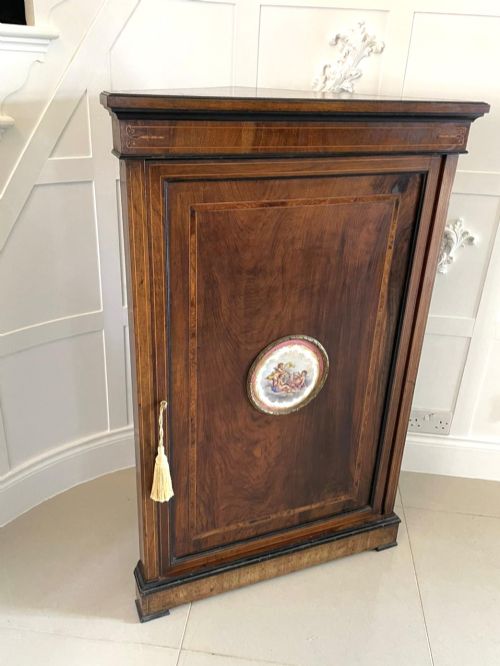
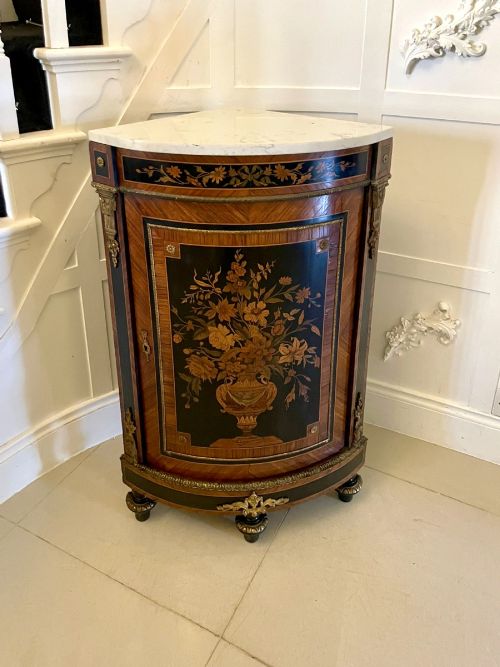
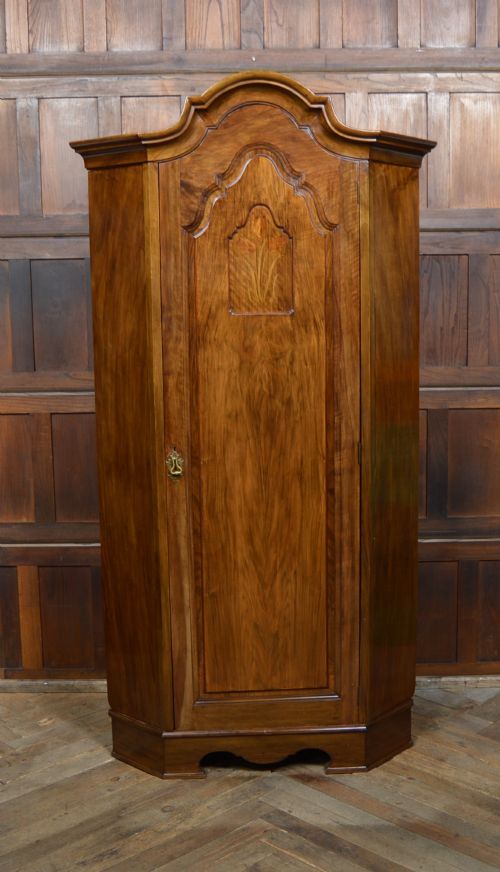
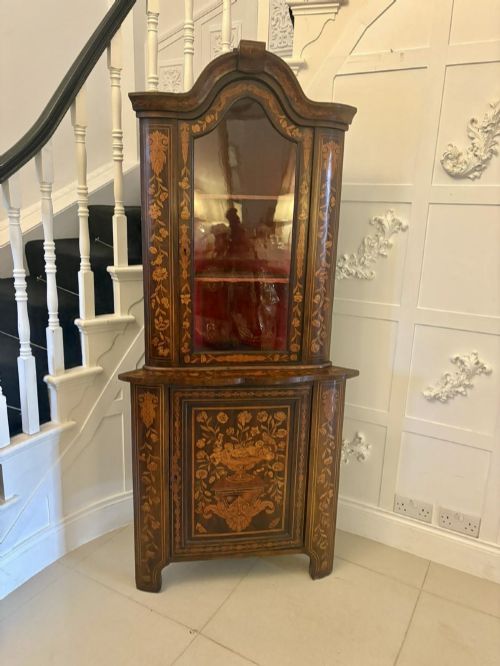

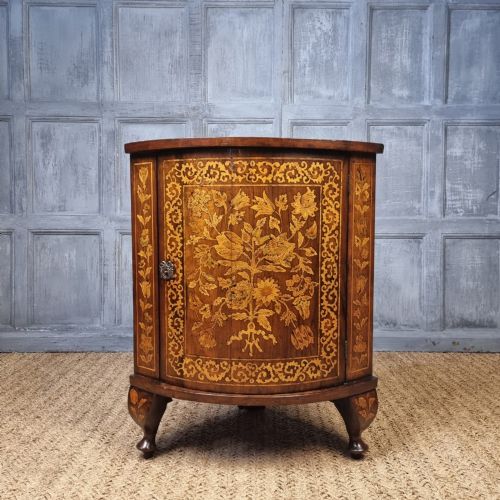


Inlaid Walnut Corner Cabinet
An inlaid walnut corner cabinet turns an unused room angle into a focal point, bringing rich grain and subtle stringing to the corner.
Inlaid Walnut Corner Cabinet
When you search for an inlaid walnut corner cabinet, you encounter fitted triangular cupboards designed to anchor room angles. These pieces range from compact hanging wall cupboards to substantial floor standing formats.
The versions most common on this page date from the eighteenth and nineteenth centuries. You find Georgian and Victorian examples alongside continental pieces exhibiting Dutch marquetry and French Louis XVI styling.
How they were made
Cabinetmakers constructed these carcases using walnut, fruitwood, and boxwood veneers applied to secondary woods like elm. Marquetry panels display intricate floral and figural motifs formed from contrasting timber slices.
Many examples incorporate brass hardware, glass panels, and occasionally marble tops or bronze mounts. Tambour doors and corner columns appear on select architectural forms.
Inlaid Walnut Corner Cabinet Retail Price Guide 2026
Typical asking prices for inlaid walnut corner cabinet among the pieces listed under this phrase on Sellingantiques today, from the lower quarter to the upper quarter. They describe what is for sale here now, not the wider market.
Listings feature walnut, fruitwood, and boxwood combined with brass, glass, and marble across Georgian, Victorian, and Edwardian periods.
What varies in quality
Quality depends heavily on the crispness of the marquetry and the choice of walnut veneer figures, such as burr or straight grain. Superior items display harmonious timber selection and precise inlay work across curved surfaces.
Construction details also separate standard production from finer cabinet-making. Original brasses, well-fitted doors, and well-proportioned cornices indicate a higher standard of manufacture.
The Inlaid Walnut Corner Cabinet Glossary
- Marquetry
- Decorative veneer patterns applied to a furniture carcase to form pictures or geometric designs. This technique frequently employs fruitwood and boxwood on a walnut ground.
- Burr walnut
- A highly figured timber prized for its swirling grain patterns. It comes from tree growths where the grain has grown in a deformed manner.
- Tambour
- Slender wooden strips glued to a canvas backing to create a flexible sliding door. This construction allows access to curved cabinet interiors.
- Ormolu
- Gilded bronze mounts applied to furniture for decorative effect. Found particularly on continental pieces.
- Stringing
- Fine inlaid lines of contrasting wood used to outline panels and drawers. It provides a neat border to the primary veneer.
Inlaid Walnut Corner Cabinet: Frequently Asked Questions
How do I hang a wall cabinet?
Hanging corner cupboards require secure fixing to solid wall studs using internal brackets or traditional strap fixings.
Because these pieces carry significant weight when loaded with china or glass, proper structural support is essential for safety.
How do I clean walnut veneer?
Dust walnut surfaces regularly with a soft, dry cloth to prevent grime accumulation. Apply quality beeswax periodically to nourish the timber and maintain the polish.
Avoid modern liquid polishes containing silicones, which can damage antique French polish over time.
Are these cabinets difficult to place?
Corner cabinets fit neatly into ninety-degree room angles, making efficient use of otherwise wasted space. Floor standing models require stable placement on level flooring.
Measure the height and door swing carefully before purchase to ensure proper clearance in your room.
What is the difference between Georgian and Victorian styles?
Georgian pieces typically feature simpler architectural lines and restrained stringing. They rely on the natural grain of figured walnut for their visual impact.
Victorian examples often incorporate heavier marquetry, elaborate brass mounts, and diverse revival influences such as Dutch Baroque.