


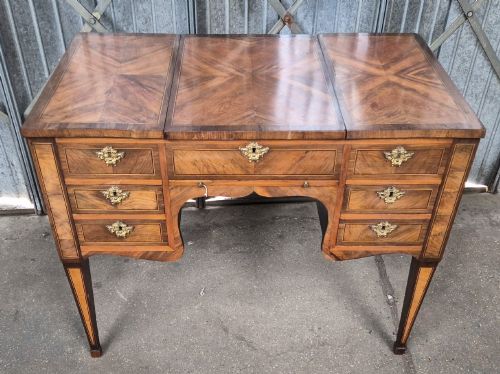
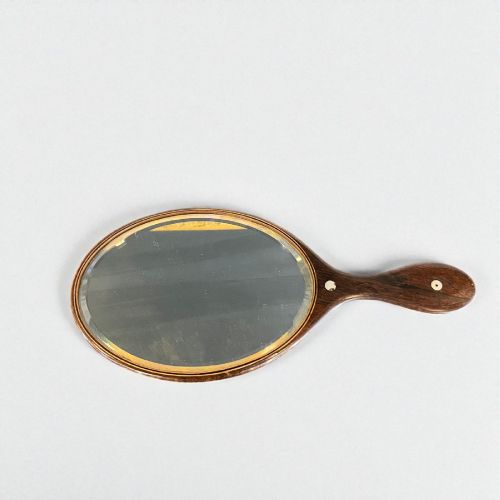
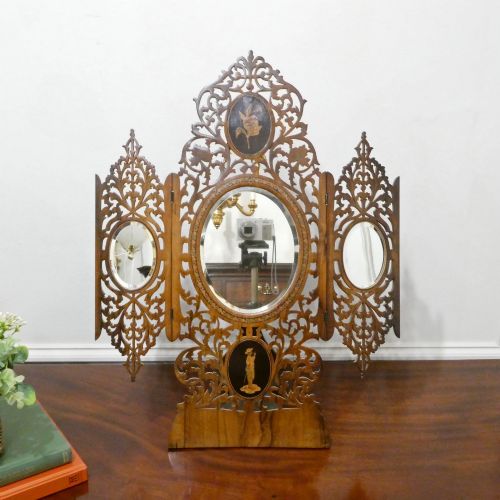
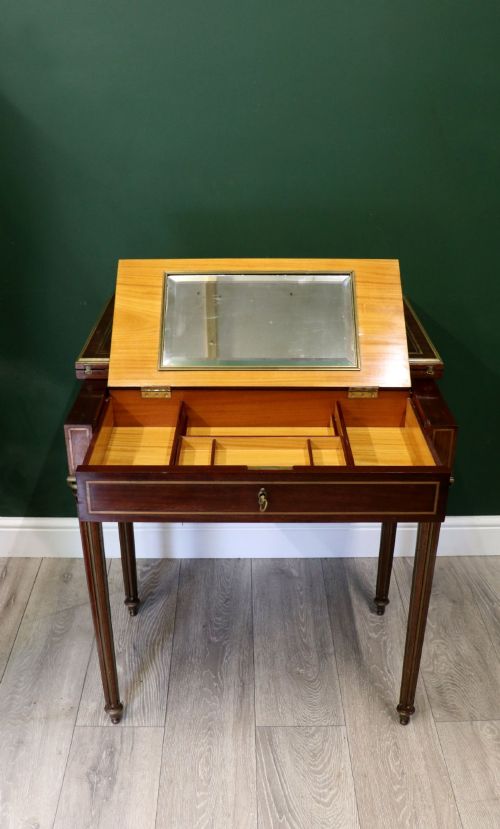
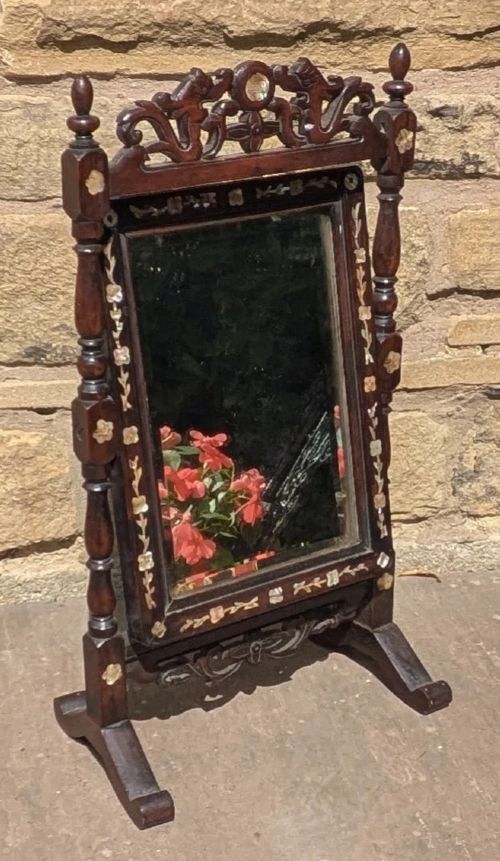
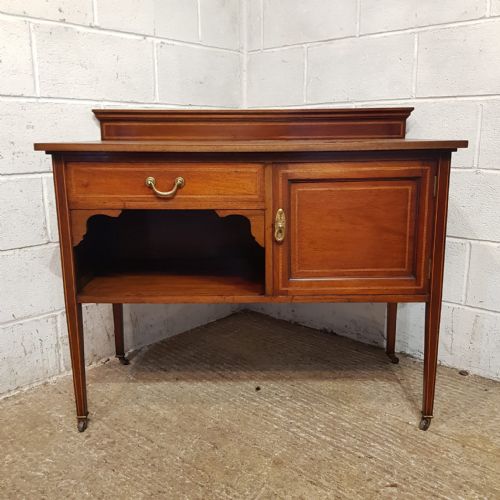
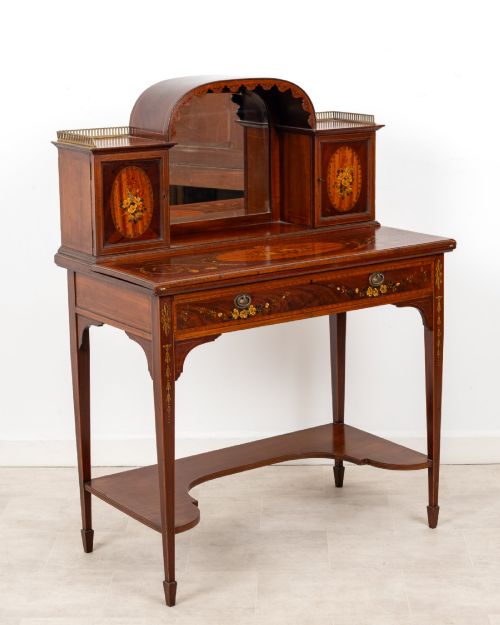
Inlaid Vanity Table
An inlaid vanity table brings together fine cabinetmaking and personal grooming, offering hinged mirrors and fitted compartments for daily preparation.
Inlaid Vanity Table
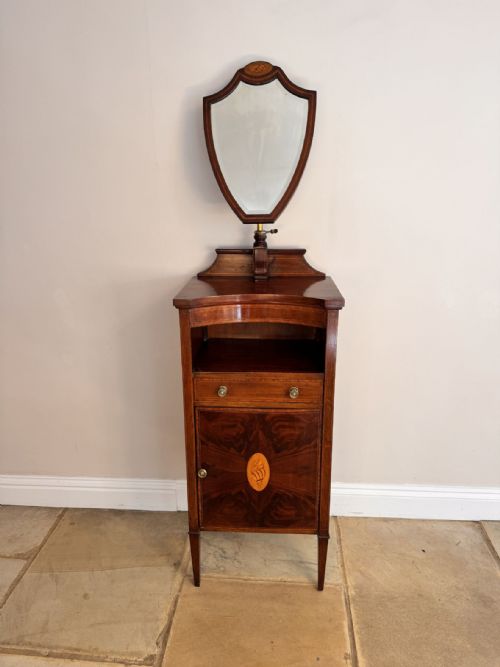
An inlaid vanity table serves as a dedicated space for grooming and dressing, appearing across periods from the eighteenth century through the Edwardian era. You will frequently encounter mahogany and satinwood dressing tables alongside compact dressing table mirrors and swing mirrors.
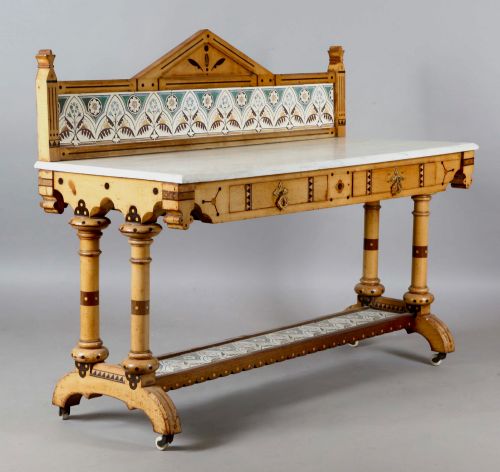
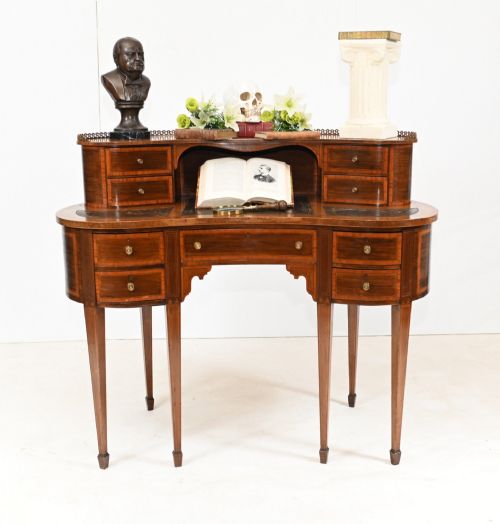
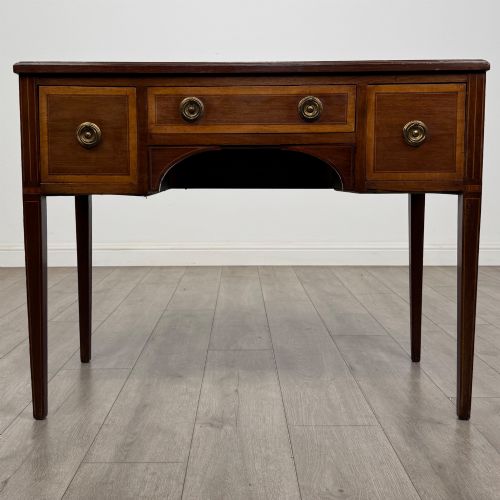
The pieces on this page span Georgian, Victorian, and Edwardian styles, incorporating related forms such as writing desks, washstands, and occasional tables. Dutch marquetry and Sheraton Revival designs frequently appear among the selections.
Makers and cabinetmakers constructed these items to combine utility with decorative surface ornament, utilising contrasting timbers and delicate stringing. The form evolved from simple toilet mirrors to elaborate freestanding tables equipped with drawers and compartments.
Materials and Construction
Cabinetmakers constructed these tables using primary structural timbers such as mahogany, walnut, rosewood, and oak, often applying veneers of satinwood or kingwood to the exterior surfaces. Boxwood and brass frequently provide contrasting stringing and hardware details.
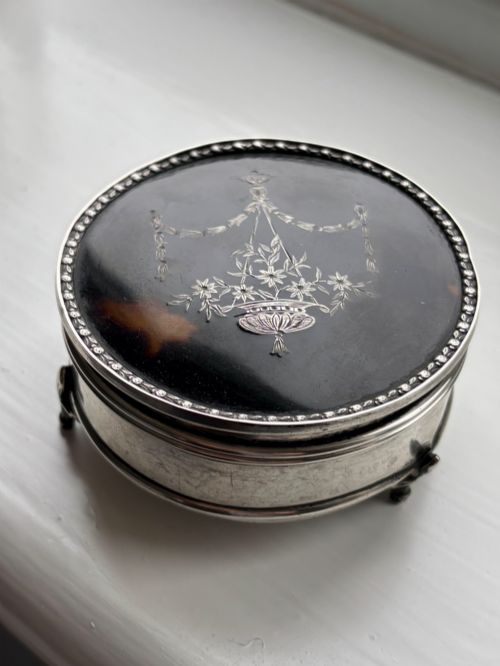
Inlay and marquetry techniques define the decoration, combining different woods or mother of pearl to create geometric patterns, floral motifs, or classical swags. Glass forms the pivoting swing mirrors and cheval glasses mounted above the tables.
Inlaid Vanity Table Retail Price Guide 2026
Typical asking prices for inlaid vanity table among the pieces listed under this phrase on Sellingantiques today, from the lower quarter to the upper quarter. They describe what is for sale here now, not the wider market.
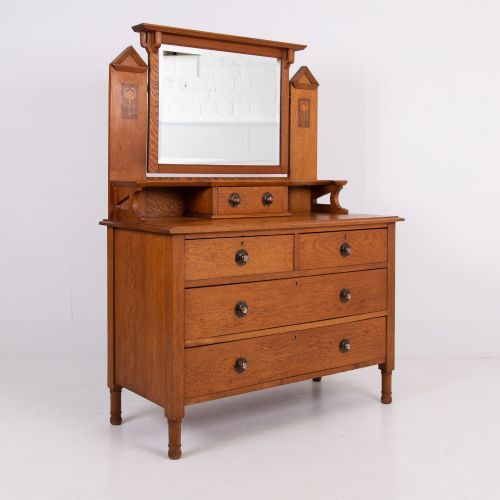
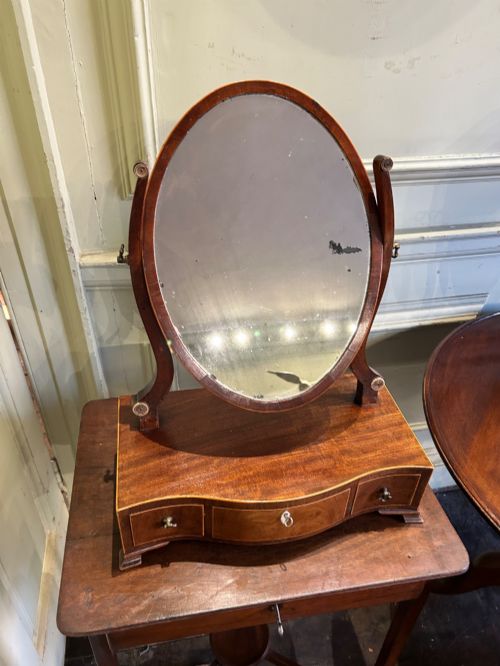
Early Heals oak dressing chests sit alongside delicate satinwood tables and Dutch marquetry toilet mirrors.
Evaluating Quality and Craftsmanship
The fineness of the wood inlay and the precision of the cabinet joints distinguish superior examples from standard production pieces. Crisp execution in the marquetry and balanced proportions indicate skilled workshop practices.
The choice of secondary timbers inside drawers and the retention of original brass hardware or silver fittings contribute to an object's integrity. High quality work shows in the smooth movement of drawers and the clarity of the original mirror glass.
Ollivant & Botsford·Asprey & Co.·H Mitchell·Edwards & Roberts
The Inlaid Vanity Table Glossary
- Marquetry
- Decorative veneer work arranged in pictorial or geometric patterns across a surface. Craftsmen cut contrasting pieces of wood to fit precisely into a designed recess.
- Cheval glass
- A full length mirror mounted on a freestanding frame with pivots that allow it to tilt. These often stand on the floor or rest atop a dressing chest.
- Satinwood
- A durable, lustrous timber with a yellow sheen used extensively for fine veneers in the eighteenth and nineteenth centuries. It provides a bright contrast against darker woods.
- Lowboy
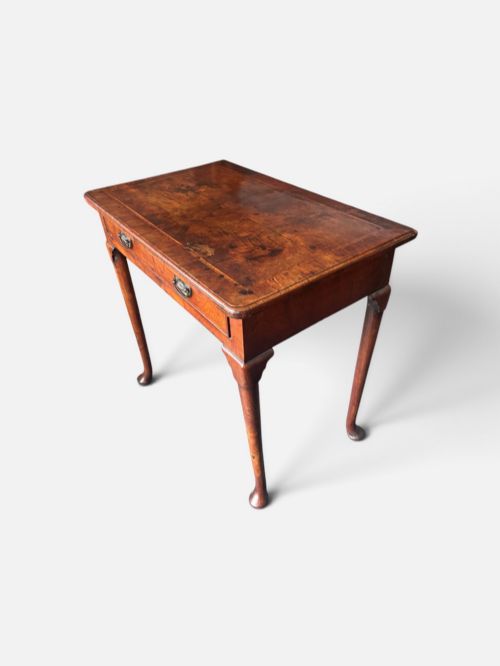
- A small side table featuring one or more rows of drawers beneath the top surface. They frequently function as dressing tables or writing desks in domestic settings.
- Stringing
- Thin lines of contrasting wood or light-coloured inlay set into the surface of furniture. It outlines panels and edges to frame the primary timber.
Inlaid Vanity Table: Frequently Asked Questions
What is an inlaid vanity table used for?
These tables provide a dedicated surface for personal grooming, hair styling, and the storage of cosmetics or jewellery.
Many examples incorporate pivoting mirrors and small compartmentalised drawers to keep personal items organised during daily use.
How do I date an inlaid vanity table?
Dating relies on observing the primary woods, construction methods, and stylistic cues like Sheraton Revival or Victorian Gothic influences.
Cabinetry details, such as drawer dovetailing and the composition of the mirror glass, offer further clues to the period of manufacture.
How do I care for antique wood surfaces?
Maintaining these surfaces involves keeping them away from direct sunlight and sudden humidity changes to protect the delicate veneer and inlay.
Regular dusting with a dry, soft cloth preserves the polished finish without harming the historic timber.