
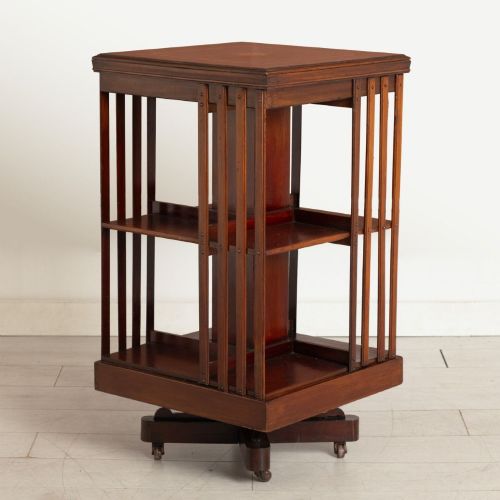
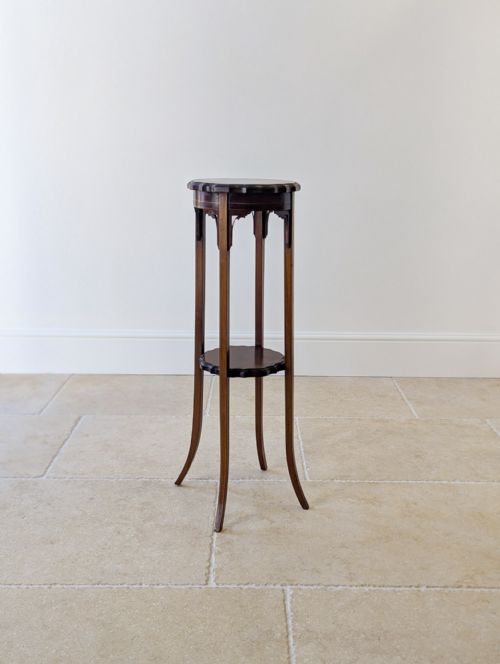
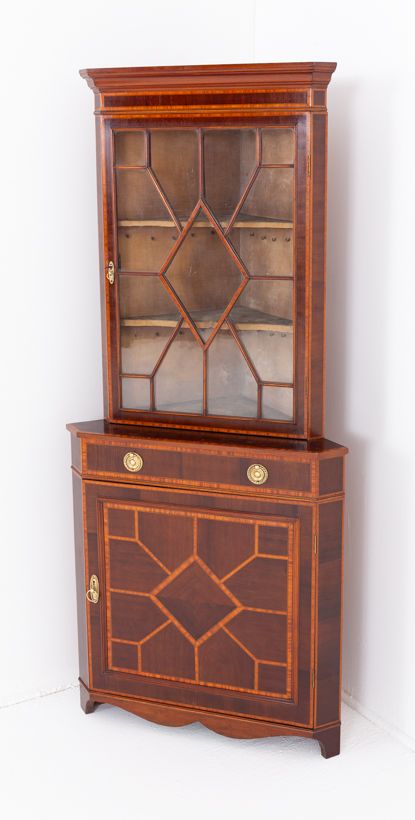

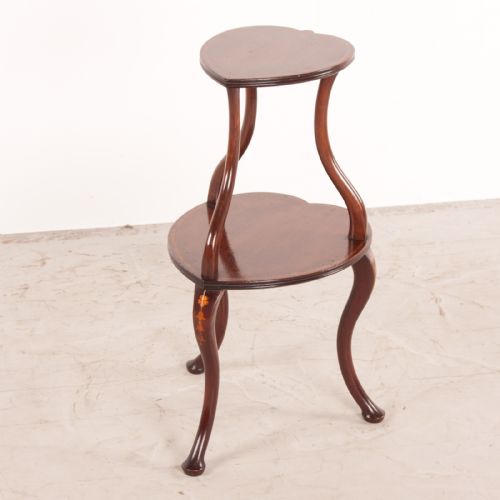

Inlaid Two Tier Stand
An inlaid two tier stand brings layered display space to a room, uniting timber surfaces with decorative contrast across Edwardian and Victorian forms.
Inlaid Two Tier Stand
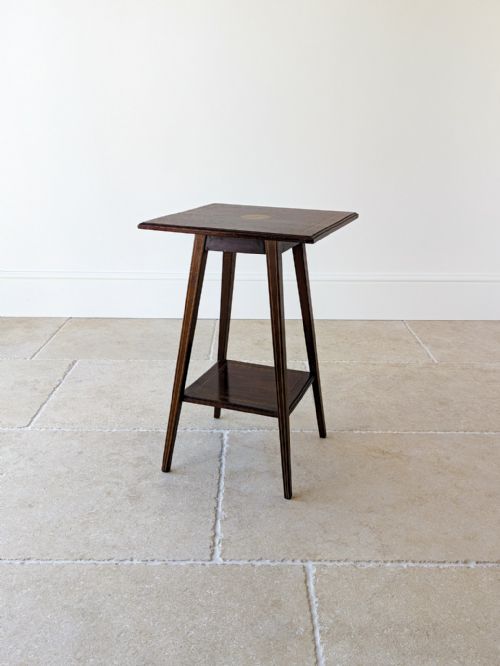
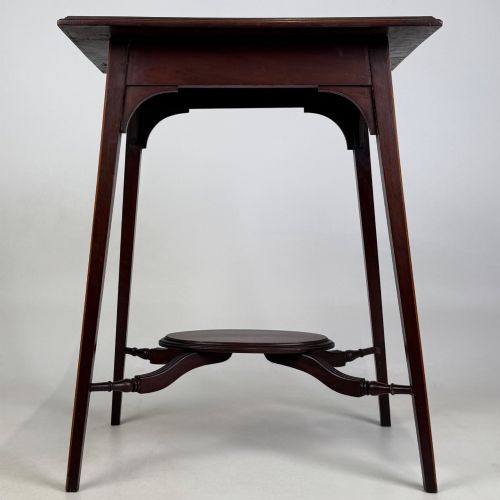
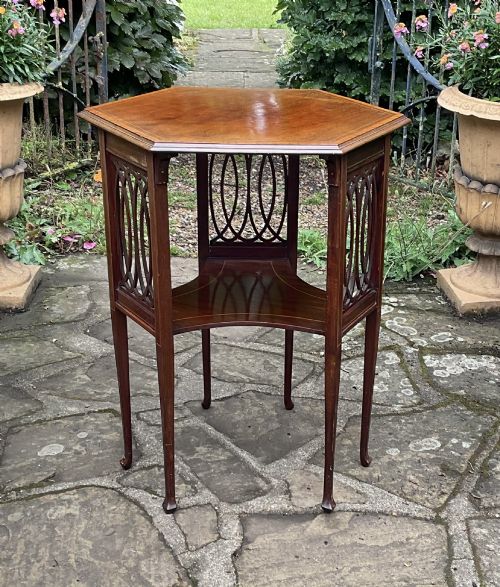
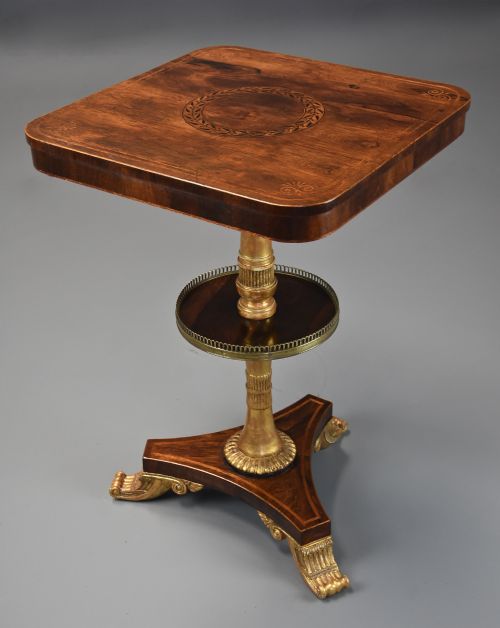
An inlaid two tier stand provides a compact surface for lamps, books, or plants by placing a smaller shelf beneath a main top. You encounter these most frequently in Edwardian mahogany forms and nineteenth-century occasional pieces.
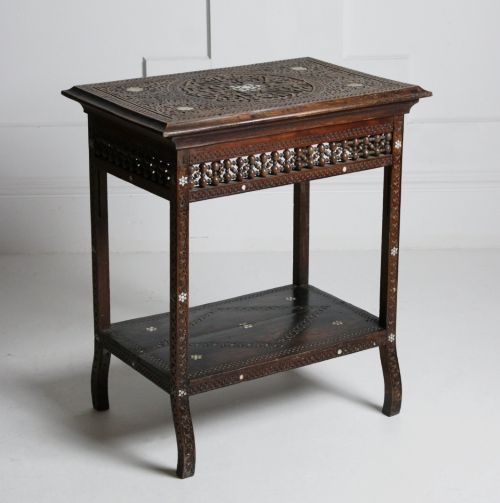
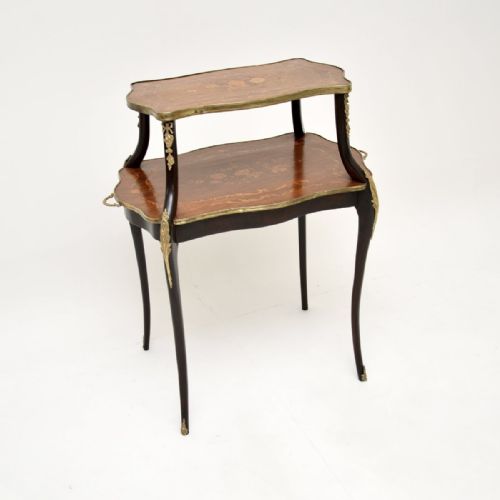
The evidence shows these stands appearing across diverse revivals, from Sheraton influences to French styles and Syrian designs. The lower tier links the legs for stability while offering secondary display space.
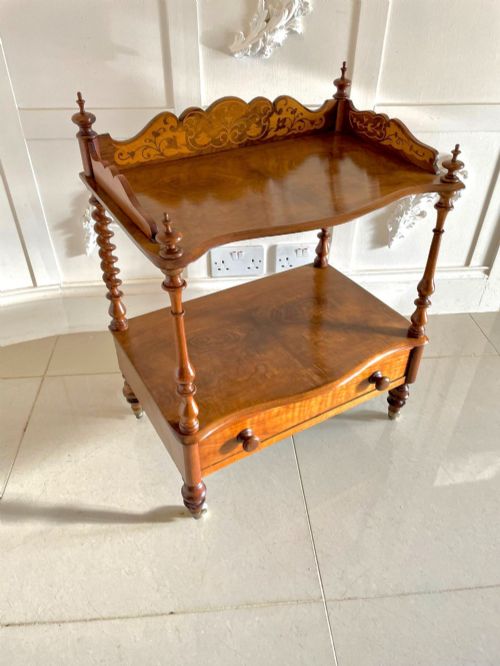
Makers adapted the two tier format into plant stands, lamp tables, and small etageres. The shared feature is the stepped vertical arrangement supported by contrasting woodwork.
Materials and construction
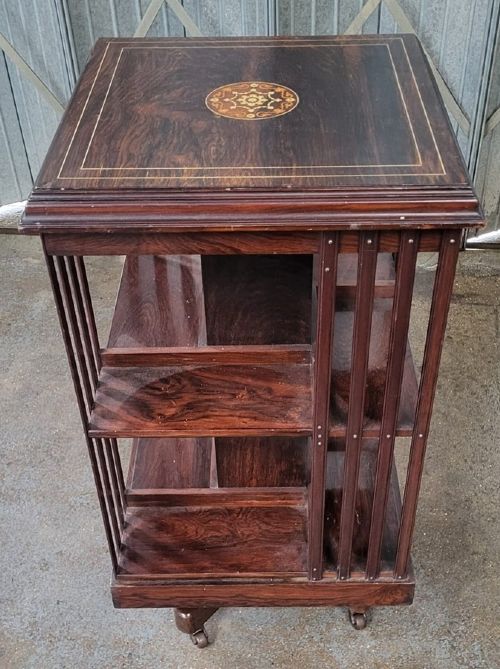
Cabinetmakers built the primary structures using mahogany, walnut, and rosewood, often selecting flame or burr veneers for visual depth. Oak and brass also appear in specific Arts and Crafts or French pieces.
Decoration relied on contrasting timbers such as satinwood and boxwood, cut into fine lines or floral marquetry. Makers used these inlays to frame table edges and define the geometric centres of both tiers.
Mahogany and rosewood dominate the primary timber selections, paired with satinwood and boxwood for decorative inlay.
Distinctions in standard and execution
Quality rests on the precision of the inlay work and the selection of the primary timber figures. Crisp boxwood lines and balanced marquetry indicate careful workshop execution.
Structural refinement separates standard production from finer pieces, seen in the joinery of the tier supports and the weight of the timber used for the shelves and legs.
George Bullock·Edwards & Roberts·Majorelle·Gordovil Spain
The Inlaid Two Tier Stand Glossary
- Inlay
- The technique of inserting pieces of contrasting wood into a recessed surface to form a pattern. This defines the decorative borders seen on many table tops and shelves.
- Marquetry
- Elaborate pictorial veneers assembled from various wood types to create decorative scenes or motifs. It appears frequently on French and Victorian etageres.
- Etagere
- A piece of furniture consisting of a set of open shelves for displaying small objects. These often feature two or more tiers with delicate supports.
- Torchere
- A tall stand designed to hold a light or a plant. The evidence includes examples matching this vertical display function.
- Sheraton Revival
- A late nineteenth and early twentieth century style drawing on the neoclassical furniture designs of Thomas Sheraton. Pieces in this style utilise satinwood inlay and mahogany.
Inlaid Two Tier Stand: Frequently Asked Questions
What is a two tier stand used for?
These stands functioned as versatile surfaces in period drawing rooms and parlours. The upper level held lamps or ornaments, while the lower shelf accommodated books or smaller decorative items.
Today, they serve similar roles beside seating or in corners where floor space is limited. Their compact footprint makes them practical for modern rooms needing extra surface area.
How do I identify an Edwardian stand?
Edwardian pieces often feature light mahogany timbers combined with delicate boxwood or satinwood stringing. The forms tend to be lighter and more slender than their Victorian predecessors.
Look for Sheraton Revival motifs and symmetrical plant stand designs dating around nineteen hundred. The construction reflects the mass production methods beginning to emerge in that period.
What is the difference between an etagere and a table?
An etagere is specifically designed for display, typically featuring multiple open tiers and often incorporating galleried edges. Tables prioritise a primary functional surface with a lower shelf added for secondary use.
French examples in the evidence lean towards the etagere classification, whilst English variations frequently present as occasional or lamp tables.
How should I care for inlaid wood?
Inlaid surfaces require protection from direct sunlight and excessive heat to prevent the contrasting veneers from drying out. Regular dusting with a soft, dry cloth preserves the polished finish.
Avoid placing damp items directly onto the timber, as moisture can damage the delicate boxwood or satinwood stringing used to create the decorative borders.