



Inlaid Trunk
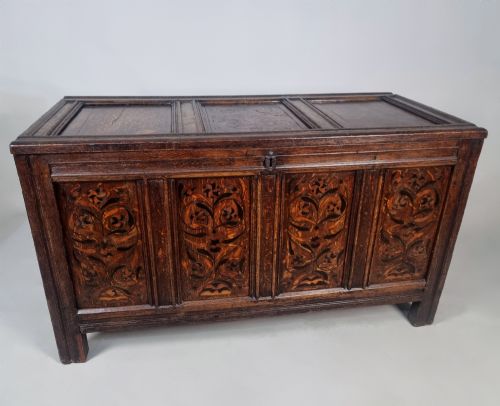
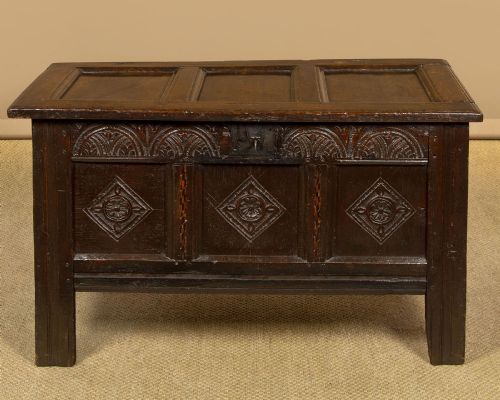
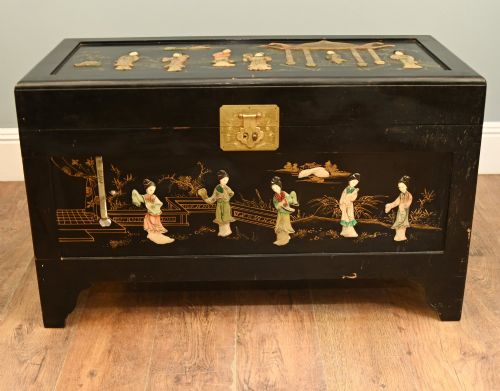
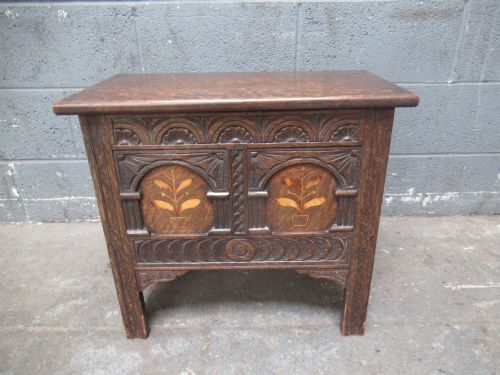
An inlaid trunk is a substantial storage piece decorated with contrasting woods, mother of pearl, or metal, offering robust utility alongside traditional craftsmanship.
Inlaid Trunk
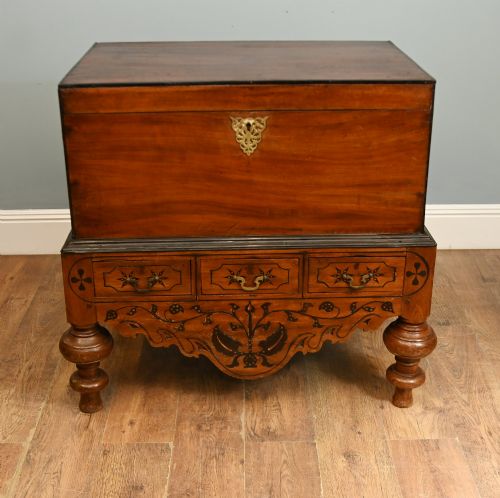
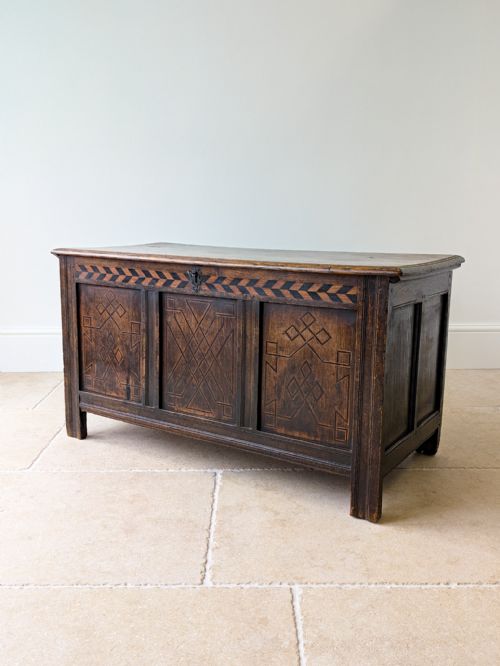
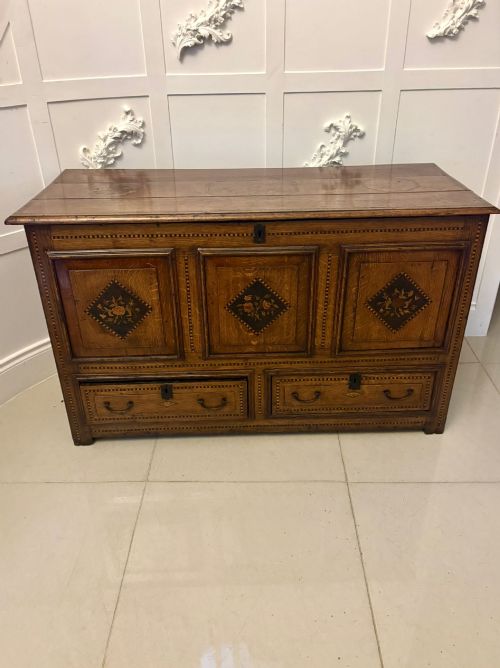
When searching for an inlaid trunk, buyers encounter a variety of forms including sturdy coffers, mule chests, and marriage chests spanning from the seventeenth century through the twentieth century. These domestic storage items served practical household functions for linens, valuables, and personal belongings before evolving into decorative furnishings.
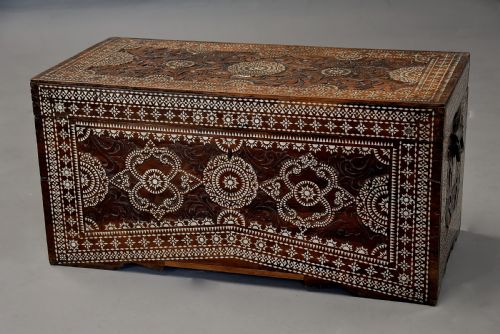
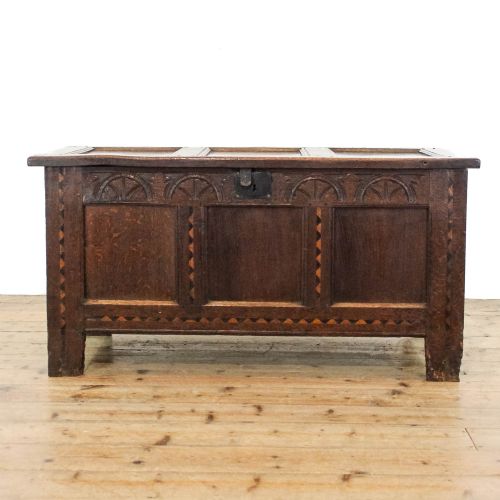
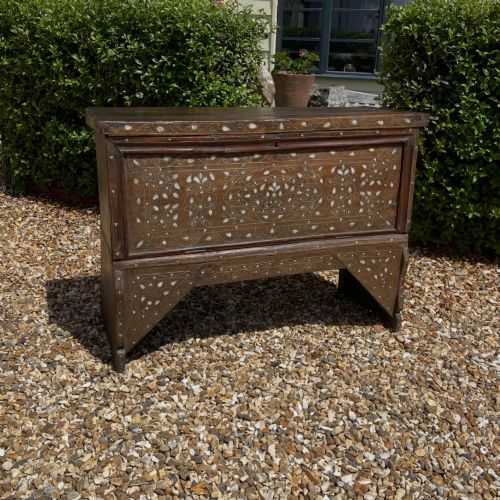
The pieces on this page originate from diverse regions, encompassing English oak examples, Portuguese marriage chests, Middle Eastern hardwood trunks with mother of pearl, and Dutch colonial teak chests. Seventeenth-century oak coffers with marquetry contrast with later nineteenth-century walnut dome coffers and twentieth-century hardwood boxes.
Buyers are most likely to meet substantial wooden chests featuring hinged lids and decorative surface work, alongside occasional specialised silver chests or blanket boxes. The integration of storage capacity with ornamental inlay defines the category across its various regional interpretations.
Materials and construction methods
The construction relies heavily on native and exotic timbers such as oak, mahogany, rosewood, teak, and walnut, providing structural integrity for large storage boxes. Joinery methods evolved from early pegged frame and panel construction to more refined cabinet-making techniques in later centuries.
Decoration is achieved through marquetry, contrasting wood veneers, and the incorporation of materials like mother of pearl, brass, ebony, and fruitwood. Craftsmen inset these contrasting elements directly into the primary wood body to create geometric, floral, or pictorial patterns across the surface.
Inlaid Trunk Retail Price Guide 2026
Typical asking prices for inlaid trunk among the pieces listed under this phrase on Sellingantiques today, from the lower quarter to the upper quarter. They describe what is for sale here now, not the wider market.
Periods represented span from the 17th century through the 1900s and 1920s.
Distinctions in quality and execution
The standard of an inlaid trunk depends upon the precision of the joinery and the complexity of the decorative inlay work. Finer examples display tightly fitted panels, crisp carving, and intricate marquetry where contrasting woods align seamlessly with the primary structure.
Material selection also dictates distinction, with dense hardwoods, substantial brass mounts, and carefully chosen mother of pearl elevating a piece above simpler utilitarian storage boxes. The integrity of the original surfaces and the refinement of the proportions distinguish superior examples.
The Inlaid Trunk Glossary
- Coffer
- A heavy wooden box utilised for storage, typically featuring a hinged lid and solid construction. These predecessors to the modern chest often sat at the foot of a bed or in main living areas.
- Mule Chest
- A storage chest featuring one or more drawers beneath the main internal compartment. They combine the traditional lift-top space of a coffer with drawer storage.
- Marquetry
- The art of applying pieces of veneer to a structure to form decorative patterns and pictures. Craftsmen cut various woods and materials to fit precisely into prepared recesses.
- Brass Mount
- Metal hardware affixed to corners, hinges, or lockplates to reinforce structural joints and provide ornamentation. These mounts frequently incorporate handles for lifting heavy trunks.
- Campaign Chest
- A modular chest designed to be easily dismantled and transported by military officers during campaigns. They often feature recessed brass handles and corner brackets.
Inlaid Trunk: Frequently Asked Questions
What is an inlaid trunk used for today?
These pieces function primarily as decorative storage furniture in living rooms, bedrooms, or hallways. They accommodate household items like blankets, bedding, or keepsakes while serving as focal points within an interior.
Their sturdy tops also allow them to double as low tables or display surfaces for lamps and decorative objects. Placing one at the foot of a bed or beneath a window utilises both their internal capacity and their visual presence.
How do I date an inlaid oak coffer?
Dating relies heavily on construction methods, joinery types, and the style of the carving or inlay. Early seventeenth-century examples typically employ pegged mortise and tenon joints with hand- cleft oak panels.
Later pieces from the eighteenth and nineteenth centuries introduce machine-cut elements, secondary woods, and standardised hardware. Examining the interior surfaces and the wear patterns around the hinges helps confirm the period of manufacture.
Are these trunks suitable for daily use?
Solid wood construction and robust joinery allow most examples to withstand regular opening and closing for storage purposes. The internal compartments remain deep and functional for bulky items.
Care should be taken with antique hinges and delicate surface inlays to prevent undue wear. Placing items with appropriate padding inside protects historical linings and base timbers from abrasion.
How do regional styles differ?
Regional origins dictate the choice of timber, the nature of the decorative inlay, and the overall proportions of the chest. English examples frequently utilise native oak with geometric marquetry or carved panels reflecting Jacobean influences.
Conversely, continental and colonial pieces often incorporate exotic hardwoods like teak, satinwood, or rosewood combined with brass mounts, mother of pearl, or extensive floral inlays. These variations reflect the local materials and artistic traditions available to the maker.