

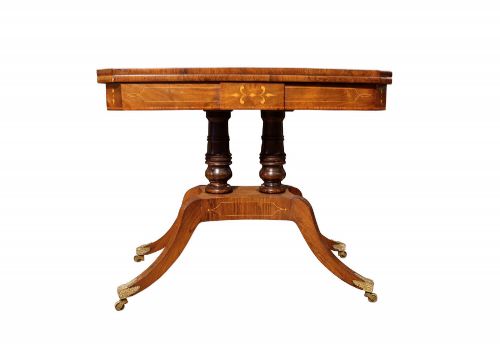


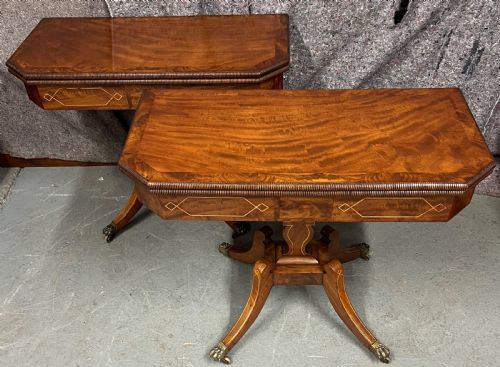


Inlaid Tea Table Castors
These inlaid tea table castors and related tables bring together the finest cabinetwork of the Regency, Georgian, and Edwardian periods.
Inlaid Tea Table Castors
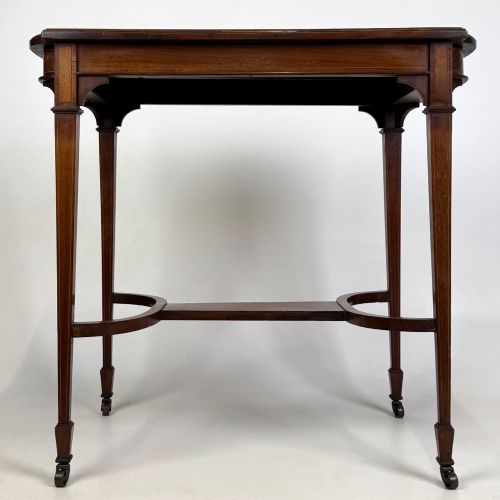
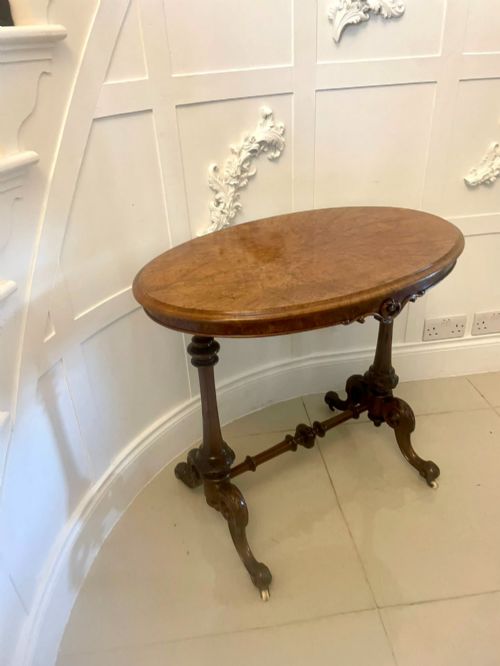
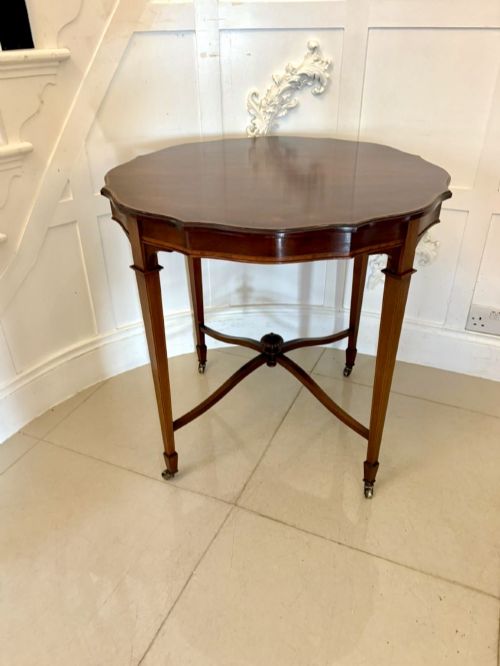
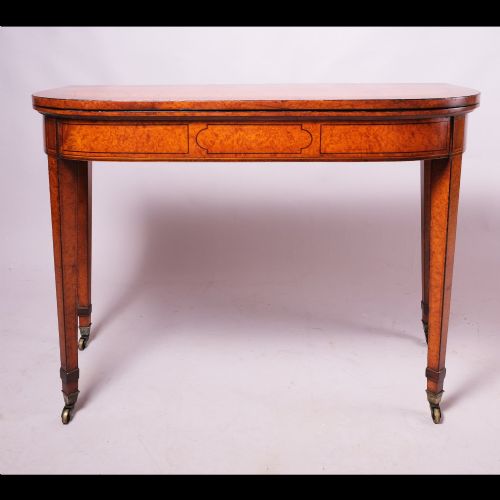
When you search for inlaid tea table castors, you are looking at sophisticated surfaces designed for hospitality and display, often supported on brass castors and delicate legs. The evidence shows these pieces span multiple centuries, appearing in forms such as card tables, games tables, Pembroke tables, and occasional tables.
The version you are most likely to meet on this page is an Edwardian satinwood or mahogany piece, alongside grander Regency rosewood card tables and Georgian side tables. These tables combine practical folding or drop leaves with intricate woodwork, serving as both functional furniture and decorative centrepieces.
What varies in quality
Quality rests in the crispness of the timber selection and the precision of the contrasting inlay work. Finer examples display harmonious grain patterns in rosewood or mahogany paired with cleanly executed boxwood and ebony stringing.
The sophistication of the design dictates the distinction between standard items and exceptional pieces, such as those featuring brass sabots and original castors. Superior craftsmanship shows in the seamless integration of the functional moving parts with the decorative veneer.
The listings here span eight distinct periods, from Georgian and Regency up to the Edwardian era.
The Inlaid Tea Table Castors Glossary
- Castor
- A small wheel mounted on a swivel attached to the legs of furniture to allow easy movement. They frequently appear in brass on Regency and Victorian card tables.
- Inlay
- A technique where pieces of contrasting timber such as satinwood, boxwood, or ebony are inserted into a recessed surface to form a pattern. It defines the decorative character of Edwardian and Georgian tables.
- Pembroke table
- A small rectangular table with hinged drop leaves on either side. These pieces often feature pedestal bases or slender legs with castors.
- Sabot
- A metal shoe or sleeve fitted to the foot of a furniture leg for protection and adornment. They are typically cast in brass on fine Regency rosewood tables.
- Stringing
- A narrow strip of contrasting wood inlaid into the surface to create linear borders. This detail is characteristic of satinwood and mahogany occasional tables.
Inlaid Tea Table Castors: Frequently Asked Questions
What is an inlaid tea table?
An inlaid tea table is a small table designed for serving tea, featuring decorative woodwork on the top surface. These pieces often include folding leaves or compartments.
They reflect the social habits of the Georgian and Edwardian periods, combining utility with ornamental craftsmanship.
How do I identify a Regency table?
Regency tables typically display rich timbers like rosewood or mahogany, often enhanced by brass inlay or sabots. The design leans toward classical proportions and includes functional castors.
Peculiarities such as eccentric side designs or card table formats also point toward this early nineteenth-century era.
Where were these tables used?
These tables occupied principal reception rooms, drawing rooms, and parlours for entertaining guests. They functioned as card tables, games surfaces, or tea tables depending on the evening.
Their mobility, aided by castors, allowed them to be repositioned easily within the domestic interior.
What is Edwardian satinwood?
Edwardian satinwood refers to furniture produced in the early twentieth century utilising a pale, lustrous yellowish timber. It was frequently paired with intricate inlay work.
Items from this period often take the form of lighter occasional, lamp, or Sutherland tables.