

Inlaid Slope Desk
An inlaid slope desk brings together fine cabinet-making and practical writing storage across periods from the Georgian era through to Edwardian times.
Inlaid Slope Desk
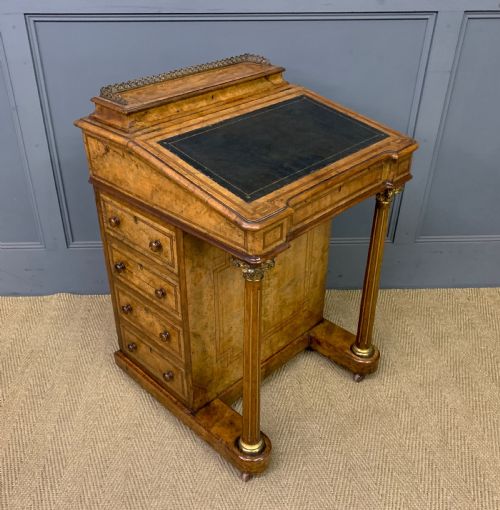
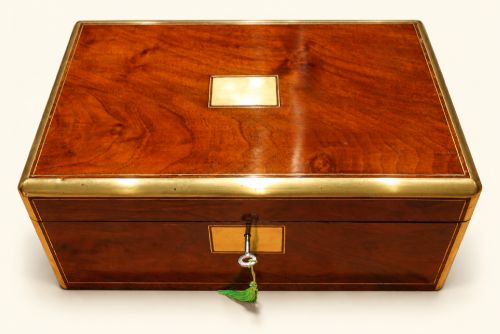
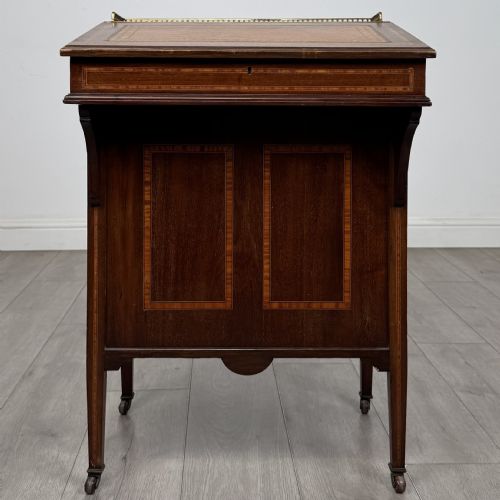
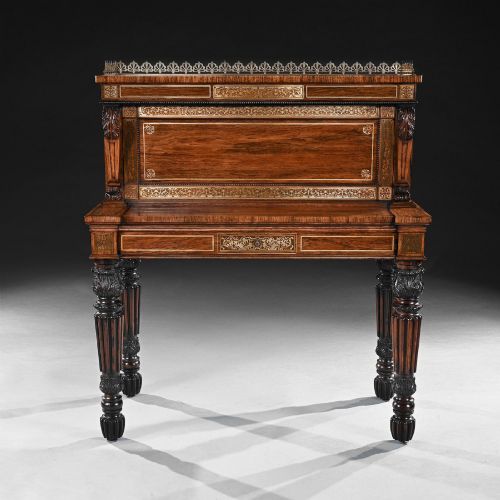
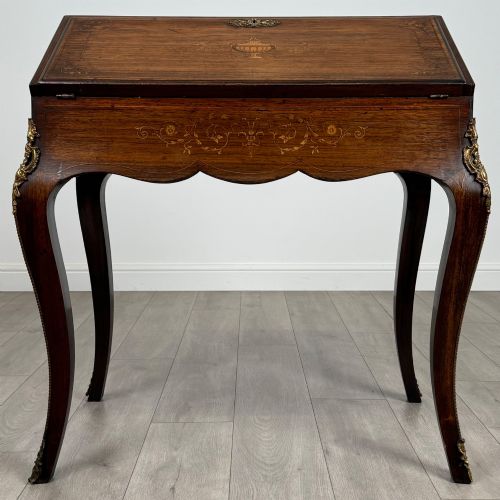
An inlaid slope desk encompasses writing slopes, bureaus, and davenports designed for correspondence and document storage. These pieces combine a slanted writing surface with internal compartments, drawers, and stationery spaces.
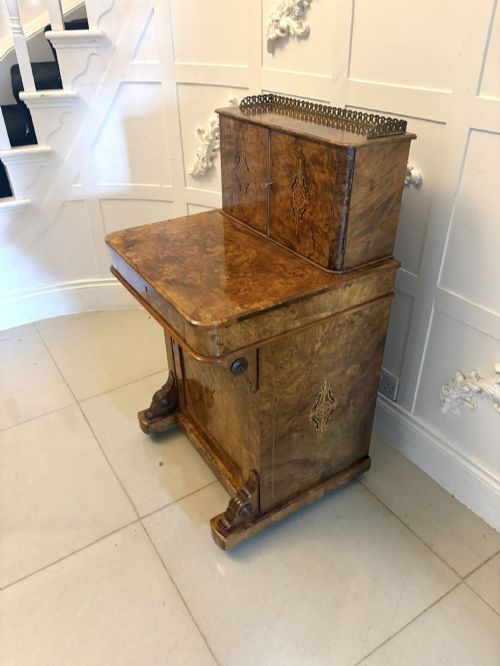
Victorian burr walnut models and Edwardian mahogany versions appear frequently alongside earlier Georgian and 18th-century examples. Forms range from compact campaign writing boxes to larger freestanding writing tables and bureau bookcases.
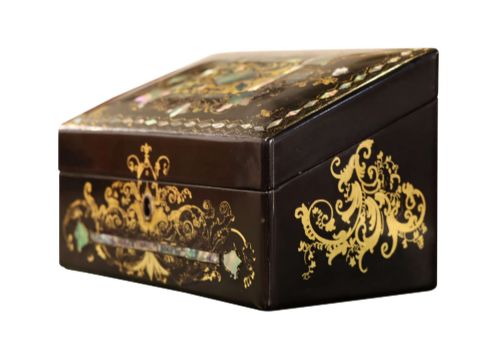
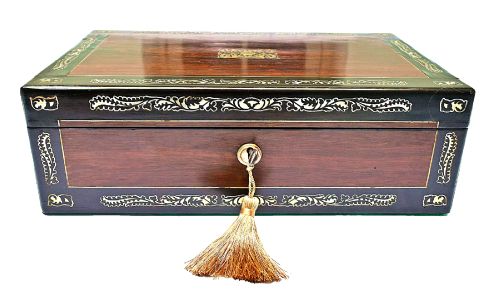
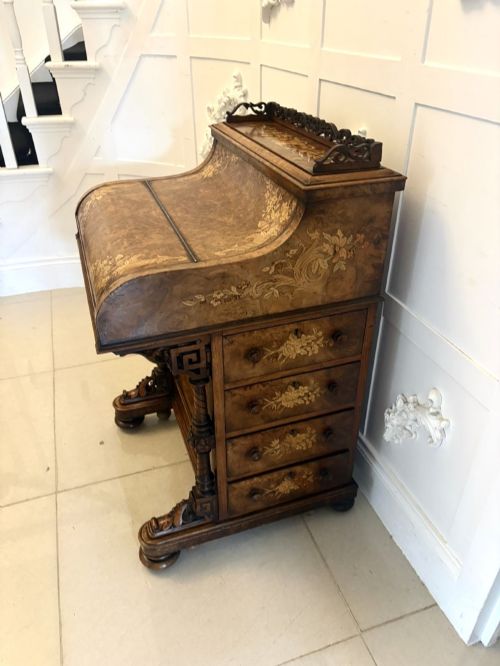
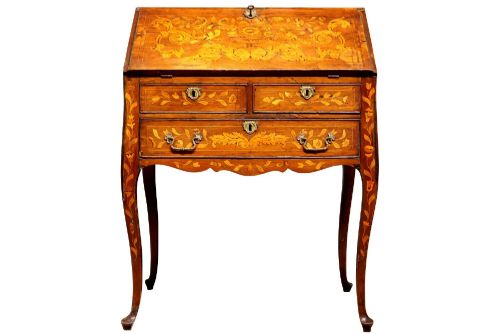
Makers utilised various timber foundations to create these items, incorporating decorative surface work such as floral marquetry, parquetry, and brass detailing.
How they were made
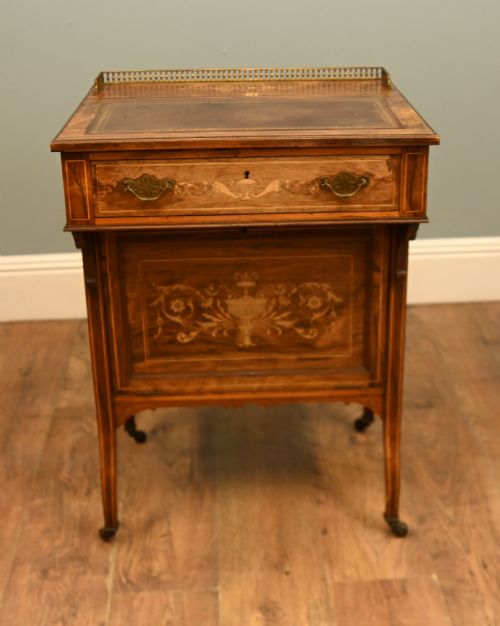
Carpenters constructed carcasses from solid timbers like mahogany, walnut, oak, and rosewood, often applying veneers of burr walnut, satinwood, or amboyna to primary surfaces. Marquetry and parquetry techniques involved cutting contrasting woods and occasionally bone into intricate geometric or floral patterns.
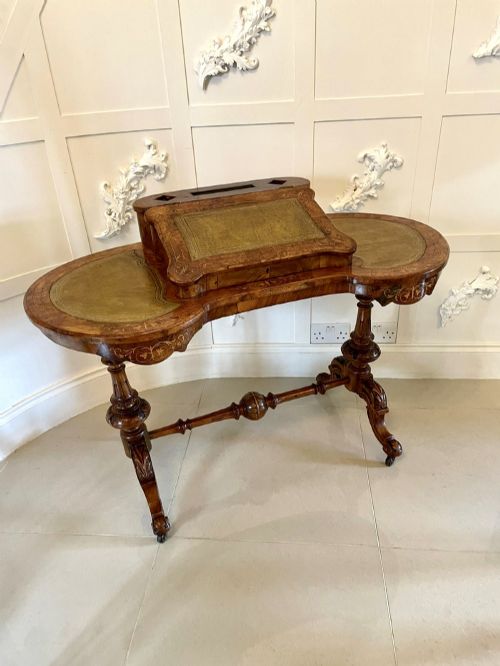
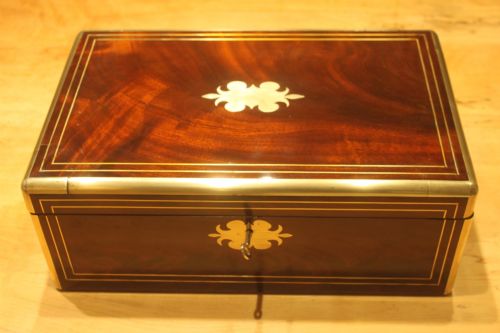
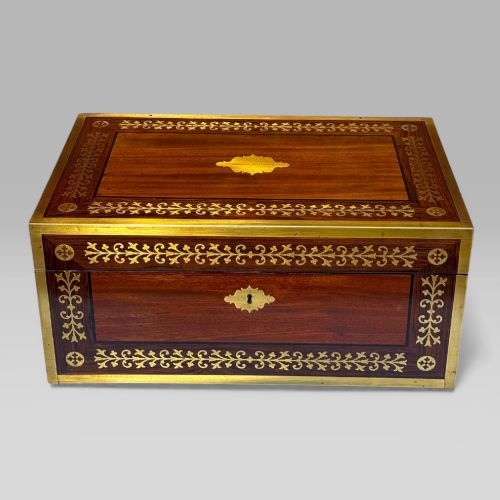
Metal components such as brass inlays, stringing, mounts, and hinges reinforced structural corners and decorated the exterior panels. Leather inserts provided a smooth writing surface on folding slopes and pull-out desk sections.
Inlaid Slope Desk Retail Price Guide 2026
Typical asking prices for inlaid slope desk among the pieces listed under this phrase on Sellingantiques today, from the lower quarter to the upper quarter. They describe what is for sale here now, not the wider market.
Listings feature walnut, mahogany, rosewood, and satinwood alongside brass inlay and floral marquetry.
What varies in quality
The precision of the wood inlay and the complexity of the marquetry patterns distinguish finer examples from standard production. Tight joints, matching veneer grains, and well-fitted internal stationery compartments demonstrate superior cabinet-making.
The choice of secondary woods and the quality of brass mounts or locking mechanisms indicate the original tier of manufacture. Pieces retaining original leather writing surfaces and intact Tunbridge ware detailing hold greater historical integrity.
Gillows Oxford Street Workshop
The Inlaid Slope Desk Glossary
- Writing slope
- A portable box with a hinged, slanted lid that opens to reveal a writing surface and storage wells for ink and paper. These items allowed travellers and homeowners to write comfortably before fitted desks became standard.
- Davenport desk
- A compact Victorian writing desk featuring a sloped, hinged top above a pedestal of drawers. The design maximised storage space in smaller rooms.
- Marquetry
- A technique where small pieces of veneer are arranged to form pictorial or floral designs on a wooden ground. Craftsmen used various coloured woods to achieve tonal depth.
- Parquetry
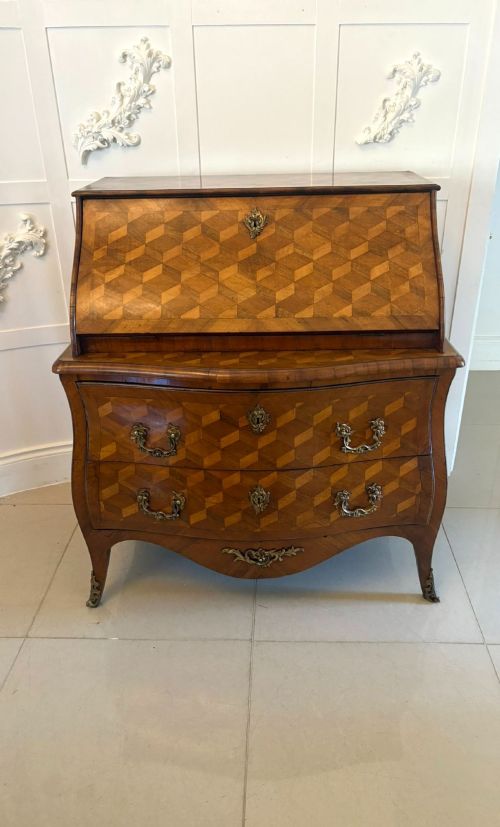
- Geometric wood inlay forming repeating patterns such as cubes or squares across a surface. This method decorated tabletops and box lids during the 18th and 19th centuries.
- Tunbridge ware
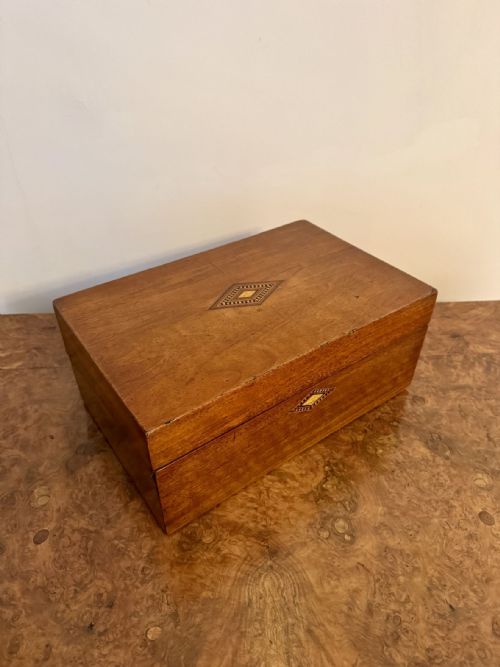
- Small wooden items decorated with mosaic patterns created by gluing together coloured wood strips and slicing them thinly. Originating in Kent, this work often adorned Victorian boxes and slopes.
Inlaid Slope Desk: Frequently Asked Questions
What is an inlaid slope desk?
An inlaid slope desk is a portable or stationary writing cabinet featuring a slanted lid and decorative wood or brass surface patterns. These items served for writing letters and storing documents.
Examples span from Georgian and Victorian periods, utilising timbers such as mahogany, walnut, and rosewood.
How were writing slopes used?
Owners placed writing slopes on tables or laps to draft correspondence while containing inkwells, pens, and paper inside the box compartments. Folding lids provided a firm writing angle.
Many portable versions travelled with owners during the 18th and 19th centuries.
How do I identify Victorian examples?
Victorian pieces often employ burr walnut veneers, Tunbridge ware decoration, and brass stringing. Davenport desks and piano-top models emerged predominantly during this era.
Interior fittings frequently include pigeonholes, secret drawers, and leather writing inserts.
What is the difference between a slope and a bureau?
A writing slope is typically a portable box placed on furniture, whereas a bureau is a larger freestanding desk with a fall-front or sloped lid built onto a chest of drawers or stand.
Bureaus provide greater internal stationery storage and floor-standing stability.