
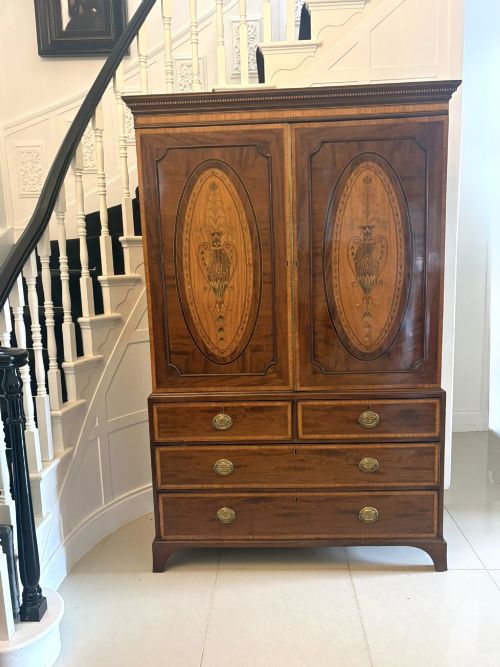
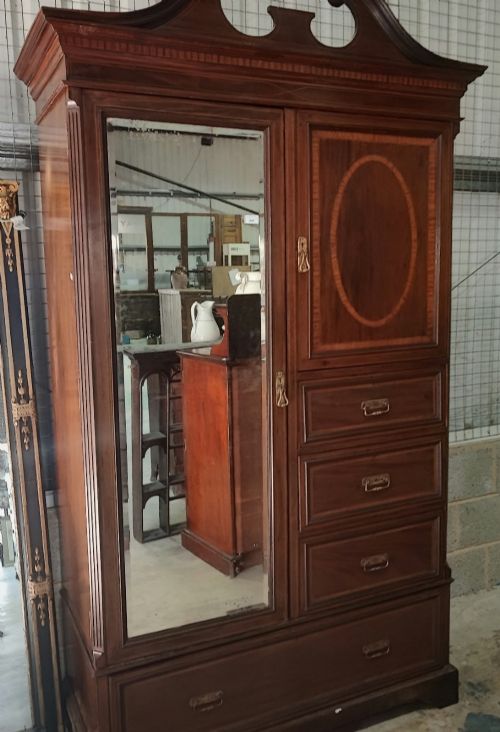
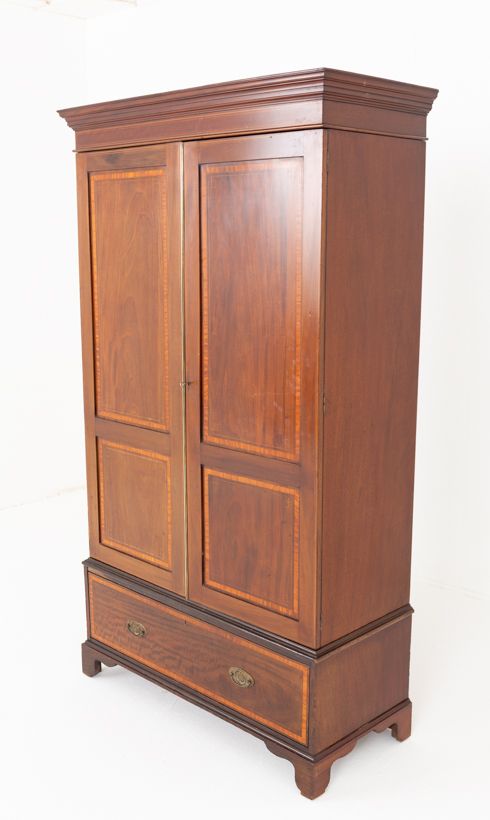
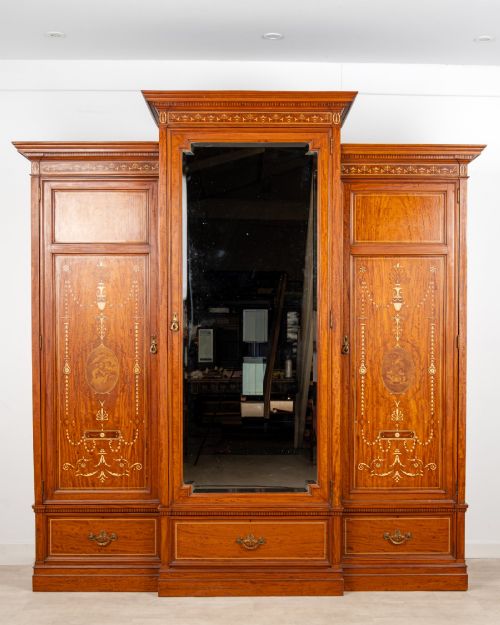
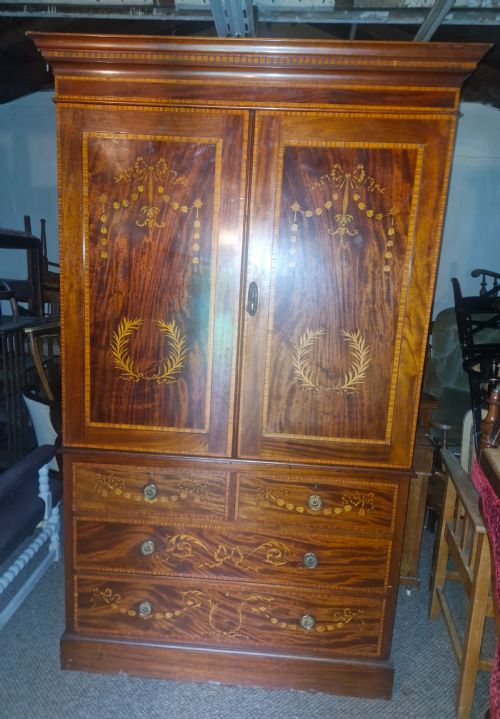


Inlaid Satinwood Linen Press
An inlaid satinwood linen press combines grand storage with pale, lustrous timbers to brighten a bedroom.
Inlaid Satinwood Linen Press
An inlaid satinwood linen press is a substantial piece of bedroom furniture designed to store linens and garments, merging upper cupboard space with lower drawers. When searching for an inlaid satinwood linen press, buyers encounter examples stretching from the late Georgian period through to the Edwardian era.
The pieces on this page span several decades and stylistic revivals, including George III, Victorian, and Sheraton Revival designs. Many take the form of wardrobes, compactums, and housekeepers' cupboards, often featuring distinctive banded or marquetry decoration.
Makers such as Edwards and Roberts, Druce and Co., Waring and Gillow, and Maples and Co. frequently produced these grand storage items. They appear in configurations ranging from single sections to large triple wardrobes and complete bedroom suites.
How they were made
Cabinet makers utilised mahogany as a sturdy structural timber, applying satinwood veneers for a bright, decorative surface. Boxwood and rosewood stringing often framed the panels, creating subtle geometric contrast.
Details such as brass hardware, mirror glass, and original interior linen slides complete the construction. Painted accents and intricate marquetry further ornamented the woodwork during the Edwardian period.
Some gentlemen's presses still retain the faint, lingering scent of cedar and old linen tucked away in the slides.
What varies in quality
The distinction between standard and superior pieces rests upon the crispness of the inlay work and the selection of timber veneers. Richly figured satinwood combined with well-matched mahogany demonstrates a higher tier of craftsmanship.
Structural integrity, such as the retention of original interior linen slides and hardware, elevates a piece. Pieces bearing identifiable workshop stamps or attribution to notable cabinet makers command greater interest.
Edwards and Roberts·Druce and Co.·Waring and Gillow·Maples and Co.
The Inlaid Satinwood Linen Press Glossary
- Linen press
- A tall piece of furniture featuring upper doors enclosing sliding trays for folded textiles, above a chest of drawers.
- Satinwood
- A durable, yellow-toned exotic timber prized for its lustrous grain and smooth finish in fine cabinetry.
- Compactum
- A fitted wardrobe divided into multiple internal compartments for hanging clothes, drawers, and shelving.
- Marquetry
- The art of applying decorative pieces of veneer to a structure to form intricate pictorial or geometric patterns.
- Pediment
- The decorative architectural crowning feature situated at the very top of a tall cabinet or wardrobe.
Inlaid Satinwood Linen Press: Frequently Asked Questions
What is a linen press?
A linen press is a traditional storage cabinet designed with internal sliding trays specifically for keeping textiles flat and orderly.
The lower section typically incorporates drawers for additional garments, making it a versatile piece for bedroom storage.
How do I clean satinwood?
Satinwood benefits from gentle dusting with a soft, dry cloth to preserve its delicate polished finish.
Avoid chemical sprays and moisture, applying a traditional beeswax sparingly only when the timber appears dry.
Are original linen slides important?
Original internal linen slides contribute significantly to the historical integrity and utility of a press.
Their presence indicates that the interior has survived alterations, which appeals to collectors seeking untouched examples.
How do I distinguish Edwardian from Georgian presses?
Georgian presses often showcase heavier mahogany construction with restrained satinwood banding and classical proportions.
Edwardian interpretations tend to feature lighter satinwood framing, painted details, and more expansive mirrored door panels.
Can these wardrobes be dismantled?
Many large wardrobes and compactums from these periods were constructed with modular sections to allow for transport.
Professional assembly is usually recommended to ensure the frame and doors align correctly in a room.