

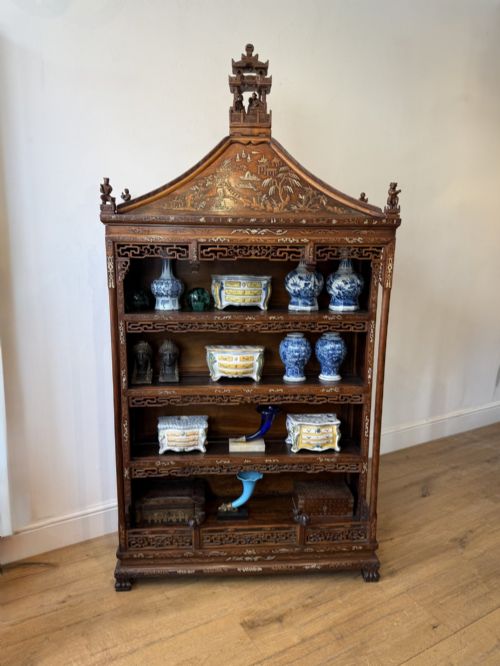


Inlaid Open Shelf Cabinet
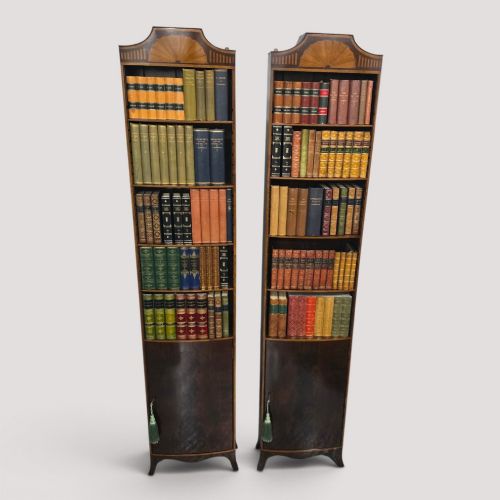
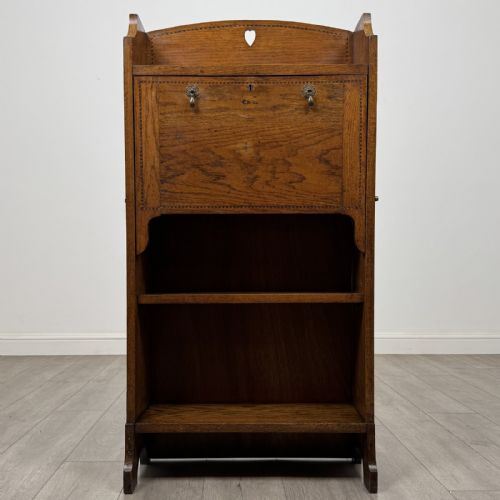
An inlaid open shelf cabinet brings warmth and practical display space to a room, combining rich timber surfaces with delicate detail.
Inlaid Open Shelf Cabinet
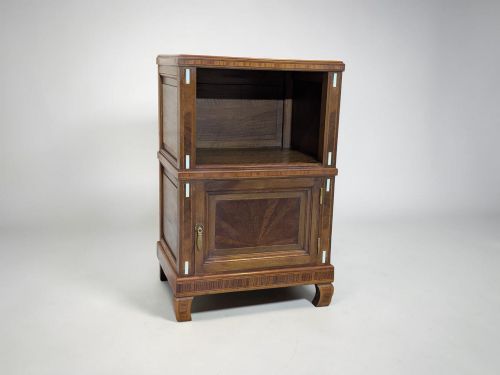
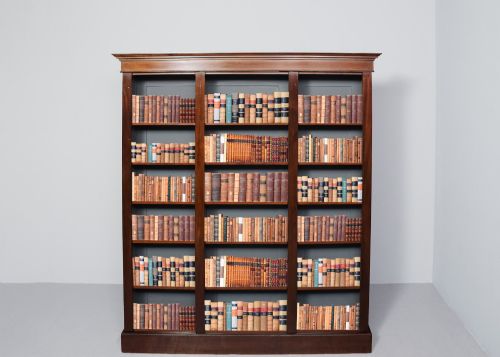
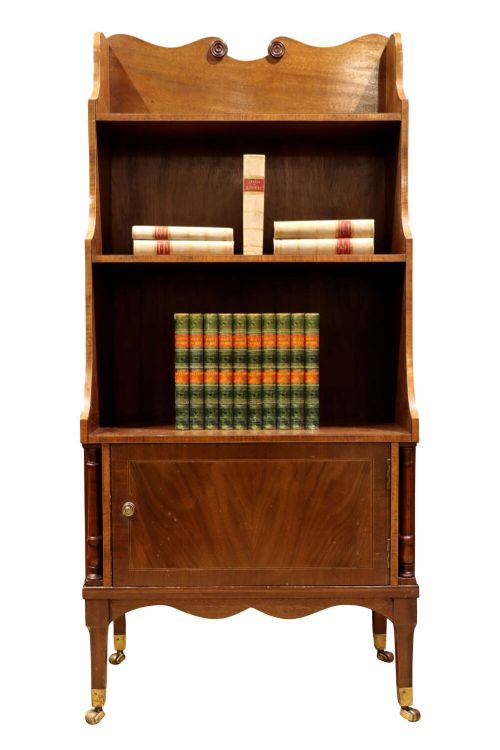
An inlaid open shelf cabinet combines accessible shelving with decorative display surfaces, often taking the form of bookcases, whatnots, and side cabinets. These pieces span the nineteenth century and the Edwardian era, reflecting Victorian, Edwardian, and Arts and Crafts design.
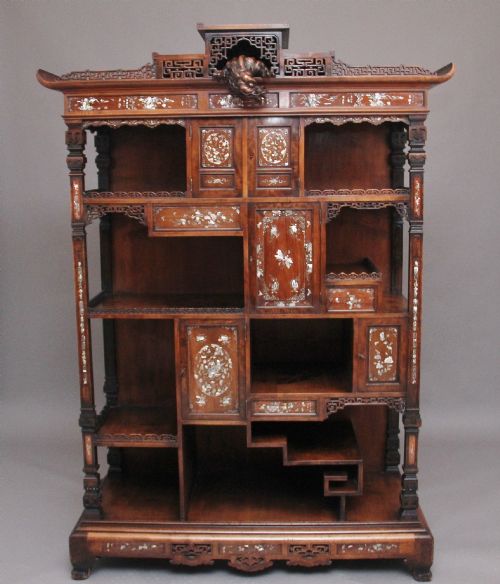
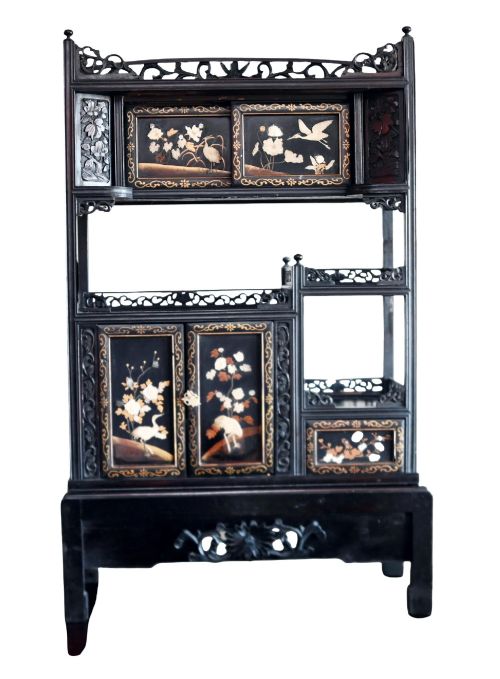
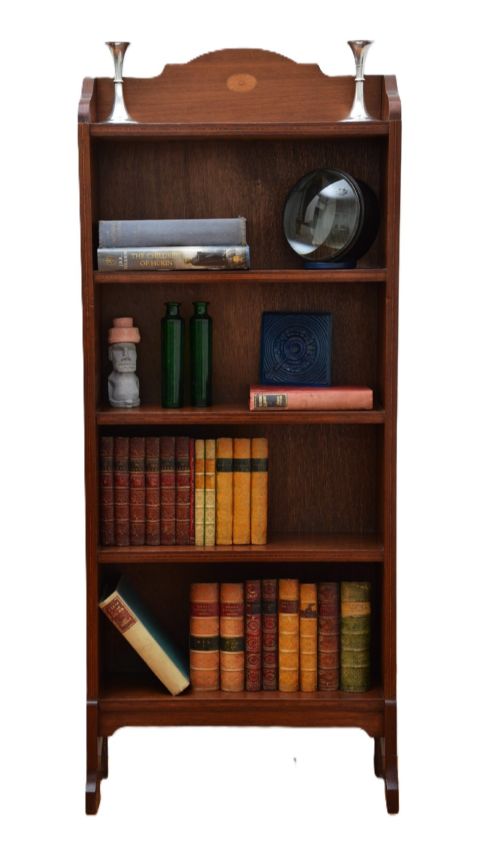
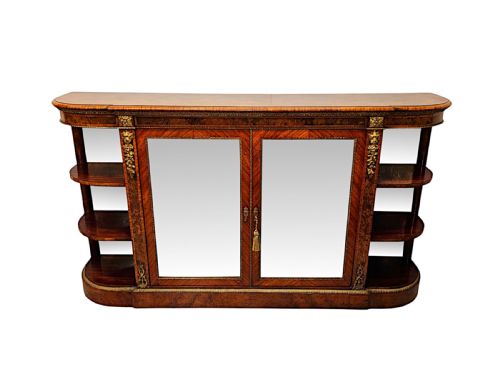
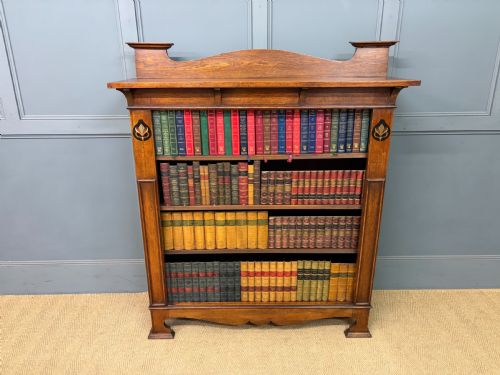
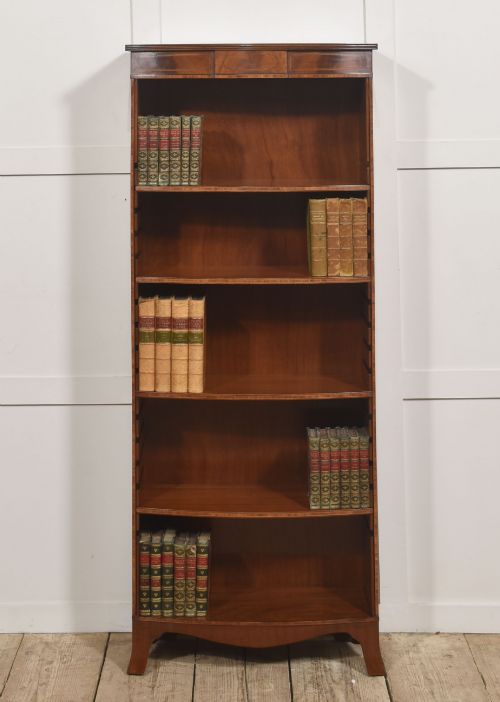
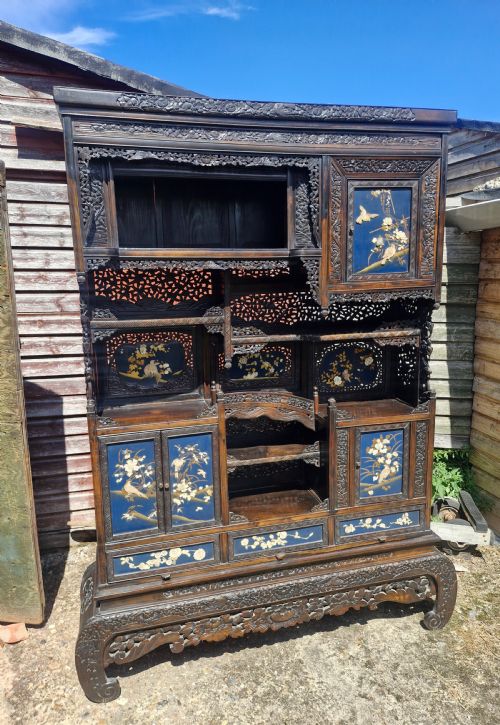
The version most commonly encountered on this page is the mahogany or walnut open bookcase, frequently decorated with contrasting inlay and supported on brass castors. Alongside these, shoppers find Japanese shodana cabinets, rosewood chiffoniers, and satinwood pieces featuring adjustable shelves.
Makers and workshops of the period utilised various timbers such as burr walnut, rosewood, and elm to construct these functional items. Whether built as a three-section open bookcase or a compact side cabinet, each item offers a distinct profile shaped by its era.
Materials and Construction Techniques
Cabinet makers utilised dense hardwoods like mahogany, walnut, and rosewood as the primary structural foundations for these pieces. Satinwood and burr walnut provided contrasting grain patterns for decorative panels and friezes.
Detailed inlay work incorporated lighter woods, mother of pearl, and brass mountings to accentuate shelves, friezes, and doors. Brass castors were frequently fitted to the base of larger bookcases and side cabinets for mobility.
Inlaid Open Shelf Cabinet Retail Price Guide 2026
Typical asking prices for inlaid open shelf cabinet among the pieces listed under this phrase on Sellingantiques today, from the lower quarter to the upper quarter. They describe what is for sale here now, not the wider market.
Distinctions in Quality
The standard of an inlaid open shelf cabinet depends heavily on the precision of the timber selection and the crispness of the inlay work. Finer pieces demonstrate seamless integration of contrasting woods and ornate brass mounts without structural distortion.
Attention to functional detail separates standard items from exceptional ones, particularly in the smoothness of adjustable shelf mechanisms and the stability of multi-section constructions. Superior examples maintain balanced proportions and clean joinery across the entire frame.
Gillows·Shapland & Petter
The Inlaid Open Shelf Cabinet Glossary
- Shodana
- A traditional Japanese display cabinet featuring asymmetrical shelving and small cupboards. These imported pieces influenced nineteenth-century European cabinet making.
- Whatnot
- A piece of furniture consisting of a set of open shelves for displaying small objects. They appear frequently in Victorian and Edwardian interiors.
- Chiffonier
- A low sideboard or cabinet, frequently fitted with shelves or a small superstructure on top. Regency and nineteenth-century examples often incorporate brass inlay and rosewood.
- Ormolu
- Gilded bronze ornamentation applied to furniture mounts and details. This material appears on select nineteenth-century credenzas and cabinets.
Inlaid Open Shelf Cabinet: Frequently Asked Questions
Where should I place an open shelf cabinet?
These cabinets suit living rooms, studies, and hallways where books and decorative objects require accessible display space. Their open shelving allows for both storage and visual lightness against a wall.
Position them away from direct heat sources and strong sunlight to protect the polished timber and delicate inlay work over time.
How do I adjust the shelves?
Many nineteenth-century and Edwardian bookcases feature height-adjustable shelves resting on wooden supports or metal pins. Simply lift the shelf clear of its supports and reposition the pins into the desired holes.
Take care when moving shelves within older cabinetry to avoid damaging the interior veneer or side panels.
How do I clean inlaid timber surfaces?
Dust the cabinet regularly with a soft, dry cloth to prevent particulate build-up on the polished mahogany, walnut, or rosewood surfaces. Avoid chemical sprays that can degrade the historic finish.
Apply a quality beeswax polish sparingly when the wood appears dry, buffing gently to maintain the natural lustre of the grain and inlay.
How do I distinguish Victorian from Edwardian pieces?
Victorian cabinets often display heavier proportions, darker walnut or rosewood timbers, and elaborate brass or mother of pearl inlay. They frequently reflect revival styles like Sheraton Revival or ornate Arts and Crafts designs.
Edwardian examples tend towards lighter satinwood and mahogany constructions, cleaner lines, and simpler inlaid friezes influenced by the turn of the century.