
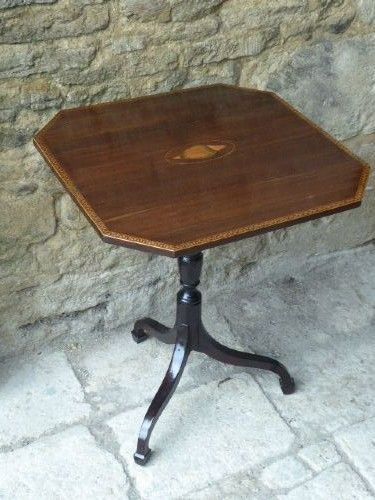
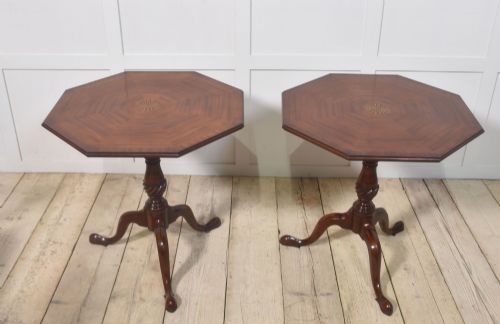
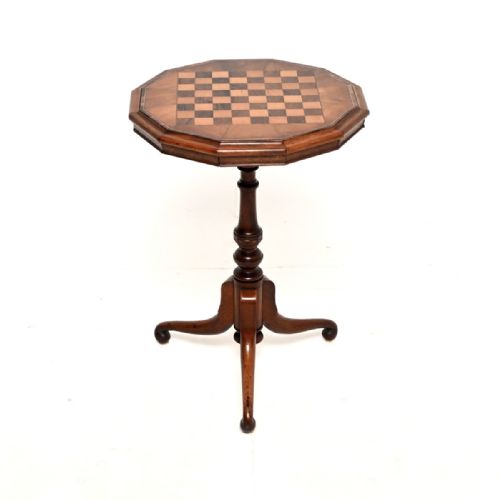


Inlaid Octagonal Tripod Table
An inlaid octagonal tripod table brings together geometric form and delicate surface decoration, offering a versatile centrepiece for any room.
Inlaid Octagonal Tripod Table
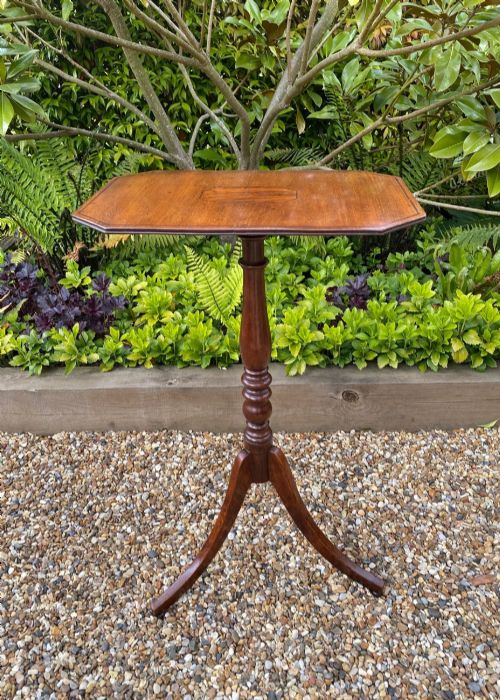
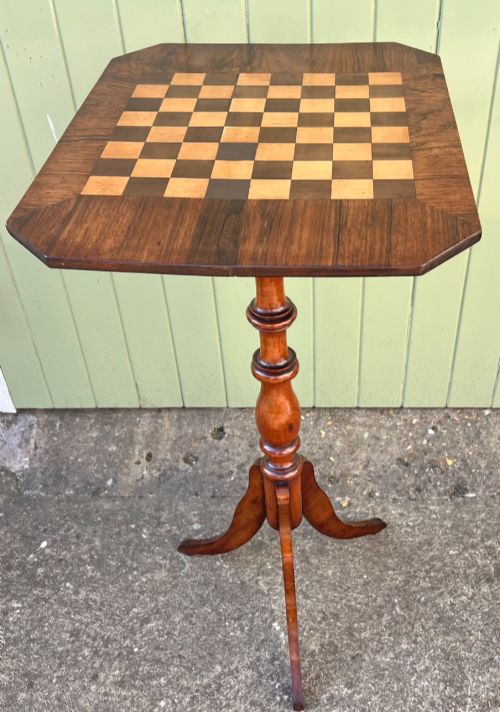
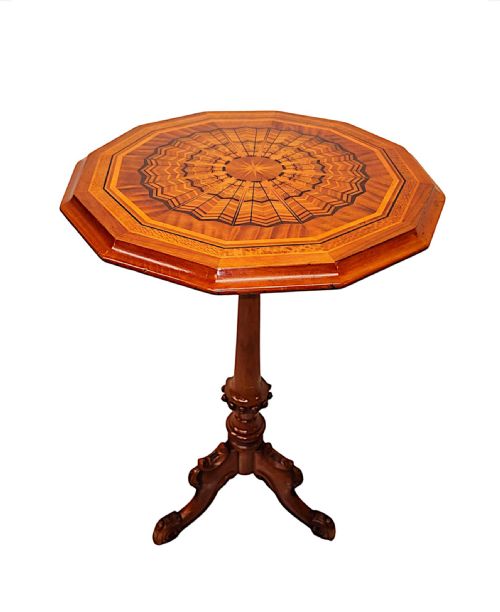
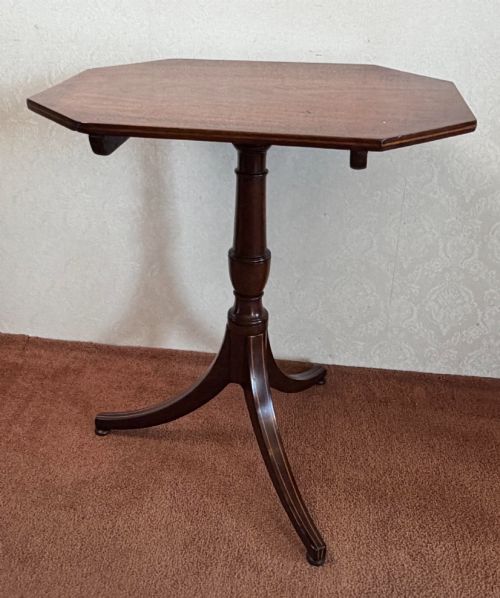
The inlaid octagonal tripod table is a compact surface supported by a central pillar and three feet, distinguished by an eight-sided top embellished with contrasting timbers.
The pieces appearing on this page span the Georgian, Regency, and Victorian eras, alongside Edwardian and early twentieth-century examples, with Sorrento Ware pieces also represented.
Forms range from occasional and lamp tables to specialised chess and games tables, as well as work and sewing tables with fitted interiors.
Materials and Construction
Cabinet makers constructed the main bodies and tops from timbers such as mahogany, rosewood, walnut, and satinwood.
Surface decoration utilised wood inlay, boxwood, ebony, brass, and marquetry to create geometric chequer-boards and intricate floral motifs.
Listings feature woods such as satinwood, rosewood, mahogany, walnut, boxwood, and ebony combined across various nineteenth-century periods.
Assessing Quality
Quality rests upon the precision of the timber selection, such as burr-elm or highly figured rosewood, and the crispness of the contrasting inlay.
The stability of the central pillar and the accuracy of the tilt-top or snap-top mechanism indicate superior workshop execution.
Gillows·Almerico Gargiulo
The Inlaid Octagonal Tripod Table Glossary
- Tripod table
- A small table supported by a central pillar resting on three feet. This construction allows the piece to be easily moved around a room.
- Marquetry
- The art of applying pieces of veneer to a structure to form decorative patterns. Craftsmen utilised various coloured woods to achieve pictorial designs.
- Tilt-top
- A hinged tabletop that can be folded vertically when not in use. This feature enabled tables to be stored flat against a wall.
- Sorrento Ware
- Decorative woodwork originating from Italy, typically featuring intricate micro-mosaic inlay. These pieces often depict architectural scenes or floral patterns.
Inlaid Octagonal Tripod Table: Frequently Asked Questions
What are inlaid octagonal tripod tables used for?
These tables served primarily as occasional surfaces for lamps, tea, or needlework, while specific variants doubled as chess or games boards.
Their compact footprint allowed them to be repositioned easily within reception rooms and parlours as household needs changed.
How do I date an inlaid octagonal tripod table?
Dating relies on identifying the primary timber, the style of the pedestal base, and the character of the inlay work. Georgian and Regency pieces favour mahogany and rosewood with brass or simple stringing, while Victorian examples often incorporate elaborate marquetry and Sorrento Ware.
Comparing the mechanical joints beneath the top provides further clues to the period of manufacture.
Are tilt-top mechanisms original?
Most period tables retain their original brass or iron catch mechanisms beneath the top, which permitted the surface to tilt or snap shut.
Close inspection of the block and pivot reveals whether the hardware is contemporary with the timber frame.
How do I care for a polished wood surface?
Polished timber benefits from regular dusting with a soft, dry cloth and occasional application of traditional beeswax to nourish the grain.
Direct sunlight and extreme changes in temperature should be avoided to prevent the veneer and delicate inlay from lifting.