

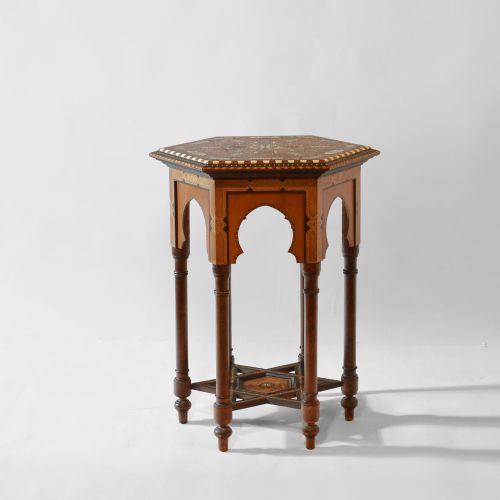


Inlaid Moorish Side Table
An inlaid moorish side table brings geometric warmth and intricate surface pattern to a room, drawing on decades of Middle Eastern, Indian and European revival craftsmanship.
Inlaid Moorish Side Table
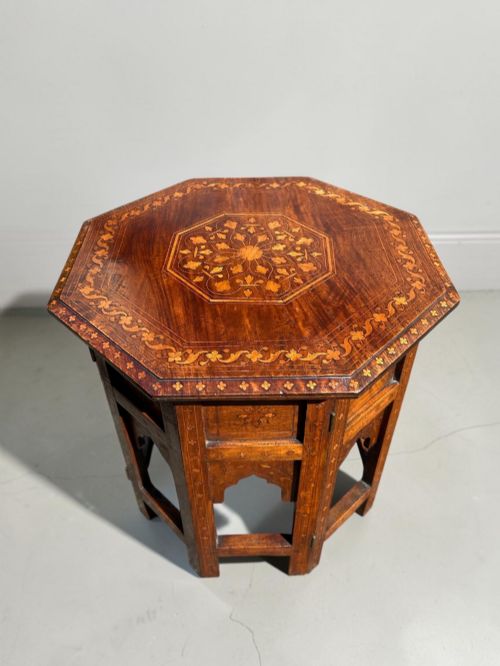
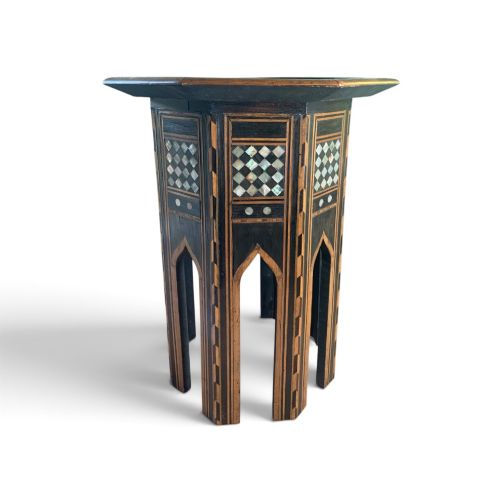
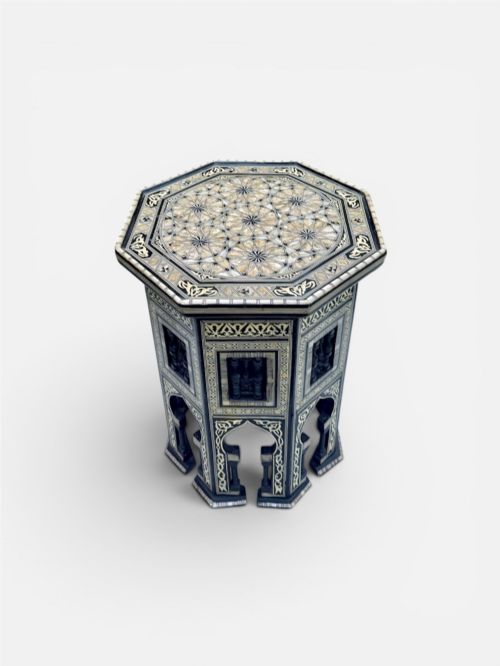
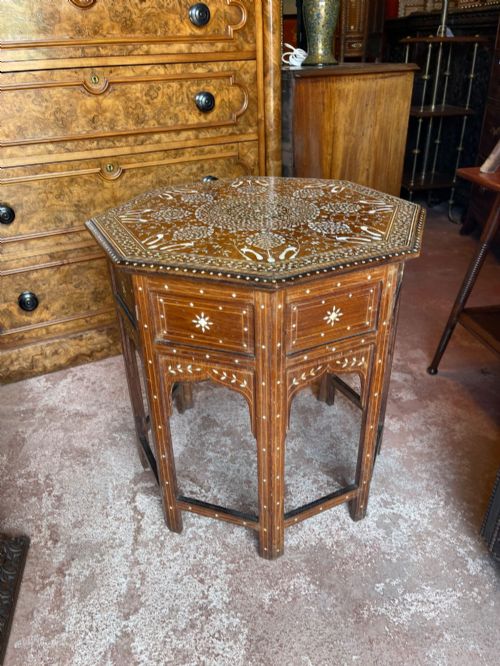
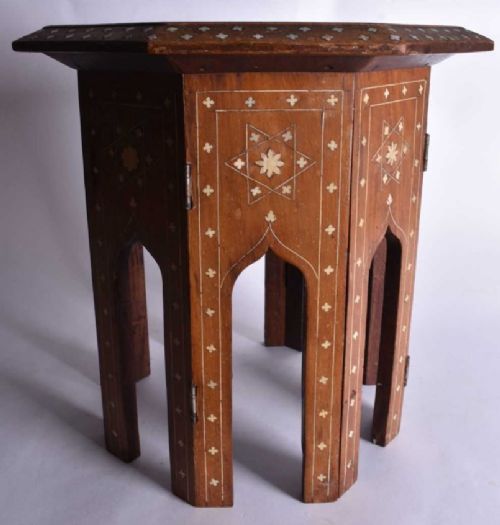
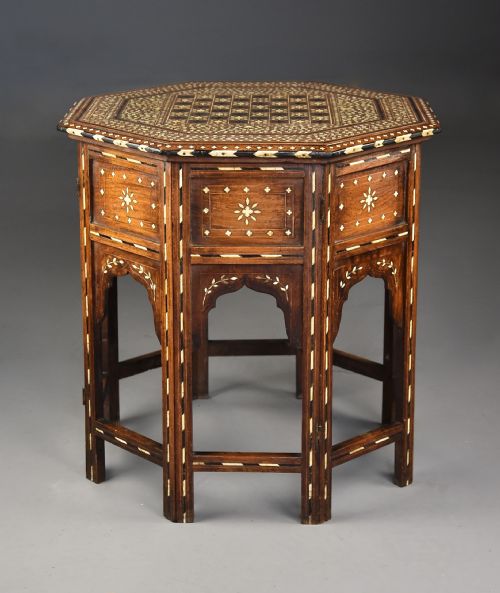
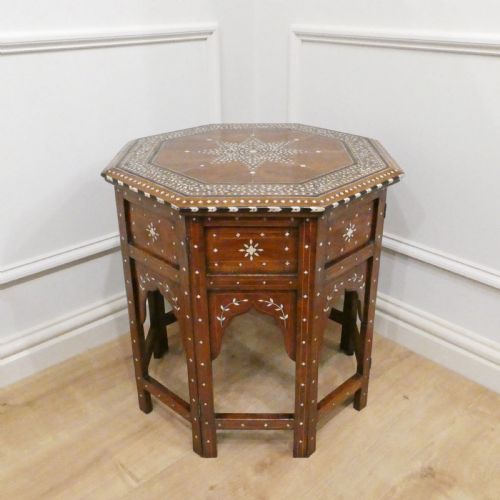
An inlaid moorish side table combines intricate surface decoration with practical occasional furniture forms, often taking the shape of an octagonal or hexagonal top resting on a folding stand. These pieces emerge from a widespread late nineteenth and early twentieth century enthusiasm for exoticism, drawing inspiration from Syrian, Egyptian and North African workshops as well as British revival movements.
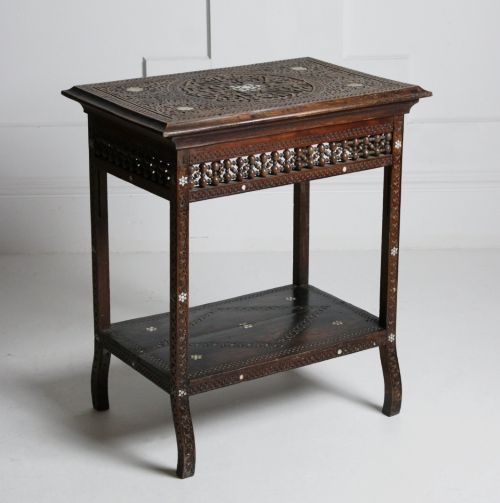
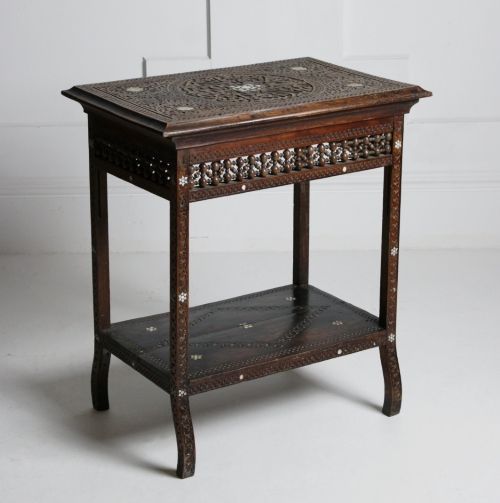
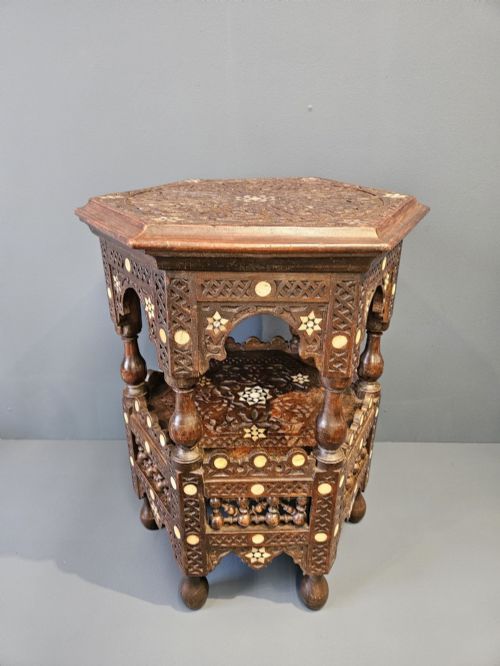
The most common examples encountered on this page date from the nineteenth century into the early decades of the twentieth century, reflecting the height of global trade and domestic eclecticism. Alongside traditional folding occasional tables, buyers find two-tier variants, lamp tables and occasional pieces associated with retailers such as Liberty and Co.
How they were made
Artisans constructed these tables using dense timbers such as walnut, teak, rosewood and ebonised wood, frequently building folding bases that demonstrated clever carpentry without metal hinges. The structural framework often relies on pierced or carved wooden lattice work and mashrabiya principles.
Surfaces receive elaborate ornamentation through the application of small geometric pieces of bone, mother-of-pearl, and contrasting woods, sometimes supplemented by white-metal and copper wire inlay. Each individual tessera is cut and fitted by hand into channels carved within the wooden substrate, creating a rich tactile mosaic.
Listings feature woods such as sandalwood, walnut, teak, rosewood and ebonised wood.
What varies in quality
The distinction between ordinary and exceptional work lies in the precision and density of the mosaic inlay, where superior examples display tight joints and intricate geometric harmony without large gaps of exposed adhesive. The selection of materials also dictates standing, with dense hardwoods and generous use of iridescent mother-of-pearl or finely engraved bone marking out better workshops.
Structural integrity and the cleverness of the joinery define the standard of the support stand, particularly in folding models where alignment must remain true through years of movement. Pieces bearing attribution to known design houses or specific regional centres such as Hoshiarpur or Damascus generally command greater regard for their artistic cohesion.
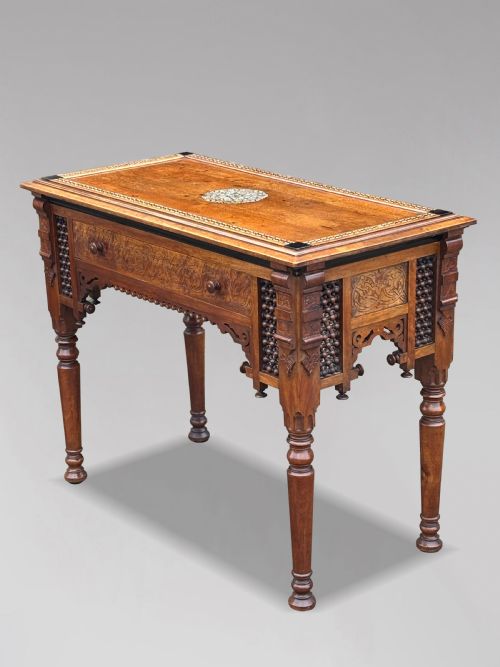
Liberty and Co·Carlo Bugatti
The Inlaid Moorish Side Table Glossary
- Hoshiarpur
- A district in Punjab, India, renowned for producing intricately carved wooden tables featuring dense bone and wire inlay. These items became staples of late nineteenth century British interior decoration.
- Mashrabiya
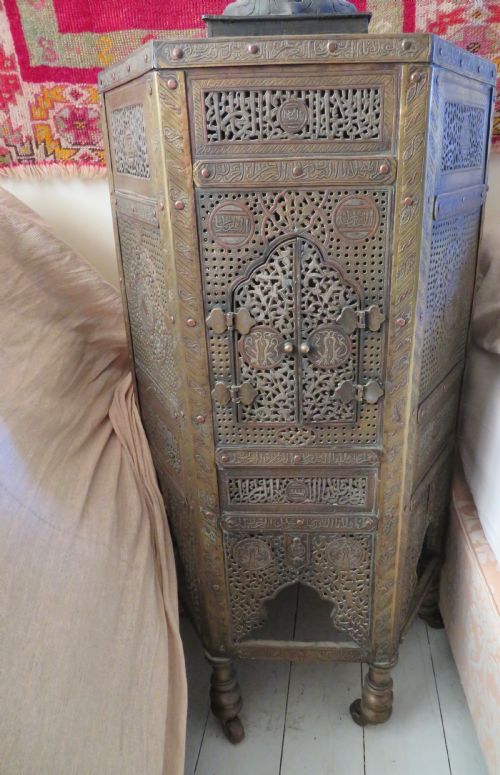
- A traditional architectural element of projecting oriel windows enclosed by carved wood lattice-work, which heavily influenced the perforated panels found on these tables. The technique creates deep shadow and allows filtered light.
- Kursi
- A low occasional table or stand originating in Islamic furniture traditions, often hexagonal or octagonal in plan. They serve various domestic functions including supporting lamps or serving trays.
- Tessera
- An individual small block of bone, mother-of-pearl or wood used to create the geometric mosaic patterns on the table surface. Artisans shape each piece by hand before pressing it into the wooden bed.
Inlaid Moorish Side Table: Frequently Asked Questions
How do I care for the mother-of-pearl inlay?
Keep the wood nourished with appropriate wax and avoid excessive moisture or direct sunlight that might loosen the small shell and bone inserts.
Gentle dusting with a soft brush helps protect the recessed channels from accumulating dirt over time.
Are folding stands original to these tables?
Many octagonal and hexagonal tops were designed specifically to rest upon collapsible wooden frames for ease of storage and transport.
These folding mechanisms use interlocking wooden hinges rather than metal hardware.
What distinguishes Syrian tables from Indian ones?
Syrian examples frequently combine walnut or ebonised wood with dense mother-of-pearl and bone geometric star patterns.
Indian pieces from regions like Hoshiarpur often feature overall carved floral or vine foliage enclosing smaller bone inlays on sandalwood or teak.
How do I date an inlaid moorish table?
Examine the timber species, construction joints and the style of the interior carcass to determine whether the piece belongs to the nineteenth century revival period or later.
Trade labels and retailer stamps can also provide a reliable indication of the production era.