


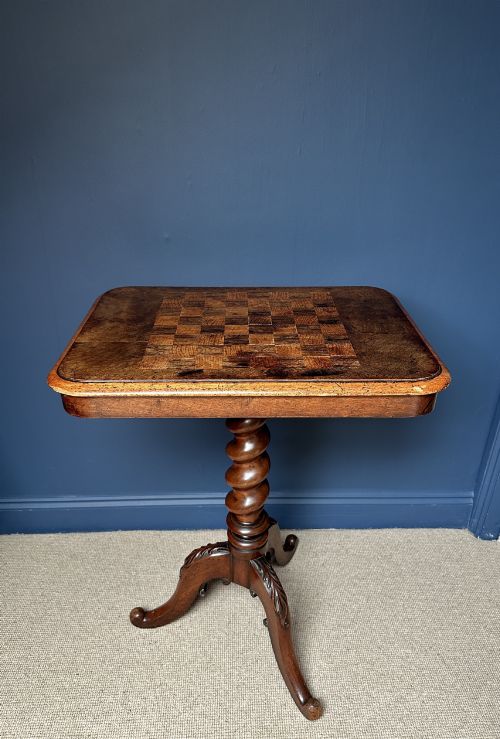


Inlaid Mahogany Tripod Table
An inlaid mahogany tripod table combines a stable three-legged base with timberwork detail, offering a practical surface for books or drinks.
Inlaid Mahogany Tripod Table
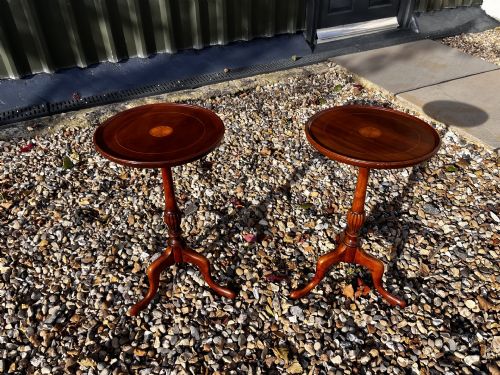
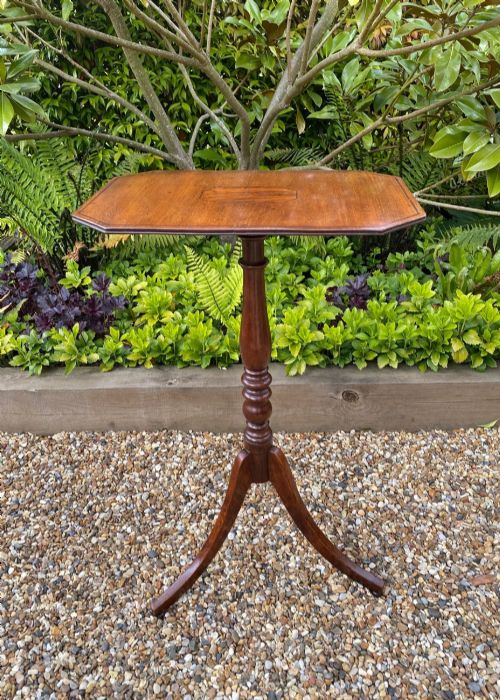
An inlaid mahogany tripod table serves as a portable surface designed for domestic use in reception rooms and parlours. The pieces found here span the Georgian, Regency, Victorian, and Edwardian periods.
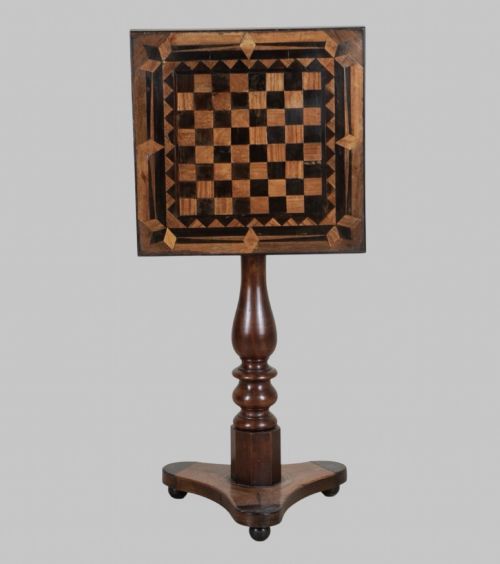
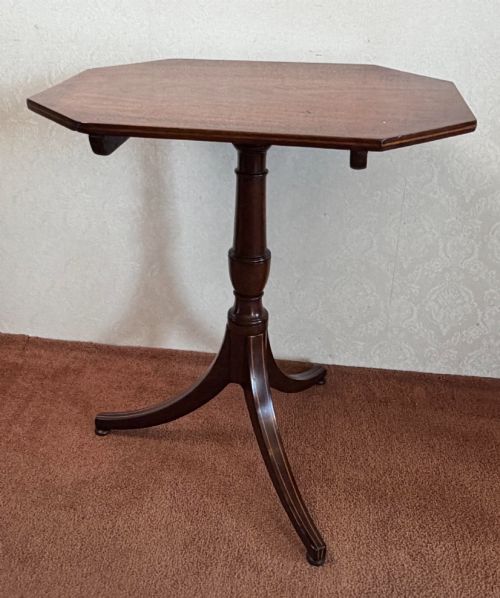
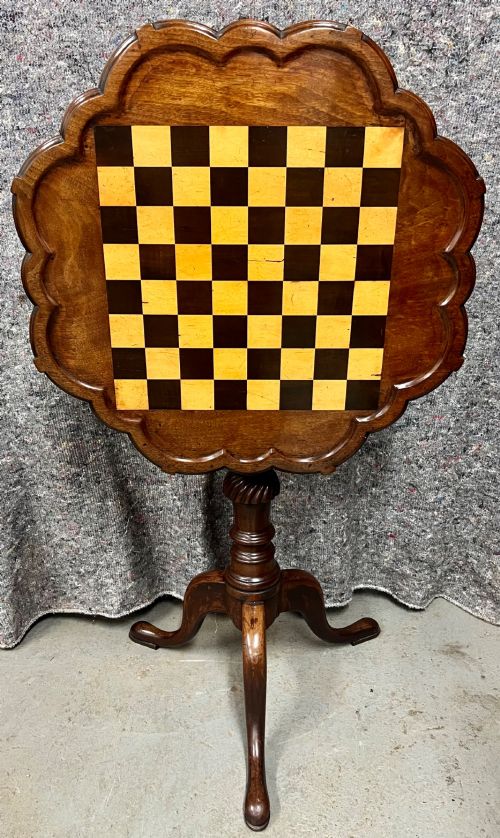
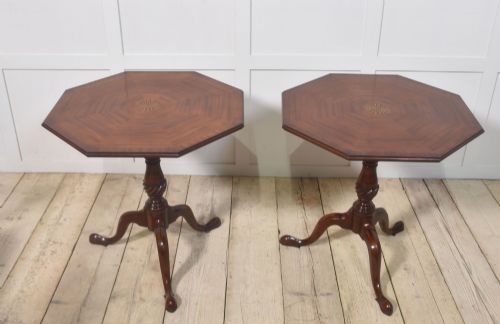
Forms include wine tables, games tables fitted with chess boards, tilt-top examples, and occasional tables supported on three legs. The majority feature circular or octagonal tops raised on a turned central pedestal.
Origins range from British workshops to specific regional interpretations, with many retaining evidence of period use as candle stands or lamp tables.
How They Were Made
Cabinet makers utilised solid mahogany and veneers, constructing tops that were frequently mounted on tilting mechanisms to save space when not in use. Turning lathes shaped the central stems, while three-legged bases provided stability on uneven historical floorboards.
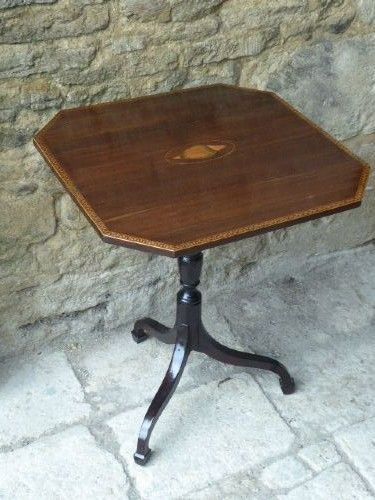
Inlay work incorporated contrasting timbers such as satinwood, boxwood, and ebony, often arranged in geometric lines or chessboard patterns directly into the mahogany surface. Additional decorative elements included brass fittings and marble inserts.
Inlaid Mahogany Tripod Table Retail Price Guide 2026
Typical asking prices for inlaid mahogany tripod table among the pieces listed under this phrase on Sellingantiques today, from the lower quarter to the upper quarter. They describe what is for sale here now, not the wider market.
Listings feature mahogany, satinwood, boxwood, and marble across Georgian, Regency, and Victorian periods.
What Varies in Quality
The refinement of the timber selection and the precision of the wood inlay distinguish finer examples from simpler provincial pieces. Crispness in the turning of the central column and the joinery of the leg attachments dictate structural integrity.
Proportion and balance between the top, stem, and tripod base determine the visual harmony of the piece. Subtle details such as crossbanding and specialised specimen woods elevate the status of an individual table.
The Inlaid Mahogany Tripod Table Glossary
- Tripod table
- A small movable table supported by a pillar on three legs. They appeared in various forms throughout the Georgian and Victorian eras.
- Tilt top
- A table top hinged to tip vertically when not in use. This mechanism allowed the furniture to stand flat against a wall.
- Inlay
- A technique of inserting pieces of contrasting wood into a recess to form a pattern. Boxwood and satinwood were common choices for lines and geometric motifs.
- Wine table
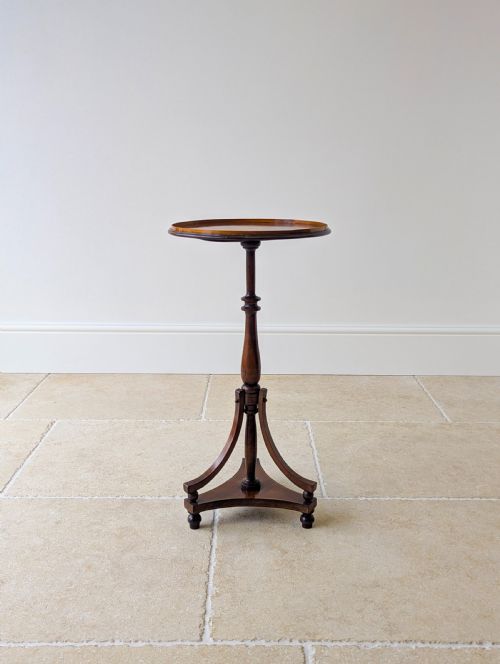
- A small occasional table designed to hold a glass or decanter. Many examples feature dished tops or raised rims to prevent items from sliding off.
- Crossbanding
- A strip of veneer applied around the border of a table top with the grain running perpendicular to the centre. It creates a framed visual effect.
Inlaid Mahogany Tripod Table: Frequently Asked Questions
What were inlaid mahogany tripod tables used for?
These tables served multiple domestic functions in period interiors, acting as movable stands for wine, books, or candles.
Tilt-top variants allowed owners to fold the surface vertically against the wall when floor space was required for other activities.
How do I identify a Georgian tripod table?
Georgian examples typically display substantial mahogany timber with hand-turned central pedestals and straightforward leg attachments.
Details such as subtle boxwood line inlay or integrated chess boards often help distinguish pieces made during this period from later Victorian revivals.
Why do some tables have tilting tops?
The tilting mechanism was a practical space-saving device used in eighteenth and nineteenth-century homes.
By releasing a catch under the top, the surface pivoted ninety degrees so the furniture occupied minimal room in a crowded parlour.
How should I care for a mahogany table?
Keep the wood away from direct heat sources and strong sunlight to prevent the mahogany finish and inlaid veneers from drying out.
Applying occasional wax polish maintains the lustre of the timber without damaging the historical surface.