
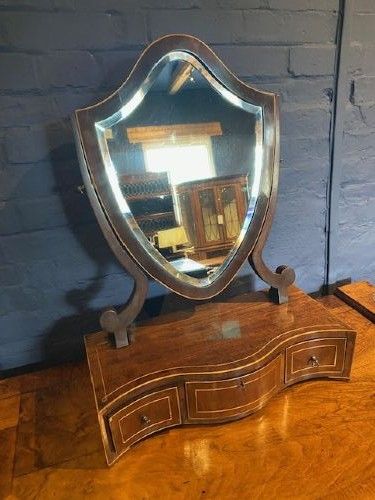
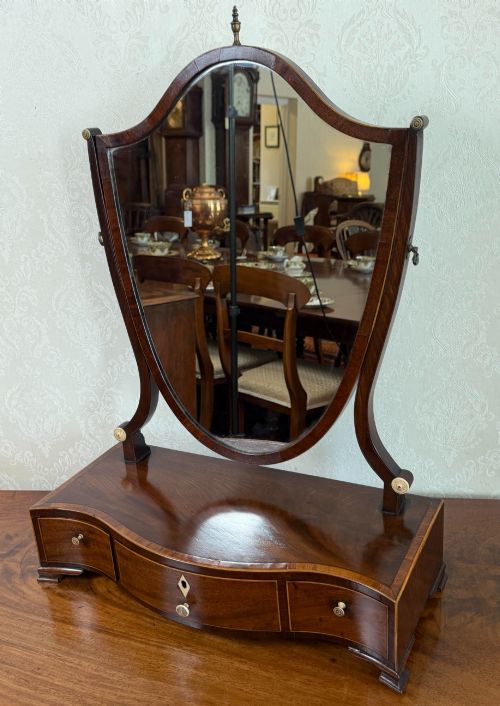
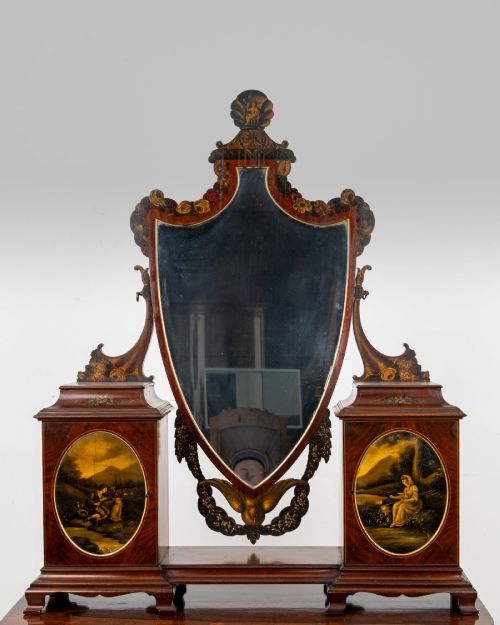
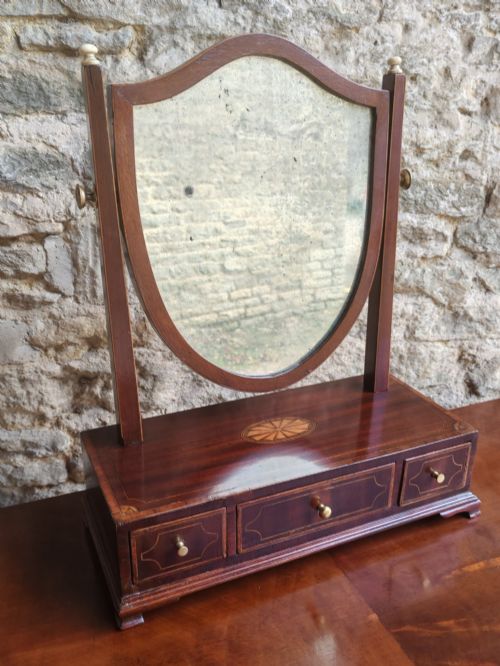
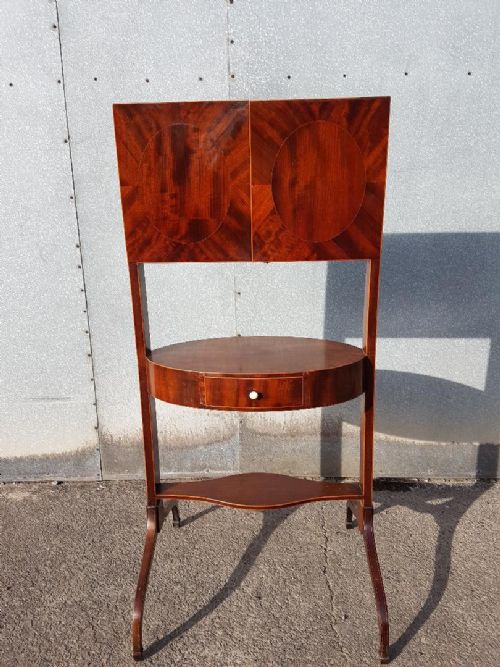
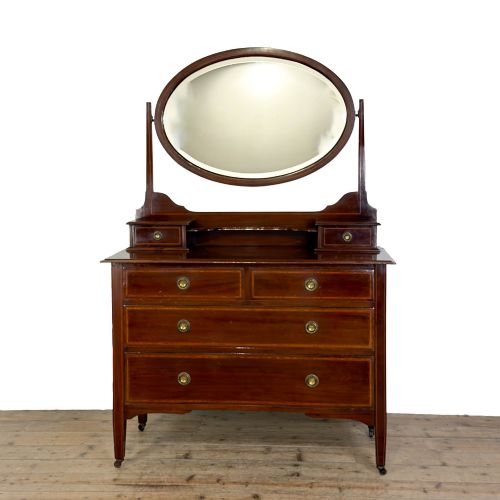


Inlaid Mahogany Toilet Mirror
An inlaid mahogany toilet mirror brings warmth and a polished surface to a dressing chest, reflecting generations of careful grooming.
Inlaid Mahogany Toilet Mirror
An inlaid mahogany toilet mirror combines a pivoting glass frame with a wooden base or box, designed to sit upon a larger chest or table for personal grooming. When you search for an inlaid mahogany toilet mirror, you encounter pieces that range from compact Georgian swing glasses to elaborate Edwardian and Regency table chests.
The specimens seen here span the eighteenth century through the Edwardian era, taking forms such as shield shapes, oval plates, and rectangular swing mirrors mounted on box bases or small drawers. Many examples incorporate boxwood, satinwood, or ebony stringing to frame the mirror glass and accentuate the rich grain of the mahogany timber.
How they were made
Cabinet makers constructed these mirrors using solid mahogany and flame mahogany veneers applied to secondary woods, jointed with traditional hand-cut techniques. The glass plates are supported by upright arms, often featuring brass pivoting screws or finials that allow the mirror angle to be adjusted.
Inlay work involves meticulous hand-cutting of contrasting timbers like boxwood, satinwood, and ebony, inlaid into recesses carved directly into the mahogany surface. This delicate stringing and marquetry outlines the borders of the mirror frames and the drawer fronts of the supporting boxes.
Tiny hidden drawers inside the box base once held secret love letters and small trinkets away from curious eyes.
What varies in quality
Quality rests upon the crispness of the boxwood and satinwood inlay, the depth of the mahogany grain, and the elegance of the supporting frame's proportions. Finer examples display balanced stringing and well-figured timber selected specifically for the mirror plate surrounds.
The structural integrity of the pivoting mechanism and the survival of original mirror glass and brass hardware also distinguish better pieces. Thoughtful integration of small drawers within the box base adds both utility and refinement to the construction.
The Inlaid Mahogany Toilet Mirror Glossary
- Swing mirror
- A glass plate hung between upright posts that tilts back and forth on pivots. This allows the user to adjust the reflection easily.
- Box base
- A small cabinet or chest beneath the mirror frame fitted with one or more small drawers. It provides stability and storage for small personal items.
- Stringing
- A narrow strip of contrasting light wood, such as boxwood or satinwood, inlaid into the dark mahogany surface. It creates geometric decorative borders.
- Shield shape
- A mirror plate cut into the outline of a heraldic shield, popular during the eighteenth century. This silhouette softens the severe lines of a bedroom chest.
- Marquetry
- Elaborate decorative patterns formed by fitting together pieces of various coloured veneers. It appears on more decorative Dutch and Sheraton revival pieces.
Inlaid Mahogany Toilet Mirror: Frequently Asked Questions
How do I date an inlaid mahogany toilet mirror?
Dating relies upon observing the shape of the mirror plate, the style of the box base, and the type of inlay employed. Georgian examples often feature slender uprights and delicate boxwood stringing, whereas Edwardian and later revival pieces display heavier proportions or distinct Sheraton revival motifs.
Hardware such as brass pivoting screws and the construction methods used inside the drawers also provide clear clues. Examining the backboards and secondary timbers helps confirm the period of manufacture.
Where should I place a toilet mirror in my home?
These mirrors suit dressing tables, chests of drawers, and sideboards in bedrooms or hallways. Their compact footprint allows them to sit securely on top of wooden furniture while providing functional reflection.
Placement near a natural light source enhances their utility for grooming and brightens dark corners of a room. Ensure the supporting surface is level and deep enough to bear the weight of the mirror box.
Are the mirror plates original on these pieces?
Many older mirrors retain their original mercury or early silvered glass, which often exhibits gentle foxing and age spots. Some pieces have received replacement mirror plates over the centuries to maintain clear reflection.
Examining the back of the glass and the way it is secured into the frame reveals whether the plate has been changed. Both original aged glass and clean replacements have their own appeal depending on your preference.
What is the difference between Georgian and Edwardian mirrors?
Georgian mirrors typically exhibit restrained proportions, fine boxwood stringing, and elegant shield or oval glass shapes constructed by hand. Edwardian pieces often revive these earlier eighteenth-century styles but can feature broader frames and slightly different internal cabinet fittings.
Comparing the crispness of the mahogany and the delicacy of the inlay helps separate genuine Georgian work from later twentieth-century interpretations.