

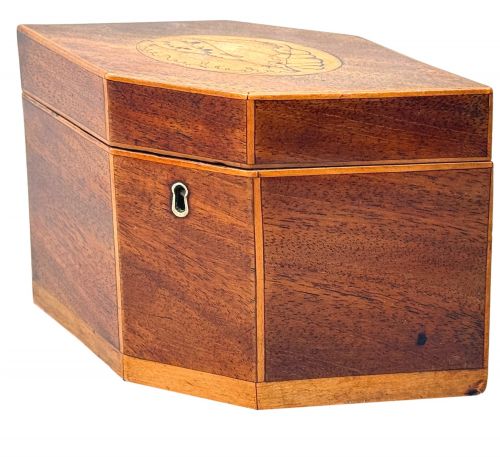


Inlaid Mahogany Tea Chest
An inlaid mahogany tea chest is a compact, beautifully figured box designed to keep expensive leaves secure, bringing tactile warmth and period elegance to any room.
Inlaid Mahogany Tea Chest
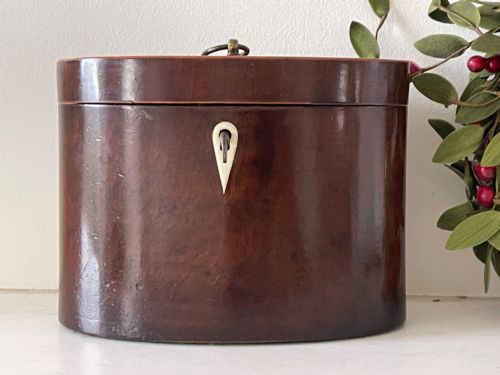
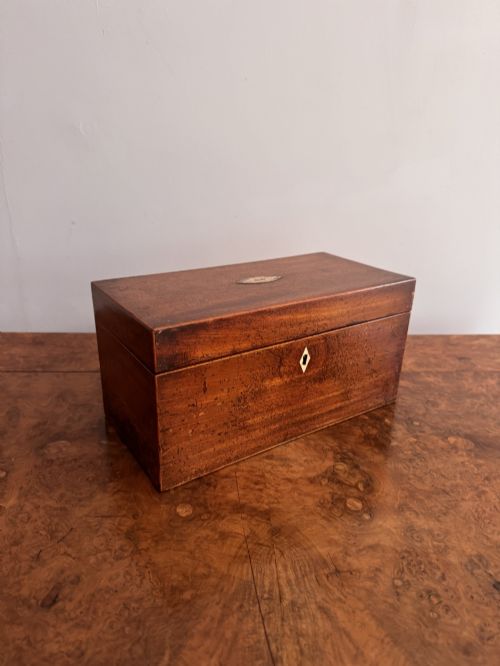
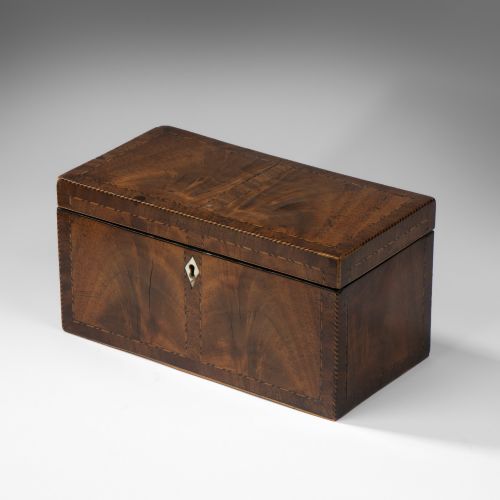
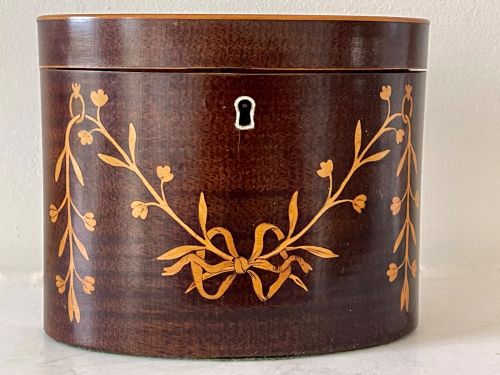
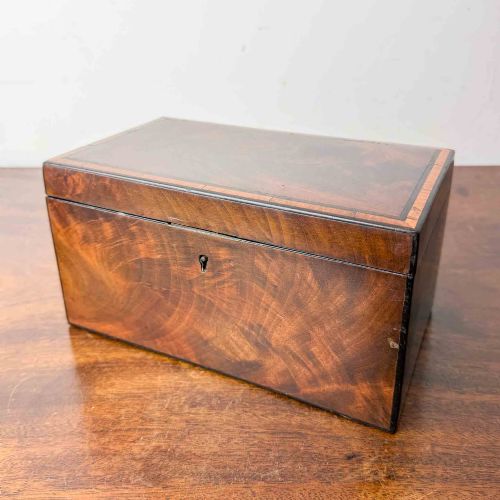
When you search for an inlaid mahogany tea chest, you encounter pieces spanning from the mid-eighteenth century through the Victorian era, encompassing forms such as tea caddies, boxes, and teapoys. The most common examples on this page date from the Georgian and Regency periods, shaped as octagons, ovals, hexagons, or classic rectangles.
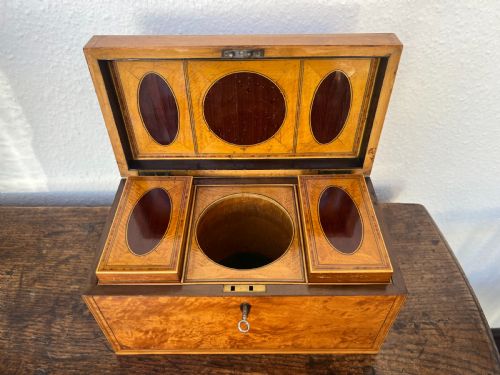
These containers served the vital domestic purpose of locking away precious tea leaves when the beverage was a luxury commodity managed directly by the head of the household. Interior compartments often retained remnants of foil lining or separate lidded canisters to keep distinct blends dry and fragrant.
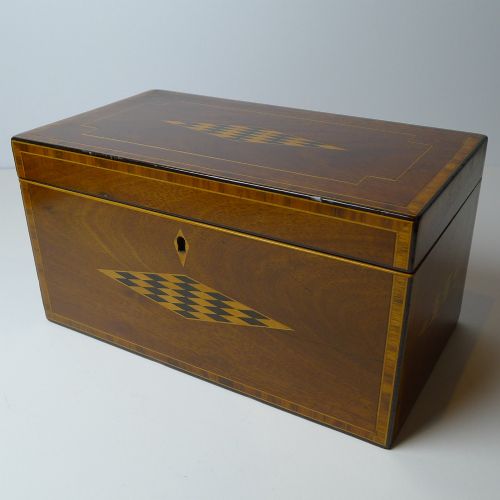
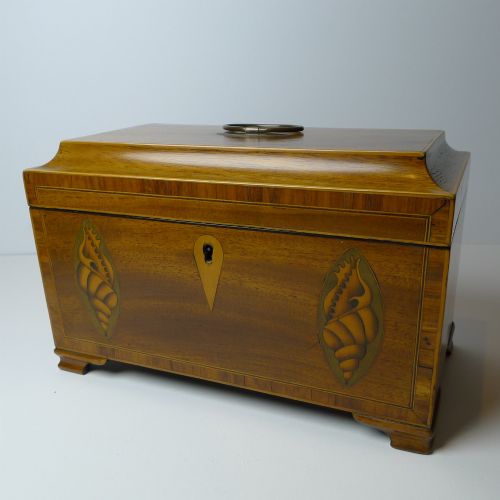
Regional variations and stylistic shifts mean you will find plain geometric stringing alongside intricate shell or star motifs set into the lid centre. Certain variants adopt the form of small chests of drawers or include metal canisters within the fitted interior.
Materials and construction
Cabinetmakers built these boxes using dense mahogany timber, selected for its rich grain and stability, then applied contrasting veneers and stringing. Boxwood, ebony, satinwood, and bone provided sharp definition for geometric borders and central floral or shell ornaments.
Surface decoration frequently relied on fine wood inlay techniques, contrasting light and dark timbers to create striking panels and banding. Brass escutcheons, hinges, and carrying handles added both structural durability and decorative contrast to the polished timber.
Inlaid Mahogany Tea Chest Retail Price Guide 2026
Typical asking prices for inlaid mahogany tea chest among the pieces listed under this phrase on Sellingantiques today, from the lower quarter to the upper quarter. They describe what is for sale here now, not the wider market.
Listings feature mahogany containers enriched with satinwood, ebony, and bone inlay across Georgian, Regency, and Victorian periods.
Distinguishing quality in period tea chests
The standard of a piece rests upon the crispness of the timber selection and the precision of the inlay work. Finer examples display tightly figured mahogany veneers matched symmetrically across the lid and sides, with flush, flawless marquetry or stringing.
Interior appointments heavily influence overall merit, particularly the presence of original internal lids, functioning locks with working keys, and intact mixing bowls or metal canisters. The integrity of the secondary timbers and the subtlety of the edge moulding complete the distinction between standard utilitarian boxes and superior cabinetwork.
The Inlaid Mahogany Tea Chest Glossary
- Teapoy
- A small stand or large caddy mounted on a central pillar with feet, designed to hold tea canisters.
- Stringing
- A narrow inlay of contrasting wood used to create delicate linear borders on box panels.
- Escutcheon
- A protective plate surrounding the keyhole, typically cast in brass to prevent the wood splitting.
- Canister
- An internal lidded container, made from metal or wood, designed to store specific varieties of tea leaves.
- Veneer
- A thin slice of figured timber applied over a secondary wood base to provide a decorative exterior surface.
Inlaid Mahogany Tea Chest: Frequently Asked Questions
What is a tea chest?
A tea chest or caddy is a specialised lidded container historically used to store dried tea leaves safely under lock and key. These boxes kept moisture away from expensive dry goods in domestic parlours.
Interior divisions separated different grades of leaf, often accompanied by a central glass bowl for blending infusions at the table.
How do I date a tea chest?
Dating relies on observing the cabinet timber, silhouette, and specific inlay motifs characteristic of eras like the Georgian or Regency periods. Hexagonal and oval geometries often point towards the eighteenth century, while bold brass work suggests nineteenth-century manufacture.
Examining the construction methods inside the box, such as hand-cut dovetails and secondary woods, confirms the manufacturing era.
Where were they kept?
These boxes occupied prominent places on side tables in the principal reception rooms of wealthy households during the eighteenth and nineteenth centuries. Because tea held high monetary value, the container remained locked until the mistress of the house prepared the brew.
Their portable nature allowed servants to carry them easily between rooms as social entertaining moved around the home.
How should I clean the wood?
Maintain the polished mahogany exterior using a soft, dry cloth to remove dust without harming the historic wax finish. Avoid applying modern liquid polishes or placing the box near direct heat sources that might dry out the timber.
Condition the antique wood occasionally with a specialist microcrystalline wax to preserve the depth of the grain and protect the delicate inlay.