

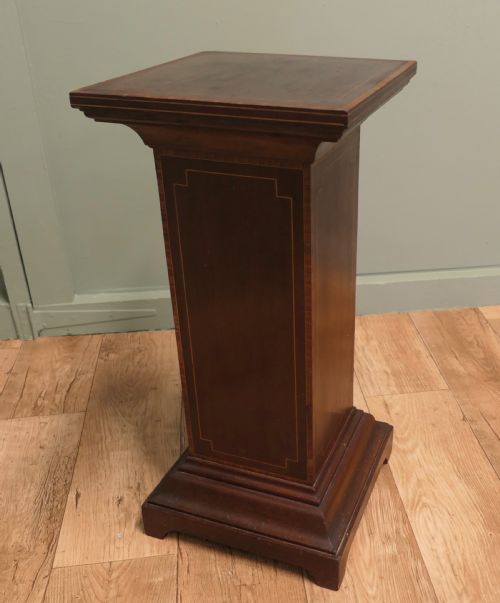
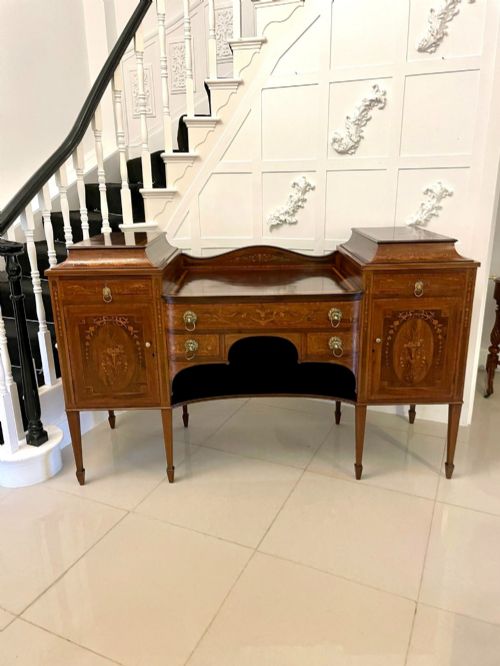
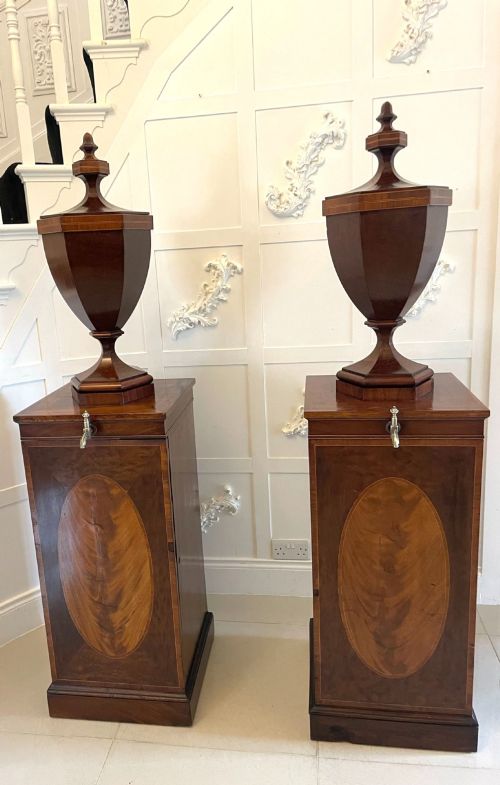
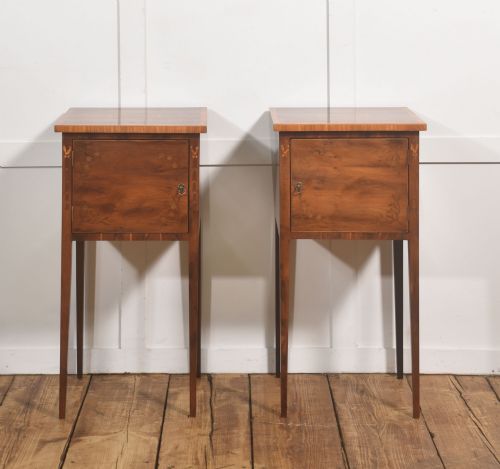
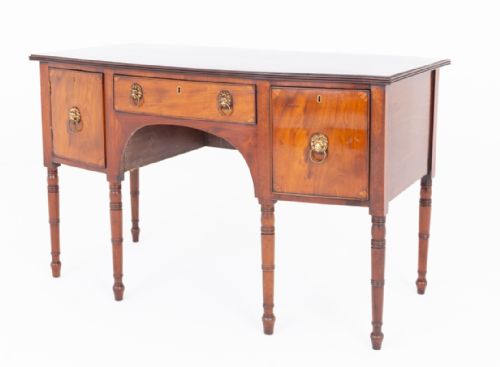


Inlaid Mahogany Pedestal Cabinet
An inlaid mahogany pedestal cabinet brings together rich timber and delicate detail to anchor a room with period proportion.
Inlaid Mahogany Pedestal Cabinet
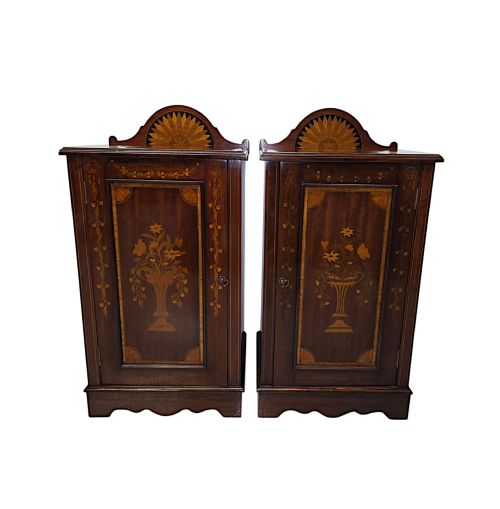
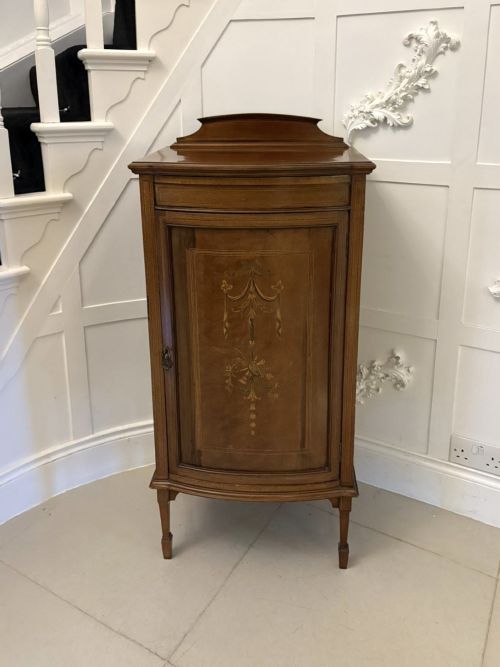
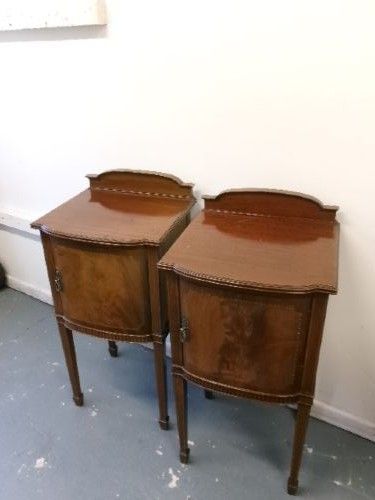
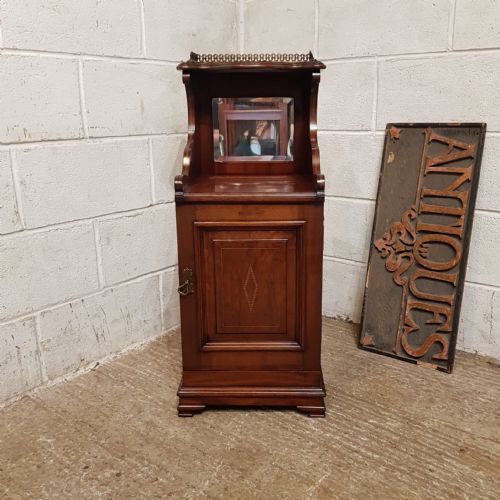
An inlaid mahogany pedestal cabinet sits primarily within the Edwardian, Victorian, and Georgian periods, alongside Regency and Sheraton Revival interpretations. These pieces function as bedside storage, display vitrines, or compact side cupboards designed to fit tight spaces without sacrificing presence.
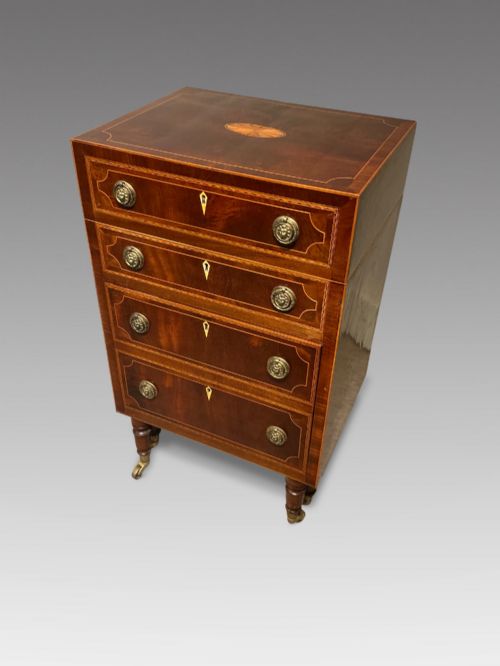
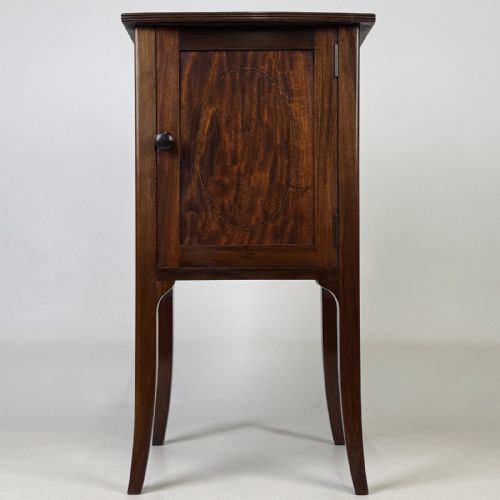
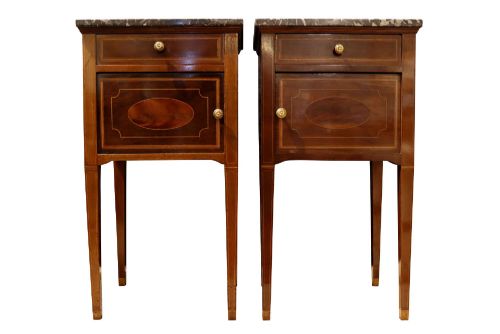
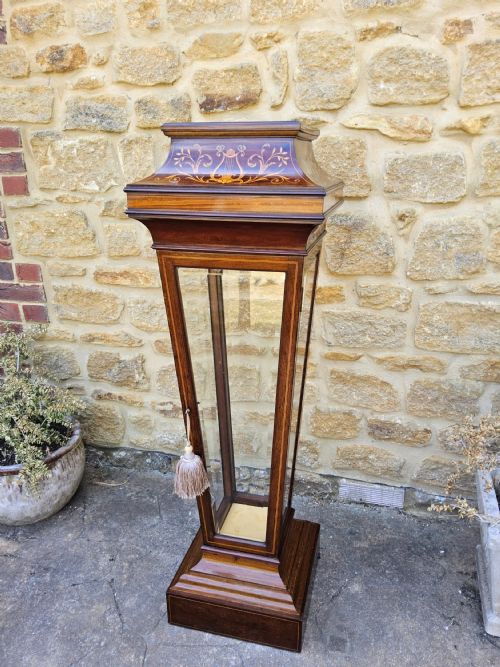
The form relies on a vertical orientation, often housing a single door or small drawers atop a raised plinth or distinct feet. On this page, bedside cabinets and display pedestals dominate the selection, showing the domestic demand for compact utility.
Materials and construction
Makers built these cabinets using solid mahogany and flame veneers over secondary timbers, enriched by contrasting wood inlays such as satinwood, boxwood, and ebony. Craftspeople executed delicate stringing and marquetry motifs to frame panels, drawer fronts, and top surfaces.
Hardware played a functional and decorative role, integrating brass handles, hinges, and occasional glass panels for display variants. Structural integrity relied on traditional joinery, ensuring the narrow proportions remained stable over decades of use.
Inlaid Mahogany Pedestal Cabinet Retail Price Guide 2026
Typical asking prices for inlaid mahogany pedestal cabinet among the pieces listed under this phrase on Sellingantiques today, from the lower quarter to the upper quarter. They describe what is for sale here now, not the wider market.
Judging quality and execution
The refinement of the timber selection dictates the visual impact, with deeply figured flame mahogany and crisp, unfaded satinwood inlay sitting at the upper end of the scale. Subtle variations in the precision of the marquetry and the sharpness of the edge banding separate standard production pieces from finer cabinet work.
Proportion and original hardware heavily influence desirability, as untouched brasses and balanced, slender forms demonstrate superior original design. The integration of specialised interior elements, such as pull-out steps or fitted shelving, marks out a more ambitious commission.
Hewetsons London·Edwards and Roberts·Maple and Co
The Inlaid Mahogany Pedestal Cabinet Glossary
- Inlay
- A technique where contrasting pieces of wood, metal, or shell are set into a recessed surface to form a decorative pattern. This method creates geometric borders or complex pictorial motifs.
- Mahogany
- A durable tropical hardwood prized for its deep reddish-brown colour and stability. Cabinetmakers favoured it for its ability to take a fine polish and hold intricate carving.
- Satinwood
- A pale, lustrous timber native to India and Ceylon used extensively for contrasting stringing and marquetry panels. Its golden sheen provides a vivid counterpart to darker mahogany.
- Marquetry
- The art of applying veneer pieces to a structural panel to create decorative pictures or ornamental designs. Artisans cut different coloured woods to fit together like a jigsaw puzzle.
- Vitrine
- A glass-fronted display cabinet or pedestal designed to showcase porcelain, books, or curiosities. It protects delicate objects while allowing light to enter from multiple angles.
Inlaid Mahogany Pedestal Cabinet: Frequently Asked Questions
Where do I place a pedestal cabinet?
These compact pieces fit naturally beside a bed as a bedside table or in a hallway as a small storage cupboard. Their vertical proportions allow them to occupy minimal floor space while providing useful surface area.
In living spaces, smaller glass-fronted display variants serve to hold glassware or small collections without overwhelming the room layout.
How do I care for mahogany and inlay?
Keep wooden surfaces away from direct sunlight and strong heat sources to prevent the timber from drying out or fading. Gentle dusting with a soft cloth maintains the finish without stripping the natural oils.
Occasional application of high-quality beeswax protects the polish and nourishes both the mahogany base and the delicate satinwood inlays.
How do I distinguish Edwardian from Georgian pieces?
Georgian examples display the heavier structural integrity and understated timber selection typical of eighteenth-century design. Edwardian and Sheraton Revival pieces often feature lighter framing, brighter satinwood contrast, and more delicate marquetry.
Examining the secondary woods and construction methods inside the cabinet provides further clues to the manufacturing date.