

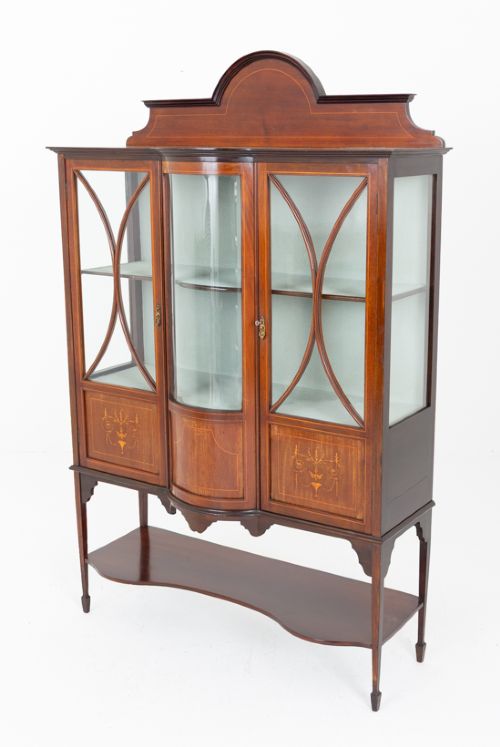
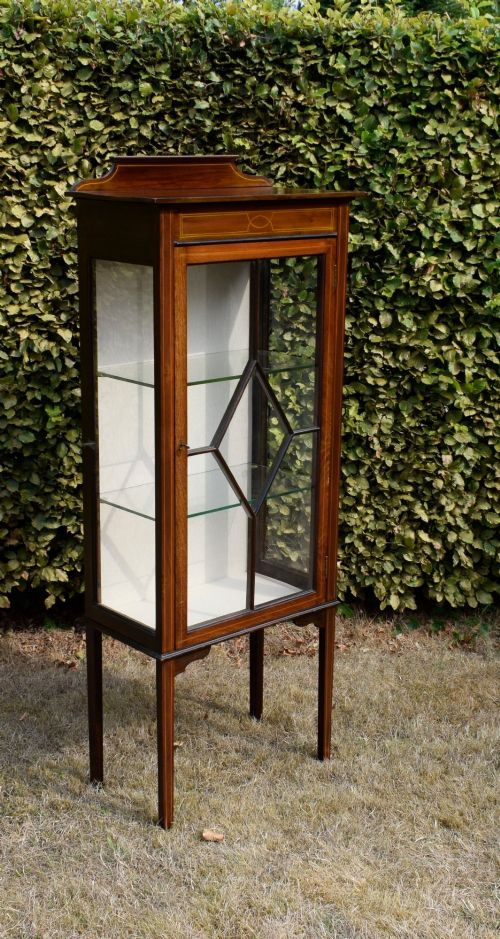
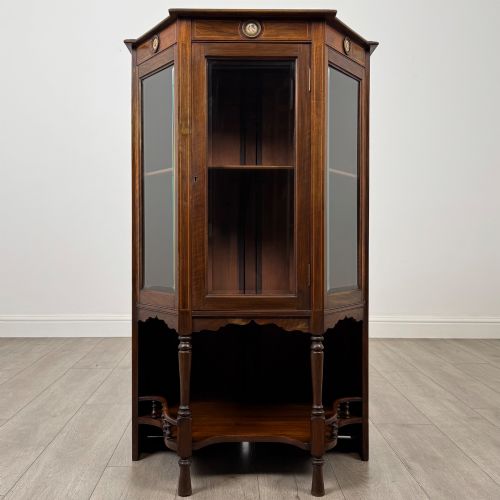
Inlaid Glazed Display Case
An inlaid glazed display case provides a refined stage for treasured objects, bringing together timber, brass, and glass with centuries of craft.

Inlaid Glazed Display Case
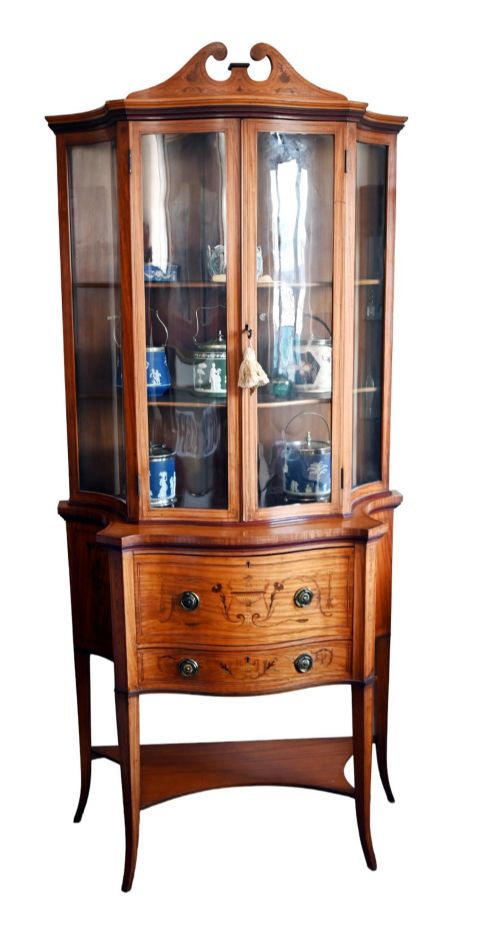
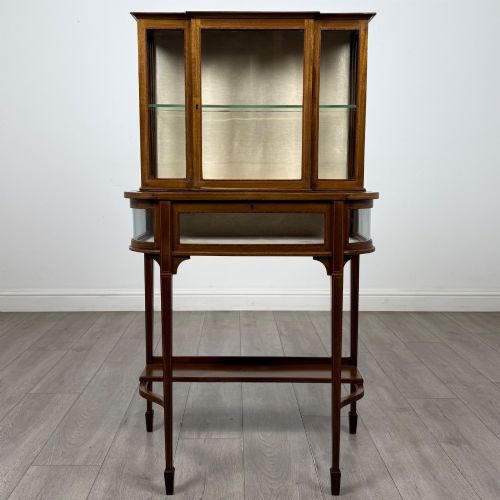
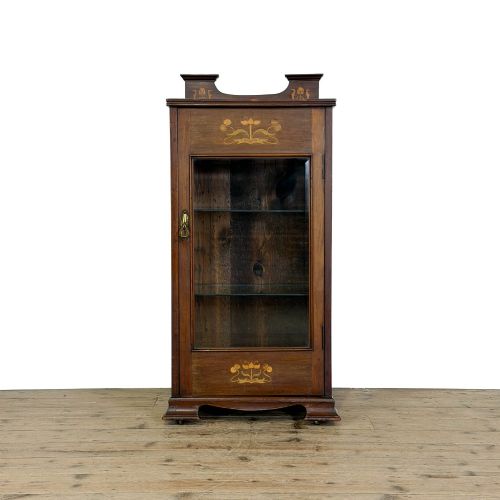
An inlaid glazed display case combines timber framing, glass panels, and decorative marquetry to exhibit valued possessions while protecting them from dust. These pieces range across Victorian, Edwardian, and nineteenth-century eras, reflecting shifts in domestic display habits.
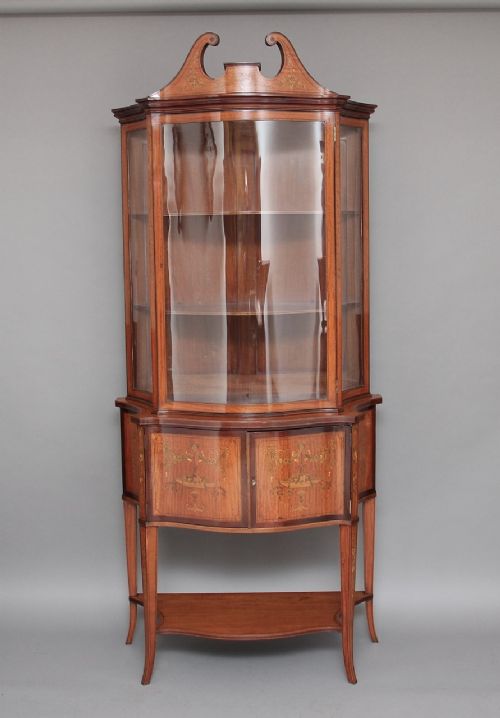
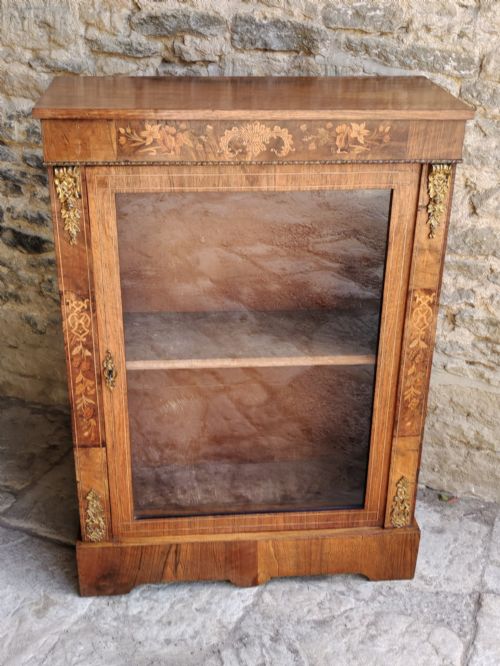
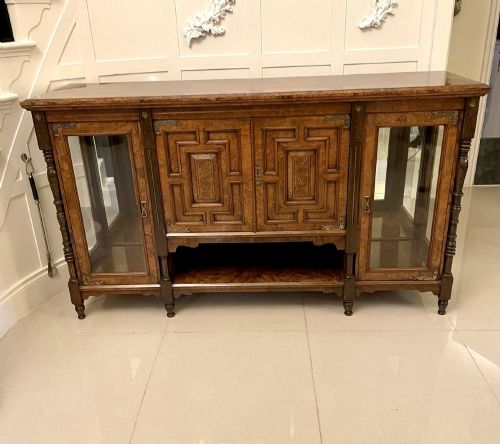
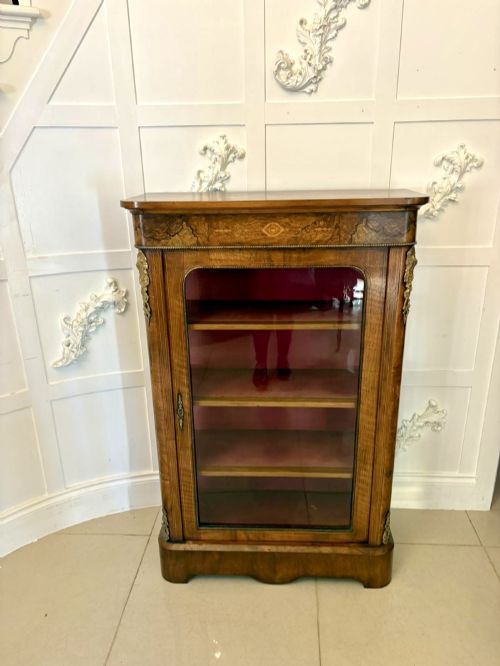
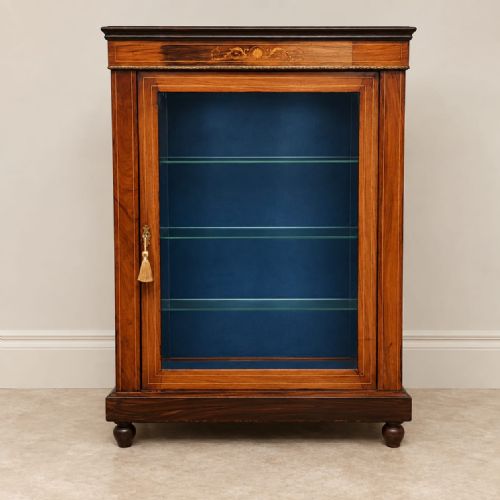
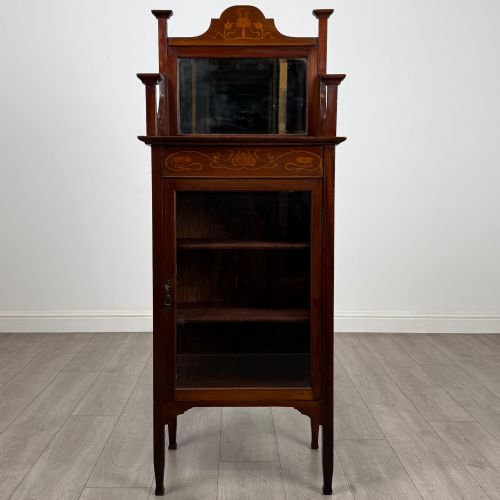
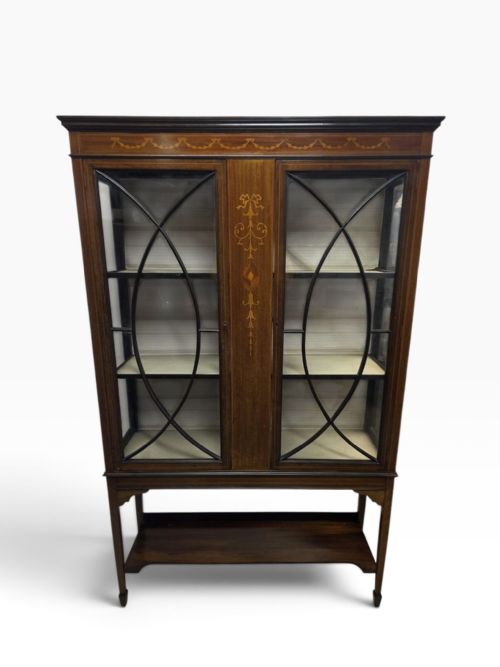
The most frequent examples on this page are Edwardian and Victorian freestanding cabinets, frequently shaped in mahogany, walnut, or satinwood. Buyers encounter tall display cabinets, low pier cabinets, and corner cabinets designed to utilise domestic space efficiently.
Makers and designers from the nineteenth and early twentieth centuries employed styles such as Sheraton Revival and Art Nouveau to ornament these glazed cases. The underlying structures serve to elevate small collections of porcelain, books, and curiosities within a principal room.
Materials and Construction
Cabinet makers utilised dense hardwoods like mahogany and walnut as the primary carcase and framing materials, often veneered with burr walnut or satinwood. These timber surfaces received detailed inlaid banding and marquetry details to create visual contrast.
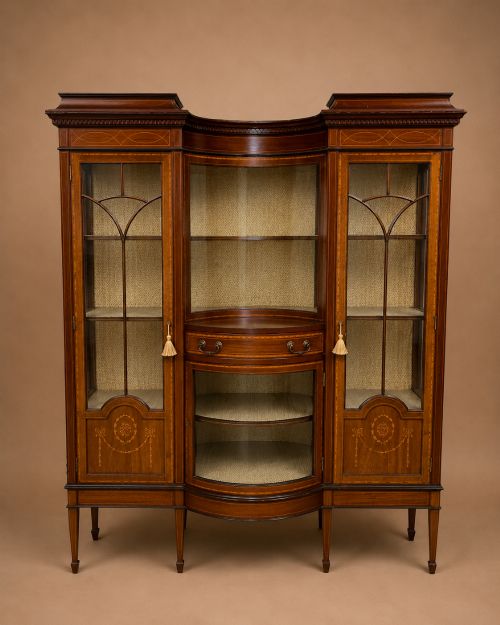
Glass panels are set within timber doors to allow a clear view of the interior shelves, occasionally accompanied by brass mounts, ormolu details, and fabric or velvet linings. Structural stability relies on tight joinery and fitted backboards rather than metal fasteners.
Listings feature mahogany, walnut, and satinwood alongside decorative additions like ormolu and velvet.
Craft and Proportion
The distinction between standard and superior pieces rests on the crispness of the marquetry inlay and the selection of figured wood veneers like burr walnut or satinwood. Finer cabinets display harmonious proportions and seamless integration of brass mounts or ormolu.
Internal elements such as adjustable shelving, sound door alignment, and original glass panes indicate higher workshop standards. The depth of hand-finishing on the timber surfaces differentiates mass production from bespoke cabinet making.
Lamb of Manchester·James Hicks·Edwards and Roberts
The Inlaid Glazed Display Case Glossary
- Marquetry
- Decorative patterns formed by fitting together thin veneers of wood, ivory, or shell onto a carcase. This technique defines the surface ornamentation of many Edwardian and Victorian display cases.
- Ormolu
- Gilded bronze mounts applied to furniture for decorative effect. These metal ornaments accent the corners and friezes of nineteenth-century satinwood and walnut cabinets.
- Pier cabinet
- A low freestanding cabinet designed to fit the narrow wall space between windows. Victorian examples frequently feature glazed doors and walnut or ebonised surfaces.
- Vitrine
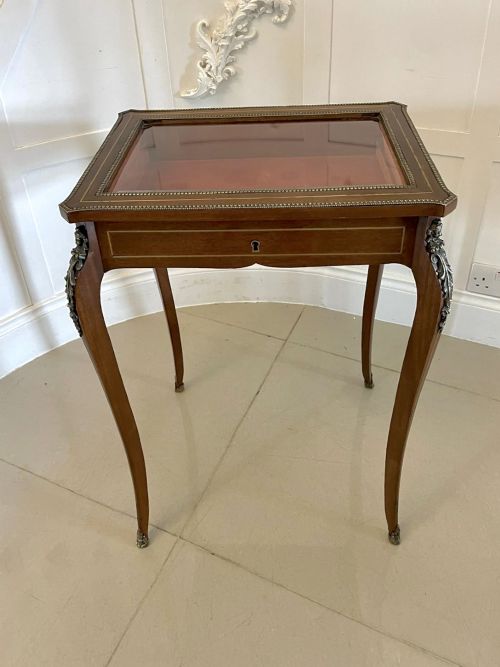
- A glass-sided cabinet or display case intended for showing porcelain and small artefacts. The term often describes continental or refined domestic display furniture.
- Satinwood
- A lustrous, yellow-toned timber used extensively in Sheraton Revival and late nineteenth-century cabinet making. It provides a pale, reflective ground for detailed inlay work.
Inlaid Glazed Display Case: Frequently Asked Questions
What is an inlaid glazed display case?
An inlaid glazed display case is a timber cabinet featuring glass doors or panels and decorative wood inlay. These pieces were built to house and exhibit fine porcelain, books, and collections.
Cabinet makers used hardwoods such as mahogany and walnut, applying contrasting veneers and marquetry to the exterior surfaces. The result is a functional furniture piece that doubles as a decorative focal point.
How do I date an inlaid glazed display case?
Dating relies on observing timber choices, construction methods, and stylistic cues present in the piece. Victorian examples often feature dark walnut or mahogany with heavy brass mounts, while Edwardian pieces frequently utilise lighter satinwood and Sheraton Revival motifs.
Interior construction, such as drawer linings and shelf supports, also offers clues regarding the manufacturing period. Comparing the hardware and inlay patterns to known nineteenth and twentieth-century conventions helps narrow the date range.
Where should I place a display case?
These cabinets suit reception rooms, libraries, and drawing rooms where their glazed panels can showcase collections safely. Pier cabinets and corner units fit well into specific architectural wall spaces without obstructing room traffic.
Direct sunlight should be avoided to protect both the timber finish and any fabric or velvet linings inside. Placing the case away from heat sources preserves the wood and prevents veneer cracking.
How do I care for antique veneer and inlay?
Maintaining veneer and inlay requires keeping the cabinet away from rapid temperature changes and excessive moisture. Dusting should be done regularly with a dry, soft cloth rather than modern chemical polishes.
Applying a traditional beeswax occasionally helps nourish the timber surface and maintain its natural lustre. Checking the humidity in the room prevents the wood from shrinking and loosening delicate marquetry details.