
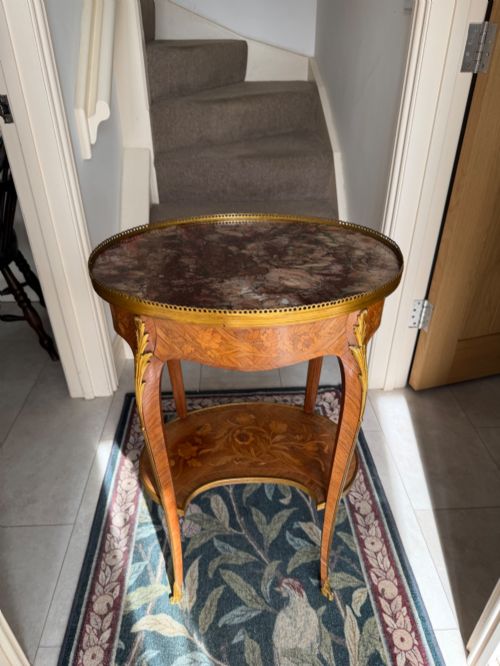
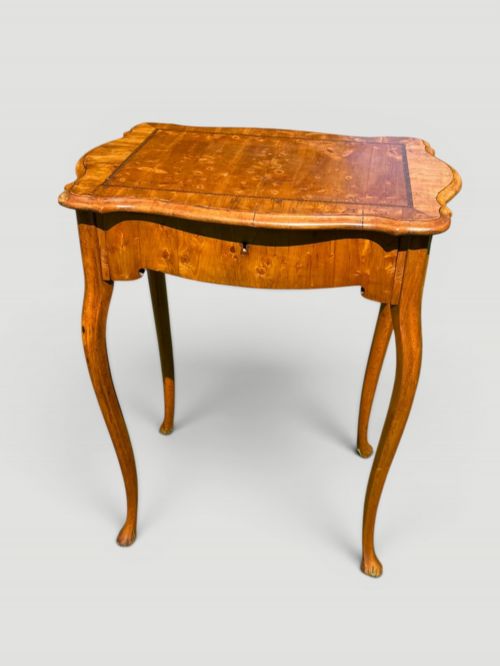

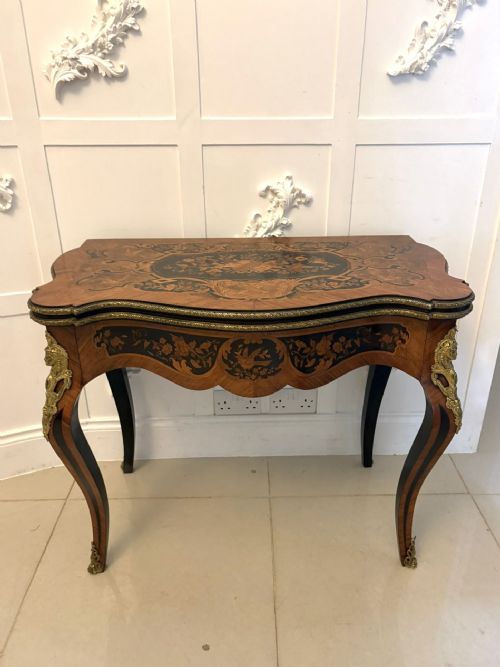


Inlaid French Accent Table
An inlaid french accent table brings continental flair to a room, offering surface space and intricate woodwork in compact forms.

Inlaid French Accent Table
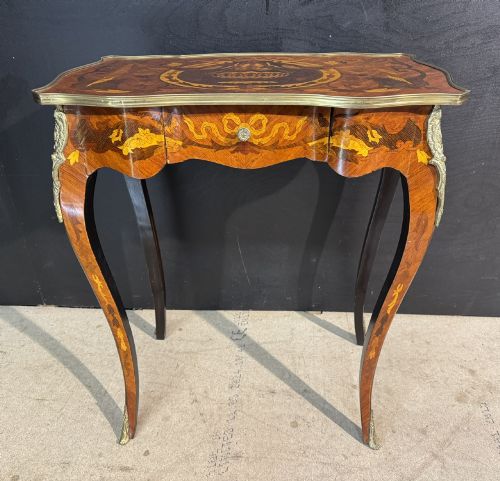
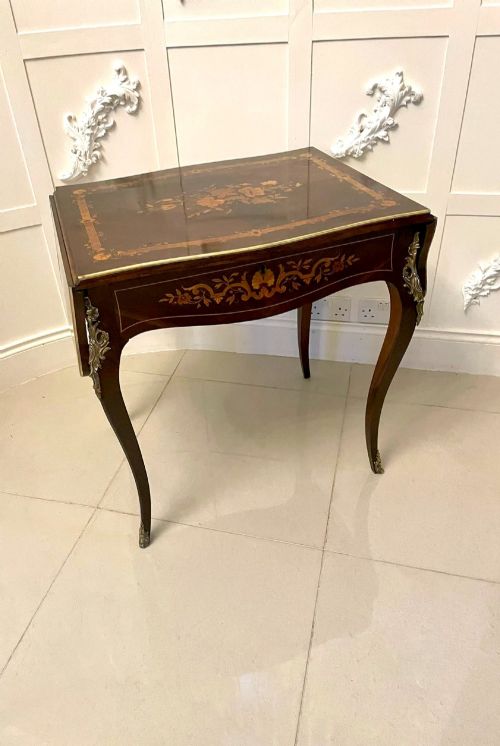
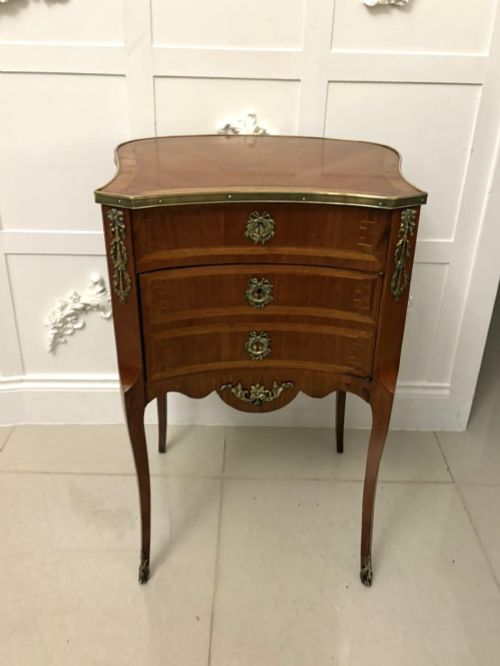
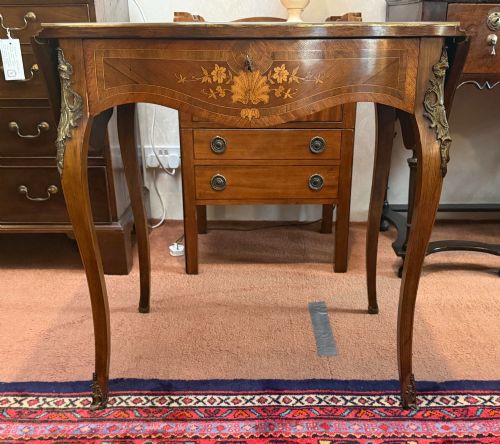
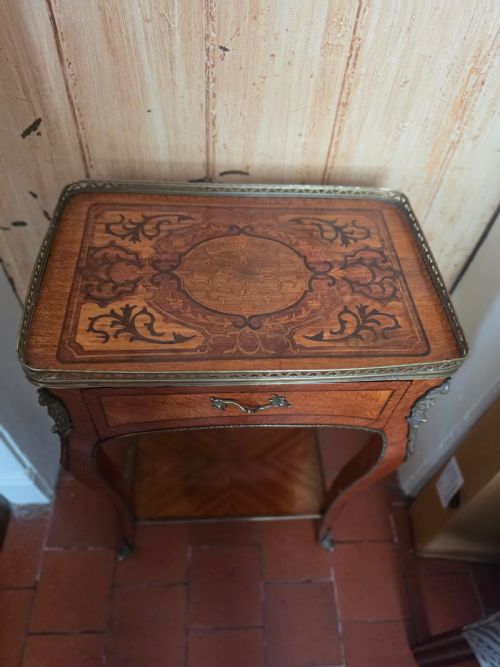
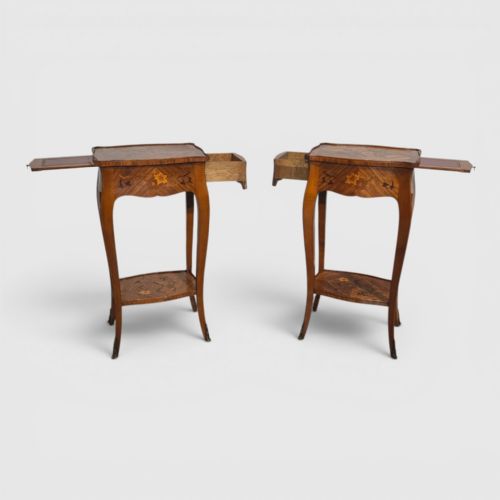
When you search for an inlaid french accent table, you find a variety of small occasional pieces designed for decorative display and light practical use. The selection spans the nineteenth and early twentieth centuries, drawing heavily on revival aesthetics such as Louis XV and Napoleon III.
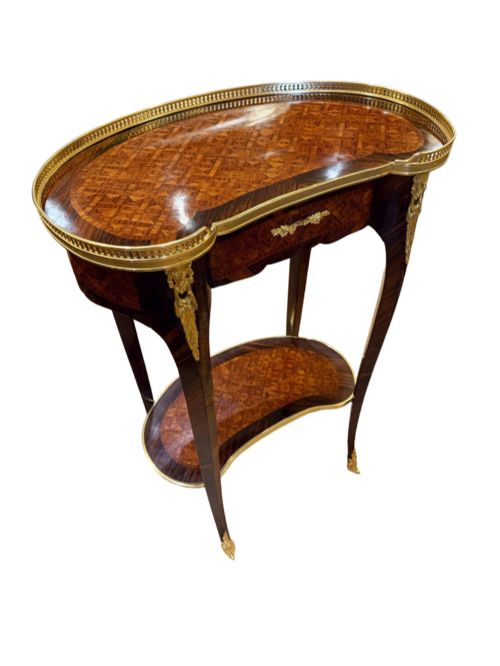
Side tables, lamp tables, and etageres dominate the current selection, often incorporating intricate floral marquetry or geometric parquetry. These smaller formats allowed makers to showcase detailed cabinetwork on kidney-shaped, rectangular, or circular surfaces.
Origins trace directly to French workshops and English makers influenced by continental taste, producing freestanding pieces intended to catch the eye from multiple angles. Walnut, kingwood, and rosewood form the structural foundation for most examples encountered.
Materials and construction
Craftsmen built these tables using dense hardwoods like walnut, mahogany, and ebonised wood as a carcase, veneered with decorative timbers including kingwood, rosewood, and satinwood. Marquetry patterns utilised contrasting wood species to render floral arrangements and pictorial scenes across the top surface.
Ormolu mounts, cast in gilt bronze or brass, edge the tabletops, corners, and legs to accentuate the curved lines typical of Louis XV and transitional styles. Parquetry employed precise geometric tiling, while specialised variations incorporated brass inlay and painted decoration.
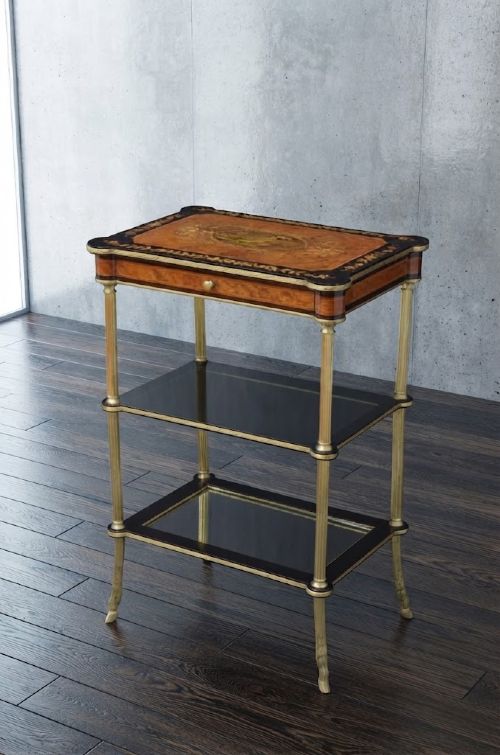
Recorded forms range from compact etageres and card tables to kidney-shaped side tables and multi-tiered display stands.
Distinctions in quality
Quality rests heavily on the crispness of the marquetry cutter's saw and the selection of veneer timbers, where rich grain and natural colour variation elevate the piece. Superior examples integrate heavy, finely chased ormolu mounts that fit the contours of the wood precisely rather than generic cast fittings.
The sophistication of the internal framing and timber selection for secondary woods also signals standard, alongside signed or labelled mounts that attribute the piece to notable makers of the period.
Millet·Edwards and Roberts·Haentgos Freres·Gillows
The Inlaid French Accent Table Glossary
- Marquetry
- Decorative veneer work forming pictures or patterns using various woods and organic materials. It differs from parquetry by depicting pictorial or curvilinear designs rather than geometric grids.
- Parquetry
- Geometric wood inlay forming repeating patterns such as cubes, lozenges, or squares. It provides a structured textural surface across tabletops.
- Ormolu
- Gilded bronze mounts applied to furniture edges and legs for decorative accent. The technique was widely utilised during the nineteenth century on revival pieces.
- Etagere
- A set of open shelves or tiered stands used for display. These pieces often incorporate mirrored tiers and delicate inlaid uprights.
- Gueridon
- A small round table supported by a central column or multiple legs. The form originated in the seventeenth century and returned in nineteenth-century revival outputs.
Inlaid French Accent Table: Frequently Asked Questions
Where should I place an accent table?
These tables suit sitting rooms as lamp surfaces or beside armchairs where their detailed woodwork remains visible. Their finished backs allow freestanding placement in the centre of a room.
Avoid positioning them in direct sunlight to protect delicate rosewood, kingwood, and satinwood veneers from fading over time.
How do I care for antique veneer?
Dust the surface regularly with a soft, dry cloth and avoid modern aerosol polishes that leave residues. Maintain stable room humidity to prevent the timber beneath the marquetry from expanding and lifting.
Keep the tables away from direct heat sources such as radiators to ensure the glue holding the inlay remains stable.
What defines the Napoleon III style?
Napoleon III pieces combine eclectic historical revivals with lavish surface decoration, particularly profuse marquetry and ebonised woods. This mid-to-late nineteenth-century aesthetic favoured ornate ormolu mounts and bold contrast.
Such tables often display intricate floral motifs alongside curved cabriole legs or tier structures.
How do I distinguish French and English tables?
French-made examples often display distinctive continental floral marquetry and specific regional ormolu casting techniques. Maker signatures or stamps on the bronze mounts frequently point to Parisian workshops.
English pieces from the same era frequently interpret these French styles using domestic workshops while retaining characteristic cabinetmaking joins.