


Inlaid Floor Clock
An inlaid floor clock stands as a towering piece of functional furniture, bringing mechanical timekeeping and intricate cabinetwork into a room.
Inlaid Floor Clock
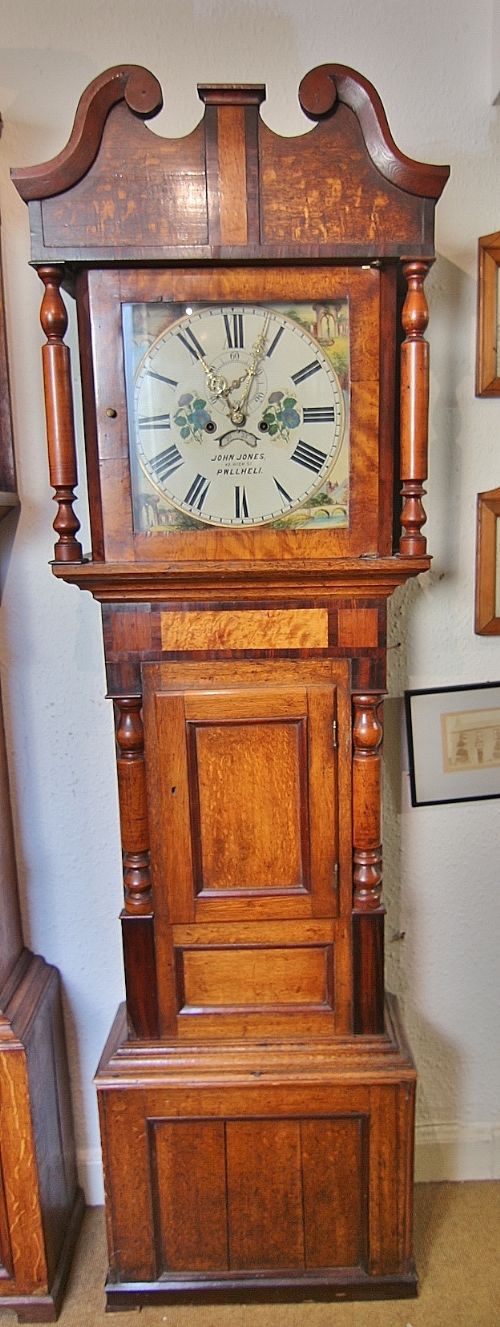
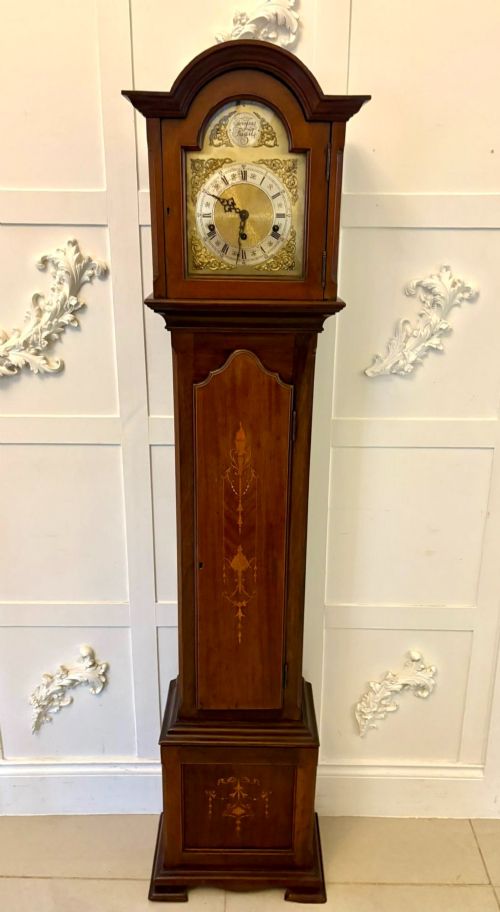
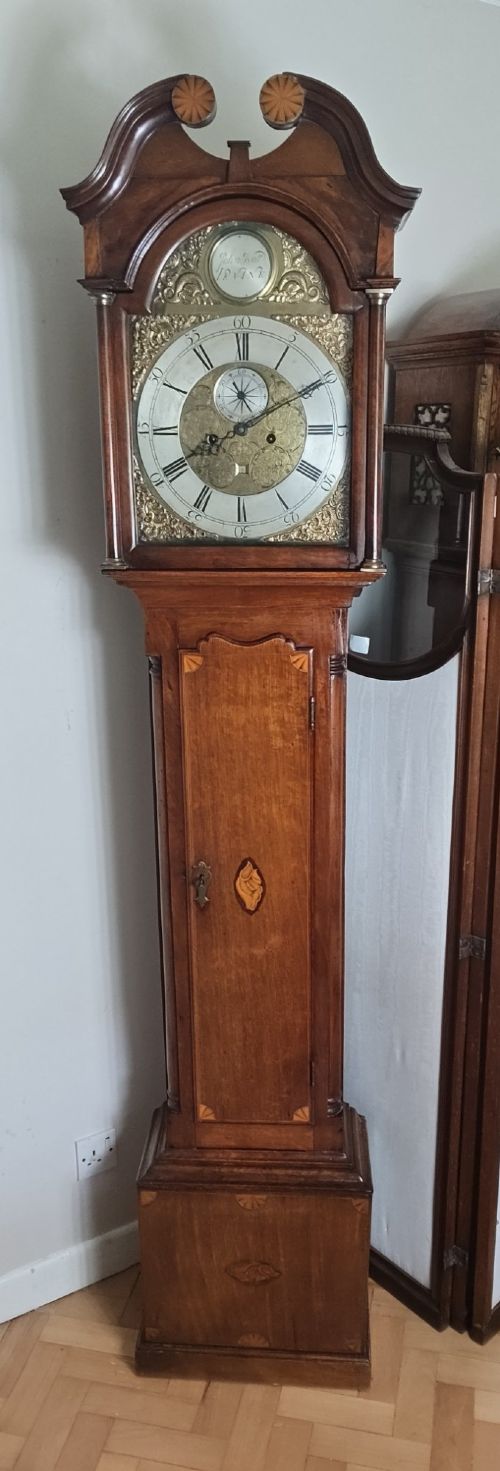
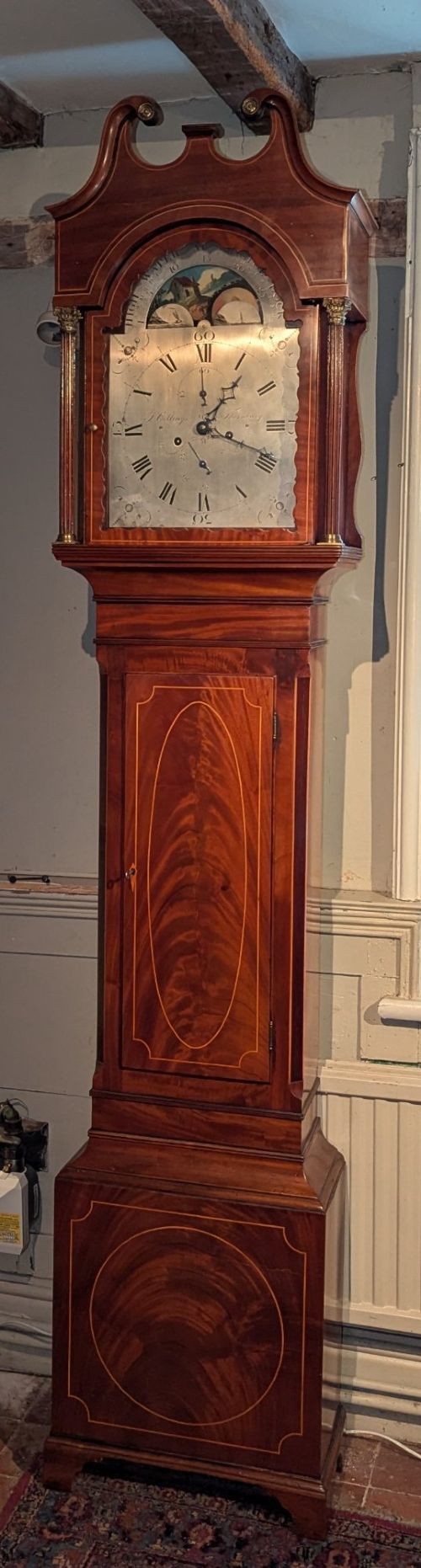
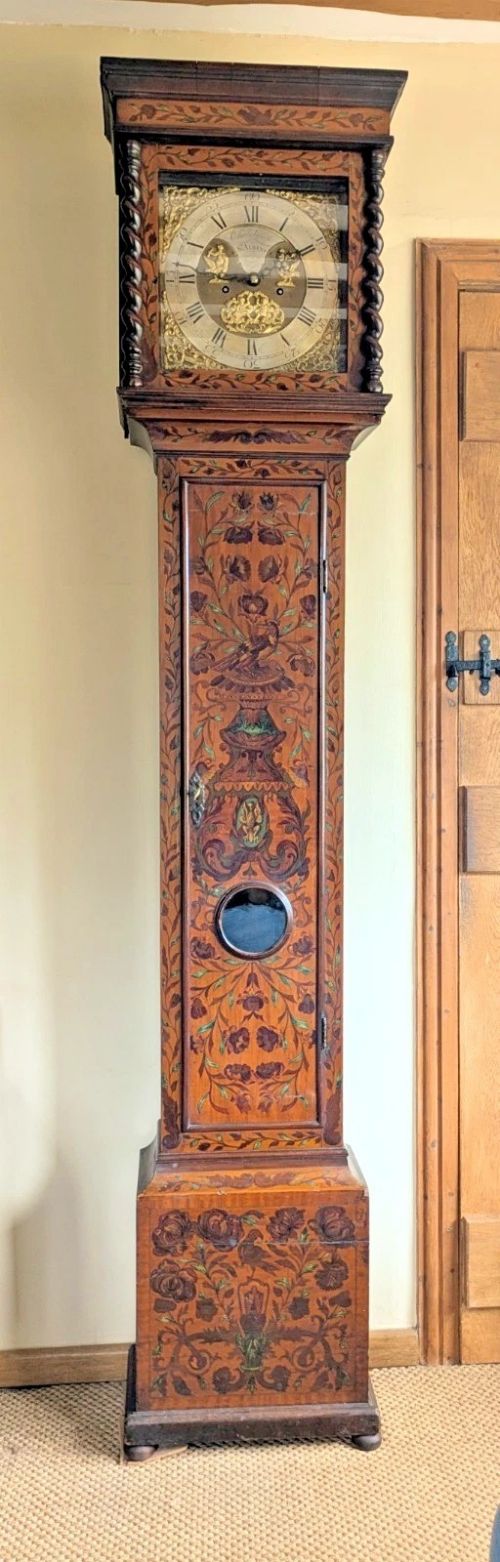
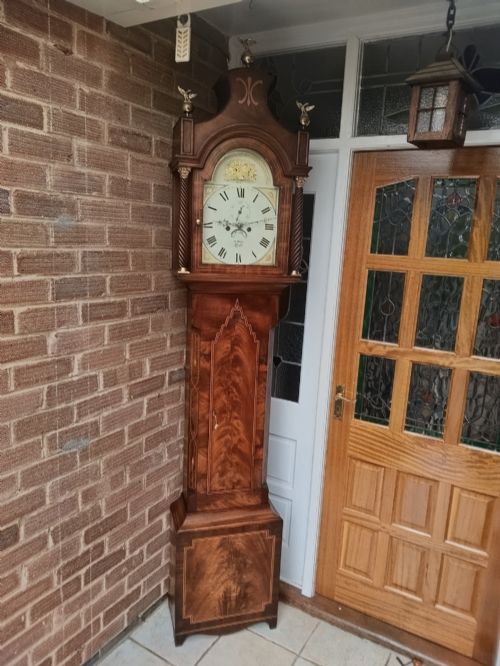
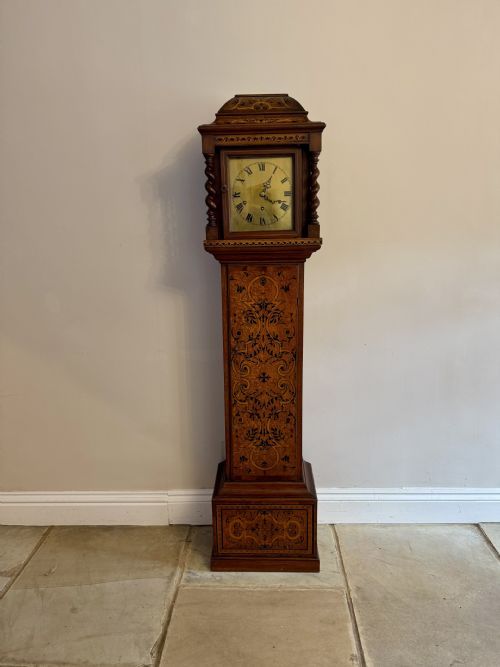
An inlaid floor clock takes the form of a tall wooden case enclosing a weight-driven movement, commonly known as a longcase or grandfather clock. When searching for an inlaid floor clock, a buyer meets examples spanning the eighteenth and nineteenth centuries, alongside Edwardian and Regency periods. These timepieces display timber cases adorned with contrasting wood insertions, ranging from simple chequered banding to elaborate floral marquetry.
The prevailing versions on this page are mahogany and oak longcase clocks from the Georgian era, built with eight-day movements and painted or brass dials. Edwardian and nineteenth-century variants also appear frequently, alongside occasional bracket clocks on pedestals and musical models. Regional makers from provincial towns and London sign the dials, connecting the furniture directly to eighteenth and nineteenth-century workshops.
Materials and Construction Techniques
Cabinetmakers constructed the tall cases using solid timbers and veneers of mahogany, walnut, and oak, often enriching surfaces with satinwood and marquetry inlay. Mechanics relied on cast brass for movements, dials, and bezels, while glass protected the dial face on the hood door.
Makers shaped the wood through traditional joinery, securing panels within frames to accommodate seasonal wood movement. Inlayers cut contrasting veneers by hand, assembling floral, geometric, or paterae motifs into recesses cut directly into the primary casework.
Several examples include moon phases on their dials, tracking the lunar cycle right alongside the ticking seconds.
Evaluating Cabinetwork and Movement Integrity
Quality rests in the harmony between the cabinetmaker's skill and the clockmaker's precision. Superior examples exhibit crisp, securely fitted inlay work on well-figured timber, retaining their original proportions, hood columns, and feet without heavy replacement.
The movement dictates the mechanical tier, with eight-day brass movements showing finer finishing than simpler thirty-hour variants. Signed dials by recorded makers add authority, whilst cases displaying uniform patination and minimal timber replacement hold greater integrity.
Charles Louch St Albans·John Denbigh Merton Park·Nathaniel Pyne·Benjamin Peers Chester·David Morice Auchtermuchty·Wightman Of London·Thomas Lees Bury·Thomas De Gruchy Jersey·Furnival Oldham·William Smith Keighley·R Lawson Leigh·Edward Stanton·Edward Glase Bridgnorth·Edward Renouf Jersey·Peter Wise London·Joseph Lum
The Inlaid Floor Clock Glossary
- Longcase clock
- A tall freestanding pendulum clock enclosed in a wooden case, commonly called a grandfather clock. These housing units protect the delicate weights and pendulum from drafts and dust.
- Marquetry inlay
- Decorative patterns formed by fitting contrasting veneers into a prepared wooden surface. This technique creates pictorial or geometric designs across the trunk door and base.
- Moon dial
- A specialised clock dial featuring a rotating disc that tracks the lunar phases alongside standard time. It displays the age of the moon through a shaped aperture.
- Paterae
- Small circular or oval decorative motifs carved or inlaid into furniture surfaces. They often appear on the corners of longcase clock trunks and hoods during the Georgian period.
- Movement
- The internal mechanical assembly of gears, springs or weights, and escapement that drives the clock hands. Eight-day versions require winding weekly, unlike thirty-hour counterparts.
Inlaid Floor Clock: Frequently Asked Questions
What is an inlaid floor clock?
An inlaid floor clock is a tall mechanical timepiece housed in a wooden case decorated with contrasting wood veneers or stringing. These pieces combine practical timekeeping with decorative cabinetwork.
They stand directly on the floor, utilising a long pendulum and suspended weights to regulate time accurately over extended periods.
How do eight day movements work?
An eight-day movement utilises two suspended weights that drive the timekeeping and striking trains, requiring manual winding through holes in the dial every week. This mechanism uses a deadbeat or anchor escapement paired with a long pendulum.
Gear trains transmit power from the weights to the hands, allowing the clock to maintain steady operation between winding sessions.
Where should I place a grandfather clock?
A grandfather clock requires a stable, level floor away from direct sunlight, heating vents, and exterior doors to protect the wooden case and movement. Placing it against an interior wall prevents vibrations from foot traffic.
Sufficient vertical clearance is essential, as these tall cases often measure over six feet in height.