


Welsh Tall Case Clock
These welsh tall case clock pieces combine regional cabinetmaking with brass movements to anchor a room.
Welsh Tall Case Clock
A welsh tall case clock stands as a substantial timekeeper, housing an 8-day movement within a tall wooden trunk. Most examples met here span the 18th century and the 19th century, reflecting Georgian and Victorian periods.
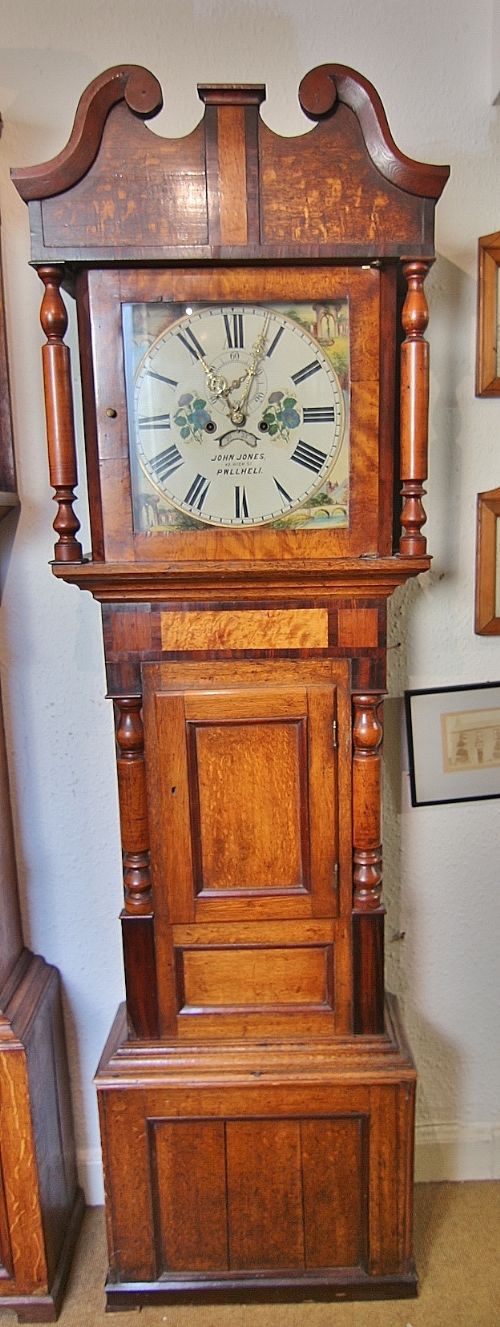
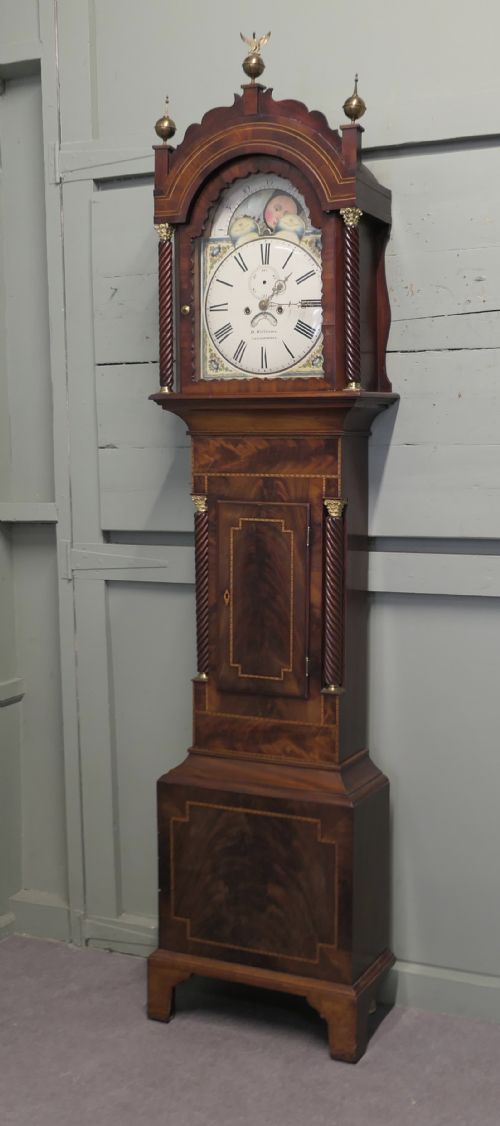
Makers housed these movements in regional cases, often featuring an arch dial or a rolling moon mechanism. Oak and mahogany serve as the primary timbers for the hoods and trunks.
Regional variations appear across different towns, showing how local makers signed their painted iron or metal dials. Buyers encounter these floor-standing clocks in both simple country oak and finer figured mahogany.
Materials and construction
Inside, brass movements regulate the time, driving hands across painted iron or metal dials. Makers inscribed their names and towns directly onto these painted faces, alongside subsidiary seconds or calendar displays.
Makers painted cheerful rolling moons into the arch dials to track the night sky from Welsh workshops.
Judging quality in regional timepieces
Quality rests in the harmony between the cabinetwork and the dial's artistry. Finer mahogany cases display careful timber selection and crisp inlay work, whereas simpler oak versions rely on robust proportions and honest regional joinery.
The sophistication of the dial painting and the complexity of the movement elevate certain pieces. Moonphase complications and detailed floral spandrels on the arch dial distinguish the more ambitious regional workshops.
D Williams of Crickhowell·Thomas Webbe of New Quay·James Harvey of Abergavenny·Watkin Owen Llanrwst·M Thomas Caernarfon·John Jones Pwllheli·David Griffith Carnarvon
The Welsh Tall Case Clock Glossary
- Arch dial
- A clock face featuring a rounded upper extension above the square chapter ring, often housing a rolling moon mechanism.
- Rolling moon
- A painted disc behind an aperture in the arch dial that tracks the phases of the lunar cycle over a lunar month.
- Longcase clock
- A tall pendulum clock enclosed in a wooden case, commonly known as a grandfather clock.
- Chapter ring
- The circular band on the dial bearing the numerals for hours and minutes.
- 8-day movement
- A weight-driven mechanism requiring winding once a week rather than daily.
Welsh Tall Case Clock: Frequently Asked Questions
How do I wind an 8-day clock?
Use the winding key to raise the weights inside the trunk slowly until they reach the top. Take care not to overwind the mechanism.
Ensure the pendulum hangs plumb before setting the hands to the correct time.
Where were these clocks made?
These timepieces originated in various Welsh towns and rural workshops, constructed by local clockmakers and cabinetmakers.
Each maker often signed the painted dial with their name and location.
What timber was used for the cases?
Makers primarily used oak and mahogany for the tall cases, sometimes adding decorative inlay work.
Timber choice often reflected the period and the client's budget.
How do I tell an 18th century clock from a 19th century one?
Eighteenth-century examples frequently feature oak cases and simpler dial layouts, reflecting Georgian cabinetmaking.
Nineteenth-century pieces tend to utilise mahogany and incorporate painted iron dials with rolling moon mechanisms or arch designs.