
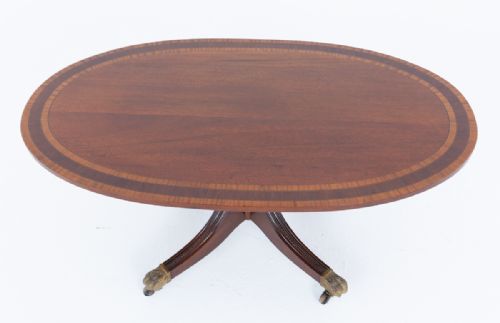
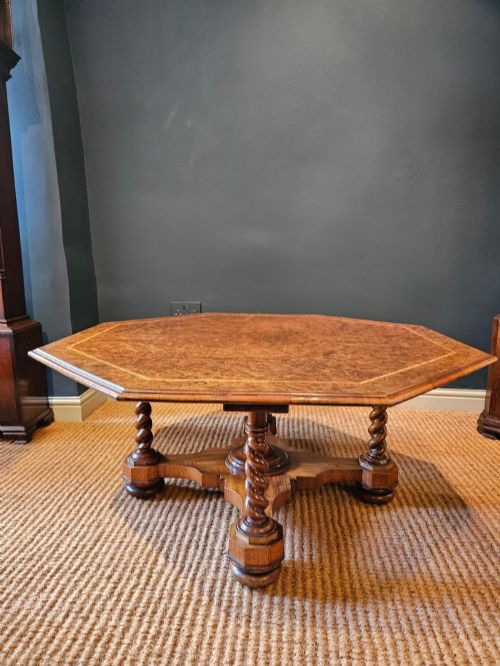


Inlaid Cocktail Table
An inlaid cocktail table brings a distinct surface and period character to a room, offering a practical low stage for glasses and books.
Inlaid Cocktail Table
An inlaid cocktail table combines low surfaces with decorative woodwork, serving as a focal point for drinks and entertaining in a sitting room. These items appear across several historic eras, ranging from nineteenth-century examples to pieces from the 1920s and 1930s.
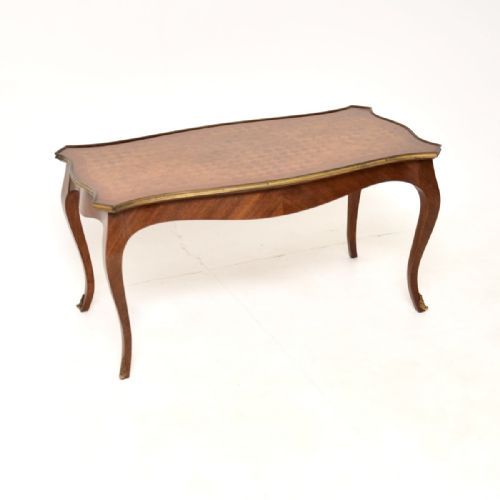
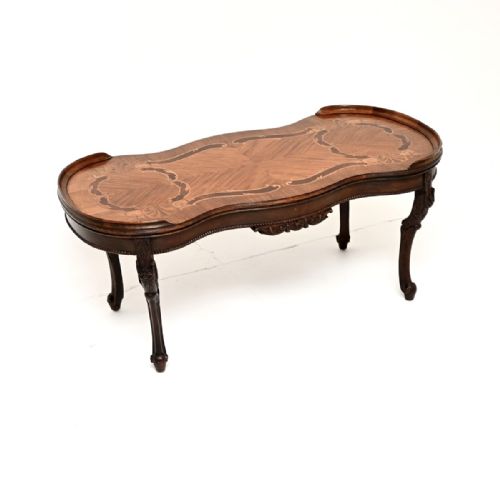
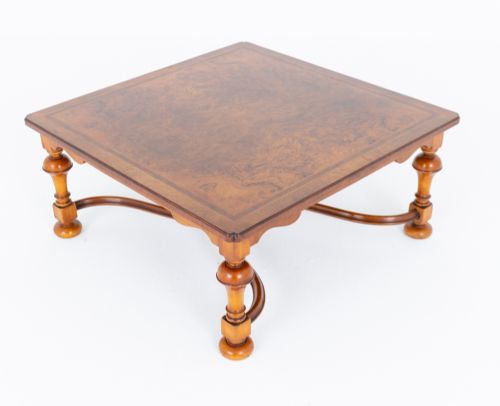
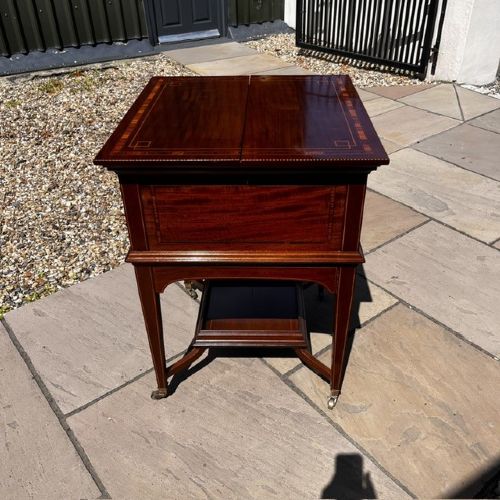
The assortment includes coffee tables and drinks cabinets adapted for serving beverages, often taking circular, oval, octagonal or rectangular forms. Surfaces feature intricate marquetry and parquetry patterns set into woods like mahogany, burr walnut and fruitwood.
Makers drew on diverse historic design idioms, producing items in Regency, Victorian, Edwardian, Sheraton Revival, Louis XV style and Carolean revival tastes. Buyers frequently encounter French and Italian workmanship alongside British cabinet making from the nineteenth and early twentieth centuries.
How they were made
Cabinet makers utilised dense primary timbers such as mahogany and burr walnut, applying contrasting veneers of satinwood, boxwood and kingwood to form geometric or pictorial surface patterns. This technique required precise cutting of thin timber slices to fit flush into prepared recesses on the table top.
Metal elements such as brass appeared in mounts, gallery edges and hardware, adding structural accents and decorative contrast to the timber. Joinery methods varied according to the period, supporting tray tops, pedestal bases and multi-legged frames.
Current listings feature pieces spanning the Regency period, Victorian era, Edwardian years and the 1920s and 1930s, constructed in walnut, mahogany, burr walnut and fruitwood.
What varies in quality
The fineness of the inlaid timber work dictates much of the distinction between standard and superior pieces, particularly in the complexity of marquetry flowers and parquetry grids. Richer selection of burr walnut, satinwood and kingwood veneers elevates the visual depth of the top.
Proportion and execution of the supporting frame, whether an oval tray top, an octagonal base or carved cabriole legs, reflect the skill of the original workshop. Finer items demonstrate seamless integration between the decorative surface and the underlying structural carcass.
The Inlaid Cocktail Table Glossary
- Marquetry
- A decorative technique where small pieces of veneer are assembled to form pictorial or floral designs on a wooden surface. Craftsmen cut different coloured woods to fit together precisely within a paper pattern.
- Parquetry
- A geometric mosaic of wood pieces used for covering floors or furniture tops. It creates repeating patterns like cubes, chequers or triangles using contrasting timbers.
- Veneer
- A thin slice of figured wood applied over a stable secondary timber carcass. This method allows workshops to display decorative grain figures without using solid expensive timber.
- Boxwood
- A dense, pale yellow wood frequently used for delicate stringing and inlay lines. Its fine grain permits sharp edges in intricate patterns.
- Tray top
- A raised rim around the edge of a surface, designed to prevent items from sliding off. This form appears on both eighteenth-century designs and later revival pieces.
Inlaid Cocktail Table: Frequently Asked Questions
What is an inlaid cocktail table?
An inlaid cocktail table is a low surface designed for drinks and books, decorated with contrasting wood veneers and patterns. These pieces range from antique coffee tables to drinks cabinets.
They reflect historical design styles from the Regency period through to the 1930s, using materials like mahogany, burr walnut and satinwood.
How do I date an inlaid cocktail table?
Dating relies on examining the timber species, construction methods, and stylistic cues such as Regency or Edwardian revival details. Secondary woods and fastener types also offer clues to the decade of manufacture.
Cabinet makers of the 1920s and 1930s often revived earlier French and Georgian forms, blending historical aesthetics with modern proportions.
Are these tables sturdy enough for daily use?
Most antique tables are built from solid hardwoods like mahogany and walnut, making them durable for everyday living. Proper joint construction and stable leg frames ensure they support normal loads.
Care should be taken to protect delicate veneered surfaces from moisture rings and excessive heat by using coasters and trays.
What is the difference between marquetry and parquetry?
Marquetry creates pictorial scenes, scrolls or floral motifs using varied wood veneers assembled like a jigsaw. It appears on many decorative table tops.
Parquetry constructs repeating geometric patterns, such as cubes or chequers, using regular shapes of contrasting timber.