

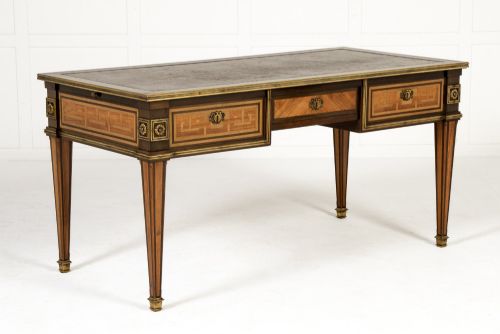


Inlaid Bureau Plat
An inlaid bureau plat is a freestanding writing table designed for the centre of a room, prized for intricate surface patterns and decorative mounts.
Inlaid Bureau Plat
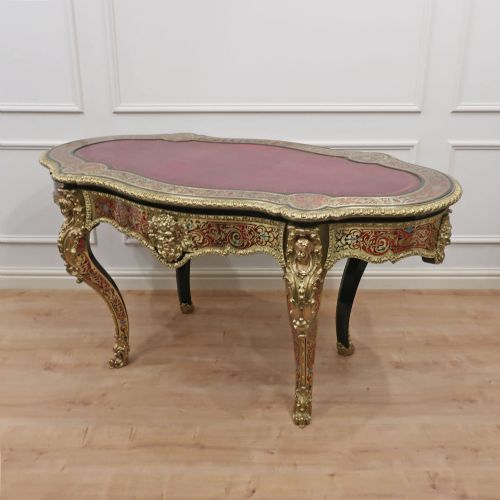
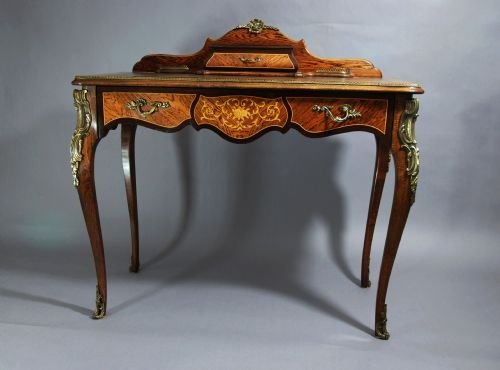
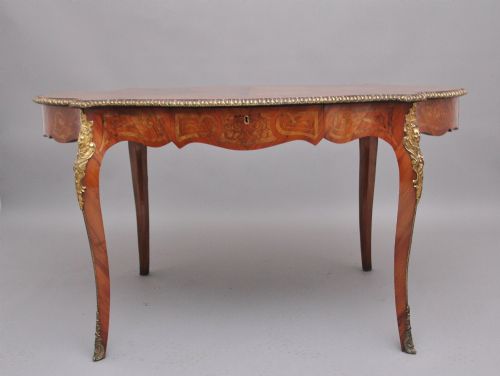
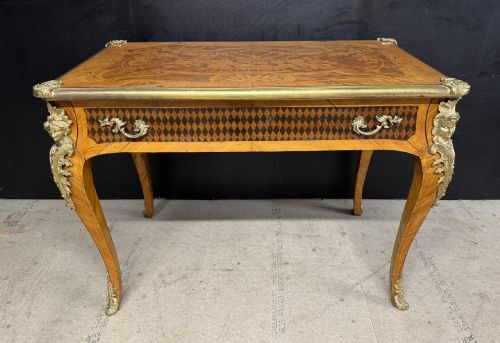
When you search for an inlaid bureau plat, you encounter freestanding writing tables and centre desks primarily originating from nineteenth century France. These pieces follow stylistic revivals of the Louis XV and Louis XVI periods, featuring finished backs designed to be viewed from any angle in a room.
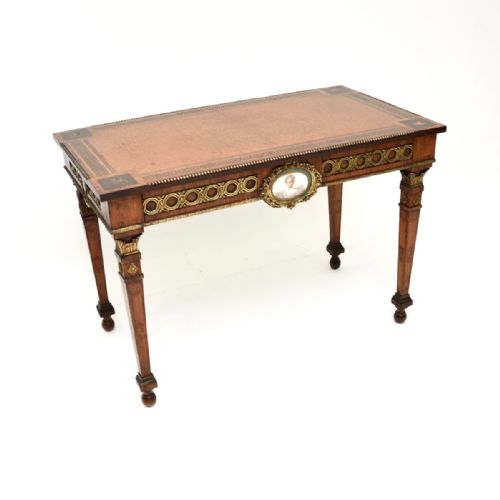
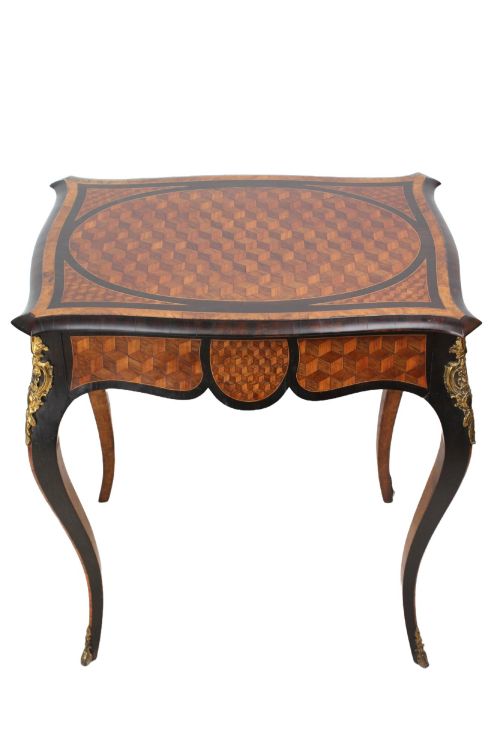
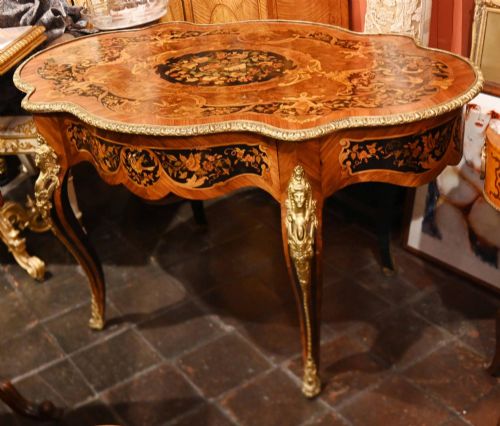
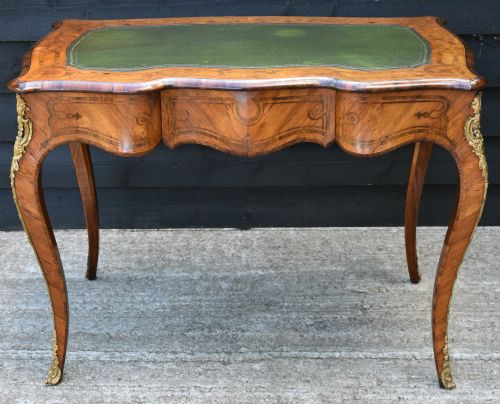
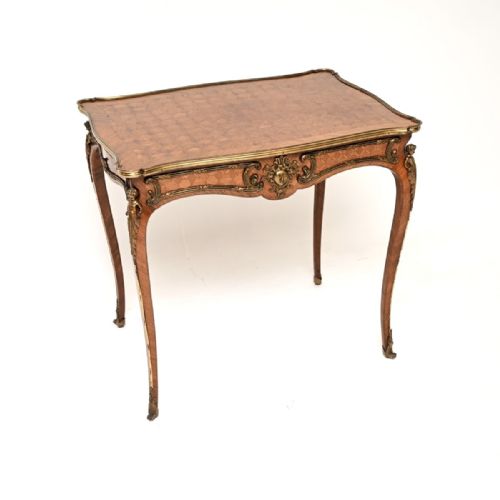
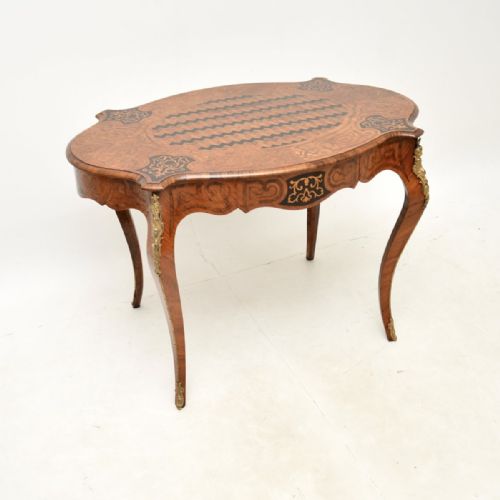
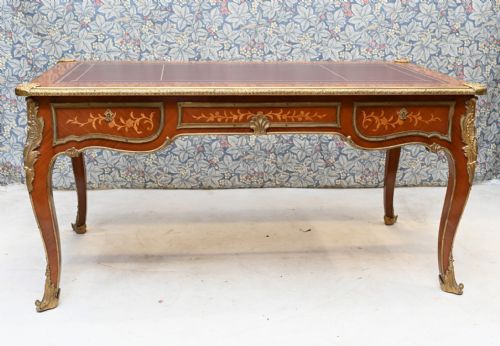
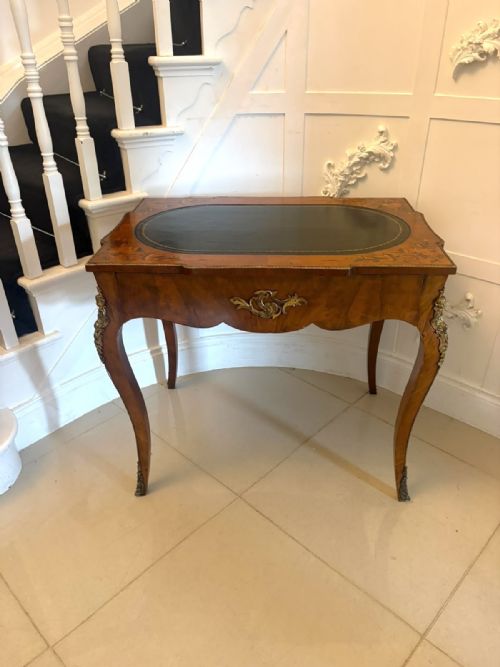
The most common examples on this page combine elaborate marquetry or parquetry surfaces with fitted leather writing inserts. Makers adopted classic writing table forms, mounting them with ormolu and brass to echo royal French cabinet-making traditions.
How they were made
Cabinet-makers constructed these desks using native and exotic timbers including walnut, kingwood, rosewood, and satinwood, laid down as fine veneers over sturdy secondary woods. Surface decoration relied on precise marquetry to form floral scenes or geometric parquetry panels.
The wooden frames received cast ormolu, gilt bronze, and brass mounts along the edges, corners, and legs to accentuate the serpentine or straight contours. Leather writing surfaces were typically tooled with gold leaf and set directly into the top.
Inlaid Bureau Plat Retail Price Guide 2026
Typical asking prices for inlaid bureau plat among the pieces listed under this phrase on Sellingantiques today, from the lower quarter to the upper quarter. They describe what is for sale here now, not the wider market.
Several desks hide their inkwells inside secret compartments.
What varies in quality
Quality rests heavily on the crispness of the bronze or ormolu mounts and the complexity of the wood veneers. Superior pieces display hand-chased metalwork and intricate, multi-timber marquetry that integrates seamlessly into the curves of the desk.
The integrity of the structural joinery and the preservation of the original leather insert further distinguish workshop tiers. Tables by documented makers often exhibit greater attention to internal drawer construction and finishing.
JAS Shoolbred·Maison Millet·Francoise Linke
The Inlaid Bureau Plat Glossary
- Bureau plat
- A flat-topped freestanding writing table, usually fitted with drawers and designed to sit away from walls. It represents the standard desk form of eighteenth and nineteenth century France.
- Marquetry
- The art of applying decorative pieces of veneer to a structure to form pictorial or floral designs. Cabinet-makers used contrasting tinted woods to create shaded effects.
- Parquetry
- A geometric mosaic of wood pieces used for decorative floors and furniture surfaces. It creates repeating patterns like cubes or chequers.
- Ormolu
- Gilded bronze mounts applied to the edges and corners of furniture. High-quality examples are hand-chased after casting to sharpen details.
- Boulle
- A form of marquetry employing brass and tortoiseshell, named after a royal cabinet-maker. It appears on selected revival writing tables.
Inlaid Bureau Plat: Frequently Asked Questions
Where did they place a bureau plat?
These tables sat in the middle of salons and studies rather than against walls. Their finished backs allowed them to occupy central positions in grand rooms.
Owners utilised them for correspondence and administrative duties while maintaining an impressive aesthetic from every perspective.
How do I spot Louis XV revival pieces?
Louis XV revival writing tables display curving cabriole legs and asymmetric floral marquetry. The outlines are fluid, avoiding straight lines where possible.
Ormolu mounts on these models typically highlight the knee and toe of each leg to accentuate the movement.
What woods appear most often?
Walnut, kingwood, and rosewood form the primary carcass and veneer materials across the selection. Cabinet-makers also utilised satinwood, calamander, and coromandel for contrast.
Exotic timbers were imported into France and Britain to supply the demand for richly coloured decorative surfaces.
Are these desks suitable for daily writing?
The leather inserts provide a durable writing surface designed for everyday use with traditional fountain pens and stationery. Many retain their original proportions and working drawer spaces.
Placing them in modern studies requires balancing their historical value with practical workspace needs.