


Inlaid Bureau De Dame
An inlaid bureau de dame is a refined ladies writing desk designed for private correspondence, combining elegant marquetry with intimate proportions.
Inlaid Bureau De Dame
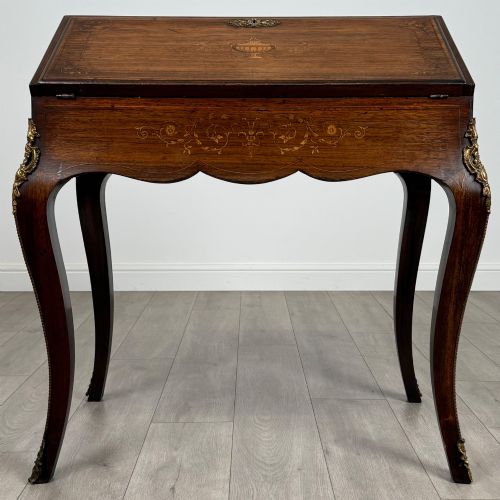
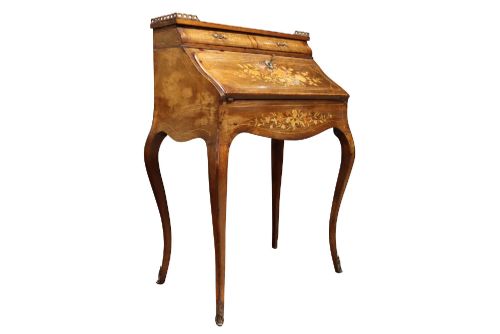
An inlaid bureau de dame is a ladies writing desk created primarily during the nineteenth century, drawing heavily on French revival aesthetics. These pieces typically feature a sloping fall-front or an upper superstructure known as a bonheur-du-jour, providing a compact surface for correspondence.
The versions most commonly met on this page date from the Victorian era, spanning the decades between eighteen-fifty and eighteen-ninetynine. They often reflect Louis the Fifteenth styles, adopting serpentine outlines and delicate cabriole legs suited to formal drawing rooms.
Makers constructed these desks as freestanding items intended to be admired from all angles within a room. Their compact scale distinguishes them from larger partner desks or heavy library tables.
Materials and Construction
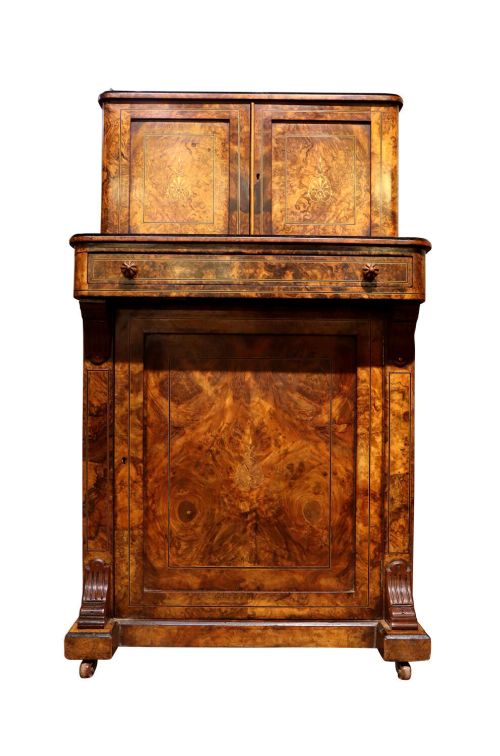
Cabinet makers utilised dense exotic timbers as carcase foundations and decorative surfaces, notably rosewood, walnut, burr walnut, kingwood, and amboyna. These woods provided rich grain patterns essential for detailed geometric or floral ornamentation.
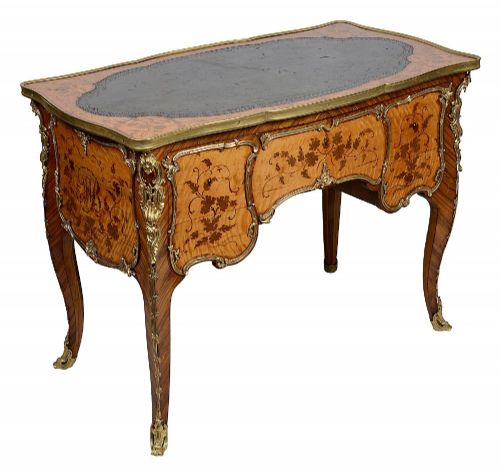
Marquetry inlay formed the primary decorative vocabulary, contrasting lighter woods against darker grounds to create intricate pictorial or scroll motifs. Metal enrichment frequently accompanied these designs through cast brass and ormolu mounts edging the contours and protecting vulnerable corners.
Many of these miniature desks conceal secret compartments designed to hide love letters from prying family members.
Judging Quality and Execution
The distinction between standard commercial output and superior craftsmanship lies in the depth and precision of the marquetry and timber selection. Highly regarded pieces employ choice burr veneers and finely pierced ormolu mounts rather than stamped metal imitations.
Internal arrangement and secondary woods also reveal standard of production, with meticulous dovetailing in drawer construction and fully finished back panels indicating an uncompromising approach to manufacture.
Paul Sormani
The Inlaid Bureau De Dame Glossary
- Bureau de dame
- A ladies writing desk, usually featuring a sloping fall-front writing flap and internal compartments. This form gained immense popularity in nineteenth-century French and Victorian interiors.
- Bonheur-du-jour
- A light ladies writing desk featuring a small set of drawers or a cabinet superstructure on the desktop. This term translates literally as day-of-happiness.
- Marquetry
- The art of applying decorative pieces of veneer to a structure to form intricate patterns or pictures. Craftsmen cut various woods to fit together precisely within the surface.
- Ormolu
- Gilded bronze mounts applied to furniture edges and feet for ornamentation and protection. This technique flourished during the eighteenth century and saw a major revival in Victorian French-style pieces.
- Kingwood
- A dense, beautifully figured tropical timber often used in contrasting banding and marquetry panels. It provided French cabinet makers with rich purple-brown tones.
Inlaid Bureau De Dame: Frequently Asked Questions
What is a bureau de dame?
A bureau de dame is a traditional ladies writing desk designed for personal correspondence and diary keeping. They generally incorporate a sloping writing flap that opens to reveal small pigeonholes and drawers.
These desks were manufactured to occupy prominent positions in drawing rooms and boudoirs. Their compact proportions suited them for domestic spaces where massive library furniture would appear overly dominant.
How do I date an inlaid bureau de dame?
Dating relies heavily on stylistic indicators, timber choices, and construction methods. Pieces showing Louis the Fifteenth revival characteristics alongside Victorian manufacturing techniques typically point to the mid-to-late nineteenth century.
Examining the secondary woods inside the drawers and the style of the brass hardware helps confirm the period. Most surviving examples date from eighteen-fifty through eighteen-nineties.
Were these desks used for writing?
Yes, they served as the primary workstation for women to write letters, manage household accounts, and keep journals. The internal compartments provided secure storage for stationery and inkwells.
The sloping leather or fabric-lined writing surface offered a comfortable angle for hand-written correspondence before the widespread adoption of typewriters.
How do I care for a rosewood desk?
Maintaining these surfaces requires keeping them away from direct sunlight and extreme temperature fluctuations. Consistent environmental conditions prevent the delicate veneers and marquetry from drying out and lifting.
Applying occasional appropriate wax preserves the polished finish of the timber. Avoid using modern silicone-based sprays that can penetrate old French polish.