

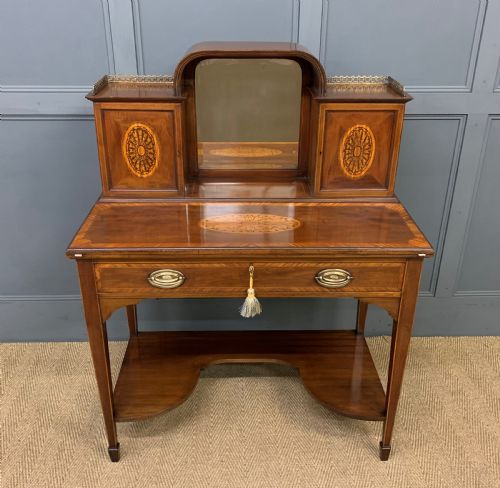
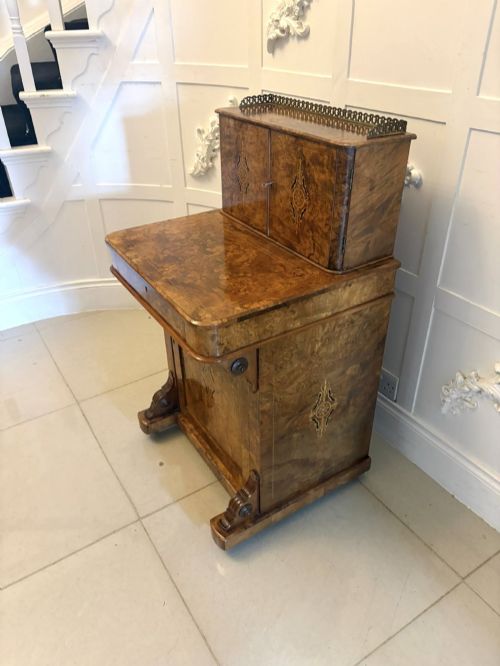
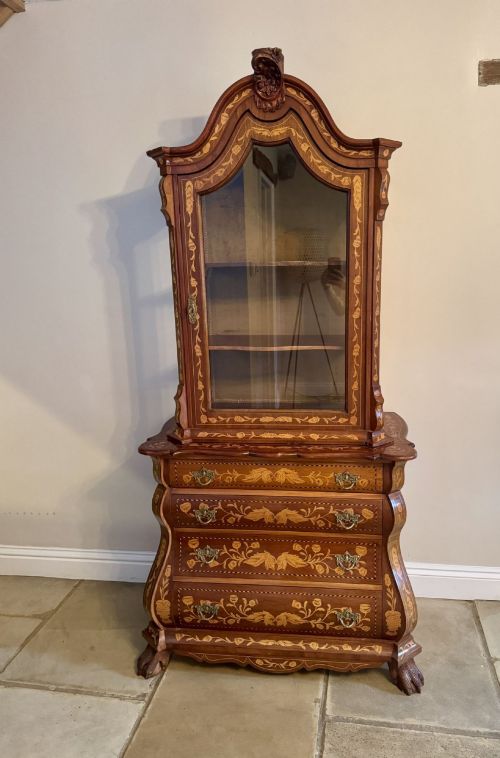
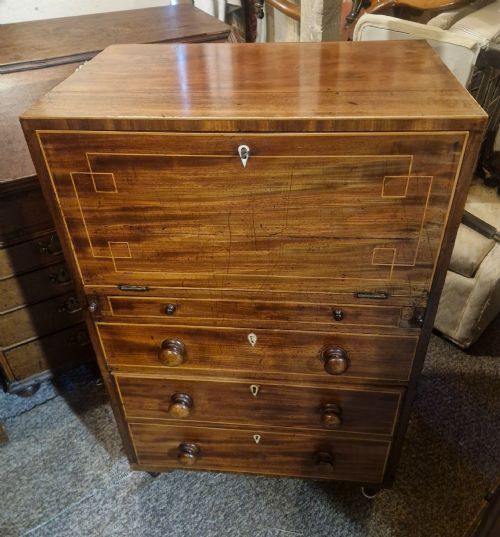
Inlaid Bureau Cabinet
An inlaid bureau cabinet brings together fine cabinet-making and practical writing space, offering fitted drawers, drop-front desks and glazed upper shelving.
Inlaid Bureau Cabinet
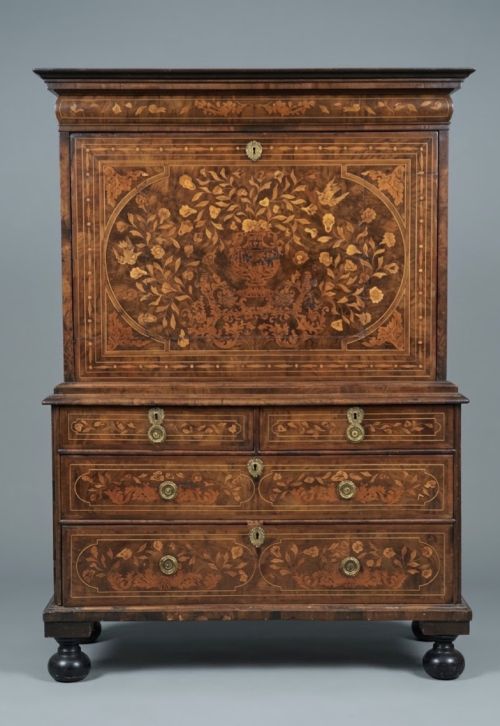
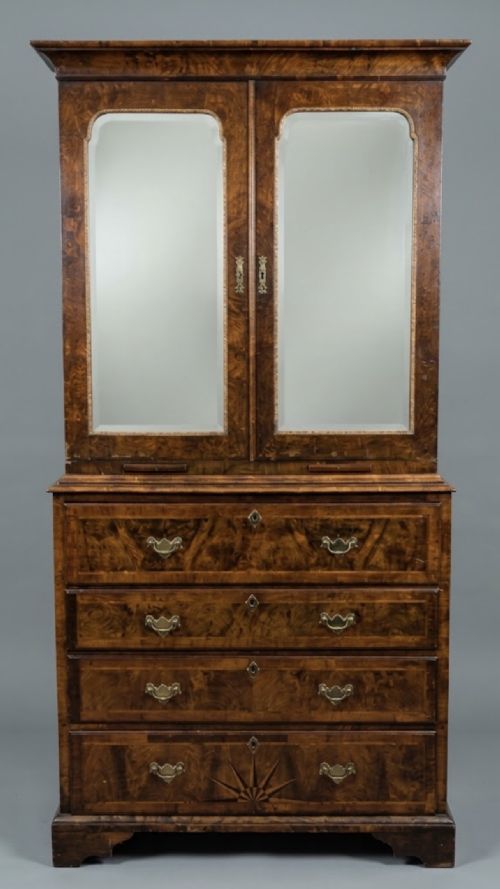
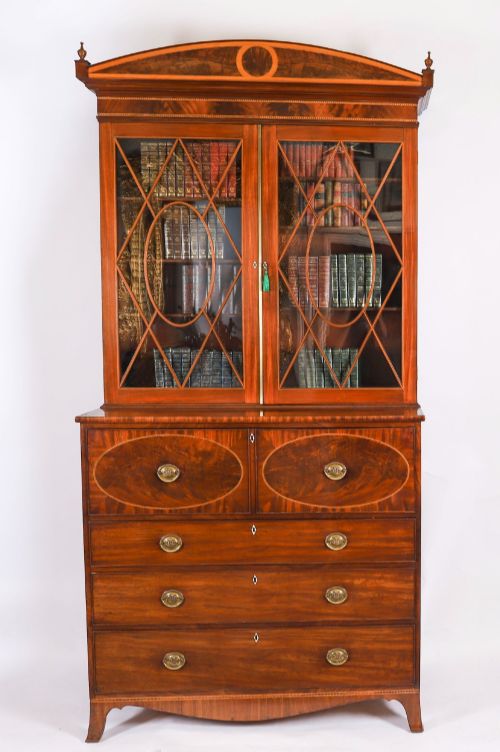
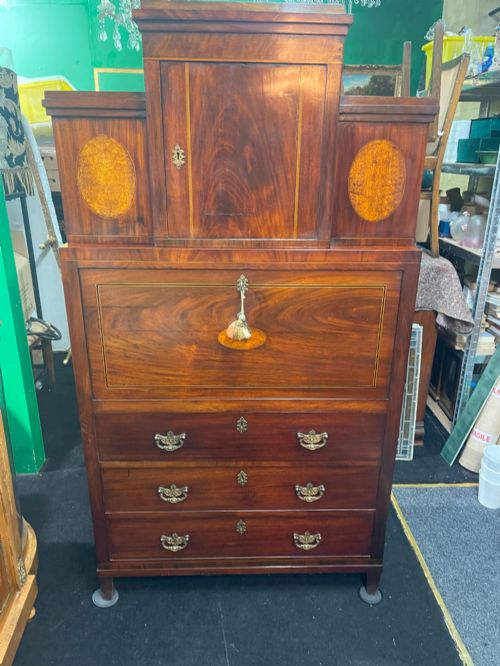
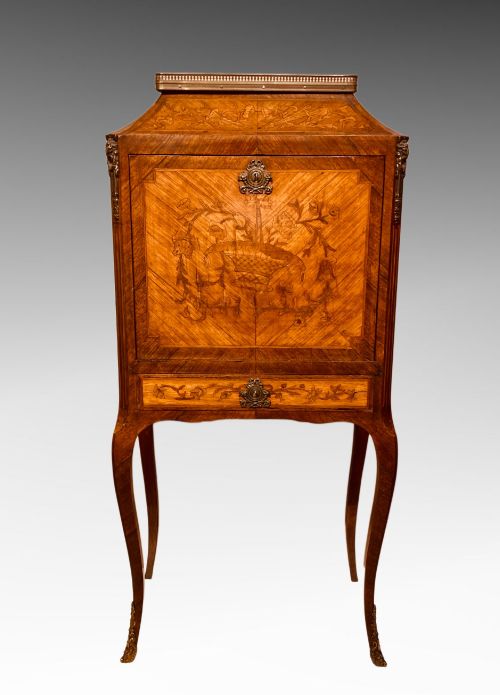
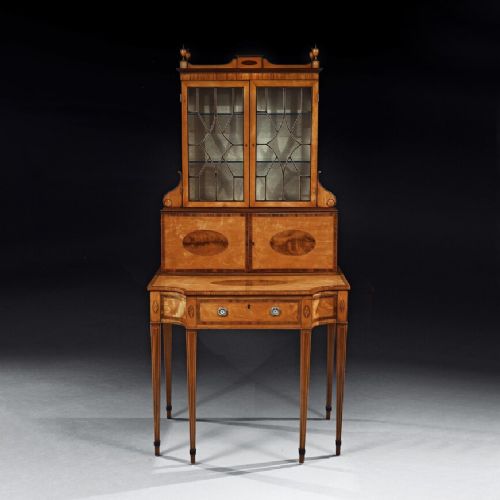
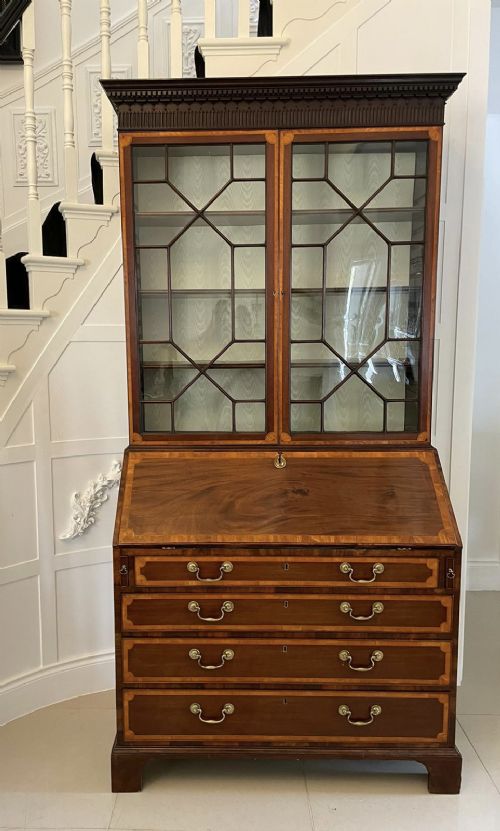
When you search for an inlaid bureau cabinet, you encounter tall bookcase hybrids, slope-front desks and elaborate bureau bookcases spanning the seventeenth to the twentieth century. These pieces combine a lower writing section with an upper bookcase or display cabinet, often featuring fitted interiors with pigeonholes and small drawers.
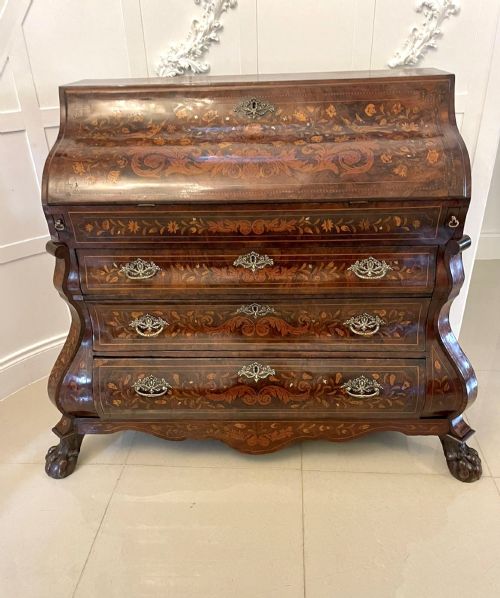
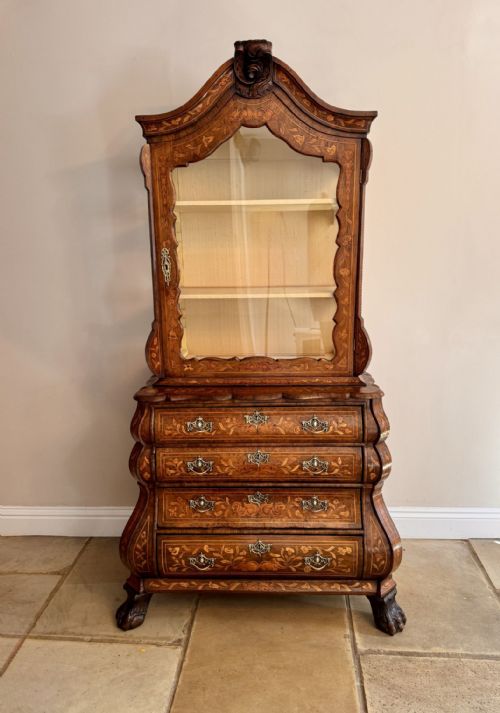
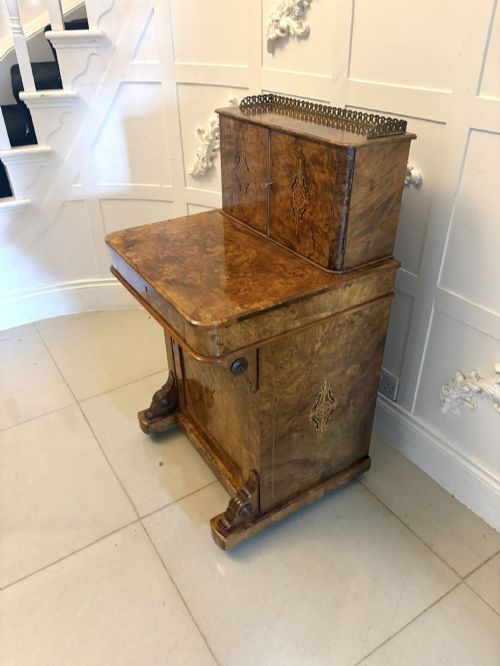
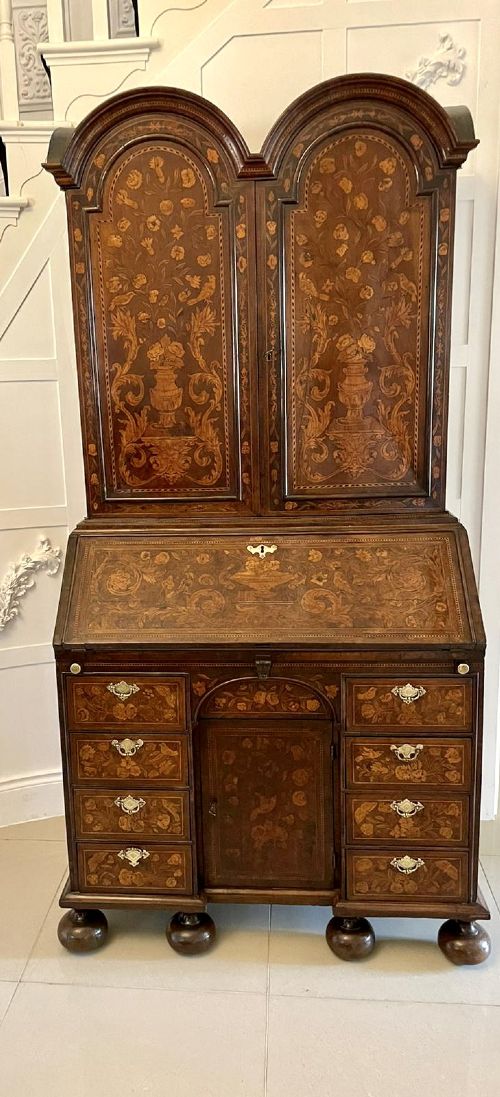
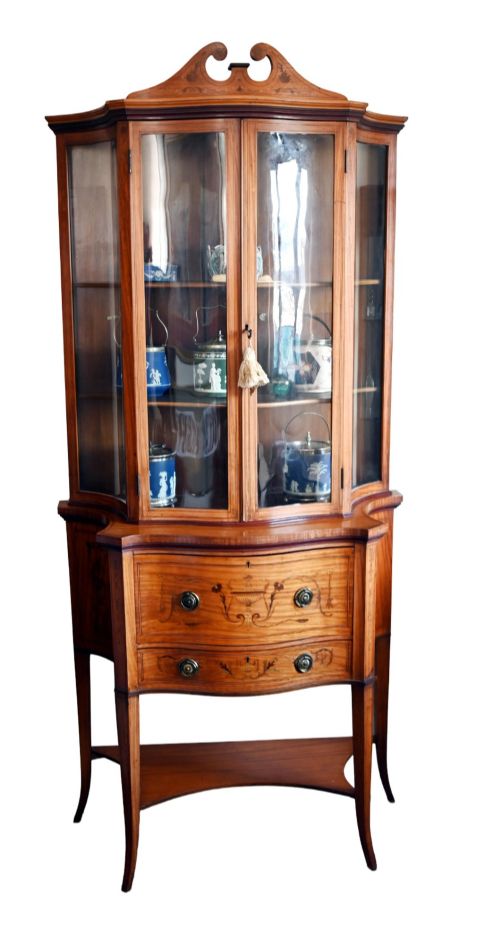
The versions most commonly met on this page originate in the Georgian, Victorian and Edwardian eras, alongside Dutch walnut marquetry examples. Forms range from compact cylinder desks and Davenport writing tables to grand double dome bureau bookcases and bombe shaped cabinets.
Craftsmen built these items using a variety of regional styles, including George III, Regency, Dutch Baroque and Edwardian satinwood revivals. Each iteration provides a dedicated workspace paired with enclosed storage for books or papers.
Materials and Technique
Cabinet-makers constructed the carcases using hardwoods such as mahogany, walnut, burr walnut, oak and rosewood, applying contrasting veneers like satinwood, fruitwood and tulipwood. They secured decorative details using brass hardware, leather writing surfaces and occasionally ormolu mounts.
Surface decoration relies heavily on floral marquetry and intricate inlay work, creating pictorial or geometric patterns across drop-fronts and cabinet doors. Glazing bars on upper sections utilise glass panes to frame internal shelving, while specialised mechanisms support tambour shutters and folding desk lids.
Inlaid Bureau Cabinet Retail Price Guide 2026
Typical asking prices for inlaid bureau cabinet among the pieces listed under this phrase on Sellingantiques today, from the lower quarter to the upper quarter. They describe what is for sale here now, not the wider market.
Secret compartments hidden behind dummy book spines or sliding panels reward owners who check behind pigeonholes.
Craftsmanship and Proportion
The division between standard and superior pieces rests on the precision of the marquetry and the choice of timber figures, such as flame mahogany or burr walnut. Finer examples display meticulous grain matching across multiple drawers and harmonious proportions between the upper cabinet and lower desk.
Internal architecture dictates upper-tier execution, where secret compartments, shaped pigeonholes and fire-gilded brass handles elevate the piece. The structural integrity of drop-front hinges, sliding mechanisms and well-fitted dovetail joints distinguishes workshops of high skill.
The Inlaid Bureau Cabinet Glossary
- Marquetry
- Decorative veneer work forming pictorial patterns using various coloured woods. Craftsmen cut intricate floral or architectural designs to adorn drawer fronts and cabinet doors.
- Secretaire
- A desk or a piece of furniture containing a writing drawer or fold-down writing flap. This term often interchanges with bureau in period descriptions.
- Bombe
- An outward-curving swollen shape characteristic of continental furniture. This contoured profile appears on Dutch and Venetian bureau cabinets.
- Tambour
- A sliding shutter formed of narrow vertical strips of wood glued to canvas. It conceals pigeonholes and small drawers on cylinder desks.
- Ormolu
- Gilded bronze used for decorative mounts on fine furniture. It provides metallic contrast against dark woods like mahogany and walnut.
Inlaid Bureau Cabinet: Frequently Asked Questions
How do I use a bureau cabinet?
Lower the fall-front flap to reveal the internal writing surface, pigeonholes and small drawers. Use the upper glazed shelves to display books or collections while keeping everyday papers stored securely below.
Ensure the support laths are pulled out to bear the weight of the writing flap before use. Close the fall-front when finished to keep the desk surface dust-free.
Where should I place this cabinet?
Position the piece against a sturdy interior wall away from direct sunlight and heat sources to protect the delicate wood veneers. Allow sufficient clearance in front of the cabinet to open the fall-front flap or pull out desk drawers comfortably.
Keep humidity levels stable in the room to prevent timber expansion or veneer lifting. Taller bookcase sections may require wall anchoring for safety.
How do I date an inlaid bureau cabinet?
Examine the secondary woods used for drawer linings, the style of the brass hardware and the complexity of the marquetry inlay. Georgian and William and Mary pieces feature hand-cut dovetails and distinct cabinet proportions compared to later Edwardian revivals.
Look for construction methods such as pegged joints, cut nails and the type of glass in upper cabinet doors. Stylistic markers like Dutch Baroque curves or Sheraton satinwood details also indicate specific periods.