

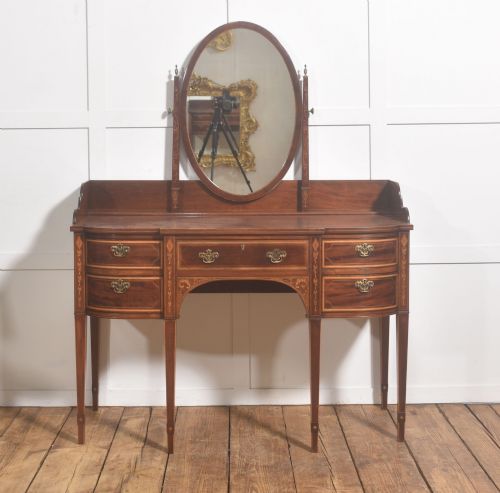
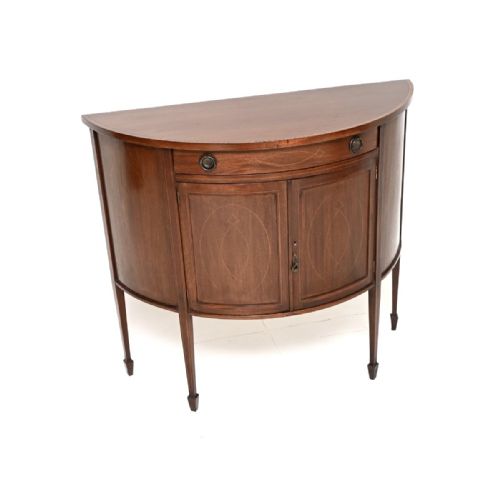
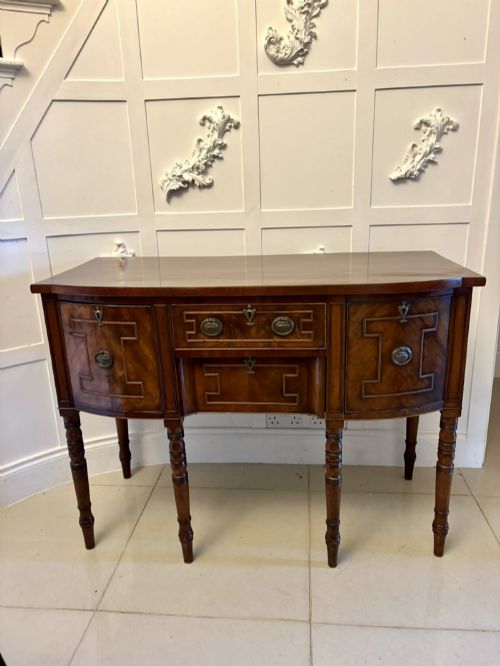
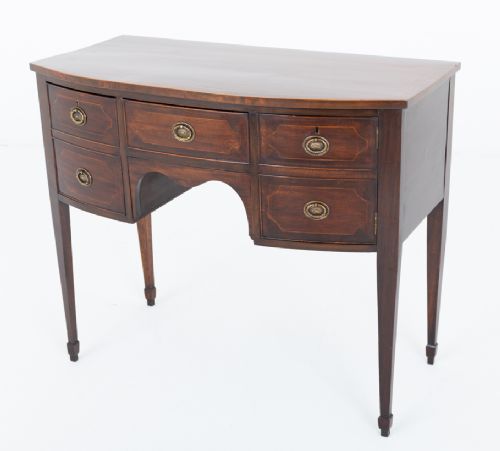
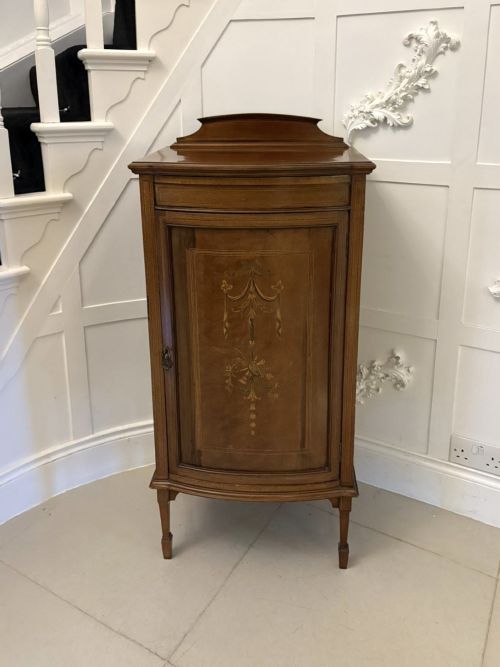
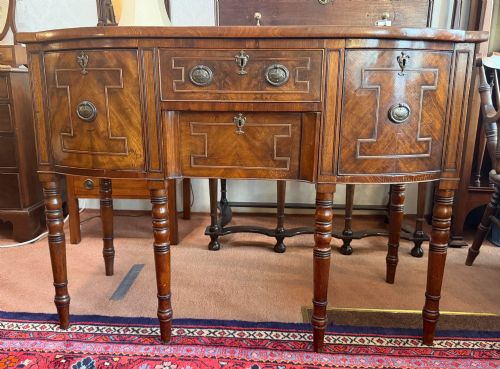
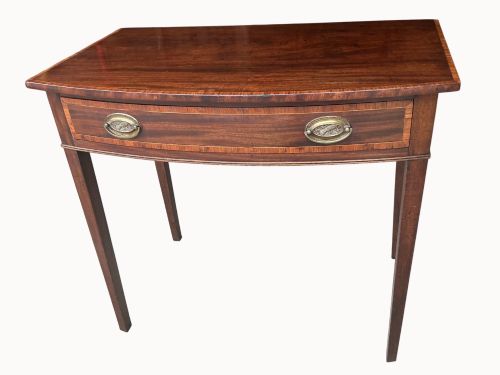
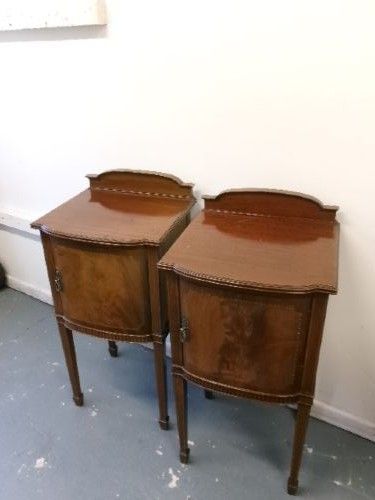


Inlaid Bow Front Table
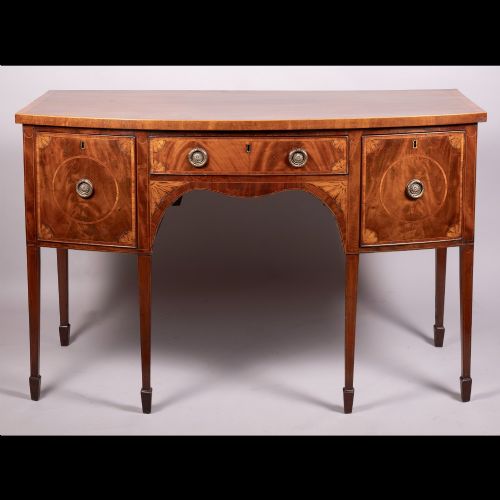
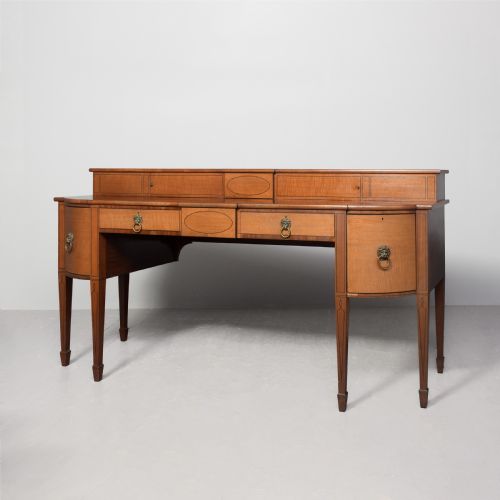
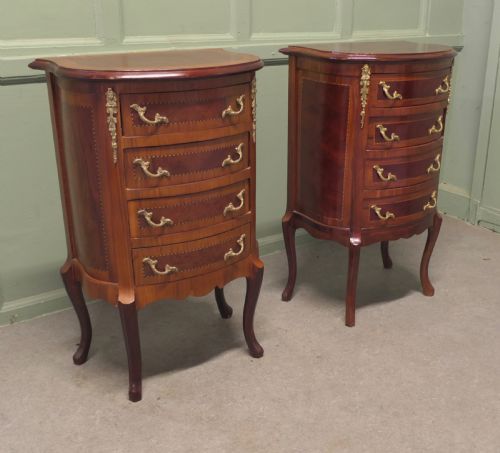
An inlaid bow front table brings together the curving line of a bowed facade and delicate contrasting woodwork, offering practical surface space with refined presence.
Inlaid Bow Front Table
When you search for an inlaid bow front table, you encounter a variety of forms designed for dining rooms, bedrooms, and parlours, spanning the Georgian, Regency, and Edwardian periods.
The most common pieces appearing under this description are sideboards, side tables, and bedside cabinets, alongside writing desks and dressing tables.
These items originate from centuries of craftsmanship, ranging from eighteenth-century George III workshops to early twentieth-century Sheraton Revival interpretations.
Materials and Technique
Makers utilised solid timber and veneers, relying heavily on rich mahogany and flame mahogany as the primary foundation for these curved carcases.
Detailing was achieved through contrasting wood inlay, incorporating lighter elements such as boxwood and satinwood to form delicate borders and motifs.
Structural integrity often involved secondary timbers like oak for drawer linings, while hardware incorporated brass handles and key escutcheons.
Inlaid Bow Front Table Retail Price Guide 2026
Typical asking prices for inlaid bow front table among the pieces listed under this phrase on Sellingantiques today, from the lower quarter to the upper quarter. They describe what is for sale here now, not the wider market.
Current listings feature mahogany, satinwood, and boxwood across Georgian, Regency, and Edwardian periods.
Design and Execution
The standard of a piece depends on the precision of the curved timber joinery and how smoothly the bowed drawers operate within their frames.
Superior examples display crisp, well-matched wood grain and finely detailed inlay work that remains intact across the sweeping contours of the front.
The Inlaid Bow Front Table Glossary
- Bow front
- A convex, outward-curving cabinet or table front that softens the angles of a room. This shape became particularly popular during the Georgian and Regency periods.
- Inlay
- A technique where pieces of contrasting wood or other materials are inserted into recessed portions of a base timber to create decorative patterns. Boxwood and satinwood were frequent choices for this work.
- Flame mahogany
- A highly figured wood veneer displaying a flame-like pattern caused by the grain intersecting at a branch junction. It was prized for principal surfaces on high-status furniture.
- Sideboard
- A large dining room serving piece designed with drawers and cupboards for holding tableware and linen. Many examples from the Georgian era utilise the bowed shape.
Inlaid Bow Front Table: Frequently Asked Questions
What rooms suit a bow front table?
These pieces function well in dining rooms as serving surfaces, or in hallways and bedrooms where a curved front saves floor space.
The gentle sweep of the design softens straight lines in interior layouts while providing concealed storage within drawers or cupboards.
How do I identify a Georgian piece?
Georgian examples display construction methods such as hand-cut dovetails and secondary timbers like oak inside the drawers. The patination of the mahogany usually shows depth built up over generations.
Later revival pieces often exhibit machine-prepared components and brighter, more uniform factory finishes.
What is the difference between a side table and a sideboard?
Side tables are generally lighter, open-framed furniture pieces with one or more shallow drawers used for display or writing.
Sideboards are substantially larger case pieces built with deep cupboards and multiple drawers specifically designed for dining room storage.
How should I care for mahogany surfaces?
Keep these items away from direct sunlight and strong heat sources to prevent the timber and veneer from drying out or splitting.
Dust regularly with a soft cloth and apply traditional beeswax sparingly to maintain the natural lustre of the polished wood.