



Ink Paper Architectural Drawing
An ink paper architectural drawing captures structural design and historic buildings through meticulous hand-rendered lines on paper.
Ink Paper Architectural Drawing
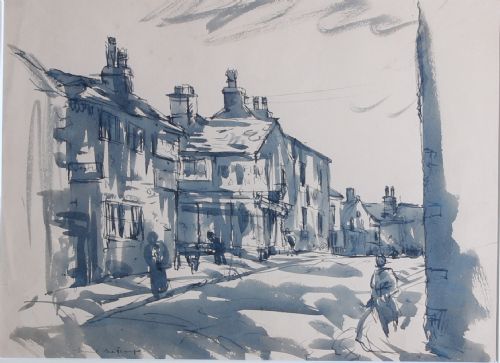
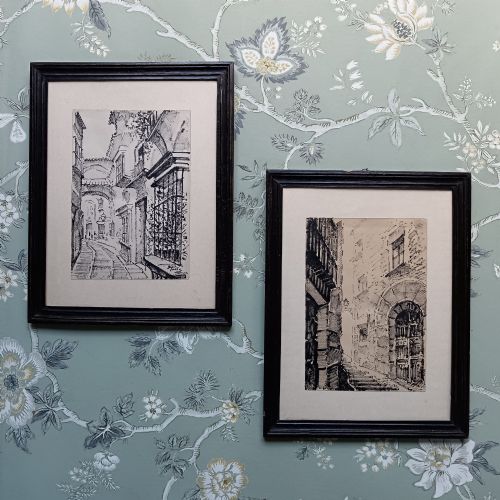
An ink paper architectural drawing represents structural designs, historic buildings, and scholarly studies created by artists, students, and professional draughtsmen. Buyers searching for an ink paper architectural drawing encounter original works spanning the eighteenth, nineteenth, and twentieth centuries, including detailed church studies, palace elevations, and townscape compositions. These works appear across various forms such as framed wall art, original drawings, and historical book plates.
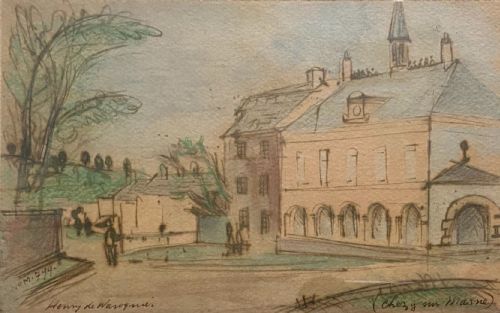
The selection includes mid-century Spanish school ink drawings, nineteenth-century academic palace elevations, and eighteenth-century engravings of classical temples. Pieces range from student submissions bearing biographical details to accomplished architectural and landscape studies by known hands. Most examples combine ink with paper, while some integrate watercolour, wash, pencil, and crayon to define form and shadow.
How these works were made
Makers laid down ink using pens and fine brushes upon paper supports, often mapping proportions with pencil before committing permanent lines. Many examples incorporate watercolour and wash to add depth, tonal variation, and atmospheric colour to the structural outlines.
Framed works frequently utilise wood and glass to protect the delicate paper surface from atmospheric moisture and physical damage. Support media extend to crayon and mixed media, reflecting the working methods of draughtsmen and artists across successive centuries.
Ink Paper Architectural Drawing Retail Price Guide 2026
Typical asking prices for ink paper architectural drawing among the pieces listed under this phrase on Sellingantiques today, from the lower quarter to the upper quarter. They describe what is for sale here now, not the wider market.
Listings incorporate works executed in ink, watercolour, pencil, crayon, and wash across paper supports dating from the eighteenth century to the mid-twentieth century.
What varies in quality
Precision of line and confidence of perspective separate standard drafting exercises from masterworks of architectural rendering. The mastery of ink flow and the subtlety of wash application determine the visual impact of the drawing.
Condition of the paper support and the preservation of the original media dictate the enduring value of each piece. Contextual depth, such as documented authorship or academic provenance, elevates specific sheets above anonymous examples.
Muriel Metcalfe·Henry de Waroquier·Stanley Orchart·H. H. Wyatt·Fred Lawson·Joseph Hansom·Peter Tillemans
The Ink Paper Architectural Drawing Glossary
- Wash
- A technique where diluted ink or watercolour is applied in broad, flat or graduated layers to create shadow and depth. It provides background tone behind crisp ink lines.
- Gothic Revival
- An architectural and artistic style drawing inspiration from medieval Gothic forms. Works in this style frequently depict pointed arches, ribbed vaults, and ornate ecclesiastical structures.
- Neoclassical
- A style rooted in the art and architecture of classical antiquity, focusing on symmetry, columns, and classical orders. Architectural drawings of this type emphasise formal proportion.
- Mixed media
- The integration of more than one medium, such as ink, watercolour, and crayon, upon a single sheet. This approach builds complex surface textures and tonal richness.
Ink Paper Architectural Drawing: Frequently Asked Questions
How should I display an antique architectural drawing?
Keep works on paper away from direct sunlight to prevent the ink and watercolour from fading over time. Ensure framing utilises conservation-grade materials to separate the delicate paper surface from the glass.
Position the drawing in a stable indoor environment with controlled humidity to protect both the paper support and any wooden framing elements.
What periods do these architectural drawings represent?
The available selection spans several centuries, including eighteenth-century engravings, nineteenth-century academic studies, and mid-twentieth-century examples. Each era brings distinct drafting conventions and stylistic influences to the paper.
Earlier works often focus on classical antiquity and Gothic art history, while twentieth-century pieces reflect modernist interpretations and regional townscapes.
Are these drawings original works of art?
The listings comprise original hand-rendered artwork, unique ink drawings, and period engravings rather than modern reproductions. Many sheets feature handwritten inscriptions, signatures, and dates denoting their direct creation origin.
Student project pieces and professional architectural studies both represent authentic period documents created by hand.
What materials are typically found in these pieces?
Ink and paper form the primary foundation of every piece, frequently augmented by pencil, crayon, and watercolour washes. Framing materials predominantly consist of wood and protective glass.
Support mediums vary from standard drawing paper to specialised academic plates and historical book leaves.