





Industrial Workshop Stool
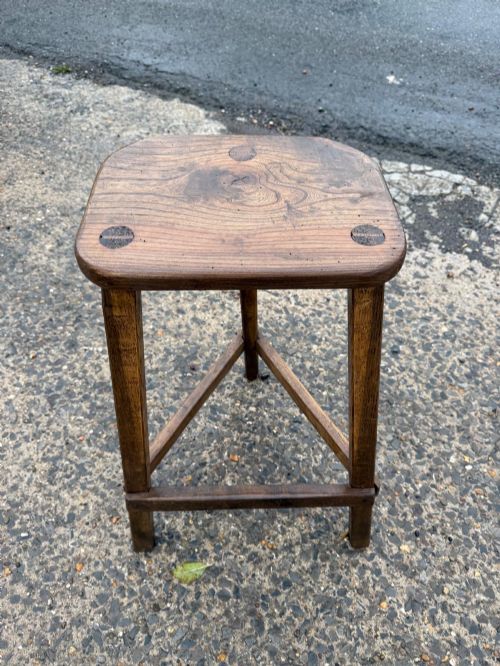
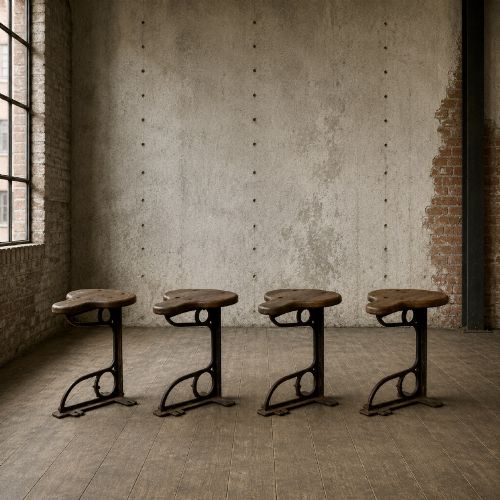
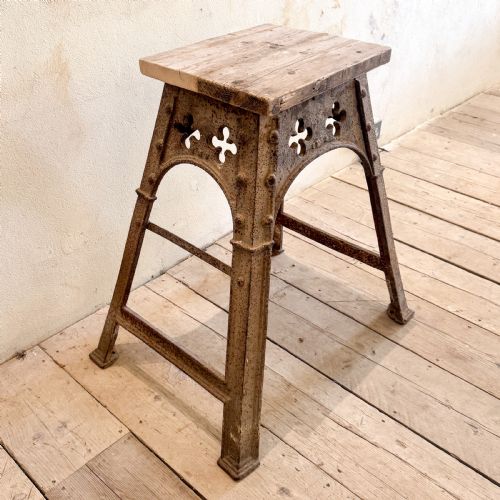
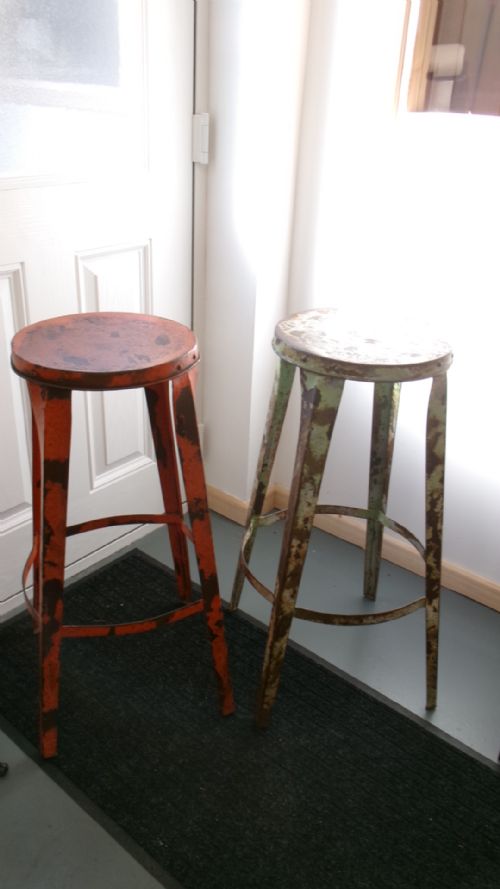
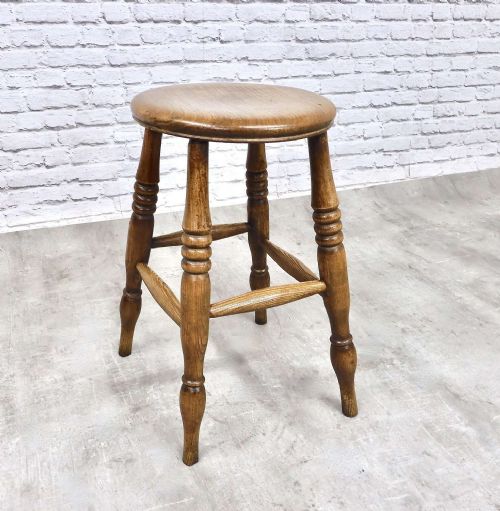
These industrial workshop stool examples combine sturdy iron framing with seasoned timber tops, built for daily factory labour rather than parlour display.
Industrial Workshop Stool
An industrial workshop stool is a heavy-duty seating form designed for factories, mills, and artisan benches, combining utilitarian purpose with robust construction. When you search for an industrial workshop stool, you find survivors from the nineteenth and early twentieth centuries, spanning the Victorian, Edwardian, and 1930 periods.
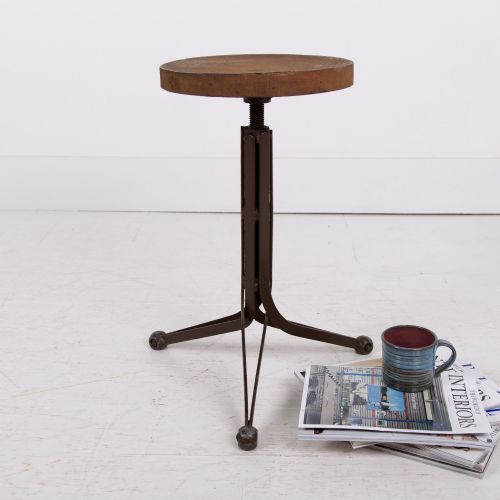
The most common forms on this page include revolving screw-adjust models, fixed-height machinist pieces, and riveted metal bar stools. These examples originate from working environments like machine shops, textile mills, and silversmith benches where durability mattered above all else.
Materials and construction methods
Makers built these pieces using cast iron for the heavy tripod or four-legged bases, ensuring stability under heavy use. Iron parts frequently feature bolted or riveted joints rather than modern welds, showing the mechanical assembly methods of the era.
Wooden components like seats use elm, pitch pine, oak, or beech, shaped into gentle dips for comfort during long shifts at the bench. Carpenters and joiners turned or carved these timber elements to withstand hard wear from daily industrial tasks.
Silversmiths once perched on these very screw-threaded seats, unintentionally polishing the elm tops to a mirror shine.
Judging the quality of an industrial workshop stool
Quality rests in the heaviness of the casting and the crispness of any maker details stamped into the ironwork. Pieces retaining their original screw-adjust mechanisms and untouched timber patination stand apart from examples with replaced hardware.
The choice of timber also marks the grade, with thick seasoned elm or pitch pine seats showing deeper grain character than generic hardwood replacements. Proportion and the absence of superfluous decoration define the integrity of the design.
Rubery Owen·Singer·Evertaut
The Industrial Workshop Stool Glossary
- Cast iron
- A strong, heavy alloy poured into moulds to create rigid bases and machine parts. This material forms the structural foundation of almost every piece listed here.
- Pitch pine
- A durable, resinous softwood sourced for heavy-duty furniture tops and workshop counters. It offers distinct grain patterns that age with a warm amber tone.
- Machinist stool
- A functional seat designed for factory workers operating machinery or assembly lines. These often incorporate adjustable height mechanisms for specific tasks.
- Revolving
- Able to turn around a central axis on a threaded screw shaft. This allows the user to alter the seating height simply by spinning the wooden top.
Industrial Workshop Stool: Frequently Asked Questions
How do I date an industrial workshop stool?
Dating relies on examining the construction methods, such as the use of hand-riveted joints, heavy cast iron bases, and the style of any mechanical screw adjustments. Earlier nineteenth-century examples often display simpler fixed frames, while 1930s pieces introduce branded elements and more complex swivel mechanisms.
Material choices also guide the timeline, as Victorian pieces frequently pair cast iron with deep elm tops, whereas later examples incorporate stamped steel components and standardised factory fittings.
Were these stools used in homes originally?
These pieces served strictly utilitarian roles in factories, mills, machine shops, and artisan workshops rather than domestic parlours. Workers sat on them for long hours at assembly benches, textile looms, and drawing tables where durability was essential.
Today, their compact footprint and robust utility make them popular for modern kitchen counters and studio desks, adapting heavy industry for daily home use.
Are the height adjustment screws still functional?
Many screw-adjust mechanisms remain operational, allowing the heavy iron threaded rod to raise and lower the wooden seat cleanly. A thorough inspection of the internal threads ensures the mechanism turns smoothly without binding.
Some pieces are fixed at a single height due to seized threads or purposeful studio modifications, so checking the specific description helps confirm the moving parts work.
What woods were typically used for the seats?
Carpenters selected dense, resilient timbers such as elm, oak, beech, and pitch pine to withstand the constant wear of workshop environments. Elm was particularly favoured for its interlocking grain that resisted splitting when dished into a comfortable saddle shape.
Over decades of use, these woods absorb oils and develop a dark, polished patina unique to each working environment.