



Industrial Storage Rack
An industrial storage rack brings utility and character to a room, offering practical shelving built for heavy service.
Industrial Storage Rack
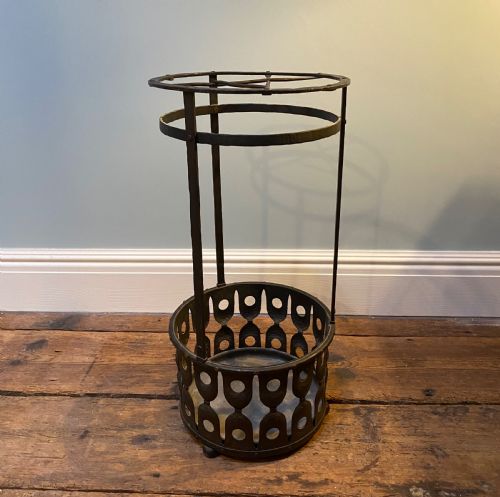
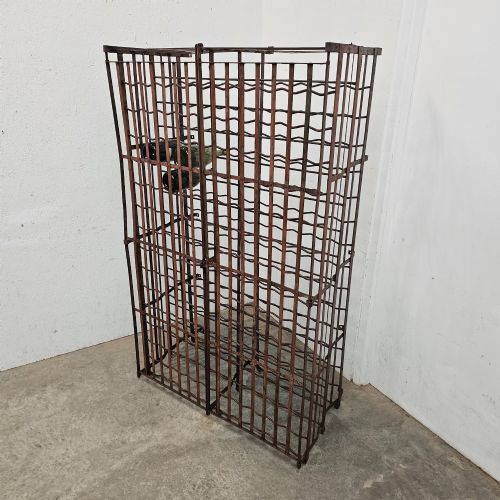
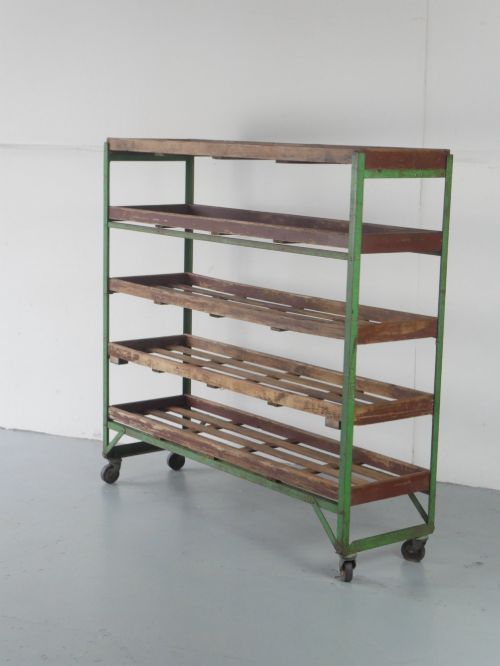
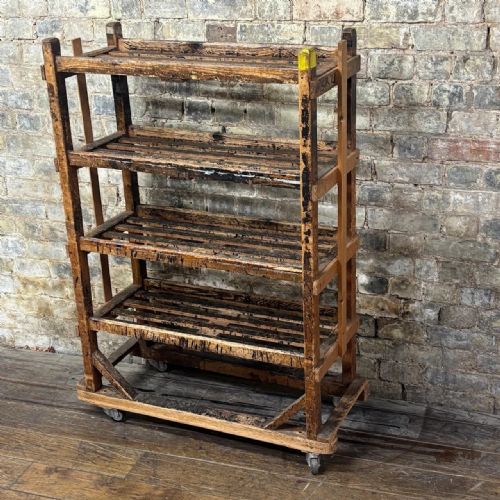
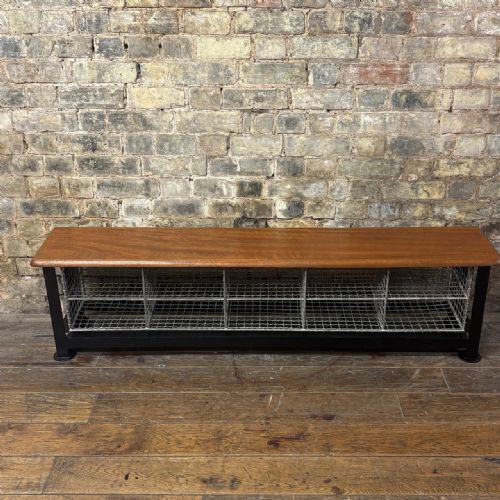
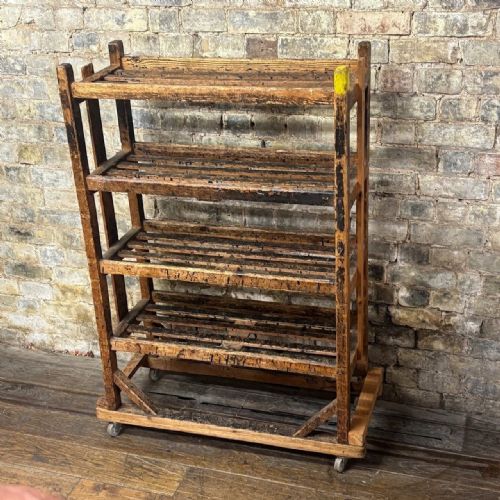
An industrial storage rack provides robust organisation through heavy-duty forms originating from utility and commercial spaces. Pieces matching this search phrase encompass functional items such as bakery racks, wine cages, shoe trolleys, pigeon hole cabinets, and railway ticket cupboards.
The versions most frequently met on this page span the Victorian era through the early twentieth century, drawing on French, English, and general industrial styles. Materials range from solid pine and oak to iron, steel, and wire mesh.
Buyers look for these pieces to anchor a room with functional history, utilising tall shelving units, benches, and wall-mounted storage to manage everyday objects.
How they were made
Construction relies on durable metals and dense timbers chosen for endurance in workshops, bakeries, and transport hubs. Iron and steel provide the structural skeleton for racks and cages, often shaped with scroll-work or fitted with wire mesh.
Hardwoods such as solid oak and pine form the shelving, pigeon holes, and shoe trolleys, joined with traditional carpentry techniques built to withstand constant handling and heavy loads.
Industrial Storage Rack Retail Price Guide 2026
Typical asking prices for industrial storage rack among the pieces listed under this phrase on Sellingantiques today, from the lower quarter to the upper quarter. They describe what is for sale here now, not the wider market.
Listings feature items spanning the nineteenth century to 1930, built from pine, solid oak, iron, steel, and wire mesh.
What varies in quality
Quality rests in the integrity of the original construction and the character of the aged materials. Pieces showing honest wear from active service in factories or railway stations carry greater authenticity than later reinterpretations.
The refinement of the metalwork, such as hand-forged iron scroll-work or intact locking mechanisms on wine cages, distinguishes standard utility items from finer workshop output.
Astrola
The Industrial Storage Rack Glossary
- Pigeon holes
- Compartmentalised wooden shelving designed for sorting documents, mail, or small components. These units vary in scale from small desktop organisers to large wall-mounted banks.
- Wine cage
- A secure storage enclosure constructed from metal mesh and iron framing to protect bottled stock. These lockable units were utilised in cellars and commercial premises.
- Shoe trolley
- A specialised wheeled cart built from timber and metal to transport footwear during manufacture or storage. They feature multiple slatted tiers for ventilation.
- Scroll-work
- Ornamental metal bending formed into spiral or curved motifs. This decorative technique appears on iron bakery racks and structural braces.
- Field kitchen dresser
- A portable or camp-style storage unit featuring metal drainers and prep surfaces. These items were built for robust service away from fixed establishments.
Industrial Storage Rack: Frequently Asked Questions
What is an industrial storage rack used for?
These pieces provide heavy-duty organisation and display space for modern interiors, adapting workshop utility for domestic storage.
Original items like wine cages, pigeon holes, and shoe trolleys serve to house books, tableware, and accessories with distinct visual weight.
How do I date an industrial rack?
Dating relies on observing construction methods, material choices, and the specific context of the piece, such as Victorian railway joinery or early twentieth-century workshop hardware.
Comparing the timber types and fastening techniques against known period examples helps establish the decade of origin.
Are these racks suitable for small spaces?
Many forms, including wall cabinets, narrow pigeon holes, and vertical coat stands, occupy minimal floor space while offering substantial vertical storage.
Choosing slimmer configurations allows smaller rooms to benefit from industrial utility without feeling overcrowded.
How do I care for metal and wood surfaces?
Maintaining these pieces involves regular dusting and preserving the aged patina of the iron, steel, and timber without stripping away historical wear.
Applying occasional protective wax to wood and light oil to metal keeps the surfaces stable and prevents further oxidation.