




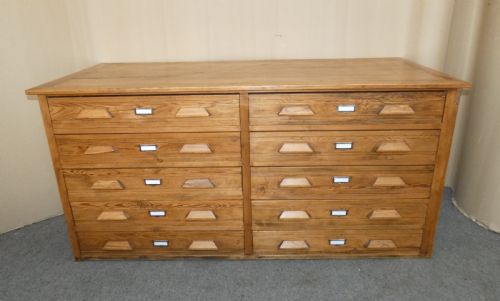


Industrial Shop Fitting
Industrial shop fitting encompasses robust trade furniture and display items built for heavy commercial use that bring functional character to modern interiors.
Industrial Shop Fitting
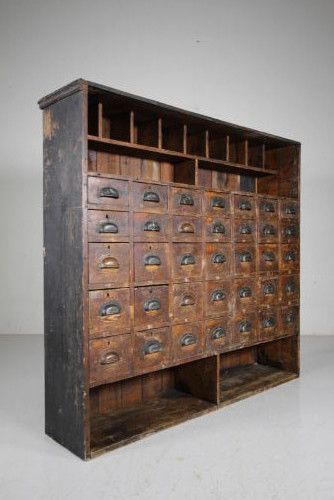
Industrial shop fitting spans utilitarian commercial furniture and display pieces designed for nineteenth and early twentieth-century trade use, encompassing multi-drawer banks, display stands, and cabinets. Buyers searching this phrase typically encounter large banks of drawers, haberdashers' chests, and countertop dispensers originating from Victorian and early twentieth-century commercial environments.
The selection ranges from tall nineteenth-century banks of drawers and chemist shop fittings to 1930s display counters and trade sign lights. These pieces served practical functions in drapers, milliners, and general stores before finding new roles in contemporary domestic and retail spaces.
Construction and materials
Makers utilised dense timbers such as pine, fruitwood, and oak for structural carcasses and numerous small drawers, combining them with robust metals like cast iron, brass, steel, and bronze for handles, frames, and display stands. Painted finishes, notably light green, frequently protected wooden surfaces while glass and mirrors provided practical display elements for retail goods.
Joinery techniques prioritised durability to withstand daily commercial handling, evident in heavily stacked banks of drawers, pigeonhole cabinets, and countertop paper dispensers. Metal components were cast or forged to support glass display cabinets and freestanding stands intended for busy shop windows.
Industrial Shop Fitting Retail Price Guide 2026
Typical asking prices for industrial shop fitting among the pieces listed under this phrase on Sellingantiques today, from the lower quarter to the upper quarter. They describe what is for sale here now, not the wider market.
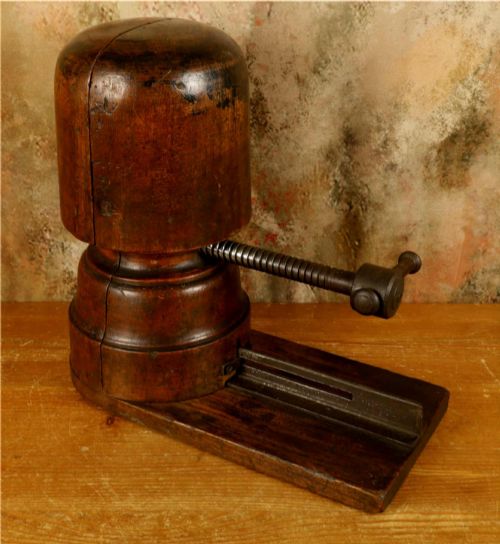
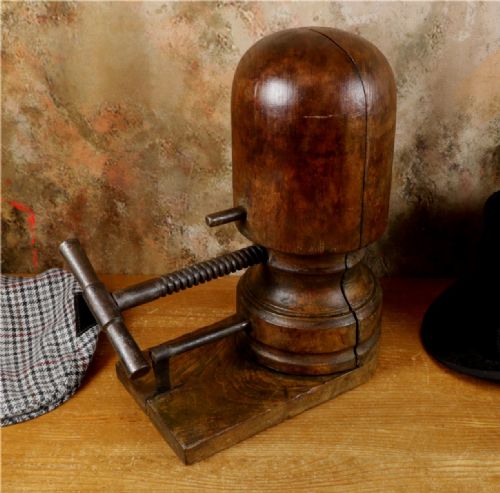
Wooden hat stretchers and milliner sizers once shaped brims before finding new life as quirky sculptural display stands.
Evaluating commercial antiques
Quality in industrial shop fitting rests upon the originality of the configuration, the scale of the piece, and the integrity of the materials. Surviving hardware, such as brass pulls and iron framing, contributes significantly to the character and authenticity of a drawer unit or display stand.
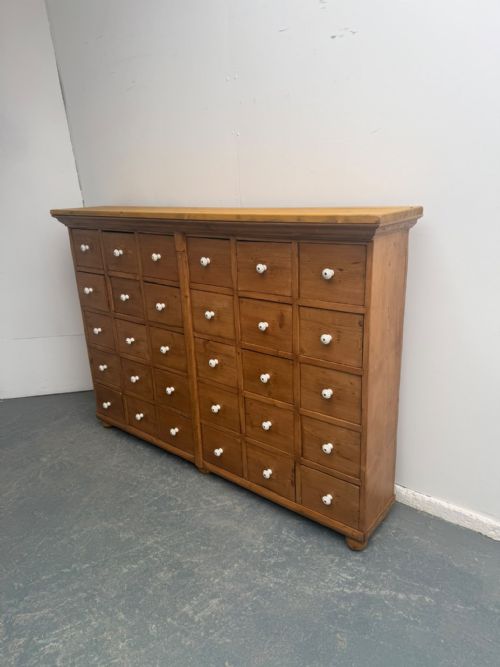
The distinction between standard utility items and finer examples lies in the complexity of the internal arrangement, such as thirty-drawer banks or specialised milliner sizers, alongside untouched painted surfaces that record decades of commercial use.
Luxmore's of Ilfracombe·Siegel
The Industrial Shop Fitting Glossary
- Bank of Drawers
- A large cabinetry unit containing numerous shallow or deep drawers designed for sorting small goods. These were essential in drapers and chemist shops for holding stock.
- Haberdashery Chest
- A multi-drawer cabinet originally utilised in shops selling small articles of dress, such as buttons and thread. They often feature glass fronts or numerous small compartments.
- Milliner's Hat Sizer
- A wooden device used in the hat trade to shape and measure headwear. They frequently double as sculptural display stands.
- Display Counter
- A shop fixture featuring wood framing and glass panels intended to showcase merchandise to customers while keeping it secure.
Industrial Shop Fitting: Frequently Asked Questions
What is industrial shop fitting?
Industrial shop fitting comprises commercial furniture and display fixtures created for nineteenth and early twentieth-century retail environments. These pieces include multi-drawer chests, display stands, and counter units built to withstand heavy daily use.
They offer practical storage solutions for modern interiors while retaining authentic historical character from their original trade applications.
How were drapers drawers used?
Drapers drawers organised small textiles, ribbons, and haberdashery items behind numerous small drawer fronts in busy mercery shops. Assistants could quickly locate specific goods by sorting through the banks.
In modern settings, these units provide segmented storage for everyday items while serving as substantial architectural focal points.
What materials are common in these fittings?
Pine, oak, and fruitwood form the primary wooden structures, often paired with cast iron, brass, and bronze for handles, frames, and mechanisms. Glass panels and mirrors are also frequently integrated into display cabinets and counters.
These durable materials ensured the furniture survived decades of heavy commercial handling in Victorian and twentieth-century shops.
How do I date a shop fitting?
Dating relies on the construction methods, timber types, and hardware styles visible across the piece, ranging from nineteenth-century Victorian joinery to 1930s Art Deco metalwork. Specific retailers' marks or labels can occasionally provide a precise origin.
Stylistic cues such as brass pulls, painted finishes, and structural proportions help distinguish Victorian examples from later mid-century items.